32.838785
-97.116107
Posted in Other, Uncategorized on December 25, 2010| 1 Comment »
Posted in Other, Traveling Thoughts, tagged church strategy, Great Churches Series, Great Commission, Let's Start Talking Ministry, LST, missions, travel on November 18, 2010| Leave a Comment »
 I’ve been computer-less for the last three days, so I know I’m a little behind, but you are going to forgive me when you read about the great church, I want to tell you about today.
On Sunday the 14th, while all of America was asleep, Sherrylee and I worshipped with the church of Christ in Chemnitz, Germany–a vibrant, thriving, encouraging family of God that I can’t wait to tell you about.
But the story begins in 1990 with our first visit to the same city. We traveled with Daryl and Gail Nash into what just a few months before had been Karl-Marx-Stadt. As we drove into the city, the big communist sign had butcher paper across it with the name CHEMNITZ in magic marker.
Daryl and Gail and their daughter Morgan moved to Chemnitz in1991 and began a wonderful experiment in tentmaking missions. We opened a private language school in Chemnitz named ABC English Language School which Daryl and Gail operated for almost a decade. The idea was to provide them financial support AND to grow so that the school could hire more Christian teachers to come and support them as well, creating a self-funded mission team.
At its zenith, the school supported about eight people and opened a second branch in Zwickau, Germany. Of course, Gail and Daryl began worshipping in Chemnitz with one other person who had been baptized by Reiner Kallus in Oelsnitz–a small group of Christians who had migrated from the Lutheran church almost immediately after the collapse of the wall through Reiner’s efforts.
Mostly because of the potential and because of the Nashes in Chemnitz, it wasn’t long until Larry and Pam Sullivan decided to move to Chemnitz and focus their full-time efforts with the newly-formed church. Then just a few years later, Jack and JoAnn McKinney, former missionaries in Switzerland and retired from Harding University, moved to Chemnitz for about five years to help the new congregation mature.
Somewhere in all of this Clyde and Gwen Antwine, former missionaries in Germany and then teaching missions at Oklahoma Christian, befriended the Sullivans and began coming each year to help them and encourage them. Clyde became the head of the Helpers In Missions internship program at Memorial Road Church of Christ, so he began sending interns to Chemnitz regularly.
And, of course, Let’s Start Talking had been sending teams each year from the beginning. The LST teams worked mostly with students at the ABC English school who wanted the extra experience in English.
Now almost twenty years later, the church is 50-60 people, mostly Germans (which is sometimes unusual), lots of young people, young families with young children, and with German leadership–in other words, a very healthy, growing, and encouraging congregation.
The Nashes left twelve years ago, ABC English closed, and the Sullivans have done such a good job that they are preparing to move to Leipzig in the next year to help with a new church plant there. Karen Neel, who came as an ABC English teacher originally, is teaching at a private school and continues to provide an evangelistic spirit to the church, the Antwines continue to send HIM workers as the church requests, and LST is still a regular part of the church’s plan for reaching new people.
I couldn’t help but asking myself why Chemnitz has continued to grow and has become such a strong church while so many other efforts in Europe are either stagnant or have failed completely, and I keep coming back to one major difference. Of course the only real answer is that God has acted mightily here, but from a purely practical side, I think that the difference has been the fact that Chemnitz has been a large team effort–not just a team effort, but a large team effort, which is so rare in Europe.
I’ve written about this once earlier this year in the series on Great Churches, so you might look back and see a more exhaustive look at the idea, but I think Chemnitz is another example of what could be done in Europe with lots of people over a longer period of time with sustained efforts–and much prayer!
We left Chemnitz on Sunday and visited with Karen Abercrombie, who with her husband Mark and the Sullivans, are starting the new work in Leipzig. I hope many of you will find ways to join them in this work and that God will bless this new work. Perhaps He looks down and says, “Well, they do care after all. Lots of my people care about Leipzig!”‘
We left Leipzig and drove toward Mainz where we visited with Alex and Cass Huffman and their baby girl Noah. You won’t believe the story they have . . . .
PS. Don’t forget that I’m posting pictures as we go on my Facebook page. Sorry, I can’t get them off my phone to add to the blog directly.
Posted in Other, Traveling Thoughts on November 15, 2010| 2 Comments »
 I love riding the trains in Europe. We needed to get from Budapest, Hungary, to Dresden, Germany which is only about 500 miles, but it is through Hungary, Slovakia, the Czech Republic, and then barely into Germany. Although there is a system of highways somewhat equivalent to the US Interstate system, the tell-tale sign is when I looked it up on Mapquest, the response was, “You can’t get there from here!”
I also looked at flying, but that would have meant about a $400 ticket and flying through Frankfurt, which would have taken us almost the same length of time it took to get to Dresden on the train for less than half the price. Plus the advantages of train travel in Europe, for instance:
When we arrived in Dresden, we expected one blessing and received another. Randy Carroll, missionary in Dresden for over nine years now, was going to meet us at the train station and take us over to the airport where we would pick up a rental car for the rest of our travels. Randy, however, was sick, so his sweet wife Brianna came and met us and got us to the airport. Then she rode with us to Chemnitz, about an hour away, where we were to have supper with all of the workers there.
The Carrolls have been faithful servants in Dresden for a long time. For a variety of reasons, they will be returning to the States next year, so we were able to have a long talk as we drove about re-entry, about third culture children, and just about how they feel about their work. It is not perhaps our main reason for coming to Europe, but we always are blessed ourselves with the chance to meet these heroes of faith, and if we can share from our own life experiences a little, then perhaps we are a blessing to them as well.
I can’t wait to tell you about Chemnitz and Leipzig. Look for the report on that visit tomorrow.
Posted in Other on October 23, 2010| 2 Comments »
 I did absolutely nothing to get to be born—seems like a pretty ridiculous statement, but the truth behind it reminds me of the sovereignty of God and His complete control over my life.
Somehow after we are born, we start taking control—or thinking that we have control. We start doing things to make sure that we continue to live and don’t die. We learn safety rules, we brush our teeth, we exercise and diet, thinking that all of these things will somehow either extend our life or improve the quality of our lives—and I don’t doubt that caring for what He has created does affect our existence. But ultimately, I did absolutely nothing to get to be here. It was all God. And I believe that when I get to the last page that He has written in my book, I will die. Period.
It’s a relief not to be in control of life and death.
I was born in Kansas City, Missouri. My parents lived in Kansas City, Kansas, but the hospital (St. Joseph’s) was in Missouri. Mom loves to tell the story of how when she was getting ready to leave the hospital, they brought her the wrong baby. She looked at the baby and said, “This isn’t mine.” They checked it out—and she was right! But I’ve often thought, “what if she hadn’t been able to tell the difference . . . ??” My life would have been very different—and I might not have ever known. You see, I wasn’t in control.
I don’t remember most of my birthdays—I hope that’s not too unusual! Many of my adult birthdays were spent at the World Mission Workshop which for many years was always on this third weekend of October.
One of my funniest birthday memories was when I turned forty. Our children were 13, 11, and 9, and they decided to do something spectacular for my birthday, so they found white house paint and went into the front yard and wrote a huge 40 on the grass itself and then a big “over the hill” in the area between the sidewalk and the street. Of course, we all thought it was funny—but it became even funnier all winter long because since the grass was no longer growing, nothing happened to ever remove their art work. I was reminded of their birthday love for months!!
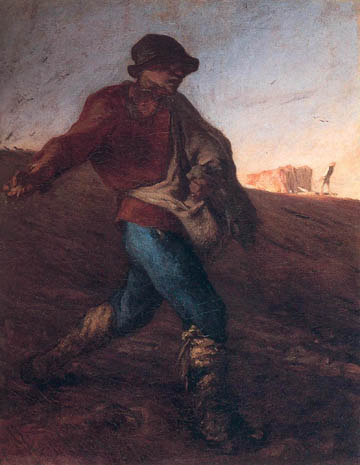
One of the sweetest gifts I ever received was from Sherrylee and the family for my 50th birthday. Again, it was during the World Mission Workshop, so many of our LST friends were able to celebrate with us. Sherry gave me a modest-sized bronze of “The Sower” which truly touched me and is one of those gifts that is beyond value to me.
Our grown children planned my sixtieth birthday party as a surprise. The doorbell rang on the evening of my birthday. This mafia-dressed guy with greased-back hair was at the door and said, “I’ve come to pick you up!” Whoa! I looked outside and there was this long, black stretch limo parked in the street. Well, I know you prom goers may not believe it, but I had never been in a stretch limo, so Sherry and I climbed in to join the most wonderful kids and the most wonderful in-law kids in the world for a wonderful evening of eating and laughing and fun on Sundance Square in Fort Worth.
Last night, Ben and I had Row 6 seats in the lower section inside of third base at the American League Championship game between the NY Yankees and the Texas Rangers. We are big Ranger fans, and the game was perfect—great pitching, home runs, clutch performances—everything you would want, including a win! Then to be a part of the celebration afterwards of the first AL Championship in Texas and the first trip to the World Series. It wasn’t quite my birthday (about 30 minutes short by the time I got home), but I will always think of it as one of my great birthday moments!
A birthday is a wonderful day to celebrate the mercy and grace and the amazing love that the Father has wrapped into the biggest and best gift of all—a life in His presence. “He has anointed my head with oil; my cup overflows. Surely goodness and mercy will follow me all the days of my life, and I will dwell in the house of the Lord forever.”
I wonder if David wrote those words on his birthday??
Posted in Other, Uncategorized, tagged Expedia, Let's Start Talking Ministry, Priceline, travel on October 11, 2010| Leave a Comment »
 I’m going to spend most of today booking international travel on the web. I have the basic itinerary set—though not confirmed because you never know for sure until you have finished booking the travel. I’ve done some preliminary checking on trains versus air for some portions of our trip. I know when I need to rent the car and where we will return it.
So today is the day to commit! And since our trip is less than a month away, I’m quite aware that I may run into availability issues and I may not get the absolutely lowest price—but I might! It’s a treasure hunt! Or a scavenger hunt! It’s a challenge!
There are no magic websites! If what you are looking for is the magic web travel agency that will give you exactly what you want with the lowest fares and throw in business class upgrades, well, you won’t find it here—and please send it to me when you do. I’ve never found such a site. But I can give you a few tips about using the web to book your travel that could be very helpful to you.
Well, I’m off to the office to start my treasure hunt! I’ll let you know if I learn anything new today! I’d like to hear your favorite websites for travel as well!
Posted in Other, Uncategorized, tagged Let's Start Talking Ministry, LST, State Department, travel, travel safety, travel warnings on October 9, 2010| 1 Comment »
The recent State Department travel warnings for Americans going to Europe raise good questions for those of us who are planning imminent trips to Europe—or really to anywhere in the world where these BIG warnings about terrorist threats occur.
In our own personal travel and in planning the travel for Let’s Start Talking teams, we have dealt with these kinds of warnings, threats, and sometimes actual occurrences of public violence in many different countries. We had workers in Russia when tanks rolled down the streets of Moscow in 1991, in Yugoslavia in 1989 when civil war broke out, and in Thailand during at least two major episodes of violent uprisings.
Sherrylee and I flew in and out of the Vienna airport where terrorists threw hand grenades and opened fire in 1985. The same year on June 19, another bomb exploded in a trash container in the Frankfurt Airport, the very one we were flying in and out of that year with our three kids and our LST workers.
Let me repeat though very clearly: at no time have we or any of our LST teams ever been in imminent personal danger that we were aware of. So the question is, how do we try to keep ourselves safe in a world where terrorists hijack planes, shoot up tourist hotels, and blow themselves and others up in public market places? First, get your thinking straight!
Then there are also very specific things you can do when traveling—but you can do these things without being afraid. For instance,
That’s probably enough. Some people’s risk tolerance is much greater than others, so people make different choices about where to go and when. Occasionally we have had to rein in some college student that thought he was invincible and was doing things that even made the local people nervous!
The best advice I can give you is to walk close to God and to live in a way that if Jesus comes today, you will be delighted. To live without fear of the Second Coming makes the uncertainty of traveling through this world much less frightening.
Posted in Other, Uncategorized, tagged safety, travel on October 6, 2010| 3 Comments »
Before we go any further, there are three things I want you to take to heart:
First, only a small handful of people experience personal danger while traveling! Of course, you hear about every single one of them in the news, so it seems like everybody has been victimized! That is just not true.
Second, almost nothing violent is more likely to happen to you abroad than could happen to you at home in the USA. If you don’t believe me, go turn on the local evening news or look at the police blotter in your hometown newspaper.
Lastly, much of what is really dangerous cannot really be avoided regardless of where you are. Earthquakes are dangerous, bombs on street corners are dangerous, hidden snipers looking for random victims are dangerous, violent people high on hard drugs are dangerous—and there is very little you can do to protect yourself against random danger. By the way, all of the above are events that have happened in the U.S. in 2010, not in some foreign capital. See Point #2 above!
Having set the parameters for our conversation now, let’s look at the things we can do to travel more safely—wherever we are going!
The most common crime that travelers experience is petty theft, so what can you do to protect yourself from petty thieves?
Sherrylee and I have traveled literally hundreds of thousands of miles to many parts of the globe for over forty years and we have never experienced any physical danger from assailants, and we have lost almost nothing to petty thieves—not because we are such vigilant travelers, but just by God’s grace! It can happen to anyone, any place, any time even those who make the best preparations. Naiveté, ignorance, or stupidity, however, will not contribute to your safety, so perhaps these pointers will be of help as you travel.
What else do you do to avoid petty theft when you travel?
Next: More Traveling Safety Tips
Posted in Christian Missions, Other, Uncategorized, tagged Europe, travel on October 4, 2010| 3 Comments »
Sherrylee and I are planning LST travel to Europe soon, so I am buried in airline, train, hotel, and rental car websites! I’ve done this a lot—especially in Europe, so I thought I might share some tips with you.
Know what your priorities are for your trip! I usually am juggling two or three different elements: number of travel days, places that we need to visit, and costs are the big ones. In the last few years, Sherrylee has made me also include rest—probably pretty smart on longer trips.
Here are some questions to help you rank your priorities.
I then work in concentric circles, from the BIG details to the smaller details. For me, this means buying tickets to Europe and back first! That sets the boundaries with exact dates of travel. The only tickets I have bought to date are the flights over the Atlantic.
Next, I try to book the non-negotiables. For instance, I have made hotel reservations only in Rothenburg so far. Today, I intend to nail down whether we will spend the night in Frankfurt on the 16th before our guest arrives early the next morning. We probably will, so we will need a hotel not too far from the airport!
Then, I try to plan an affordable route. Usually it is least expensive to travel in the same direction as opposed to crisscrossing . If you are scheduling meetings with people in lots of different places, this can be challenging, so you have to work on it early, before you start purchasing any of your other travel. I like to fly to the furthest point, then work my way back to the place we will return from. For this trip, that means flying from DFW to Frankfurt, but going to Turkey first, working our way back through eastern Europe and finishing in western Europe.
After all of the transportation is set and purchased, then I go back and book hotels and rental cars, where necessary. These seem to be easier to cancel than flights, if something changes—and something always changes!!
Next, I’ll talk about useful websites and travel information that might help you, as well as strategies for using them.
Posted in Other, Uncategorized, tagged aging, autumn on October 2, 2010| 3 Comments »
 I love Fall season! No, we don’t have the breathtakingly beautiful colors of Vermont—but we also don’t have the cold snaps that create those colors! But we do have fall in Texas—usually. Today the high is 82 degrees with an overnight low in the lower 50s—such a relief from the very, very hot summer that we had this year.
As I was reveling about fall this morning, I had a few thoughts to share with you today about the fall season of life—where I find myself now in the birthday month of my 63rd year!
Fall is a beautiful time of year! All the seasons declare His glory. Let’s delight in this beautiful fall day that God has given us!
Posted in Other, tagged church growth, church leadership, church ministry, church strategy, Great Commission, Let's Start Talking Ministry, LST on October 1, 2010| Leave a Comment »
 The pre-start and the start-up phases of any new ministry are hard, but exhilarating. Typically, you have the most passionate and the most committed people involved, so these Starters are willing to do whatever it takes. Starters are heart, soul, and mind committed!
As the start-up continues, the Friends of the Starters observe the commitment and enthusiasm—as well as the results that follow the do-whatever-it-takes efforts of the Starters, so they join up and become a part of the ministry—with equal enthusiasm, but not necessarily with equal commitment as the Starters. But the ministry has grown because both Starters and First Volunteers are part of the ministry, and it appears to have a great future.
A small cloud looms on the horizon, however. First Volunteers do enjoy the work of the ministry; however, they did not come into the ministry to recruit, but to serve. The reluctance to recruit in this second phase means there are fewer Second Volunteers than First Volunteers.
The Second Volunteers are the friends typically of the First Volunteers. They really enjoy working together, so now the First and Second Volunteers merge into a pretty wonderful, but fairly self-contained group—so they recruit no one else and there are almost no Third Volunteers for the ministry.
This promising ministry is completely unaware that it is in a crisis it may not survive! With no new volunteers, no one takes the place of the Second and Third Volunteers that have to drop out for quite normal reasons. Attrition is predictable. Typically, Starters and First Volunteers just step into the gaps because they still are doing whatever it takes.
Then more Second Volunteers and some First Volunteers step out—and Starters start pushing everyone to recruit more Volunteers—but especially the Second and Third Volunteers did not commit to the ministry to be recruiters—so they talk to a friend or two, but that is it.
For many ministries, this is the almost predictable slide into an inevitable conclusion—a whimpering end of the ministry with many regrets. I’m sure you have observed some recognizable version of this story in your own church, if not your own attempts at ministries.
Here are a few suggestions for breaking this pattern and prolonging the effective life of your ministry!
1. You never have enough new people! If the ideal number of workers is 10, then seek 20 and plan on seeking replacements continually. If the ministry does not have a recruiting strategy , purposefully and intentionally organized to bring in new people, it will not survive long.
2. Those involved in the ministry are the best recruiters. Every volunteer can be asked to be a recruiter. Some will be better than others, but every new person should feel some responsibility for recruiting others.
3. Keep recruiting personal. Pulpit announcements, videos, church bulletin announcements can create some general name recognition of the ministry, but one person tapping another on the shoulder saying, “Come go with me” will yield greater results.
4. Teach volunteers how to expand their circle of friends. Most workers invite their immediate friends—and then they stop because to talk to others is outside of their comfort zone. One way to expand their circles is to help them recognize other points of contact at church that exist, but that they do not necessarily think of right away. For instance:
5. Utilize the best recruiters among your volunteers! Former cheerleaders (like Sherrylee) are much better recruiters than bookworms (me!). Use people’s natural talents. It may be more important for someone to Sherrylee to recruit than any other task in your ministry!
How long the ministry will thrive and survive depends to some extent on the ability of the Starters to recognize the need for expanding its circle of friends. The earlier in the ministry that friend-building becomes a part of the model, the greater chance of blessed longevity the ministry will have.


 Mark's Blog