Feeds:
Posts
Comments

Archive for the ‘Other’ Category

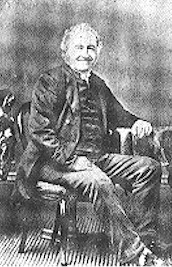
Edward Mote

In our post-modern love of all things new, coupled with the disregard, if not disdain, of all things old, I hope that some of the wonderful contemporary Christian music will still be sung 200 years from now.

You know that I walk most mornings and try to both pray and listen to God during that very quiet time. One of the half-dozen songs that I regularly sing (very quietly) to myself as I walk is the hymn My Hope Is Built On Nothing Less, written by Edward Mote around 1834.

Edward Mote was at first in the cabinetry business which explains the framing metaphors in the first verse of the song—something I missed completely until I really focused on the words in recent years.

I dare not trust the sweetest frame, but wholly lean on Jesus’ name.   These words still challenge me to think about the other things I construct in my life to give me stability! Sometimes these constructs are quite sweet as the song says, like family, friendships, even church—but all structures constructed from temporal materials by human hands will eventually fail.

Sweet parents die and leave us alone; the best of spouses turns out to be just as human as I am; friends drift away, and even the warmest church fellowship can cool—nothing is the same yesterday, today, and forever, except  Everlasting God!

I love this song because it does not try to dispose lightly of the ‘whelming flood . . .  when all around my soul gives way.  But Mote captured in the words—at least for me—not the inevitable eternal victory with Jesus that will make everything right, but rather the Beistand that is the very nature of Jesus.

Sorry to use the German word, but it is just better than any I can think of in English at the moment. Beistand is literally “standing beside” .  It’s not rescue from the ‘whelming flood, but rather  that Jesus gives—my Hope and stay!  I am not alone—ever—regardless—in spite of!

Jesus came in the flesh and dwelt among us! “I am with you always!”

And what a beautiful expression of the grace of God: When He shall come with trumpet sound . . . dressed in His righteousness alone, faultless to stand before His Throne!  I love the repetition of He, His, His!  It’s all about Jesus—from the Beginning to End—and to the New Beginning!

The music carries the message so well in the chorus: staying on the same note, lifted off the bottom of the scale: On Christ the Solid . . . then climbing one worshipful step up to the Rock I Stand . . . for me a very musical expression of personal  stability in Jesus!

My Hope is built on nothing less than Jesus’ blood and righteousness. . . . that’s my prayer and my declaration this beautiful Sunday morning!

Just a little historical note: Edward Mote was such a faithful minister that at the end of his preaching career, the church wanted to give him literally the keys and title to the church building.  Reportedly, his reply was, “I do not want the cha­pel, I on­ly want the pul­pit; and when I cease to preach Christ, then turn me out of that.”

He didn’t need the security of ownership. He enjoyed the security of faithful Hope!
Read Full Post »

In Savannah, they call it “the Book!”  They are referring to the novel  Midnight In the Garden of Good and Evil by John Berendt, which was first published in 1994. It was a bestseller for 216 weeks on the NY Times list. Many probably remember the story from the Clint Eastwood-directed movie, released in 1997, starring Kevin Spacey as Jim Williams.

Unfortunately, the book version is true!  Williams, a local antique dealer, is tried four times and finally acquitted for the murder of a male prostitute. A voodoo priestess, a local drag queen, and a mad scientist threatening to poison the water system of Savannah are some of the quirkier characters who populated Savannah and are part of the backdrop for the non-fictional novel’s storyline. It’s a quirky, tawdry story, and I’m not trying to send you to see the film or buy the book.

Sherrylee and I are in Savannah for a few days, so we keep bumping into two dark elements that are a disturbing, and I am beginning to think that one may have led to the other.  The term southern gothic is the literary genre to which Midnight belongs .  Macabre , supernatural, and grotesque are words often used to describe the genre. Other well-known authors that have used this genre include William Faulkner, Eudora Welty, Ann Rice, and Flannery O’Connor, who was born and raised in Savannah.

Southern gothic keeps coming to mind as you tour old homes in Savannah because you keep hearing stories of murder, spirits, and voodoo! The cemetery/ghost tours are among the most popular.  We rode past one mansion that has been abandoned by its owner because he is convinced it is haunted.

This strong tradition of dark magic/religion came to America—especially to the southern slave states–with the early slaves from Africa, then blended with other religions and superstitions into a recognizable and now celebrated southern tradition. Have you been to New Orleans?? Much of Mardi Gras tradition comes from this dark and superstitious tradition.

It’s frightening! It’s the garden of evil side of Savannah!

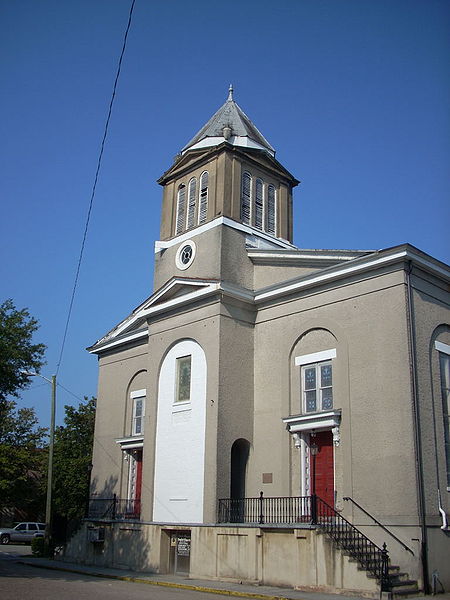
First African Baptist Church of Savannah, GA

On the opposite side of Savannah from the Bonaventure Cemetery is the First African Baptist Church, probably the first Black congregation in North America, dating back to 1773.  The congregation was entirely slaves, including the first pastors. The current building was built by freed African Americans and slaves, brick by brick made and layed after their day’s work for their masters in Savannah.

If you look closely at the floors of the sanctuary, you find small holes—ventilation holes to the built-out crawl space under the floor.  This church building was Stop Two on the Underground Railroad, used by thousands of slaves, attempting to escape to the north to gain their freedom.  They would spend two or three days sometimes under the floor of the church in a four-foot high space, fed and watered through the holes in the floor by other slaves.  At a safe moment in the middle of the night, someone would lead them through a tunnel from the church to the Savannah River, where they would be ferried in a small boat across to South Carolina for the next leg of their dangerous journey.

As I was thinking about the haunted houses, the voodoo, and the southern gothic on one side of this city, I started comparing it to the hallowed house, the Holy Spirit, and the Christian tradition on the other side.  No one lives in the haunted house! The First African Baptist Church is still a living, thriving congregation of Christians—still serving, still loving, still sacrificing for the welfare of others.

When the clouds roll back and the Light comes on and all the deeds of darkness are exposed for what they are, I know which garden of this city I would want to be in!


Read Full Post »

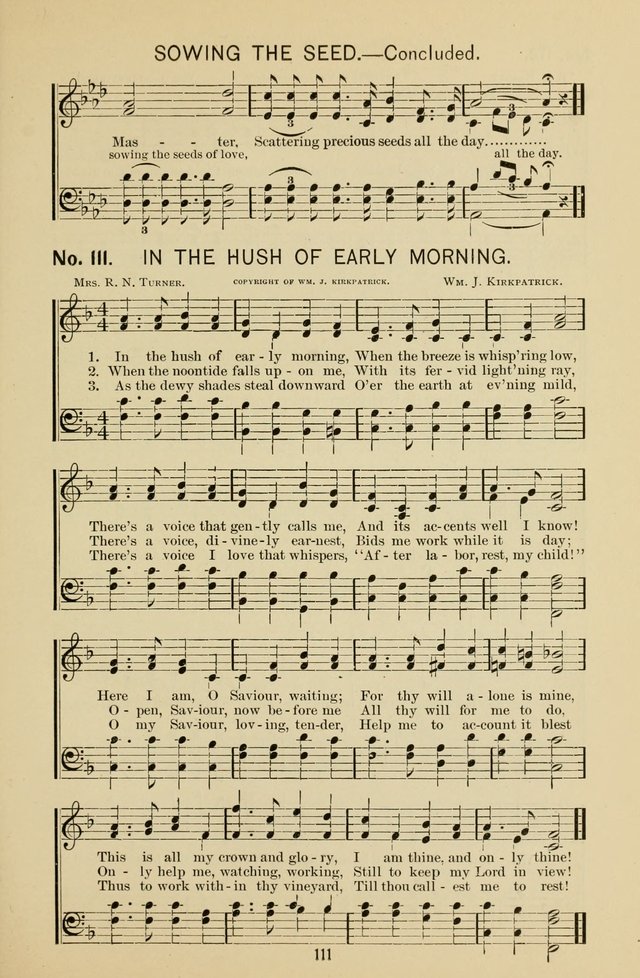
In The Hush of Early Morning!

Every Sunday morning for the four years I was in college at Harding, I got up about 7am, got dressed, and drove an hour and a half to Formosa, Arkansas, where I preached for the Church of Christ there.

Every Sunday morning for four years, at 7am, my radio alarm would go off to wake me up. No buzzer, no rock station. In Searcy, every Sunday morning at 7am the local religious program would begin with a hymn as its program opening.

So every Sunday morning for four years at 7am, I awoke to the following words:

In the hush of early morning, /When the breeze is whisp’ring low,

There’s a voice that gently calls me,/And its accent well I know!

Here I am, O Savior, waiting; For Thy Will alone is mine,

This is all my crown and glory,/I am Thine and only Thine.

Every Sunday morning for forty years now, if it is a quiet Sunday morning, that is, no phone call wakes me, no children crying, no illness requires immediate attention, if it is a quiet Sunday morning, I wake with these words and that soft melody in my head.

Actually, it’s embedded even deeper, because often, when it is not Sunday, and  I get up early to walk, if it is still quiet in our neighborhood, those words come first to mind—sometimes I even sing as I walk.

In a time when even our worship together on Sunday seems to need to be loud and the goal seems to be to pump us up into a holy frenzy, in a time when most of those who aren’t going to church I meet walking are plugged into something that drowns out the quiet, let’s be careful that with all of our self-created noise, we don’t drown out the voice that gently calls us.

Starting Sunday, the Lord’s Day, with quiet surrender: “Here I am, O Savior, waiting; For Thy Will alone is mine”

. . . well, I think I’ll quit talking now and just be quiet for a while longer.

Read Full Post »

We know what idolatry looks like when we see it! We see people bowing before images, lighting incense and offering food for images. Yes, any traveler in Asia has seen this and recognized it immediately as idolatry.

Paul wrote a disturbing note to the Christians in Colossae saying, “Put to death, therefore, whatever belongs to your earthly nature: sexual immorality, impurity, lust, evil desires and greed, which is idolatry” (3:5).

I’m not sure that we would recognize sexual immorality or impurity as idolatry—but certainly not greed!  I’m not even sure we know what greed is! Is greed the desire to make as much money as possible? Is greed having more of anything than we need?  Is greed acquiring something to the detriment of another?

Erich Fromm, a famous psychologist, said “Greed is a bottomless pit which exhausts the person in an endless effort to satisfy the need without ever reaching satisfaction.”  Pretty scary definition in a society that coaches us to never be satisfied, to always want more, earn more, build more, grow more, simply More more!

But if Greed is idolatry, then it must be something akin to what we do recognize as idolatry. Are there objects for veneration?  Do we attempt to obtain our wishes and desires by serving the idol of Greed?  Do we worship Greed but give it a loftier, almost divine name: Manifest Destiny, the American Dream,  Capitalism, Business,  for instance?

Let me tell you a story that helps me put my wants and desires into proper perspective. My dad went to school in Kansas City during WWII to become a radio operator. His first job after receiving his training was with Braniff Airways, maintaining communications with the pilots in the air. It was a pretty good job in those years—especially for a young, single man.

One day he noticed a beautiful apple green hat in a store window, but it was very expensive. He really wanted that hat, so he saved and saved, walking by that store window everyday  to make sure the apple green hat was still there.

Finally, he had saved up enough money to splurge on the apple green hat, so that day after work, he walked into the shop, purchased the apple green hat, put it on and walked out of the store.

Immediately, a gust of wind caught the hat, blew it off his head, and down the gutter hole into the sewer! Irretrievable! Gone!

The moral of the experience for my dad and for all of us children as we heard the story told and retold at home was “Never buy anything you can’t afford to lose!”

Now hearing this story again with more mature ears, I am also reminded that we will lose everything in this world that is not redeemed for eternity.  A simple gust of wind blows everything obtained by Greed into the sewer!

Serving anything other than God is idolatry. Desiring anything more than God is idolatry. Loving anything more than God is idolatry.  

Do you have an apple green hat in your life?

Read Full Post »

I regret that some people think that I have a low opinion of the church. I assume they think that because I have said that we as a fellowship could fulfill the Great Commission better by doing a number of things differently than the way we have done them.  I respectfully disagree with them and want briefly to show you why I think I have a higher opinion of the church perhaps than even those critics.

The church of Christ

In a recent conversation, a group of mission committee members were wrestling with the fact that several of their members had become full-time foreign missionaries without actually being a part of the mission budget of the church.  Many individuals of that congregation were supporting these member-missionaries privately, giving their money directly instead of to their local church. In this particular case, the church mission budget also contributes to these missionaries, so the mission committee certainly approves of and encourages these member-missionaries, even treating them like their own missionaries to a great extent, but still the committee wrestles with the feelings that somehow the individual supporters were bypassing the church’s system and the money given outside of the church contribution was in competition or lost to the church.

Many years ago, Sherrylee and I were new members of a congregation and were looking for something we could do. Sherrylee decided to start a young mother’s class in homes during the week, which met a great need and took off like a rocket.  Several months after this class had begun, one of the elders of the congregation came to Sherrylee privately and began apologizing! He said he wanted to apologize to her for the fact that the church leaders should have recognized this need among young mothers in the church and should have begun this class.  He went on to say how appreciative he was that Sherrylee had taken the initiative to start the class, but now the elders would like to assume responsibility for it and let the staff be responsible for it.

It was all kindly said and well-intentioned—but it broke Sherrylee’s heart because she had seen a need and invested herself in meeting that need, only to have it taken from her and absorbed into the official program of the church.

I believe the church is much more than the official programs of elders, deacons, and ministers. Why aren’t all the activities of the members, done in the name of Jesus the work of the church?  Are we sometimes guilty of thinking that if it is not a budget item, it is not really a work of this local church?

Sherrylee and I have fought for years—usually unsuccessfully—to keep people from describing Let’s Start Talking as a parachurch ministry.  By this, they mean an organization other than the church that is doing work similar to what the real churches do. So what’s wrong with this designation?

We have always argued that everyone involved in LST is a Christian and a member of a local church, so we are also church—not something other than church.  For most of our 31-year history, LST has been officially under an eldership. Only in the last few years was the ministry organized under a board of Christians as opposed to an eldership, mostly because of the size of our budget and because of Internal Revenue Service’s rules.  Still, we are doing everything we do as a ministry to advance the kingdom of God and to help people go into all the world. We are acting as members of God’s church—not as anything other than the church!

So I want to argue that I have a very high view of church and that those who misunderstand this may be locked into a view of church that is defined by bricks and mortar and by staffs, committees, and budgets.

Open the doors of our churches! Empower all members to initiate, to search for areas of service, to solicit others to join them in good works that advance the Kingdom of God!

I am not saying that we should do away with our collective works, but church leaders need to be careful about hearing their top-level decisions as the entire voice of the church.  Everywhere we go, we hear of churches working on getting their members to be externally focused! Congratulations to those churches that succeed in this worthy goal without it being controlled from the board room!

I love God’s church! 

Read Full Post »

Just got back from taking four of the gkids to the Friday children’s matinee where we saw Despicable Me (2010, PG), which was a surprisingly good film. Somehow we had heard a bad report on it when it first came out, so had avoided it. I loved the little minions, but especially the transformation of one of the villains. Did everyone else think that Vector was supposed to look like Bill Gates??

Anyway, it reminded me of how helpful recommendations for kid films are, and since we have been doing grandkids now for a week and have seen several, I thought I’d give you a short review of several current movies playing.

Cars 2 (G) was entertaining for all of the grandkids, but the younger ones (4-6) lost interest several times.  This sequel brings back characters like Lightening McQueen (Owen Wilson) and Mater (Larry the Cable Guy) from the first movie, but introduces new British car-characters Finn McMissle (Michael Caine) and Holley Shiftwell (Emily Mortimer) for the James Bond – like plot.  In the spirit of Wall-E (2008), this film has an eco-message about oil and alternative fuel, but don’t worry because this message is totally lost on all the children.  It does open good conversations about the need to adapt to different cultures and about the value of every person’s culture—even if it doesn’t seem like culture at all.

Super 8 (PG-13) As you probably have heard, this is a nostalgic piece by J.J. Abrams and Steven Spielberg, so it is everything you hoped it would be.  I have described it to friends as a mix of Stand by Me (one of my favorite films ever!), Goonies (one of our kids’ favorite films ever), and E.T. (one of everyone’s favorites ever!), so how could it go wrong.  The children are the stars, the government men are the bad guys, and the alien is the victim.  I’m sure the PG-13 rating is for bad language (just like Stand By Me and Goonies) and for some pretty heavy emotions (just like ET).  I would pay attention to the age recommendations on this one, but for teens and you adult kids, you’ll love it.

X-Men: First Class (PG-13) The whole X-Men series has been especially good for a superpower series. For the most part, it has avoided silliness and has maintained some level of real human emotions to carry the characters. Hugh Jackman, the best of the X-men, only has a cameo in this prequel, but even that is done well.  Those of you who have seen the others will enjoy learning the backstory of Professor X and Magneto.  For those who need a redemptive message to enjoy this kind of fantasy, the ongoing conversation about “others” is more significant in this film than in previous four X-men films, i.e., how the society treats people it deems to be different. If you can’t generate a meaningful conversation with your teens from this film, then you weren’t paying attention!

I have given up completely on the Pirates of the Caribbean series. I really like Johnny Depp, but these films deep sixed about two sequels ago! We won’t be seeing Mr. Popper’s Penguins either because Jim Carrey’s films of this genre are the same exaggerated gags over and over again.

Harry Potter: Deathly Hallows 2 comes out this week. Sherrylee doesn’t like the Potter films, so I’ll probably go with someone else, but I have intentionally avoided seeing Deathly Hallows 1, so I could see the whole finale at once. I’d love to see it at an IMAX.  We certainly will take the kids to see The Smurfs and I hear good things about Green Lantern.

Just for you adults out there, I think Midnight in Paris looks like it could be the movie that brings people back to Woody Allen. Many of us who were fans of his earlier films have yearned for something truly interesting and intelligent instead of what he has offered over the last couple of decades: quirky and off-color.

Any word on Captain America: The First Avenger?  I usually don’t care much for revenge films, but I have not really seen what the storyline is yet.

Our grandkids loved Hansel and Gretel which we downstreamed on Netflix, and they loved the Yul Brenner – Deborah Kerr version of The King and I (1956). Anna designated it her now most favorite movie! But she prefers the original name Anna and the King of Siam. That’s a pretty big award for a classic film from an eight-year-old!

Hope that helps you in your summer film watching. I’ll try to update as we see more.

Read Full Post »

In the last two weeks, the Dallas Mavericks have won the NBA Championship,  school  vacation has started for all of our grandkids, summer movies have started coming each week—we saw Super 8 and thought it was great fun—and with the help of a robot, I had surgery and have recovered enough to have enjoyed Father’s Day yesterday with all of our Texas family!

Many, many thanks to Craig Altrock, who graciously provided some wonderful thoughts on and from Psalm 119. Craig and his family will be returning from Rwanda soon, where they have been involved in a Let’s Start Talking Project.

And thanks for allowing me a short break.  I want to get back to “Re-Thinking Missions” and reply to some of the responses that I have come from those of you engaged in this conversation.  I also want to do some writing about Leadership, especially church leadership.  Then, I look forward to sharing with you everything from movie reviews to the results from Grandkids Camp (July 1).

The Swedes have a proverb that says, “A life without love is like a year without summer!”   That’s pretty good, except I lived in northern Europe enough to know that they do have years without summer.

So let’s end with the poet William Carlos Williams saying, “In summer, the song sings itself!”

Read Full Post »

Opening Night of the Pepperdine Bible Lectures is why it is still alive when virtually all other Christian college lectureships have faded!

Opening dinners start at 4:00pm, one for the women sponsored by Associated Women of Pepperdine and one for the men.  I suspect this gender-divided agenda is a fossil remnant once required so that the many women leaders who raised over $250,000 for Pepperdine last year can stand at the microphone, and so women like Emily Spivey, the dinner speaker for the AWP Dinner, can speak the Word of the Lord as powerfully as the preachers I have heard at the men’s dinner.

No one really sees this as an issue at Pepperdine—because the people who are looking for fights don’t come to Pepperdine Bible Lectures. 

Helen Young continues to grace the dinner and the lectures with her godly presence. She is a continuing inspiration and a link to the past that reminds us that there have always been gracious, forward-looking people in our fellowship!

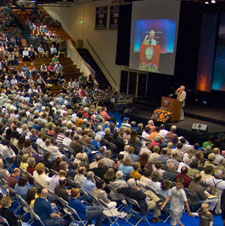
In a matter of minutes after the dinner, I had short conversations with national evangelists from Senegal and The Gambia, with church leaders from Greece, and with Christians from Rwanda and New Zealand. With each of these, we had true koinonia—true fellowship in the gospel—hugged, shook hands, whatever was appropriate and talked about the work of God in their country.  This is why we and thousands of church leaders come to Pepperdine.

I especially loved the moment when Dennis Okoth, an African evangelist of the first order, led the thousands of saints in prayer, beginning with these words, “Brothers and sisters, let us believe and pray!”  Oh, yes! Let us believe and pray!

I don’t know how many people were at this opening service, but I would guess about three thousand, Christians from all over the world and from across the United States. We have already been with friends from Michigan, Georgia, Tennessee, Oklahoma, Texas (of course), Oregon, Washington, and Florida—just on the first day—oh, and California too!

My personal moment to remember though was every voice singing Great Is Thy Faithfulness, the great hymn written in 1923 by Thomas O Chisholm. I was introduced to this hymn by Owen Olbricht in 1966 when I was a part of Campaigns Northeast. We used it as our theme song, so we sang it often. Sherrylee and I adopted this hymn as ours and have certainly sung this song with each other more than any other hymn, I’m quite sure, so to sing it with the Pepperdine crowd was very special.

The theme for this year’s Lectures is “God’s Unchanging Faithfulness” based on the Psalms. The program  variety is huge! The number of classes so many that hard choices are made all week. The singing groups are the best in our fellowship. There is nothing missing from the Pepperdine Bible Lectures.

But what truly sets these lectures apart is a sense of fellowship!  In years past, Christian college lectureships were known for their “Open Forums” where Bible professors would pontificate on every conceivable question.  Other lectureships were known for “defending the faith.”

Make no mistake, the Pepperdine lectures have not avoided the hard questions. On the contrary, probably most “hot” topics are discussed here—but they are discussed in an arena where people are respected, not ridiculed, and where at the end of the day, we join hands across the aisle and sing “The Lord Bless You and Keep You!”  It’s the spirit of a fellowship on the mission field where fellowship is precious—where fellowship is unity!

I’m not sure the lectureship format will last another generation—but if it does, Pepperdine’s Bible Lectures will be the shoulders the future gatherings stand on!

Read Full Post »

I began my last post by imagining that the giant sequoia that fell over three hundred years ago suddenly some Sunday it appeared upright and alive again. What would the world do?

1.            The story would be printed and broadcast all over the world. For about five years, the site would almost rival Disneyland for yearly visitors.

2.            In spite of all the pictures and reports, some would not believe that it was true! (We talked about this in the last post: Fallen Monarch and Faith.

3.            Some people would begin worshipping the tree! Every Sunday there would be a gathering of thousands to talk about life and death and trees. Even hundreds of years later, those who now dance at Stonehenge on the spring equinox would come to California to dance around the wondrous sequoia, now called the Phoenix!

4.            Some would explain it through extraterrestrial powers.

5.            Scientists would immediately start searching for a rational explanation. Investigations of the tree itself would commence immediately. Although the very act defies scientific explanation, prominent arborologists would offer a whole spectrum of speculative explanations for the phenomenon.

6.            And some century in the not-too-distant future, someone would challenge the old story that the tree had ever been dead, suggesting that the more primitive science of the 21st century could not really know if it were dead or not.

You are much too smart an audience to need me to connect the dots for you between the fantastical sequoia story and the resurrection of Jesus.  And we have already talked about why we believe that Jesus is alive, so now let’s talk about something much harder:  how has this historical event changed your life?

Try to finish this sentence: Because Jesus was raised from the dead and is now alive, I ______________.I’ll go first:

1.            I have confidence that his claim to be the Son of God is true. If the resurrection is not a lie, then I become more confident of all that He said.

2.            I believe that if he conquered death, he is powerful enough to do the miracles attributed to him. He can calm the storms, he can feed the multitudes, he can raise the dead.

3.            All the dead people he raised died again! That’s not enough. I once read a fictional account describing Lazarus after Jesus called him out of his tomb and it was not pretty. Lazarus suffered from all kinds of skin and health issues for having been dead for four days.  But to restore life never to be lost again, now that is something I long for. That’s what Jesus has promised, confirming his promise with his own resurrection!

4.            I can live my life now with less fear of death. I do sometimes fear dying—the process is often difficult—but  that is a different fear than one of death as annihilation.

5.            I can approach my own death without a horrible sense of loss—because the promise of resurrection means that everything good, every person I have ever known who has sought God will continue to be a part of my life—forever! All the beauty of God’s creation will be redeemed. Whatever wisdom and truth I have discovered in my life will not be lost, but will be confirmed as God’s own truth—meant to be discovered.

6.            Because Jesus was raised from the dead and is now alive, I have a purpose and a task worthy of spending one’s entire life doing, that is, doing good and telling the story so that it is easier for others to believe that Jesus is alive.  My own resurrection does not depend on any success quota or measurement of skill, rather my own resurrection was accomplished on that Sunday when Jesus rose.

Do not leave this page without having answered the question: What difference does the fact of the resurrection make in your life? 

That’s my gift to you today!

Read Full Post »

Fallen Monarch in Mariposa Grove

After you park in Mariposa Grove in the southern part of Yosemite, you walk past a sequoia that probably fell over three hundred years ago, which today is called the Fallen Monarch. White people first saw it in 1857, but the tree was already on the ground. The bark contains chemicals that help it resist decay, not eternally but for much longer than average trees.

What if next Sunday, visitors to the park came, parked in the parking lot, reading their usual park material, walked to the edge of the parking lot and saw this huge tree standing upright, roots in the ground, leafed out completely, and apparently growing again!  If they ran to tell the park rangers, the rangers would think they were crazy! If they published pictures on Facebook, people who had seen the dead tree would think the pictures were forged.  What would it take to convince the world that this tree that had been dead for 300 hundred years was now alive????

What if over 500 people told you that they had seen the tree alive?  What if they wrote accounts about it and published them on the internet?  Would you believe it then?

I keep thinking about the people who don’t believe that men ever landed on the moon or that JFK is alive on the top floor of Parkland Hospital in Dallas—or that the president was not born in Hawaii. To believe that something is true requires more than evidence; it requires faith!

What happened the day after the resurrection of Jesus from the dead?  I know that the priests and the elders paid off the guards to spread the story that the body was stolen, so whoever talked to them had their disbelief confirmed by “eyewitnesses.”

I don’t know how the high priest explained the ripped curtain in the temple, or how the people in Jerusalem who saw those bodies of the godly men and women who were raised and who had wandered into the city and “were seen by many.”

Even the remaining eleven of the inner circle had trouble believing.  Mark reports, probably as Peter reported to him, that Jesus “rebuked them for their stubborn unbelief because they refused to believe those who had seen him after he had been raised from the dead” (16:14)!  And Thomas held out at least another eight days!

How much harder must it be 2000 years removed to believe that Jesus rose from the grave! But for those of us who do believe it to be true, it changes everything—absolutely everything!

So the question for today is why do you believe in the resurrection of Jesus? If you only give me “evidences,” then I think your faith is vulnerable to rational attack. If your belief, however, includes “the substance of things hoped for, the evidence of things not seen (Hebrews 11:1), then you need have no fear that you’ve been tricked!

God gave life to the tiny seed that fell to the ground 2000 years ago that became the giant sequoia. He was there when it fell over. God is not only the First Cause, He also creates the essential Effect of every cause.  I believe God caused the Virgin Mary to conceive and give birth; I believe that Jesus was killed on Friday, and I believe with all my heart that He not only was raised on Sunday but is just as alive today. It’s my choice to believe. But I can choose to believe because God gives life to tiny seeds!

Next: What does the resurrection on Sunday change about Monday for you?

Read Full Post »

« Newer Posts - Older Posts »