Feeds:
Posts
Comments

Archive for the ‘Uncategorized’ Category

Before we go any further, there are three things I want you to take to heart:

First, only a small handful of people experience personal danger while traveling! Of course, you hear about every single one of them in the news, so it seems like everybody has been victimized! That is just not true.

Second, almost nothing violent is more likely to happen to you abroad than could happen to you at home in the USA. If you don’t believe me, go turn on the local evening news or look at the police blotter in your hometown newspaper.

Lastly, much of what is really dangerous cannot really be avoided regardless of where you are. Earthquakes are dangerous, bombs on street corners are dangerous, hidden snipers looking for random victims are dangerous, violent people high on hard drugs are dangerous—and there is very little you can do to protect yourself against random danger.  By the way, all of the above are events that have happened in the U.S. in 2010, not in some foreign capital. See Point #2 above!

Having set the parameters for our conversation now, let’s look at the things we can do to travel more safely—wherever we are going!

The most common crime that travelers experience is petty theft, so what can you do to protect yourself from petty thieves?

  • Don’t bring anything, don’t wear anything that you can’t afford to lose! And I do mean anything. Let’s assume that you know better than to wear big diamonds or expensive watches, but don’t forget your camera, or your laptop, or your locket that your grandmother gave you, or your new Kindle. Many things you might regret losing, or it might be an inconvenience to lose, but the less you have that is truly valuable to you, the less you have that is valuable to a petty thief.
  • If you must bring something that is valuable to anyone else, keep it out of sight as much as possible. Your new Ipad may not have anything on it and be insured, so you are not worried about the possibility of it being stolen, but just carrying it on the shopping streets or using it in a café or while on public transportation could be more temptation than a watchful thief could stand.  Same for any kind of jewelry. Same for expensive clothes. Same for your passport!
  • There is absolutely no totally secure place to hide your valuables. I know of LST workers who have had money stolen from the bedroom of the home of their host by adult children of the host. I know people who have had the pouches cut that hang from their necks but under their shirt while they were asleep on trains. Backpacks and fanny packs are about the worst places to carry anything of any value; they are easily slit without your ever being aware. Checked luggage is easily opened and searched for goodies (This just happened at a US airport!). If I have a large amount of money or electronics, I will use either the hotel safe or the hotel room safe to store them for the duration of my stay—and even then I’m not 100% confident that it will be there when I get back.
  • Carry on your person only what you must have for that day. The last thing you ever want to do is to pull out a wallet full of your travel money in front of anyone!  This means you have to anticipate what you might spend and only carry that much with you or just a little more. (This is also a good budgeting technique!) Only carry your one emergency credit card—and have the emergency number somewhere else so that you can call immediately if it is stolen.
  • The safest place to carry extra cash, extra credit cards, and your passport is a safety pouch that you wear as a belt under your clothes. Now don’t do this going through security at the airport or you will have to virtually undress. Don’t carry ALL your money there or you’ll have to reveal all just to buy a coke!  Anticipate!! 
  • If someone attempts to rob you, resistance is almost always futile–and often dangerous. Imagine the danger of grabbing them or chasing them or beating them with your umbrella!! Besides, half the time the criminals are little kids or old ladies—and they always work in groups! It is almost never just one person you would have to go up against.  Resisting increases the chances that you might get hurt.
  • Know where the thieves like to hang out and look for victims. If you are staying at a tourist hotel, you can count on there being thieves in the vicinity, also, outside all those places where tourists go, on public transportation that goes to where tourists go, near train stations, and for you missionary types, anywhere that is identified as a place where Americans show up—like churches—is watched for an opportunity!   Now I didn’t say to avoid those places; rather, just be more aware and take less stuff there!

Sherrylee and I have traveled literally hundreds of thousands of miles to many parts of the globe for over forty years and we have never experienced any physical danger from assailants, and we have lost almost nothing to petty thieves—not because we are such vigilant travelers, but just by God’s grace!  It can happen to anyone, any place, any time even those who make the best preparations.  Naiveté, ignorance, or stupidity, however, will not contribute to your safety, so perhaps these pointers will be of help as you travel.

    What else do you do to avoid petty theft when you travel?

    Next: More Traveling Safety Tips

    Read Full Post »

    Sherrylee and I are planning LST travel to Europe soon, so I am buried in airline, train, hotel, and rental car websites!  I’ve done this a lot—especially in Europe, so I thought I might share some tips with you.

    Know what your priorities are for your trip! I usually am juggling two or three different elements:  number of travel days, places that we need to visit, and costs are the big ones. In the last few years, Sherrylee has made me also include rest—probably pretty smart on longer trips.

    Here are some questions to help you rank your priorities.

    • Are your travel dates fixed or are you flexible? If fixed, rank this high; if flexible, you can move it down your list.
    • Where do you have to be? For us, this means surveying potentially new LST work sites or maintaining relationships with established LST sites.  For this next trip, our dates are fixed, so we are limited to how many places we can go to. For that reason, I have already had to make hard choices between established sites and new sites.
    • How much money do you have to spend? If you have more money than time, your answer will be different from those people on smaller budgets or shorter agendas. For LST trips, the answer is always small budget and long agenda—which is why it takes lots of time and research to make it work.  Yesterday I was looking at the cost of trains versus flights between Zagreb and Budapest—which is also a question of how much time we have as well.
    • What are the non-negotiables? We must be in Frankfurt on Wednesday the 17th because we must pickup someone at the airport who is joining us there!  We must be in Rothenburg on the 21st for the start of the American-European Retreat!  Almost everything else is subject to change.
    • What pace can you sustain? We have actually begun allowing ourselves at least a day of rest after the transatlantic flight if at all possible. In addition, rather than trying to be in another place every day—which is how we used to plan these trips—we now allow an extra day in some places, mostly just to pace ourselves.  People who don’t pace themselves often either exhaust themselves to the point they can’t complete their agenda, or they arrive home so exhausted that they lose a week or two recovering from their trip. Your trip will be more enjoyable, if you will pace yourself.

    I then work in concentric circles, from the BIG details to the smaller details. For me, this means buying tickets to Europe and back first!  That sets the boundaries with exact dates of travel.  The only tickets I have bought to date are the flights over the Atlantic.

    Next, I try to book the non-negotiables. For instance, I have made hotel reservations only in Rothenburg so far.  Today, I intend to nail down whether we will spend the night in Frankfurt on the 16th before our guest arrives early the next morning. We probably will, so we will need a hotel not too far from the airport!

    Then, I try to plan an affordable route. Usually it is least expensive to travel in the same direction as opposed to crisscrossing . If you are scheduling meetings with people in lots of different places, this can be challenging, so you have to work on it early, before you start purchasing any of your other travel. I like to fly to the furthest point, then work my way back to the place we will return from.  For this trip, that means flying from DFW to Frankfurt, but going to Turkey first, working our way back through eastern Europe and finishing in western Europe.

    After all of the transportation is set and purchased, then I go back and book hotels and rental cars, where necessary. These seem to be easier to cancel than flights, if something changes—and  something always changes!!

    Next, I’ll talk about useful websites and travel information that might help you, as well as strategies for using them.

    Read Full Post »

    I Love Fall!

    I love Fall season!  No, we don’t have the breathtakingly beautiful colors of Vermont—but we also don’t have the cold snaps that create those colors!  But we do have fall in Texas—usually.  Today the high is 82 degrees with an overnight low in the lower 50s—such a relief from the very, very hot summer that we had this year.

    As I was reveling about fall this morning, I had a few thoughts to share with you today about the fall season of life—where I find myself now in the birthday month of my 63rd year!

    • Cooler days are a relief from hot days! With the absolute and firm exception of God and His Kingdom, I’m relieved not to care so much about the Dallas Cowboys, about the governor’s race, and about reaching Mars first before the Chinese!  If you are still young and passionate about all of these things, you may not understand my perspective here—and I understand why! But all I can tell you is that life is easier if there is less concern with winning and losing every battle. Maybe it allows you to focus more passion on the big ones better!
    • Changes in color can be beautiful! I love the youthful blooms of spring, but I also love the bright reds, yellows, and orange of fall!  My sister who does genealogy told me the other day that this very old person—as compared to just slightly old persons—told her that Woodward men were always very white-haired or bald as they got older. I’m glad that I’m the former—although Sherrylee does like bald men!
    • Some leaves fall early and some fall late. This depends on the tree mostly, but also the fall wind.  We have a pool under several trees. In November it is full of early leaves; in early March, we start cleaning the late leaves.  Sooner or later, all the fall leaves fall—and God is in control of that from beginning to end.  So hurray for the fall leaves that drop in full color—and hurray for the fall leaves that hang on to the very end of winter!
    • Fall is messy! And we love it, don’t we!  All the leaves cluttering the yard, filling the pool, covering the cars.  Our grandkids love to pile the leaves and waller (is that a word??) in the leaves!  The mess is a big part of the beauty of fall.  By the fall of life, there is no doubt that life is messy.  Virtually everyone will have been touched by the messiness of life.  You may have the blessing of living long enough to even come through the other side—and to see joy on the other side of the mess, like the kids in the leaves.  I have.

    Fall is a beautiful time of year!  All the seasons declare His glory. Let’s delight in this beautiful fall day that God has given us!

    Read Full Post »

    LST Pepperdine Moscow Team 1995

    In 1989, LST sent out 58 workers to thirteen sites. Just three summers later, 163 workers read the Bible with people at 27 different sites. Three times the workers and twice the sites in three years, but why?

    As I have begun to describe in earlier posts, I think it was God’s good timing:

    • First full-time employees—both a result of and a cause for growth
    • Great opportunities in former Soviet bloc countries where few had ever gone
    • Greater group of mature, experienced leaders, some new and some alums.

    In addition to these, I believe another factor that contributed to growth was the sudden discovery of LST by the missionaries. LST was such a mom-and-pop ministry throughout the eighties that unless you were a western European missionary, or someone who had met the Woodwards during their mission work in Germany in the 70s, you probably didn’t know anything about LST, nor the unusual method used by LST.

    That started to change in the 90s. Graduated LST alums spread out throughout the world–that’s one reason.  Just like the John Osbornes who carried the LST banner to Japan, others did the same to other parts of the world.

    An OC student named Ty went to Lisbon, Portugal, with LST. He came home to Dallas with a report that impressed his father, who was one of the key mission persons at a Dallas church that was heavily involved in Brazil. Ty’s dad told the missionaries in Brazil that they should invite LST, which they did, which led to the first Brazilian LST project in Rio de Janeiro in 1992.

    Pete and Janine Brazle had been a part of LST most of the 80s, but in the early 90s, they became full-time mission workers in Honduras. One of the first things they did after establishing themselves in Catacamas was to invite LST teams to come.  We had a long conversation with them and others, including June Hendrix, who was also an LST alum working in Honduras, about whether the LST strategy would work in a small community where half the people were illiterate in their own language. We decided to try, and God blessed the work with so many Readers we had to virtually keep it a secret that the team was there lest they be mobbed by people wanting to join the program. That was 1991.

    A recent graduate of Michigan Christian had contact with a missionary in Mutare, Zimbabwe, who because of their friendship invited this young man to bring an LST team there in 1994—our first team to go to Africa.

    One of the great LST stories is about the beginning of the work in East Germany after the fall of the Berlin wall. Gail Mize Nash had gone to Lisbon, Portugal, with an LST team as an Oklahoma Christian student.  She returned, got her Bachelor and Masters degrees in Teaching English As A Foreign Language (TEFL) and married Daryl Nash.

    I approached her one day with the crazy idea of moving to East Germany and starting a language school as a self-supporting  mission point. She got excited about it, talked Daryl into at least exploring the idea, so we took a trip together to East Germany in April 1990—just weeks after the borders had opened.  In spite of overgrown autobahns, totally neglected parks, streets, and buildings, and barely any government infrastructure still functioning, they decided to move there and open the language school.

    The second part of our plan was to bring LST teams into Chemnitz in the summer to help the mission efforts of the school in two ways: first, it would attract new students for the school, and second, participating students would have special access to the LST teams which could build the bridge to faith conversations for the Nashes—and those that worked with them.

    Yes, it wasn’t long until the Nashes hired other teachers to help with the growing number of students in the school . Next, because of the presence of the Nashes and their cadre of Christian teachers, one of the first church planting efforts in East Germany was begun in Chemnitz. Then, as a result of all of these efforts, Larry and Pam Sullivan moved to Chemnitz to work full-time with the emerging church.  I believe that Chemnitz, one of the best and most stable works in Germany even today, has hosted LST teams almost every year since 1991’s initial effort.

    The early stories are all like that. I could tell you about the bullet holes still in government buildings when the first LST teams went into Bucharest, Romania, or the two LST teams we had in Zagreb and Belgrade in 1991, just as the Yugoslavian civil war threatened to break out. These two teams found themselves in two different countries which had broken political ties with each other. We actually had to take the Belgrade team out on a train to Hungary rather than to Zagreb as had been originally booked because of the impending civil war.

    And I must mention the beginning of LST’s work in Thailand in 1995. I believe the connection came about because Patinya Thitathan, the national evangelist working with the Ramkhamhaeng University Student Center in Bangkok had once worked for the Midtown Church of Christ in Fort Worth where my parents attended. I had heard his name for many years. I honestly don’t remember if he approached me or I him, but what I do know is that it has been a great partnership there for many years now.

    Patinya was in my office just days ago, talking about needing LST to help with an emerging work in Laos in the next 2-3 years.

    So these are a few of the stories of the worldwide opportunities that God presented to us in the 1990s. We had no strategic plan for expansion or growth. No, our only plan was to go where we were called and to find others with the same heart and help them go too.

    Next: FriendSpeak, FriendsCamp, and the move to Texas.

    Read Full Post »

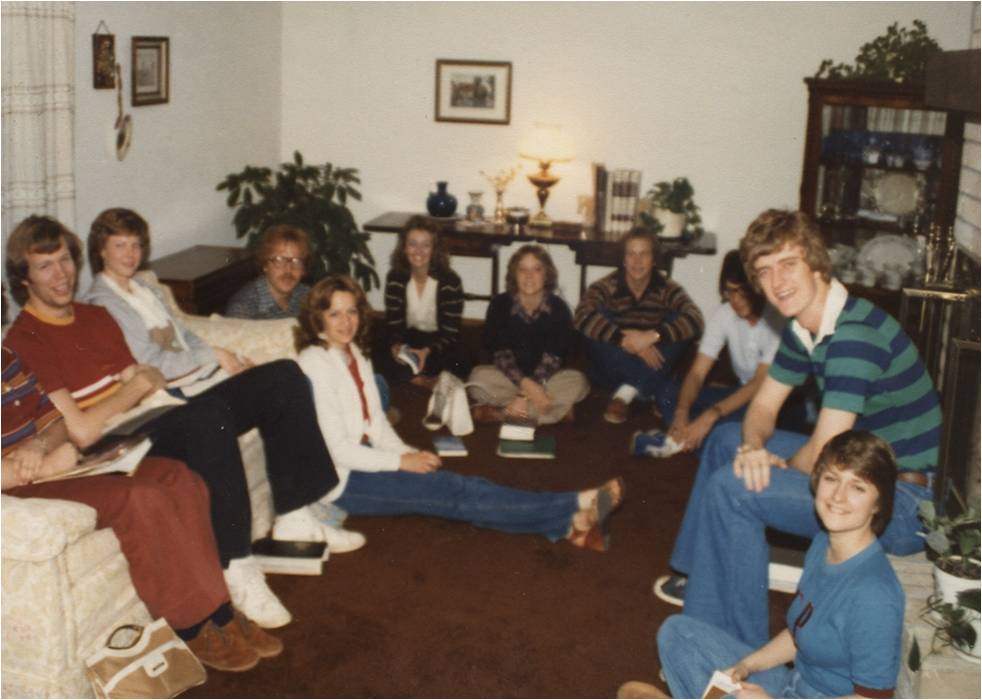
    Project Germany team in Woodward home for training (Fall 1979)

    I’ve heard Sherrylee tell the story many times of how I was sitting in the bathtub and had the ideas that became the core of the LST philosophy, but I think that is creative memory—mainly because I am a shower person, not a bath person! Here’s my version of the genesis of LST’s core philosophy.

    Sometime before we left Germany in April 1979, I read a short article from Glen Jones, missionary in Kiel, Germany, about the power of the Word itself based on John 20:31:

    But these things are written that you may believe that Jesus is the Christ, the Son of God, and that by believing you may have life in his name.”

    I asked myself if I really believed this to be true! And I didn’t know the answer because my experience was all about teaching people what the Word meant, explaining, clarifying, and supplying the missing historical, linguistic, or logical information that they needed to really come to faith.

    Even if we believed that the Word was powerful, how were we ever going to get German skeptics to read the Word? With the exception of a few true Seekers, we knew that the masses were not open at all to reading the Word!

    This was then the moment that God put all the pieces together! What could we offer the Germans that they really wanted? We could not count the times while living in Germany that people had sought us out to practice their English or to help them translate something important to them from English to German. So what if we offer to help them with their English language skills??

    The question that every service ministry faces, however, is how to move from loving service to the Gospel story that produces faith! (This is such a difficult question for many ministries that they simply avoid answering it, sometimes even rationalizing the need for that bridge to faith-sharing as unnecessary. I think that is rowing with only one oar—but that’s a topic for another time!)

    Sherrylee and I talked a lot and decided in the fall of 1980 to try something completely new—at least we knew of no one else doing anything similar at all. We decided to recruit a team of college students to go to Germany with us for eight weeks. Instead of moving from city to city in short campaigns, they would stay in one place to enable them to develop stronger relationships with the people they would be talking with.  They would be a small group (4-6 people) rather than a large group, so that they could function more as a “family” rather than as a tour group and so they would not be such a burden on the small German churches that they would be working with.

    Members of LST First Team: Valerie Kinnell and Chip Kooi

    But the riskiest part of this experiment was that we were going to ask the German church to advertise free English conversation classes and see if anyone would respond. It was very important to us not to trick people into using the Bible, so we had people respond to the advertising by calling a member of the local church who was instructed to always tell them that this group would be using the Bible as the textbook for these conversations.  That’s where we had no idea how Germans would respond!!

    In the fall of 1980, Sherrylee and I recruited ten students from Oklahoma Christian, several of whom had been a part of the Project Germany group that we had led under Ralph Burcham the previous summer. We meet with these ten students weekly throughout the school year, sharing our experiences and knowledge about the German culture and training them to open the Word and release its power in a relational and non-confrontational way.

    One team worked in Braunschweig with the Gemeinde Christi and the other worked in Bremen, Germany, both German churches that Sherrylee and I knew well. The teams lived independently, cooked for themselves, rode public transportation, and made their own schedules—all of which was pretty new strategy for campaign groups at this time.

    The first signs that God was doing something new and wonderful were that there was an amazing response to the advertising and many, many people called, seeking help with their English.  The next amazing discovery was that most of them expressed surprise that they were going to be using the Bible as the conversation guide, in fact, they always asked why; nevertheless, most of the people agreed to register for the program in spite of their skepticism!

    At first our workers tried to just open their Bibles to Luke’s Gospel as the conversation guide, but this really put many of their early Readers (our new term for the people who participated with us!) off, so we decided to cut sections out of Luke and make a little worksheet  with a few little exercises for them each time they came—and this made all the difference! They had no problem reading the same biblical texts if they were part of a workbook of some kind.

    But would this be an effective strategy? The most common opening statement by every person who came that first year was, “Thank you for offering to help me with my English, but I want you to know that I do not believe that anything in the Bible is true! Is that OK?” That’s when we learned how important it was to serve them unconditionally by helping them with their English, forcing us to believe even stronger that the Word was powerful enough to break through this unbelief!

    LST First Team Members Galen and Larale Rawlins (1981)

    At the end of this first summer, we came back to the States and told our friends who had sent us that we had seen a miracle! We had seen skeptical Germans read the Bible every day for weeks with our students. The numbers had grown as the summer progressed, not diminished—which we did not expect—because the Germans loved their experience.  They even asked who would continue the program after the Americans left, so we were able to introduce them quite naturally to the local American missionaries.

    But the real miracle was that some of those same people whose opening sentences were so defensive and skeptical had been touched by the living Word. Now at the close of the first year, in answer to our prayers, the most common summary of their experience that we heard was “I came only wanting to know English, but I got so much more. Now I also know Jesus!” And a few added, “And I believe!”

    They had been changed, and we were changed—and Let’s Start Talking was birthed—although we didn’t know it.

    Next:  The 1980s — Genesis Expanded!

    Read Full Post »

    This is Let’s Start Talking’s 30th Anniversary, which we are celebrating September 25th at our Harvest Call Dinner in Fort Worth. I thought it might be fun to write a brief history of the ministry to this point. Look for a new installment each day until the 25th.

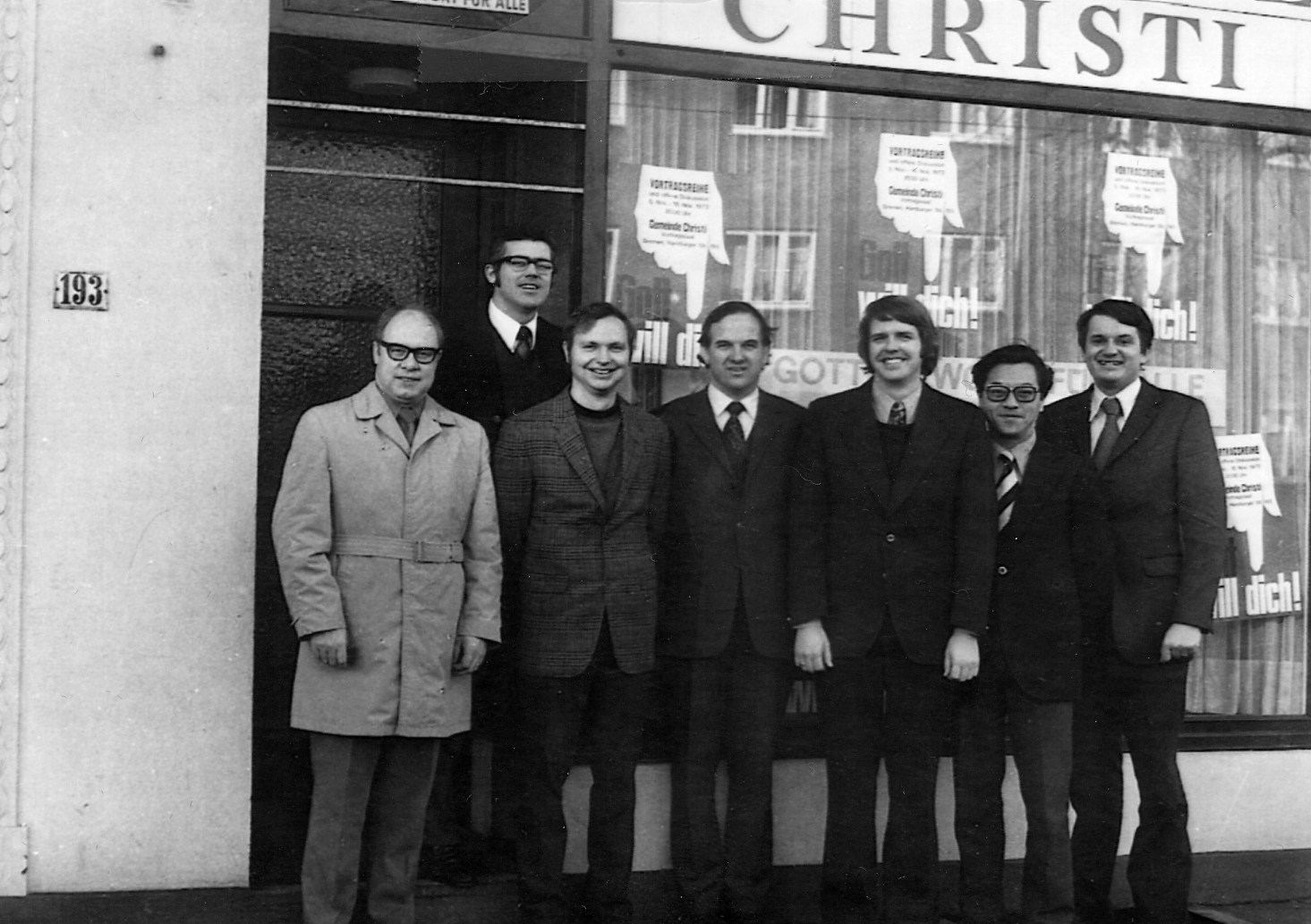
    Mark Woodward with other German missionaries ca. 1976

    I’m pretty sure someone has used the teaching of English in order to tell the Gospel story since St. Patrick returned to Ireland as a missionary in the second half of the fifth century. The first time I encountered this ancient idea, however,  was during the summer of 1966, when I was doing evangelistic work in New Jersey with Campaigns Northeast.  I remember distinctly talking to an older woman with Eastern European heritage who told us that she had converted to the Jehovah Witness faith after they taught her English using their version of the New Testament.

    After graduating from Harding University in 1969 and already committed to leave for Germany with a mission team two years later, I accepted an interim employment offer from the Oxford Church of Christ to be what was called then a campus evangelist. They could not pay a full-time salary, so they offered to pay tuition for graduate school at Ole Miss. I started a program in Psychology, thinking that counseling skills would serve me best in our mission plans. After one semester, however, I realized that this program was all about rats and not people, so I switched to one of my college minors—English. My thinking at the time was that with this degree I would be able to teach English in a foreign country if I ever wanted to do vocational missions, so I finished my Masters degree in English there shortly after Sherrylee and I married in 1971. It’s amazing the way God moves us through life, isn’t it!

    In 1971, Sherrylee and I left with a mission team to work in Germany as missionaries. We were always searching for some way to open new doors to faith for a people who had been inoculated so long with an impersonal form of Christianity that they were pretty immune to personal faith. I heard about a group of Christians in New York City who were offering to help foreign businessmen improve their English and were using biblical texts as conversation pieces.  I actually sent off for a sample of their material, but we never used it.  The time was not ripe—yet!

    In our eighth year in Germany, we initiated an exciting project to start a Christian international school in Stuttgart. Almost a year had been spent in the scouting, planning, and searching for a facility. In February 1979, I even made a quick trip to the states to recruit teachers to begin in the fall. But in March, all of the start-up funding—including our salary—disappeared with one phone call.  Suddenly, we found ourselves in Germany with three children, no income at all—and no clear path as to what to do next.

    We literally had to sell most all of our missionary family belongings to purchase plane tickets back to the states, where we moved in with relatives and sought God’s will. In pretty severe shock at having been torn from our home in Germany–a place and a work that we loved dearly–we looked for any kind of ministry position anywhere in the country. Slowly opportunities started appearing, but something just wasn’t right—but one day God blessed us with nothing short of an epiphany.

    I don’t have a vision of the seventh heaven to tell you about, but what I do know is that on a very specific day, both of us came to the firm conclusion that we had been called to be missionaries—and that nothing had changed about the call—so we were only going to look for jobs that would allow us to continue being missionaries—and to Germany, if possible. Well, that vision shortened the list of potential employers considerably, which actually made all of our decisions much easier.

    As Providence would direct, Oklahoma Christian University had a one-year, temporary job opening for an English instructor. We knew that teachers have summer’s free to do missions; we knew that Ralph Burcham, an OC professor had been bringing students to Germany for several years on campaigns, and we knew that the 12th and Drexel  Church of Christ had supported the work in Germany heavily over the years, so we jumped at the opportunity, interviewed for the job, and was hired for the one-year position—one year that turned into twenty-four!

    Honestly, I can hardly describe the emotions we had during that first year in Oklahoma. We were so happy for the job, but we could not imagine why God had put us in Oklahoma! We were missionaries. The churches were large and did not need us; the friends we made were wonderful, but did not understand us. And we did not understand what we were supposed to do.

    But we knew we were missionaries, so we volunteered during the first semester there as sponsors to go with Project Germany the summer of 1980. These groups did traditional campaigns, passing out invitations to preaching services and some street singing. We did, however, try out one new idea:  we offered to help people practice their English, if they would come to the church building one hour before the preaching started.  Our idea was to get them in the building, hoping they would stay and hear the preaching in German.

    But the response to even this very limited and ill-prepared offer of English was surprisingly strong, so strong that I came home that summer thinking that God is working here somehow. I promised myself to pray and search for a better understanding of what He was trying to show us.

    Tomorrow:  1980/81 – The First Team and the Discovery of LST

    Read Full Post »

    Are you waiting until your children are teenagers before you think about going on a short-term mission trip with them?  DON’T!

    I know what the popular wisdom is here:

    • Young children won’t understand or appreciate the experience, so wait until they will get more out of it.
    • Young children are a pain to travel with.
    • Young children are not really useful, so it is hard to justify the expense.
    • Young children are impossible to fund raise for, so you can’t afford to take them.

    EVERYTHING ABOVE, I BELIEVE TO BE TOTALLY WRONG!

    • The best time for children to experience missions first is when their young minds and hearts are still soft and impressionable–not after their hormones create havoc in them for a few years.  We have 8 grandkids under the age of 8. Only the two born this year and the 3 yr old have not been on a foreign LST project, and most of them have been multiple times. They have friends in Japan. They are not afraid of foreign languages. They know what the grown-ups are talking about when they tell of teaching others about Jesus. They are very disappointed in the years they can’t go.
    • There are challenges to traveling with young kids–but they make little kids suitcases and backpacks.  They will sleep in the airplane seats. Travel is quite a fun game if the parents will invest just a little time to make it so!
    • Children are magnets on the mission field. No matter whether it is Germany or Africa or China or Turkey, adults accompanied by small children find it much more common to get into conversations with people.  I know of 6-8 year olds who have “helped” other children with their English, while their parents read the Bible in English with LST workers.  Children may be the best missionaries ever!!
    • Unfortunately, the previously mentioned misconceptions do make it difficult sometimes to raise money for children to go. We faced this even more strongly back in the 80s, when the Woodwards were starting LST, towing 3 small children behind them. I just dug in my heels and said, we don’t go without them–and tried to educate people on the good a whole family does who goes together. God provided.

    Many, many mission churches do not have whole families. Often only the mother and children come, or only the father, or only the children.  To see a whole family–parents and kids–being Christians together is inspiring to onlookers, no matter what country you are in.

    Your decision to take your children on a short-term mission trip will be one of the best decisions you have ever made!  And when you do it the second time, you will thank God for removing the doubts that you had.

    And your children, when they are young adults,  will put their arms around you and thank you for doing something wonderful that dramatically changed their lives and helped them know God!

    And is there anything in this world you want more than that?

    Don’t wait!

    Read Full Post »

    During my morning walk today, I saw two different mini-vans loading kids with new book bags, new clothes, and big smiles on their faces. At the first house at least, both Mom and Dad were getting in the mini-van, and at the second house, the Mom was saying loudly as Dad closed the door, “And have just a wonderful day,” her voice breaking just a bit on wonderful.

    It’s the first day of school for three super gkids here in North Texas.  It is also the first day of school in Escondido, California, because we have one granddaughter starting second grade today and the other starting first grade.

    I don’t know if I really remember the first day of first grade in the fall of 1953. I do remember some things about first grade though! I went to first grade at Springdale Elementary School in Fort Worth, starting when I was five and turning six in late October. I didn’t go to kindergarten; it wasn’t required, and I think it cost money.

    I was trying to think this morning of what was different on my first day of school from this day for my grandkids. Here are just a few things you might find interesting.

    • There was nothing electronic in our school supply list! The one piece of equipment that I remember owning for the first time was a #1 pencil. They were big and red with very soft lead that wrote very large and very dark lines.  That’s what all kids learned to print with.  They did not have erasers on the end. You had a separate eraser–usually red or green.  I searched for a picture of a #1 pencil and didn’t find any that matched my memory. One more thing to look for in the antique stores.
    • My classmates all had regular names like Ed, Larry, Janice, Betty, Mary—a few double names: Linda Jo, Billy Mac, and one boy’s name was just initials—H.L. –I don’t know if he put periods after them or not.  And I think they were all spelled like you would expect, not in ways that will require life-long explanations.
    • The school was not air-conditioned, which is one of the reasons Texas schools always started after Labor Day. We also stayed until at least 2:30, maybe 3:30. Then we were picked up by my Mom who drove carpool that year and taken home in our air-conditionless Chevrolet. Today, it is supposed to be 105 degrees here in Fort Worth. I’m glad the gkids have air-conditioning.
    • War stamps were sold in our classroom. The Korean War was almost over, but one way the federal government funded the war was by selling war bonds to adults and war stamps to kids at school. I don’t think they cost much and you put them in a stamp book like green stamps and cashed them in later.  I know I bought some. That was back when people always supported the wars that the country was in. Pretty big changes since then!
    • My first grade class learned the 23rd Psalm by memory and recited it to the whole school over the public address system for the regular morning pray. I do regret the disappearance of Christianity from our common life together—but I am not worried about prayer in public schools. As long as we teach our children to pray at home, there will be plenty of prayer at school.

    I loved school from the beginning.  It is important to love learning, to learn to read and write well, to learn history, to learn how things work, but as I have thought about it, maybe the most important thing that our children learn in school is how to live in a community with others.

    Do you remember the book by Robert Fulghum that came out about 1986 called All I Really Need To Know I Learned In Kindergarten? I’m finishing today with just a little excerpt from his book that reminds us of what is really important about school.  This is what you want your child to learn, isn’t it?

    Share everything.
    Play fair.
    Don’t hit people.
    Put things back where you found them.
    Clean up your own mess.
    Don’t take things that aren’t yours.
    Say you’re sorry when you hurt somebody.
    Wash your hands before you eat.

    Flush.
    Warm cookies and cold milk are good for you.
    Live a balanced life – learn some and think some
    and draw and paint and sing and dance and play
    and work every day some.

    Take a nap every afternoon.
    When you go out into the world, watch out for traffic,
    hold hands, and stick together.

    Be aware of wonder.
    Remember the little seed in the styrofoam cup:
    The roots go down and the plant goes up and nobody
    really knows how or why, but we are all like that.

    Goldfish and hamsters and white mice and even
    the little seed in the Styrofoam cup – they all die.
    So do we.

    And then remember the Dick-and-Jane books
    and the first word you learned – the biggest
    word of all – LOOK.

    I would just add,God loves you and God is with you, so make Him happy with everything you do and say.”

    Read Full Post »

    I wrote a guest movie review of Inception for Tim Spivey. Go to his blog if you would like to read it. www.timspivey.com I recommend his blog to you for great articles on church organization and leadership.

    Read Full Post »

    Remember the young missionary couple that Sherrylee and I visited with Sunday evening. In the previous post (http://wp.me/pO3kT-5S), I shared with you some of the insights that I had during our conversation. But, I also promised to share with you the advice we offered that seemed to resonate with them.  Maybe it will for you as well.

    • Treat your team relationships like a marriage. Working on the mission field in a team is much more common than it used to be—and rightly so. However, most teams break up pretty quickly. The reasons for that are numerous—and worthy of its own post—so let me just skip to the conclusion: if you want your team to stay together, then you have to commit to one another like a marriage. If you believe divorce is an option, then you will likely divorce each other. If you do not believe divorce is an option, then you will struggle, but you will prayerfully find ways to make it work because it brings God more glory!
    • Don’t try to be more German than the Germans. When we went to Germany in 1971, I was pretty much prepared to wear lederhosen, eat brotchen for breakfast, and listen to polka music every day for the rest of my life. I knew all about fitting into the local culture. I’m so thankful for the German Christian who told us, “Don’t be more German than the Germans. I eat cereal for breakfast and would not be caught dead in lederhosen!”  Foreigners who over-identify with another culture are still foreigners—and often look pretty silly to the nationals.
    • Don’t pretend you are not an American! The very best missionaries that I know learned how to use their foreignness—their American-ness, if you will—in an attractive way in their new culture. To do this, however, you need a good local friend to help you know what is truly attractive and what is just being an ugly American.
    • Don’t wait too long to come home for your first visit. Our specific piece of advice was to come home for your first visits before you are so homesick that it skews your view of both of your homes. If you wait too long before you come home, then everything about America is too wonderful and everything about your new foreign home is where you were so unhappy! Both of those mistaken views can be avoided by not waiting so long to come home.
    • Read the Roman Catholic Catechism. This couple is going to a predominantly Catholic country, so it would seem obvious that they would want to know about the country’s religion. Surprisingly, many prospective missionaries assume that they will only be telling their own story, not listening to other people’s story.  Reading the primary source (Quran would be another example) is a way not only to learn, but to show respect for your new hosts.

    And I just want to emphasize the value of going to the primary sources. Reading books about other religions always has a sub-plot—another agenda—so you can’t really know that you are getting the real story from them. The same is true even when teachers and mentors “explain” other religions to us. I have often cringed when listening to some self-appointed spokesperson explaining to the media or to a public class what my church believes. I’m sure people in other countries do the same.

    • Don’t believe everything that Americans tell you about your new country. I was once in a European restaurant with an LST team. As I would do at home, I put my napkin in my lap, but one of the LST workers who had been there for a couple of weeks already stopped me and said, “Don’t do that! That’s not polite here.”  I took it back out of my lap, but I then looked around the restaurant and noticed that everyone else in the restaurant had their napkin in their lap!  I turned and asked my friend where they had heard this information, and she said, “The American missionary told us!”  Since then, I have had lots of experiences with American myths about host countries, i.e., one American tells another American who tells another American. . . and either it was not true to begin with or it became unrecognizably altered in the multiple transmissions. 

    I forgot to mention this last piece of advice to the young couple, but it is a short piece of advice that Maurice Hall gave to us back in the 70’s when Sherrylee and I were the young couple, new to the mission field, and asking for advice. Maurice was an early missionary in France after WW II and one of the last missionaries out of Viet Nam as Saigon was falling. He continues today, beyond his 90th birthday, to practice this advice. He said to me, “Mark, don’t quit!” That’s all, but I have found it to be extraordinarily valuable. I have shared that with many, many prospective and experienced missionaries around the world.

    Let me end by sharing it with you: “Don’t quit!”

    Read Full Post »

    « Newer Posts - Older Posts »