Feeds:
Posts
Comments

Archive for the ‘Uncategorized’ Category

My MOOC and My Church!

computing kidI’m taking an online course in Elearning and the Digital Culture from the University of Edinburgh in Scotland.  It’s a MOOC (Massive Open Online Course), and I don’t know whether it is pronounced “Moose” or “Mook” – or maybe not pronounced at all!

Over 20,000 views have been logged in the Discussion board during the first four days of the course. I know some MOOCs have 150,000 or more students enrolled, probably from every country that has internet access in the world.

The course is free!  This one is taught by four professors in Scotland, but other MOOCs are taught by professors from schools like Harvard, Yale, Princeton, Berkeley. In other words, if you have a computer and internet access, then the best world of higher education is open to you free of charge.

At the moment, universities are not allowing students of MOOCs to earn credit toward graduation, but many of them are awarding certificates for doing the work and passing the final exam. Yes, there is real assessment!  Some of the reports I have read say that in certain industries, these certificates are opening the same kinds of doors as degrees.

Before we get to the church, think about what this means for higher education. Remember all the twittering about the morality of student debt! What if there were a free alternative?  What changes will occur in non-industrialized countries when the poorest students can access the best professors in the world?

It’s not just about access to information—because the internet eons ago (relatively) changed modern education by providing students information access without the help of professors.  Professors ceased to be the best source of information—at least of current information, so their role has become that of coach, facilitator, educated mentor, motivator, and quality assessor.

So, Church, what does this have to do with You? Well, it has to do with community, with catechesis, and with common experiences.

In my MOOC, community is created by discussion boards. We will never be in anything but the same chat room at the same time—but it doesn’t make any difference.

Our first week of instruction, so far, consists of several short indie videos to watch and discuss, two peer-reviewed articles to read and digest, and two more articles, less academic but perhaps more effective because they address broader questions with less jargon.  Participation is required and measured, but only evaluated by other students so far.

Most of our churches work on an educational model that is far removed from MOOCs. Think about it:  We leave our homes and go somewhere to sit in pews or some chair and have intermittently successful community experiences. We have very predictable ritualistic acts whose familiarity bring us comfort, but which are a mystery to the uninitiated.  The heart of our most valuable time together is spent listening to the church’s best teacher lecture for 30-40 minutes, during which we expect him not only to instruct, but to inspire, motivate, admonish, and/or convict somebody.

Amazingly, this model continues to work well for some but that number appears to be shrinking. What I am asking is this:  how much longer will it work for anyone??

I just left my first-grade grandson at home, doing his homework on the computer. He had headphones on, listening to the audio information while watching professionally produced instructive video—which certainly did not last longer than 5 minutes!  His teachers don’t lecture. Our third and fourth grade granddaughters both received iTouches from their elementary school with which they communicate with classmates and their teacher 24/7.

My grandkids and your children, including your current teenagers, don’t learn anything the same way we did!  What makes us think that they will learn to love God and love His Church and Love His Word and Love their Neighbor from teaching models that they only experience in church for a couple of hours a week at best.  What are we thinking??

Here are some of the challenges:

  • Will churches be able to distinguish between divinely inspired and familiarly required?
  • Will the first who seek to change be burned at the stake?
  • How much critical mass will be lost before churches are forced to consider other models?
  • Who will have both the courage and the wisdom (not just knowledge) to even know how to restructure the church’s model of instruction?
  • Will the church finally begin to find a working model, only to realize that learning styles have continued to evolve and have moved on down the road?

Churches have managed to survive with this model through Generation X, but we are struggling to retain Gen Y or Millennials.  We don’t even know what the game is yet for the Gen Zers (born after 2000) because they are still too young.

I know they will tell us—but will we understand what they are saying?  And will we listen?

 

Read Full Post »

I watched the President’s State of the Union speech last night. Very intentionally, President Obama framed his more controversial and political proposals with non-controversial, military bookends. He started with the removal of troops from Iraq and finished with the elimination of Osama bin Laden.  At every mention of the troops with their sacrifices and victories, both sides of Congress and all visitors stood and applauded.

 If there is one thing upon which Americans generally agree, it is that the country stands behind the troops on the ground!  Even when we disagree over why they are there or how long, no one ever goes on record saying our soldiers did a terrible job!

I couldn’t help but wonder if the American church of Christ feels that same way about its boots on the ground! I’m talking about the foot soldiers we send out to combat the kingdom of darkness all over the world—aka missionaries.

Times were when these soldiers of the cross seemed to be highly respected.  Missionaries like McCaleb, Shewmaker, Benson, and later Gatewood, Hare, and Bixler were well-known names with heroic stature in our churches.  Because of the big splash the Brazil team made in the early sixties and because of their innovative approach, they too continue to enjoy notoriety, especially in older, established churches.

I wonder how many of us can name five missionaries that have entered their field in this millennium—or even the last quarter century?  Unless you are on a mission committee that sent some recent workers or a teacher of missions, or working in a missions organization, I’m afraid of the results!

Our churches are still committed to missions, and we are still sending out new missionaries, so what has changed?  Here is a short list of some of the things I fear have reduced our enthusiasm for the troops:

  • Because it is now more expensive to go abroad than to work at home, churches are choosing more domestic mission projects.
  • Also because of economics, churches are choosing to support national preachers instead of Americans. National preachers are viewed as requiring much less support, no travel funds, and no benefits!  What a deal!
  • Foreign mission work is seen more as a competitor to local work. This sometimes has economic roots and sometimes geo-political.  When the nation is tired of foreign entanglements, the church becomes tired of them as well.
  • Because of fewer services per week, i.e., many churches only meeting Sunday morning for a general assembly, with other meetings done in classes or in homes, fewer are willing to open their pulpits for missionary reporting.  The average member in the pew has very little exposure to the work and sacrifice of current missionaries.
  • Mission work is low on the ladder of ministerial respect.  Fairly or unfairly, one hears the comment that people go to the mission field who can’t make it or who don’t want to fit in at home.   Test yourself: rank in value to the kingdom the following types of ministers:  mega-church preachers, small church preachers, youth ministers, campus ministers, worship ministers, church planters, and foreign missionaries.
  • A nineteenth-century attitude toward foreign missions predominates, which says missionaries should go to third-world countries and live in poverty, working only with people who are physically needy.  Interestingly enough, as Africa has become one of the most Christian continents on the planet, it has become an even greater magnet for American mission work! If there are more Christians in Africa than in the United States, perhaps American missionaries should be choosing to go other places. (I’m not saying that we should not continue to aid African Christians in their work. American Christians still have much more wealth than African Christians.)

This list is certainly not exhaustive, but perhaps will stimulate the conversation about missions among us.

I would love to see the day return when foreign missionaries are greeted with standing ovations, when churches line up to invite them to speak of their work, when mission committees bang on the doors of Christian colleges and missions organizations, looking for good people to send to their mission points.

What can you do to raise the stature of those soldiers of the cross who serve faithfully and sacrificially in the spiritual battlefields of this world?

Read Full Post »

A Last Prayer for 2012

top-10Each year during the days between Christmas and New Year’s, I like to publish the ten posts from the previous year that more of you read and shared with others.  This gives me a break during the holidays and gives you a chance to catch up with something that you might have missed.  Or you might remember a certain post and want to share it with others now. Or you may just want to see what others are reading.
No matter what you do with them, I have only hoped that my words and thoughts have stimulated you to think–and maybe even create yourself.

Please feel free to comment on these posts as well. Your comments are always welcome and always stimulating.

Here is my prayer for you which I found here and have reworded a bit to make it appropriate for us:

Come, long-expected Jesus. Excite in us a wonder at the wisdom and power of Your Father and ours. Receive our prayer as part of our service of the Lord who enlists us in God’s own work for justice. 

Come, long-expected Jesus. Excite in us a hunger for peace: peace in the world, peace in our homes, peace in ourselves. 

Come, long-expected Jesus. Excite in us a joy responsive to the Father’s joy. We seek His will so we can serve with gladness, singing and love. 

Come, long-expected Jesus. Excite in us the joy and love and peace it is right to bring to the manger of our Lord. Raise in us, too, sober reverence for the God who acted there, hearty gratitude for the life begun there, and spirited resolution to serve the Father and Son. 

We pray in the name of Jesus Christ, whose advent we hail. Amen

Read Full Post »

Out of the stump of David’s family will grow a shoot—
    yes, a new Branch bearing fruit from the old root.
And the Spirit of the Lord will rest on him—
    the Spirit of wisdom and understanding,
the Spirit of counsel and might,
    the Spirit of knowledge and the fear of the Lord.
He will delight in obeying the Lord.
    He will not judge by appearance
    nor make a decision based on hearsay.
He will give justice to the poor
    and make fair decisions for the exploited.
The earth will shake at the force of his word,
    and one breath from his mouth will destroy the wicked.
He will wear righteousness like a belt
    and truth like an undergarment.

In that day the wolf and the lamb will live together;
    the leopard will lie down with the baby goat.
The calf and the yearling will be safe with the lion,
    and a little child will lead them all.
The cow will graze near the bear.
    The cub and the calf will lie down together.
    The lion will eat hay like a cow.
The baby will play safely near the hole of a cobra.
    Yes, a little child will put its hand in a nest of deadly snakes without harm.
Nothing will hurt or destroy in all my holy mountain,
    for as the waters fill the sea,
    so the earth will be filled with people who know the Lord.

In that day the heir to David’s throne
    will be a banner of salvation to all the world.
The nations will rally to him,
    and the land where he lives will be a glorious place.

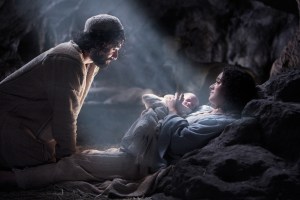
Nativity Interestingly, just about a month ago, I wrote about this passage in a blog entitled “The Story of A Dead Tree.” You might want to go back and read that today, although it was written more with the divisiveness of the November election in mind than the Advent.

On the other hand, Jesus was born into a world where Jews hated Gentiles, Jews hated Samaritans, Jews hated Romans, and everyone hated Jews.

He was born into a world where his own disciples wanted to call down fire from heaven on those who opposed Him.

He was born into a world where a ruler ordered all the boy babies killed to protect his throne.

He was born into a world where he and his parents became refugees in a foreign country for fear of their own lives.

He was born into a world where a friend would betray him for 30 pieces of silver.

He was born into a world where his cousin would be beheaded to please a dancing girl and her mother.

He was born into a world where the religious leaders tried to protect their own power by killing someone again whom Jesus had raised from the dead rather than acknowledging the miracle of his resurrection.

He was born into a world where most people just came for what they could get from him—like food or the thrill of seeing something miraculous—but who all abandoned him when he needed them.

He was born into a world of beggars, unclean lepers, self-righteous priests, hypocrite teachers of the law, second-class women, slaves, political oppressors, zealots, traitors, murderous politicians, extreme poverty, rampant divorce, abortion, perversion, pedophiles, famine, the occult, terrorists, false messiahs–a world much like ours.

And his birth set in motion the fulfillment of this prophecy of a peaceable kingdom  in Isaiah 11.

And someday, when justice is complete, when peace and harmony reign, and when every knee bows to confess that Jesus is Lord, “the land where He lives will be a glorious place.”

On this the last Sunday before Christmas, as you break bread and take the cup, remember the baby, the heir to David’s throne, who became the “banner of salvation to all the world.”

Come, Lord Jesus.

Read Full Post »

On this first Sunday of Advent, I want to begin a series of advent thoughts. No other historical event has affected the entire world as has the birth of Jesus in Bethlehem.  Even if Christians have used the wrong date, according to Pope Benedict (CNN 11/23/2012), the fact of his birth is not disputed.

Four themes inspire the common Christian celebration of advent: waiting, preparation, light in the darkness, and the coming of the promised Messiah.  These are the themes I want to look at on each of the four Sundays of advent. I hope you’ll be blessed with these thoughts.

simeonFirst Sunday   of Advent – Waiting
Scripture:  Romans 13:11-13 (NLT)

11 This is all the more urgent, for you know how late it is; time is running out. Wake up, for our salvation is nearer now than when we first believed. 12 The night is almost gone; the day of salvation will soon be here. So remove your dark deeds like dirty clothes, and put on the shining armor of right living. 13 Because we belong to the day, we must live decent lives for all to see.

Luke concludes his story of the birth of Jesus with the presentation in the temple, according to Jewish law, eight days after his birth.  As the holy couple was entering the temple with their newborn child, they are confronted first by the prophet Simeon, who had been told that he would see the Messiah before he died. “He was righteous and devout and was eagerly waiting for the Messiah to come . . . . (2:25).

We live in the day of immediate gratification. Computers don’t run fast enough, information isn’t accessible enough, and our wants and desires can’t be satisfied quickly enough.

What if someone told you—with certainty—that the whole reason for your existence, the fulfillment of your life’s purpose, would not happen until you were very old!  No matter how impatient you were, you would have to wait—just wait . . . .keep waiting . . . .not yet . . . not now . . . just wait.

Think of everything unanticipated that might change the plan . . . no, just wait.

What if the plan doesn’t work? . . . .no, just wait.

What if the plan was just a myth?  . . . no, just wait.

What if I mess the plan up? . . . no, just wait.

Simeon waited his whole life, then held baby Jesus in his arms and praised God:

Sovereign Lord, now let your servant die in peace, as you have promised.30 I have seen your salvation,31 which you have prepared for all people.32 He is a light to reveal God to the nations, and he is the glory of your people Israel!”

I love how Anna the prophetess responded moments later, when she realized what Simeon was saying and what it meant:    . . . she began praising God. She talked about the child to everyone who had been waiting expectantly for God to rescue Jerusalem.”

We Christians believe that the wait for God to come down to man is over!  We wait no more for the Promised One. We do not wait for salvation? In Jesus, the Creator of the Universe has completed His work of redeeming what was destroyed by Sin.

But we are not finished waiting! And we wait with the same certainty that Simeon and Anna waited.

God has not waited. The end of the story is written. Only we wait . . . confidently . . . while praising God . . . and telling everyone . . . while we wait!

You may want to sing this song . . .  while you wait:

Come, Thou long-expected Jesus
Born to set Thy people free;
From our fears and sins release us,
Let us find our rest in Thee.
Israel’s Strength and Consolation,
Hope of all the earth Thou art;
Dear Desire of every nation,
Joy of every longing heart.

Born Thy people to deliver,
Born a child and yet a King,
Born to reign in us forever,
Now Thy gracious kingdom bring.
By Thine own eternal Spirit
Rule in all our hearts alone;
By Thine all-sufficient merit,
Raise us to Thy glorious throne.

Read Full Post »

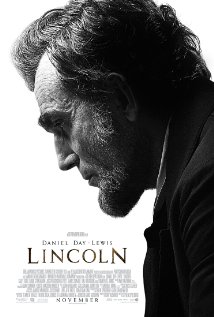
Lincoln (2012) is one of the great films, so be sure to see it! But it won’t make everyone happy. The film is long (2hrs 29min), mostly dialogue with very little action, and is definitely a period piece. But for all of these same reasons, you should see it!

Lincoln, who generally ranks as the most influential president in our history, has been ubiquitous in cinema since its beginning, only a generation removed from his death.

The 1908 film The Reprieve: An Episode in the Life of Abraham Lincoln is the first known film to portray him, one which tells the story of Lincoln sparing the life of a union soldier who falls asleep on duty, a story re-told many times in later films, and to which Steven Spielberg pays homage when his Lincoln deliberates over the sentencing of a soldier for desertion.

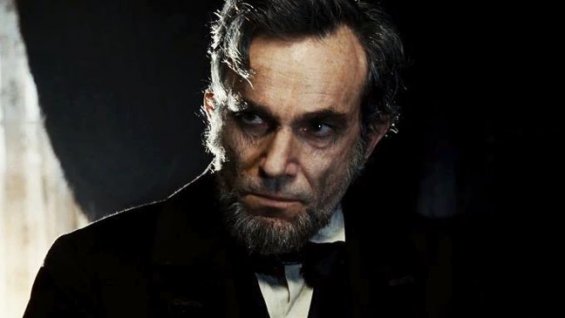
Henry Fonda was perhaps film’s first great Lincoln. His performance in Young Mr. Lincoln(1939) set a high standard, but then Raymond Massey’s Lincoln in Abe Lincoln in Illinois (1940) set the insurmountable standard most thought.  I would argue that Daniel Day-Lewis’s portrayal of the president has eclipsed both of these earlier giants.

Not only does Day-Lewis truly look like Lincoln, he speaks like him! When the first TV trailers came out, many were astonished to hear the high, tinny pitch of his voice as opposed to the more sonorous tones of Raymond Massey. Day-Lewis’s portrayal is more accurate and, once one gets over the initial dissonance, is more humanizing.

Henry Fonda as Young Lincoln

This Lincoln is very human: he stoops when he walks because he is so tall; his hair is disheveled and unruly; his grammar is hardly educated or refined, but these are just the superficial qualities that betray his humanity.  I love the scene when he lies on the floor by his sleepy young son Tad (short for “tadpole”), so that his son can crawl on his back and ride horsey off to bed.  I love his buggy ride with his wife and his stoking his own fire in his White House office—all as authentic as Steven Spielberg could make it.

I’ve read that the ticking of his pocket watch is truly the ticking of Lincoln’s actual watch; the sound of his carriage is also authentic, recorded from the sounds of a still-existing carriage of his.

Where Day-Lewis’s Lincoln excels, however, is in his ability to portray both the down-home and the imperial Lincoln!  No scenes are better than when Lincoln is telling a bathroom joke to a small crowd—he can’t help but laugh at his own jokes—except perhaps the brief scene when he stands and thunders, “I am the President of the United States and I am cloaked with tremendous power!”  To be able to capture the man who won the hearts of a nation and at the same time sent many of the sons of his people to their death in a brutally bloody civil war is a historic piece of acting. Daniel Day-Lewis is the new standard bearer.

Raymond Massey as Lincoln

You will also enjoy Tommy Lee Jones’ portrayal of Thaddeus Stevens, the Great Commoner, who was offensively common. Jones is perfectly cast for the part and rises to Oscar level in his supporting role.

You may or may not like Sally Field as Lincoln’s mad wife.  She is not a sympathetic character. If anything, Sally Field is overly sympathetic.  I thought she did a marvelous job portraying the damages of civil war on the president himself and his family.

The visual representation of the White House and of the chambers of the House of Representatives will take you to a different place in time. Again, absolute commitment to authenticity and a decade of research by Spielberg produced an intimacy in the film that is not typical. The low lighting of so many scenes—because it was winter in Washington—as well as the cramped spaces create the reality of the time.

I saw tears in our theater as you may also see or shed yourself because the 13th Amendment is being passed every three hours at most of the theaters in the US. We  witness the beginning of the journey to racial equality, one which we still find ourselves on, and we watch the moral courage of Lincoln with nothing and no one on his side—and we watch him win! And we are reminded that we all are better people because of his courage and determination.

Of course, he dies.  If you are interested in the assassination and its aftermath at all, you must see The Conspirator (2010), also an excellent film.

Daniel Day-Lewis as Lincoln

As the film concludes, audiences applaud—at least they did in our theater!  I did.

Lincoln is a brilliant reminder of other days of great dissension—even greater than today–but also that one man can make a difference if that man has vision, courage, and uses all he has been given to accomplish what is right!

Read Full Post »

Image

Image

Read Full Post »

Sherrylee and I are taking a week of vacation, so I am going to use the opportunity to post some of my early blogs that many of you have not seen.  I hope you find them helpful and interesting.

From August 24, 2010

As I was writing, I was reminded of my sister-in-law Janet, who lived with her family in a pretty rough part of New Jersey for many years. Her children grew up walking and riding public transportation through city parts that would frighten lots of parents in more suburban settings.

She made it a practice as they walked out the door into the challenges of their world to arm her children with these words: “Remember your baptism!”

I was talking to a very good Christian friend recently, who was describing to me moments of doubt, doubt about whether he was good enough, doubt if he was the example he wanted to be to others, even a hint of doubt about his salvation.  He is sometimes angry about how his parents raised him to believe, and he is definitely angry about the great sense of guilt and eternal uncertainty that he received from the church he grew up in.

In an attempt to help this friend, I found Janet’s words to be perhaps the most appropriate thing I could say: “Remember your baptism.”

If you don’t really connect with these words, I suspect you grew up in the same kind of church I did, where baptism was unintentionally perverted.  Without impugning what was taught because we don’t always hear what was intended, here is what I learned about baptism:

  • The ritual act of baptism is what is most important.  This had to be because our preaching was all about immersion over any other form, about the age to be baptized, and occasionally about the words that were spoken by the baptizer. If any of these ritual elements were tainted, then most likely, the baptism was not effective. I have seen people baptized again because their arm did not go under the water with the rest of their body, because they were too young to understand everything they needed to understand, and because the person who baptized them did use the triune formula, rather just baptized in the name of Jesus.
  • Baptism was a rite of passage. You had to be 11-12 years old—anything younger and you were suspect. At baptism, you became a member of the church—which, if you were a boy, meant you could not only take communion, but serve communion and lead public prayers.  Girls could only take communion.
  • Baptism separated the saved from the unsaved.

At this point, you may be surprised to hear me say that I still have a very high view of baptism. I might even say I still believe the above—just much differently. Let me explain:

  • The biggest change in my theology of baptism is an understanding that it is all about what God does in baptism and less about what we do. Rather than “getting baptized” which is how it is generally described where I go to church, I wish we would talk about “receiving baptism” as I’ve heard in other churches. The first emphasizes the initiative and activity of the person, the second is more passive. The person is the recipient of the grace, created and extended by God through Jesus, separate and apart from anything we might do to earn it.
  • The symbol of burial and resurrection inherent in immersion is indisputably connected to the meaning of the sacrament. If you mess with the symbolism, you start opening doors to new understandings of the rite.
  • I still believe baptism is a rite of passage, but of passage from darkness to light, from blindness to sight, from carnal to spiritual, from the old man to the new, from the old creature to the new creation, from death to life.

So, here’s the BIG question: does baptism separate the saved from the unsaved? The real answer is that the blood of Jesus separates the saved from the unsaved. He died to destroy Sin and was raised to bring Life.  As Paul said in Romans 6, those who participate in His death will share in His resurrection. Paul says, “Remember your baptism!”

  • Remember that you have been redeemed by the blood of Jesus.
  • Remember that your old life was buried in the tomb with Jesus.
  • Remember that you are new—not old or refurbished–resurrected!
  • Remember that you are not your own. You were bought with a price.
  • Remember that on the day of your baptism, God worked the miracle of salvation on you.

God says in baptism that He is for you!

And if God is for you, who can be against you?

That should be enough to get you through your day!

Read Full Post »

I just spent a couple of days on the campus of Ohio Valley University, a small liberal arts university established by Churches of Christ over fifty years ago in Parkersburg, West Virginia.  In spite of its longevity, many members of Churches of Christ have probably never heard of this college because it is far removed from the mother lode of churches in the Bible belt states and because OVU does not really compete for students with the bigger universities like ACU, Harding, Lipscomb, Pepperdine, Oklahoma Christian, and Lubbock Christian.

It’s been a bad season for our smaller colleges/universities. Western Christian in Regina, Canada, just closed permanently. Not long ago Columbia Christian/Cascade College in Portland, Oregon, took down its flag.  York College (York, Nebraska) went to the brink, but seemingly has turned the corner and is resurging—for which we should all be very thankful!  These smaller institutions serve the fellowship of churches in a very important way:

  • They often serve students in areas where churches of Christ are not numerous. Educating their students in this areas reduces the number who migrate to the Bible belt—which just makes those smaller churches even smaller.
  • They serve students who want or need a more intimate environment for higher learning than they would get even at our larger institutions. At OVU, I spoke to two  first-year classes with six students in each one and one upper level course with about 15. (Of course, smaller classes are both a blessing and a curse for these schools who depend heavily on student tuition for survival.)
  • At smaller schools, a student can be on the soccer team, sing in the choir, be in a social club, be in student government, and be a part of a LST mission team that makes plans to go to China!
  • At smaller schools, students receive more personal mentoring from their professors and from the school staff. At OVU, the Executive VP leaves his door open for students to pop in when he is there. There is no secretary between him and the students. I could not get a seat in Harry Ogletree’s office, the dean of Spiritual Formation, because there were so many students hanging out in there. The professors attended a student-organized variety show and ate among students in the cafeteria on Octoberfest night while I was there!
  • I met with the Academic dean Jim Bullock and the director of International Studies Steven Hardy and no matter which student’s name that I mentioned, they not only recognized the name, but they knew the personal story of that student. I was very impressed.

Sure, there are academic programs, social activities, and other experiences that a small school like Ohio Valley University cannot offer, but for many students, not only Christian students, but also others who want a strong, faith-based education, a school like Ohio Valley University provides a uniquely appropriate environment for growing in wisdom, stature, and in favor with God and their community.

One more observation:  Dr. Harold Shank, a great preacher and scholar, is the new president of Ohio Valley University. He left a faculty position at Oklahoma Christian because he is from the Northeast and feels a special calling to minister to and support the churches in that region. He and Sally bring an unsurpassed passion to a very difficult task, but great people have never shirked great challenges.

Dr. Shank has begun bringing other good people to Ohio Valley, people who have the same missional heart for the task.  Jeff Dimick left southern California and his job in rocket engineering just five years short of qualifying for his pension to become the Executive Vice-President for Dr. Shank.  Jeremy Jacoby joined the team as VP for marketing and recruiting.  In conversations with these men, both talked mostly about how important it was for the school to continue as a beacon of light.

Then there are also those professors and staff members who have served this school for many years, through the few fat and the many lean years—I met several, but if I start to list them I’ll probably leave the most important ones out.

As with churches, so with Christian schools and colleges, there should be no competition among light houses!  Thank God for all who minister at these schools.  We should do more to support them!

God bless Ohio Valley University!

Read Full Post »

Like 3500-4500 churches each year in America, this church was thinking about closing its doors.  Just over eight years ago, there had been enough energy and hope among somewhere near 200 church members to add a new 300-seat auditorium and several classrooms to their small, aging facility.

But by the end of 2011, in spite of several soul-searching attempts at revival and renewal, church membership was about 50 members with little hope left of turning things around.

This church had a very limited number of choices; without knowing what actually took place, I’m confident that some members probably wanted to hold on and keep trying to grow. “If we just work harder, . . . .”  Other members may have been for searching out a partner and merging with a larger established congregation. Other small churches in this area have done that in the last few years.(See “Southlake and The Hills ).  I hope none were tempted to maintain their identity until the last person walked out the door and locked up the building, but it wouldn’t surprise me.

Ultimately, the church and its leaders decided that even this process could be damaging to those members still left, so the best thing to do for this congregation was to encourage all current members to seek other church families and to become involved with them.  Sunday, May 27 was the last communion service in this building which had been home to this church family for three decades.

But what about the building? What happens to all the things, including the building, when a church disbands?

By law, non-profit organizations—which includes churches—upon dissolution cannot just sell everything and distribute the proceeds to the members. It doesn’t take long to figure out why! Virtually all of the money used to purchase all of the assets would have been charitable donations for which all of the donors received tax benefits.  The church property had been tax exempt. And much of the money given charitably to the organization would have been given by people who were no longer associated with the church.  The principle is the no one is allowed to “profit” from the sale of a non-profit!

So what happens with all the assets when a church disbands?  A church building, for instance, can be sold, but all the proceeds must be distributed to other non-profit organizations.  I have known church buildings which were sold and all of the proceeds went to build Christian camps; others gave their funds to other congregations to support mission work; still others have given their funds away to facilitate new church plants.

This church decided to sell the building and distribute all of the funds to a variety of ministries with which the church had been involved.

Let’s Start Talking was a ministry in search of a home; we were going to be evicted on September 30 of this year to make room for a new airport freeway.  On July 16, the day after the “For Sale” sign appeared in front of the church building, we contacted the church leaders, who by that time were the only “members” of the congregation left and the ones who were personally maintaining and funding the building.

Because they knew and had actually participated as a church with Let’s Start Talking, they were eager to talk.  From the very beginning, they made it clear that they were willing to sell us the building well below its appraised value in order to make it possible for LST to purchase the building.

After just a few conversations, the church leaders made LST a firm offer that could be accepted, a purchase price that was just over 50% of what the church was asking others to pay.

This morning, October 12, we sat around the table with the banker and the lawyer, and the deed to the facility passed from these faithful church leaders to the Let’s Start Talking Ministry.  The papers were signed quickly, but afterwards we all just stood around and talked about how God had once again provided in a way that exceeded our imaginations.

Sherrylee asked some of the church leaders if there were any pangs of remorse.  Of course there is some sense of loss, but these men all reassured us of the joy it brought them to know that what had been of such great benefit to them was now going to continue to be used for the work of the kingdom and through a ministry in which they believed God was working.

LST is the beneficiary of this great blessing, and we know that all good gifts come from the Father, but we want to commend these church leaders for faithful stewardship of all with which they had been entrusted—to the very end!

They are a great example to the leaders of all of those 3500-4500 churches that are closing each year. The end of your story is not the end of God’s story for you!

Read Full Post »

« Newer Posts - Older Posts »