Feeds:
Posts
Comments

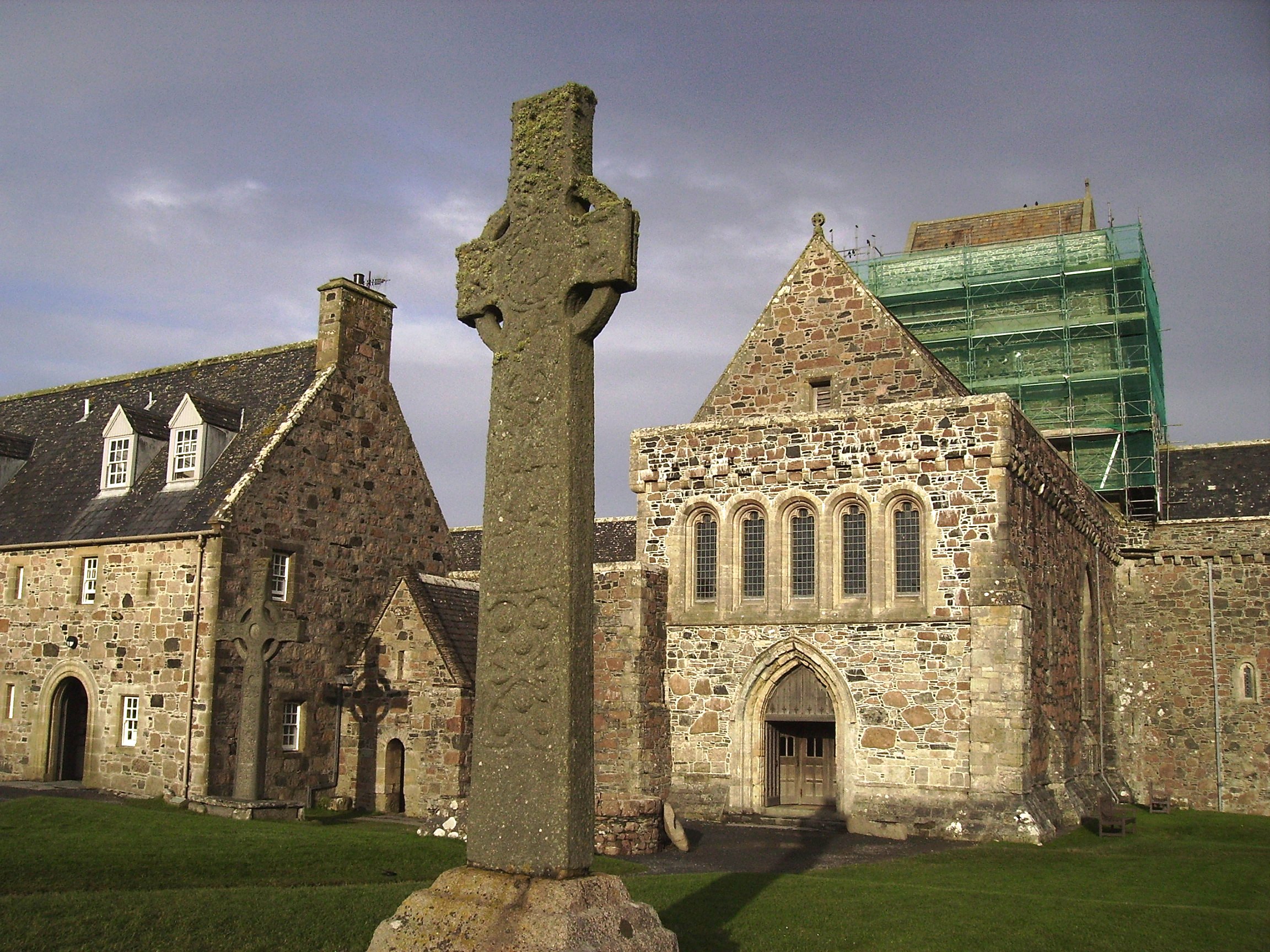
St_Martin's_CrossMuch of the American conversation among church leaders focuses on the challenges in big churches! As I thought about the questions that I see regularly addressed in minister’s blogs, many of them came with assumptions about their churches that were uniquely American and perhaps unintentionally, but nevertheless, big church questions.  For instance

  • Which is a better kingdom-building strategy, a mother church planting daughter churches, or the multi-campus single church strategy?
  • Which is a better leadership model, a staff-led church or a member-led church?
  • Is Sunday school still the best model or should the teaching of our children be returned to parents and small groups of parents?
  • Worship styles / Seekers worship / and all of those questions.
  • Staffing questions: large hired staff versus volunteers—with all the ensuing involvement questions
  • Ethnically mixed churches versus homogeneous ones—with accompanying language and cultural issues.
  • Leadership issues brought on by generational differences, especially as millennials (and pre-millennials) move toward the first arenas of ministry leadership.

One of the things I love about mission work is that when you are on the real front line of evangelism, it clears the air.  I was just with a small church in Scotland.  You know, I didn’t hear any of these questions on their lips.

Scotland is a country of about 5 million people with a Christian heritage dating back to the second century, though without much history until the sixth or seventh centuries. John Knox led the Scottish Christians out of Roman Catholicism and into the Church of Scotland during the Reformation, so while there is no established church in Scotland, these are still the two largest groupings.

No, that’s not quite right!  While 42% of Scots claim the Church of Scotland and 16% are Roman Catholic, 28% claim no religion. And although 42% claimed membership in the Church of Scotland, the church itself could only account for about 12% of the population as members.  The number quoted to me was 2% of the population attend any Christian worship service on any given week.

It’s not that the Scots have run off into non-western religions, which are represented mostly by the Muslims, Asians, and Indians living in Scotland. And, yes, there is a smattering of occult and even blatant pagan religion, but that’s not where most Scots seem to be.  No, they just are . . .not religious—secular!–not unusually immoral or uncharitable—in fact, there are charity stores and posters everywhere.  And their public schools not only permit, but encourage religious activities and instruction from Christian groups.

I had breakfast with the minister of this small Christian church in Scotland, and I was the guest of a family in this church. Both husband and wife are leaders there as well.  And in none of the hours of conversation that we had, did we talk about any of the questions listed above.

Here are some of the topics with which we wrestled:

  • What do we do when two of the three leadership families in the church have to move away in the same year?
  • How do we give our children what they need when there are only 5-6 children and they are of all different ages?
  • How can we reach out to young families when we are so few young families ourselves?
  • How can one paid minister (only partially from this church and with part coming from the US) take care of the spiritual needs of the members and reach out to seekers?
  • Do we need to recruit workers from America to help out? If so, how would we use them?
  • Where will our children find Christian friends? Who will they marry?  (All of these questions suggest the difficulty of engendering faith in children who grow up where none of their peers believe, of course.)
  • If everybody in the church is involved already, how do we create new growing edges that might encourage growth?
  • The church members, though few, come from every direction across the city, so how do we have strong fellowship and ample opportunity for Bible study and prayer together?
  • How do we integrate the foreign Christians whom we are glad to welcome, but who bring different perspectives, both from their culture and from their home churches that can be very disruptive?

Now, these are not unanswerable questions—nor are they unique to Scotland, but they do seem to be questions of a more basic nature than sometimes make the headlines among Christian thinkers.

And aren’t most of the Christian churches in the world more like the Scottish than like the mega-churches of America?

It won’t hurt all of us to drop back and make sure we are addressing foundational questions, even as our churches grow!

irish cathedralIn Dublin, just as in all of Europe, the spires and steeples of beautiful church buildings turn your eyes upward as you walk around each corner of the city. I noticed in the advertising about tourism in Dublin that one particularly beautiful building adorned the ads for The Church. John Wesley delivered his first sermon in Ireland here in 1747 when it was known as St. Mary’s Church of Ireland. George Handel used its organ to practice as he prepared for the first public performance in Ireland of his Messiah. Other notables attended and a few are buried within its walls—as is the case with many churches in Europe.

Welcome to The Church. The Church is the ‘local’ of choice for native Dubliners and welcomes approx 700,000 visitors annually from all over the world who come to experience the culture, atmosphere and friendly service at The Church.

So begins the description on its website—well, not exactly. I deleted a few words in the opening sentence, so let me put them back in now.

Welcome to The Church, we are Dublin’s most unique bar and restaurant.

Now that’s disappointing, isn’t it!  Just as disappointing to me is to note their website http://www.thechurch.ie .  Was there no Christian church in all of Ireland that claimed this site??

Today . . . today the Irish are nominally Christian (84%), but the churches are empty while the bars are full!

Christianity in Ireland dates back to the very earliest mission efforts of the earliest Christians, perhaps as early as the second century, but surely by the third. The national treasure of Ireland is the Book of Kells, an illuminated copy of the four gospels, created sometime around 800 AD.  And then there is St. Patrick and St. Columba, from the 5th and 6th centuries respectively—great heroes of faith in Ireland. Many stories of early Irish missionaries, then later Irish Christian scholars, fill the pages of western church history.

We worshiped with a very faithful remnant in Dublin on Sunday, and I’m sure there were other very faithful Christians meeting around the city. The variety of nationalities represented jumped out at us.  Out of 40 people in this service, at least half were from non-western countries: Liberia, South Africa, Ghana, Malaysia—probably others whom I did not meet.

Fortunately, the pages of western church history do not contain the whole story of the Way—just as the story of the Jerusalem church was/ not the whole story of the Way even in the first century.

I’ve been thinking of how much trouble the Jerusalem-mostly-Jewish Christians had accepting the fact that the gospel was not just going to a few Gentiles, but was spreading throughout the Gentile world.  We call them the “judaizers,” but mostly they were Christians who were trying to imprison the Message into the Jewish context from which it started.

As late as the end of the book of Acts, roughly thirty years after the day of Pentecost, James, the brother of the Lord and an apostle/elder in the Jerusalem church, pleads with Paul to accommodate the Jewish Christians who needed to see that he had not forsaken the Law and that he was not introducing Gentile elements into temple worship!  As the Jews saw their place in the world slipping away from them—it’s only another decade until Jerusalem and the temple are completely destroyed and the Jews scattered among the nations for 20 centuries—they held on even more tightly to their own traditions—even the Christian Jews apparently.

Is it possible that the Christianity of the western world with all its centuries of architecture and tradition has grown so stale that God is moving on with His plan? Many have reported the shift in Christianity’s center to Africa and the southern hemisphere.  The rapid growth of the kingdom in China has great potential for changing the outward appearance of Christianity in a world where one out of every four persons alive is Chinese.

I don’t have all the answers, but I can tell you that I believe what the Apostle Paul said to the Greeks at the Aeropagus (ERV, Acts 17:26-27),

God began by making one man, and from him he made all the different people who live everywhere in the world. He decided exactly when and where they would live. God wanted people to look for him, and perhaps in searching all around for him, they would find him. But he is not far from any of us.”

We feel like we are in a battle for the very life of the church in America. We see churches closing around us now and we are afraid they will all become bars and restaurants like in Europe.  Of course, we, as do the European Christians, must continue to be faithful, to bear witness, to be salt and light, but we should not be afraid for God’s church.

And we should be wide open to receiving the nations into the heart of our fellowship—because they are in God’s heart!


A New Journey!

airplaneIn twenty minutes, I’m getting on the plane to Frankfurt, Germany, which is the beginning of 41 days on the road in Europe.  We will be working with English-speaking churches in Germany, Ireland, and Scotland to help them either establish or advance their FriendSpeak programs.  Then I will be conducting a workshop in Turkey.   After that it is Italy (5 churches), France, Spain, Austria, Hungary, Czech Republic, and back to Germany to touch base with works interested or possibly interested in hosting Let’s Start Talking teams.

There are going to be lots of trains, planes, and automobiles, hopefully without the adventures of the movie by the same name! Lots of meetings, lots of working meals, lots of new beds, but mostly lots of new people.

I guess you can see that this is not a vacation–never more than two nights in the same location, but that’s OK. The part we enjoy are the conversations about the kingdom, with people we may not know but with whom we have so much in common because we are all about sharing the Good News.

Although my blog may be a little sporadic while we travel, I will certainly try to stop long enough to share with you some of the special pleasures of our trip.

Time to board.  Pray for us as we pray for you!

Quartet424-424x283Sherrylee and I saw a delightful movie last night, Dustin Hoffman’s directing debut film Quartet. The story revolves around about fifty residents of a state-run retirement home in England. All of these residents were once renowned musicians, but are now reduced to trying in their dotage to put on a gala fundraiser to save their home.

What makes this film unique among a growing number of films about paleo-aged people is that it is not about dying, not about dealing with long-term disease, and not really about dealing with a world that has passed them by.  It is about living!

One day the most famous operatic star (Maggie Smith) of her time steps out of the minivan to enter the home. She brings her reputation as a diva as well as her personal history into an established group of her former peers, which stirs up old rivalries as well as old passions.

Her colleagues need her to recreate her part in the Quartet from Rigoletto by Verdi, along with one patient whose mind is slipping (Pauline Collins), one who continually crosses social boundaries of propriety (Billy Connolly), and her ex-husband (Tom Courtenay)—and therein lies the tale.

You’ll laugh, cry, be mildly embarrassed, but mostly be touched by the joy, the love, the drama of these extraordinarily talented people.  And you will love the music!

What do we do with old missionaries? Sorry, I couldn’t help but going to this question.

Most of the old missionaries that I know have gone down one of three paths:

  • The most fortunate old missionaries have found a Christian college that gives them an office and an occasional class, where they can share what they have learned and experienced with students barely able to appreciate it.
  • Some are able to preach for a church—usually a small, rural church. These churches are often older people, so they don’t mind the slower pace of an older preacher—and they don’t mind the stories of other places.
  • Some just vanish!  Yes, they just disappear.
    • Occasionally they quietly return to their foreign home, where they work very quietly, living on social security checks or very small support from many small churches who remember their reputation for greatness.  And they live there until they die.
    • Others vanish in the States. They have no retirement, maybe not even social security since they lived out of the country for so long. They live with children or on charity. I’ve heard that a few Christian retirement homes make places for them.

We have finally awakened to the need for missionary care, both for those workers currently on the field and those who have recently returned, but are we not missing a great opportunity to draw on years of experience and continents full of wisdom and hearts full of love for lost souls?

In Quartet, these ancient musicians pooled their remaining talents and produced a splendid evening of entertainment.

What would God’s people do if our ancient missionaries’ talents were pooled? What could we learn? What would we attempt? Where would we go? How much faith would there be in that room?

Enough to move mountains!

mikebonemToday was the first day of strategic planning at LST. . . Well, not the first day if you count selecting the coach, but I have already written about the selection process, so this is the first real day because we did something! We spent three hours after church and after lunch with our strategic planning coach!

No one has called him Coach Bonem yet, but we are all happy so far that Mike Bonem is our coach!  A few days ago, Mike sent us a short introduction, so if you want to know more about him, why don’t you watch his three-minute video:  Mike Bonem

Today he met with the LST board and he will meet with us again tomorrow in the only face-to-face meetings he will have with us until the end of September when the plan should be finished.  Here’s what we did today:

  • He asked all of the board members to tell him what their day job is, how they first got connected to LST, and how long they had served on the board.
  • Then he asked Sherrylee and me to each tell one memorable event in our history with LST.  Sherrylee told about sending the first team to Japan, LST’s first non-Christian nation, and the big decision to continue beginning in Luke with the story of Jesus.  I told about our departure from Oklahoma and our move to Texas.)
  • Then he told his own story to us, not the PR version, rather a very personal story—one that gave us both confidence in his ability as well as in his humanity.

Next he drew the board even further into the process by proposing a monthly plan, including both the topics for each month’s phone calls as well as the necessary activities surrounding those topics for each month.

For instance, in April the coaching calls will focus on discussing input from different LST constituent groups, as well as preparations for a staff workshop. The activities for that same month include the compilation of the data from the constituents and conducting the staff workshop.

LST has such a great board. They wanted to know, among many other things, at what points and how were they to be involved in the process.  In spite of having full-time jobs, each of them really wants to participate and support the process.

The last activity of the afternoon was the standard activity of listing strengths, weaknesses, opportunities, and threats to LST. We found it hard not to dive in and expand on or explore each item in all four of these lists, but Mike kept us from bogging down by promising that we would work with these lists tomorrow morning.

Mike served us well–but here is the dessert!  Because several of our board members are from out of town, Sherrylee and I invited them to come over for pizza afterwards. We invited Mike too—and he accepted!  How often do visiting preachers or other important resource people hole up in hotels after or between their presentations!  We were all very impressed that he came, he ate, he visited, really connecting with all of us on a social level as well as during the hours for which we are paying him.

It was a good day, Coach.  We look forward to tomorrow.

20130202_130022My grandson and I had a little run in the other day on the basketball court and it reminded me of David and Goliath. Let me tell you my version of what happened.

He is 10 years old, about 4’8’ tall, loves basketball, plays on two above-average teams and has a very sweet shot, especially from a distance. I, on the other hand, am more than 6x his age, only used to be 6’ tall, played my last organized basketball game in 1969, and need I go on about the differences.

He and I decided to play a little one-on-one for fun, and I’m pretty sure he was thinking he would win handily.  What he did not allow for was the difference between 4’8” and 6’.

I scored the first two baskets because I could shoot and miss, but get my own rebound and have 3-4 more shots under the basket until I would finally make it. Because of my height, he had a hard time driving and he doesn’t have a jump shot yet, so he had a hard time scoring. He then tried to dribble all over the driveway to wear me out—which he was doing faster than he knew.

That’s the moment when the wheels started coming off our game—that moment when he realized no matter what he did, I was going to win—simply because I was taller.

First he changed the boundaries to create more court—for him to run around in, of course.  Then he started changing the rules of scoring, so that if he thought he was fouled, he would always get to shoot two shots that counted two points each.

I know you think I should have just backed down and been grandfatherly and let him win—and maybe you are right—but I really haven’t ever let anyone win. I was taught that to do so was the height of condescension. You don’t beat people badly, but you never just give away a game.

After some fourth-grade level trash talking from both of us, I did let him change rules to his advantage, but it did raise the tension in our game a bit.

That’s when I made a big mistake.  In the heat of battle as he was using his speed to zip around me, I grabbed his arm and held him—a very obvious and intentional foul—but without harm—or so I thought!

Never intentionally foul an already frustrated grandson in the moment when he is about to score!  Very bad idea!

Next thing I knew he was walking off mad. He had had enough with Grandad!

I did give him a few minutes, then followed him up to his room, but found the door locked. Of course, I’m not showing it, but I’m kinda sick inside that I had let the whole competition thing get out of hand.

About 15 minutes later, I’m sitting on the couch downstairs, when I get shot by a nerf gun from upstairs.  I was smart enough to know that what might seem like an angry act of revenge was really just a ten-year-old way of seeking rapprochement.

I worked my way upstairs and asked him if we could talk. He agreed, so we had a great five-minute conversation about what had happened. From his perspective, it was all about fairness.  Nothing about the game was fair to him—and, of course, he was right, so we agreed that next time we would play and not keep score OR we would play and he would get his brother and maybe another cousin to be on his side because 3 against Grandad might be fair!

I love that boy, and I’m thankful that we got that all worked out—but it did make me think about fairness.

Not every David and Goliath story ends with David slaying the giant!  The tall guys sometimes win.

Big countries have more influence than little countries; rich people control more of the world than poor people.  Strong people rule weak people.  Does any of this have to do with fairness?

Big states have more sway than little states Attractive kids make better grades in school than less attractive kids. Smart kids make better grades than average kids.

Not everyone gets a trophy. And if they did, then that would not be fair!

God causes it to rain on the just and the unjust (Matt. 5:45)! He chose Jacob over Esau (Romans 9). He chose Israel, not because they were the biggest or the best nation, but because he . . . chose them. (Deuteronomy 7:7).

If you are Ishmael, you cry out, “Unfair! Unfair!”  but here’s what Paul says about that in Romans 9:

20 No, don’t say that. Who are you, a mere human being, to argue with God? Should the thing that was created say to the one who created it, “Why have you made me like this?”

I think what this means is that if Goliath had won the battle, David could not have complained of unfairness. Nor could Goliath complain that David’s divine partner gave the little guy an unfair advantage.

As I write this, I’m hearing the cringes and frowns from most of us who want—demand—fairness. Immense trust is required of us to believe that God’s will is absolutely righteous and that He is sovereign over his creation—and that He loves us.

Life isn’t fair, but Christians believe an absolutely good and righteous God is!

But don’t ever intentionally foul your grandson!!

Strategic-PlanningWhen the LST board asked us to begin the strategic planning process, they were in agreement that they wanted an outside party to be an integral part of the process.  I believe that the main reasons for this was to

  • Insure the integrity of the process,
  • Benefit from an experienced person,
  • Benefit from one who has thought deeply and creatively about the process.

Two other criteria seemed very important to them: first, that the person be at least experienced in working with faith-based non-profits—if not a strong believer themselves. Secondly, we wanted to find someone who used a coaching model, not a consulting model—about which we will talk more about later.

We first explored a well-known Christian organization with which some of our board members were familiar. I’m sure they would have been of great help to us, but we eventually decided not to turn to them for the following reasons:

  • They did not seem to grasp the scope of our need and kept offering us more than we wanted and more than we could afford.
  • When we finally got on the same financial page, what they did offer seemed barely adequate.
  • Our assigned advisors seemed like they were new to the organization—which doesn’t mean that they might not have been the very best on the staff, but it did not inspire great confidence when we talked to them.

We then gathered recommendations from our acquaintances. Our board members were very helpful, suggesting university professors who taught strategic planning, attorneys who did mediation and other people-oriented services, and executive coaches.  As we interviewed each of them, it became apparent that they were all highly qualified.  Those that we removed from the list came off because

  • Their area of strength was not really strategic planning.
  • They were so professional that we were afraid of being put into a template plan with little regard for our idiosyncrasies.
  • Their time schedule for availability did not match ours.

One of the first requests I made of each of these candidates as we were interviewing them was if they would explain the difference between coaching and consulting. I confessed to being pretty fuzzy on the distinction—and I wasn’t the only one.  Nevertheless, these are the distinctions that came out of our conversations:

  • Consultants advise clients on how to solve problems while coaches ask questions that help the client discover his/her own solutions.
  • Consultants focus on results and clients focus more on the people involved.
  • Coaches help their clients create processes while consultants analyze, advise, and sometimes implement their solutions.

As I mentioned earlier, our board was keen on using a coaching model, not a consulting model.  I know coaching is all the rage now, but it seems to me that consulting has its own place and value as well.  Sometimes the home team is in a totally new situation or they are in a potentially overwhelming problem; they need someone to offer them solutions and perhaps even implement those solutions. They don’t have any of the answers themselves and need help from those who have had similar experiences and dealt with them successfully.  Consulting has its place.

We chose, however, a person who uses a coaching model, primarily because our board does not think we are in the middle of an unsolvable crisis.  I believe they wanted a coach because they believe that those of us who know the LST ministry the best—the board themselves, the staff, our workers and volunteers, and our donors—are in the best position to evaluate the present and look a little ways forward.

I really appreciate that confidence as does the rest of our staff.

Next, we’ll look at beginning the strategic planning process.  By the way, I welcome your questions or insights!

I know you want to know who we hired to serve as our coach. If you don’t mind, I’m going to show him what I am writing and ask for his permission before I tell you. Thank you for your patience.

Strategic-PlanningStrategic planning for a faith-based organization raises different questions and  . . . well, I just don’t think it looks the same as strategic planning might look for a for-profit enterprise of the same ilk.

About 18 months ago, the board members of Let’s Start Talking brought up the idea of developing a strategic plan. Just now, we have begun the process, and even getting to this point was not without some pain. For the next nine months, I will be working on this, so I thought it might be helpful to some of you to share the process with you.

Let’s start with some of the questions:

Why go to the trouble and expense of doing a strategic plan? 

As you probably know, my wife and I founded Let’s Start Talking in our living room 33 years ago. LST was first organized as a ministry of a local congregation, answering directly to the elders of that church.

In this start-up phase, the ministry had no employees, no regular donors, and no plan for the next year except to meet the needs that were placed in front of us, which for LST meant, recruiting students and training them to go with us on short-term mission trips at the invitation of a handful of European churches with which Sherrylee and I had a relationship because of our previous mission work in Germany.

By the end LST’s first decade (1980-89), we were taking about 50 students, who raised all their own money plus enough to cover the small cost of organizing the projects, training the workers, and overseeing them in the summer. Financially, we were a zero-sum organization, starting each year at zero and finishing each year at zero.

The only plan was to recruit enough workers to do the work that God had placed in front of us.

LST mushroomed in the 90s, going from 50 workers to over 300. The breakup of the Soviet Union generated a huge desire among Christians to share the Gospel in these many countries where Communism had attempted to suppress and eradicate faith. But no one spoke these many languages, so LST’s strategy which involved working in English but was also direct evangelism became one of the most successful ways to work. LST, which one couple could manage in the 80s, now needed to become much larger.

The strategic plan was the same as it had been, i.e., to recruit more workers to meet the greater need!  As we recruited more workers, we generated more income, so we hired one office assistant and one recruiter. As the numbers grew, we added first volunteer office help, then hired office help, so that by the end of the 90s, we had 12-15 employees. The ministry was growing to meet the need.

But the dimension and scope of LST’s work was creating some issues. The 150-member congregation that had provided our legal status and oversight for almost 20 years decided that we were too big now and that the liability was bigger than the church wanted to take on. God had a big change in front of us!

And what was my plan for the ministry?? To continue to recruit more workers to meet the growing number of invitations from mission sites—now all over the world. But to do that among Churches of Christ, we needed a sponsoring church.

In 1999, a Fort Worth mega-church assumed our oversight, organized us into a Texas non-profit, and generously supported the ministry. But, of course, in this new arrangement, LST was required to have a board of directors.

Now after another decade, LST has continued to expand into China and the Muslim world, the budget has doubled in size, and the ministry is now an independent non-profit. LST now sends out more church members than college students and the funds all workers raise only cover about 70% of the annual budget, so outside fund raising is a necessity. All of these changes have been pretty dramatic!

What was our strategic plan that got us through these changes?  To continue to recruit more workers to meet the vast need of the world to hear the story of Jesus!

As you have probably deduced, the first obstacle to formulating a strategic plan has been this strong sense I have had of having always had a very simple plan that has always worked! I have always stated it as “following God and trying to do the tasks he puts in front of us to do!”

About six months ago, the LST board insisted that I get serious about strategic planning.  So, I’ve worked pretty hard to get my head around the idea. Here are the thoughts that have helped me:

  • Planning is a way of letting other people know what I believe God wants to do with LST.
  • Planning is an opportunity for people to look objectively at the ministry and make helpful suggestions.
  • Planning can suggest new ways of measuring outcomes that might be helpful.
  • Planning is good for donors who want to see measurable steps toward measurable goals.
  • Planning helps board members perform their duties better because they have a better definition of ministry activities and goals.
  • Planning should help us anticipate potential changes and prepare better for them.
  • Planning may force me as Executive Director to define both the vision and the means more precisely than I am inclined to do otherwise.

What would you add to this list?

Next I want to talk about the search for a consultant/coach to help us work through the strategic planning process.

computing kidI’m taking an online course in Elearning and the Digital Culture from the University of Edinburgh in Scotland.  It’s a MOOC (Massive Open Online Course), and I don’t know whether it is pronounced “Moose” or “Mook” – or maybe not pronounced at all!

Over 20,000 views have been logged in the Discussion board during the first four days of the course. I know some MOOCs have 150,000 or more students enrolled, probably from every country that has internet access in the world.

The course is free!  This one is taught by four professors in Scotland, but other MOOCs are taught by professors from schools like Harvard, Yale, Princeton, Berkeley. In other words, if you have a computer and internet access, then the best world of higher education is open to you free of charge.

At the moment, universities are not allowing students of MOOCs to earn credit toward graduation, but many of them are awarding certificates for doing the work and passing the final exam. Yes, there is real assessment!  Some of the reports I have read say that in certain industries, these certificates are opening the same kinds of doors as degrees.

Before we get to the church, think about what this means for higher education. Remember all the twittering about the morality of student debt! What if there were a free alternative?  What changes will occur in non-industrialized countries when the poorest students can access the best professors in the world?

It’s not just about access to information—because the internet eons ago (relatively) changed modern education by providing students information access without the help of professors.  Professors ceased to be the best source of information—at least of current information, so their role has become that of coach, facilitator, educated mentor, motivator, and quality assessor.

So, Church, what does this have to do with You? Well, it has to do with community, with catechesis, and with common experiences.

In my MOOC, community is created by discussion boards. We will never be in anything but the same chat room at the same time—but it doesn’t make any difference.

Our first week of instruction, so far, consists of several short indie videos to watch and discuss, two peer-reviewed articles to read and digest, and two more articles, less academic but perhaps more effective because they address broader questions with less jargon.  Participation is required and measured, but only evaluated by other students so far.

Most of our churches work on an educational model that is far removed from MOOCs. Think about it:  We leave our homes and go somewhere to sit in pews or some chair and have intermittently successful community experiences. We have very predictable ritualistic acts whose familiarity bring us comfort, but which are a mystery to the uninitiated.  The heart of our most valuable time together is spent listening to the church’s best teacher lecture for 30-40 minutes, during which we expect him not only to instruct, but to inspire, motivate, admonish, and/or convict somebody.

Amazingly, this model continues to work well for some but that number appears to be shrinking. What I am asking is this:  how much longer will it work for anyone??

I just left my first-grade grandson at home, doing his homework on the computer. He had headphones on, listening to the audio information while watching professionally produced instructive video—which certainly did not last longer than 5 minutes!  His teachers don’t lecture. Our third and fourth grade granddaughters both received iTouches from their elementary school with which they communicate with classmates and their teacher 24/7.

My grandkids and your children, including your current teenagers, don’t learn anything the same way we did!  What makes us think that they will learn to love God and love His Church and Love His Word and Love their Neighbor from teaching models that they only experience in church for a couple of hours a week at best.  What are we thinking??

Here are some of the challenges:

  • Will churches be able to distinguish between divinely inspired and familiarly required?
  • Will the first who seek to change be burned at the stake?
  • How much critical mass will be lost before churches are forced to consider other models?
  • Who will have both the courage and the wisdom (not just knowledge) to even know how to restructure the church’s model of instruction?
  • Will the church finally begin to find a working model, only to realize that learning styles have continued to evolve and have moved on down the road?

Churches have managed to survive with this model through Generation X, but we are struggling to retain Gen Y or Millennials.  We don’t even know what the game is yet for the Gen Zers (born after 2000) because they are still too young.

I know they will tell us—but will we understand what they are saying?  And will we listen?


medical recordsAlthough anyone can get sick anywhere in the world—including at home, with a few precautions, you can minimize your chances either of getting sick or of irritating some pre-existing condition you might bring with you on your mission trip.

Here are some things that Sherrylee and I have learned to do—and we have rarely been sick in all of our travels to all parts of the world. I’m not a medical doctor, so the information I’m giving to you is totally based on experience. If your doctor tells you something different, then he is right!!

  1. If you deal with chronic health issues, choose your destination more carefully If you have severe asthma, you might want to go to a place that does not have severe air pollution. If you have knee issues, you might not want to go to a church that meets on the fourth floor with no elevator.  If you have immunity issues, you might want to go to a more hygienic country.  You do have choices! God’s people all over the world need help, not just in the countries that would most endanger your health.
  2. Go with people who understand your health needs. This is usually a spouse or near relative, but if you are not going with someone that close to you, then go with a good friend to whom you can fully disclose your health situation. If you are not willing to tell someone the full story, then you probably should not go.
  3. Get all of the appropriate vaccinations and shots before you go. The CDC is an excellent source of information about health and foreign travel. You may have a travel clinic in your city, and they too will provide good information and the medications that you need.
  4. Take all the medications/equipment needed with you for any chronic condition that you have, including prophylactics to prevent the onset or to control an unexpected attack or event.   You cannot count on getting medicines you might need, nor seeing a doctor for a local prescription, so get enough for your whole trip–and a little longer–to take with you.  Be sure and put your important medicines—whatever you can’t do without–in your carry-on, just in case your checked luggage does not make it to you! I always include my extra contact lenses and/or an emergency pair of glasses. And if you are prone to bronchial distress or events related to diabetes or hyper allergic to . . . anything that could become life threatening, just be sure you take with you whatever you would keep handy at home.
  5. Don’t go if you are already sick! This seems so logical, but after you have bought expensive tickets and made very important plans, it is hard not to get on the plane.  It might be easier to make the right decision if you have Travel Interruption/Cancellation insurance that covers illness. It is also possible to change most tickets for a fee—which is worth it to you, to your fellow passengers, and to the hosting people you might be infecting if you go.
  6. Try to adjust to local time zones as quickly as possible so that you stay rested. Starting your trip more rested and sleeping on the international flight go a long way towards helping you feel good when you arrive and adjusting more quickly. Short-term missions do not lend themselves to lots of rest, so if your health requires more rest, you may have to sneak away for a nap every now and then.
  7. Be aware of everything that goes in your mouth! We all wish we had iron stomachs that could eat anything anywhere, but most of us don’t. On a short-term trip, you really don’t have enough time to adjust to local bacteria like a long-term worker can, so you just have to be careful.  Water is a big culprit. Safest is not to drink anything that is not bottled—with the lid commercially closed. Safest is to use the same bottled water to brush your teeth. Foods that have a high water content can be bad also, so avoid lettuce, soups, ice cubes, and jello that are made with unknown water.  Honestly, this is very hard to practice 100% consistently, so take the approach of just minimizing your exposure to bad water as much as you can.
  8. Wash your hands a lot—with soap. While I’m generally opposed to overuse of anti-bacterial hand products, I use them regularly when traveling overseas for added protection.
  9. Follow the suggestions of the local hosts. If they say use a mosquito net, then do so. If they say don’t eat from street vendors, then don’t. If they say, take malaria meds, then do it.  The only thing you have to be careful about here is when you are with locals who have not traveled out of their country and do not understand what your special needs might be.
  10. Know the difference in yourself between minor sickness and major sickness. Almost everyone who travels internationally has experienced some degree of upset stomach and/or Montezuma’s revenge. Most people don’t die even from food poisoning that can occur no matter how careful you are. One can become dehydrated though, so treat your symptoms and monitor your condition even with minor things so that they don’t become major. In almost all countries, you can trust local doctors for treatment of minor sickness, so don’t be afraid to ask for help if a minor illness seems to last too long or you begin feeling even worse.

Again, let me say that if you are in pretty good health, then you can participate in most short-term mission programs. But even the healthiest of us will be more effective on our mission trip if we stay healthy!  We don’t have complete control over that, but these few tips will certainly help you.

Now, Go . . . into all the world!