Feeds:
Posts
Comments

Not exactly like our yellow stationwagon, but close.

We have a great family story that has meant a lot over the years because of what it taught us at a very crucial time in our lives.  Would you like to hear it?

Many of you know our story of coming back to the States from Germany in 1979 under less than desirable conditions: no home, no job, no funds, and no understanding why we were back in the States and what we were supposed to do. God, of course, had a great plan for us, but we were in the pain of the moment, and our vision of the future was very short-sighted.

Piece by piece our future path started opening up in front of us.  After a couple of months, I got a one-year temporary teaching position at Oklahoma Christian—which turned into a twenty-four year career. OC was very generous and provided free housing during the summer before the semester started, which meant I could also walk across campus to get to work—all good when your total income that year was going to be $12,000.

About six months before leaving Germany, I had taken an auto loan from our local bank and bought a used Opal stationwagon for our growing family (Emily had just been born the previous October).  As our story goes, we had about two-weeks’ notice, causing our departure from Germany, selling almost everything we owned in order to buy five one-way plane tickets to the States.

Our “new” car was pretty easy to sell, but knowing that we had no money, no income, and not knowing how long we might be in that condition, I asked our local banker to let me keep the proceeds from the sale of our car and continue paying monthly on the car loan.  We had a good history with this bank, so he readily agreed.  That car loan money was all the money we had from April until the end of September—except for a few odd jobs that I was able to pick up.

And now the story begins:  One day, Sherrylee and I went car shopping! Surely you know what a terrifying experience that can be—especially if you have not been living in the States for eight years and you don’t really know how the whole car-selling thing works, and you have almost no money to spend.  By the end of the day, we were exhausted and discouraged, but we stopped at one more big car lot just to see what they had.

And what they had was a leftover “new” car that was over a year old—and it was canary yellow—which explains why it was leftover.  They wanted to get rid of that car so badly that they found a way to sell it to these two ex-missionaries with no income, no credit, and a very small down payment.  I’m sure they popped corks after we left—but in our exhausted state of naiveté, we couldn’t believe that we had just bought a new car! We were so proud of our yellow stationwagon! Only providential care could have made that happen.

We knew what a gift it was, so we washed it, cared for it, and made sure the kids didn’t trash out the inside of the car. 

One day that car—a kind of balm for our wounds– was sitting in the driveway in front of our little house in Edmond, Oklahoma. I came out to find that Benjamin (not quite 3 years old) was sitting on the hood of the car. In his little innocent hands he had a small, sharp tool with which you pick the meat out of pecans.  We’ve always said he was scratching his name into the yellow paint. I don’t know if it was his name or he was just “coloring,” but there he was, scarring, marring our yellow stationwagon—our gift from God!

I learned that day a lesson that has been reinforced many times since: nothing and nobody in this world is perfect—and even things/people who start out perfect are going to get scratched up, damaged, and/or scarred.

It’s like the pain you feel as a parent with your first child’s first wound that leaves a scar.  Robert Frost said, “Nothing gold can stay.”

At LST, we just moved into a new building of our own. We invited all our friends to come and see everything, freshly painted, newly decorated—and the night before our Open House, it rained heavily and we found out the roof leaks in two places, one of them dripping into our new main hall!

What must God have felt when Adam and Eve sinned!  Or when His perfect Son was spit on, beaten, and nailed to the cross!

The flawed conditions of this world make pessimists of many who have no hope, but we Christians believe in restoration and reconciliation. We believe in a new heaven and a new earth—a real perfection of creation that cannot be scratched.

So I learned two big lessons that day:  Expecting perfection in this world leads only to pain and disappointment; however, living in a flawed world must not cause despair! We are being guided through these imperfect landscapes to a time and place where we will never be disappointed, never be scarred, and never be scratched.
 

 With the political arena as hot as it is during this election year, and with the unreasonable fear propagated by the talk shows and political pundits, this chapter from Isaiah really has something to say to us!

You will remember from chapter 7 that Samaria and Israel were plotting against the southern kingdom of Judah, which left the king and his people “like trees shaking in a storm!” (7:2)  Isaiah’s message was that before a child could be born and be old enough to know good from evil, God would have used Assyria to erase the kingdoms of Samaria and Israel—so don’t worry!

The first four verses of chapter 8 deal with the birth of this child, Isaiah’s son Maher-shalal-hash-baz.  So everything is just as God said it would be! Trust Him to be in control.

But not everyone believes God is in control!

In verse 11, the prophet  receives a warning from God that he “should not think like everyone else!”  You may want to put the next verses on your TV screen for the next few weeks:

 “Don’t call everything a conspiracy, like they do, and don’t live in dread of what frightens them.

Which conspiracy are you afraid of? Are you afraid of the left-wingers creating a social welfare state, bankrupting the country, led by a closet-Muslim president who isn’t really a citizen of the United States?

Or are you afraid of right-wing tea cuppers who want every citizen armed to the teeth, led by someone who believes the American Indians are descendents of the lost tribes of Israel, therefore the U.S. should obliterate Iran before it gets a nuclear weapon and blows up the world!

Which conspiracy keeps you awake at night?

13 Make the Lord of Heaven’s Armies holy in your life. He is the one you should fear. He is the one who should make you tremble. 14 He will keep you safe.

It’s not even ironical that Isaiah follows this exhortation with a prophecy that both Israel and Judah will stumble—because as a people, they will not trust the Lord.  Instead they would turn to palm readers and go to séances to consult the dead, saying, “With their whisperings and mutterings, they will tell us what to do”(v.19)

“But shouldn’t people ask God for guidance? Should the living seek guidance from the dead?” (v.20)

Or as Isaiah might have said it today, “Should people who believe in God seek guidance from CNN or Fox?”

Here are the choices the prophet gave to his audience—and they are still ours today: Either “Look to God’s instructions and teachings,” or, “contradict His Word.”

Those who choose the latter will be in the dark, so they will first experience an emptiness, a hunger, that makes them angry, so angry that they rage against their government—and their God—for not being there for them!

“They will look up to heaven 22 and down at the earth, but wherever they look, there will be trouble and anguish and dark despair.”

If you despair about the coming election, or the state of the world; if you find yourself drawn to conspiracy theories or horoscopes; if you have a hunger that you can’t seem to fill, or a rage that you can’t seem to quench . . . Isaiah has a word for you:

Make the Lord of Heaven’s Armies holy in your life. He is the one you should fear. He is the one who should make you tremble. 14He will keep you safe.

Just say, as Isaiah said, “I will wait for the Lord. . . I will put my trust in Him.”

Now that puts this election into a whole different light, doesn’t it!


Our family car was a 53 Chevrolet like this one.

Sherrylee and I both grew up in families that liked to make road trips!. While we were still dating, her family decided one evening to drive through the night to Atlanta to shop at Rich’s Department Store—eight hours away! Her family used to drive from Fort Lauderdale up to Jacksonville, Florida to visit grandparents—only a six-hour drive today, but 8-10 hours before the interstate highway saved us from getting behind big trucks on a two-lane stretch or the red lights in small towns that stopped you even in the middle of the night after the sidewalks had been rolled up!

My family traveled from Fort Worth to Glasco, Kansas, every year to visit my grandparents. With Mom and Dad and the smallest child in the front seat and the three other children in the backseat–in the days before seatbelts, a/c in cars, and minivans–we always traveled through the night, mostly, however, to preserve my parents’ nerves, I suspect.

Last Friday Sherrylee mentioned that she thought we needed to, and Saturday morning, we decided to drive to Nashville to visit a dear friend who is very sick. We left on the 700-mile trip three hours later! Our plan was to return on Monday, but because of too many relatives in Nashville, a little car trouble, and the need for a predictably good internet connection for an LST board web conference, we did not get away until almost 7pm, so we spent the night in Memphis and drove in on Tuesday. I don’t do all-night drives anymore!

I’ve noticed among the younger people in our office—and that’s almost everyone else—that long car trips are not even a considered option. Those with children seem sometimes forced into them by the economics of travel, but they seem to dread the trip itself.

If you decide you might even try a longer road trip—for any reason, here are a few ideas to make it fun and easier for you.

  • Don’t try to cover so much ground that you are rushed—either leaving or arriving.My personal preference is no more than 8 hours per day when you have to get somewhere, although this trip to Nashville was eleven.
  • Don’t let meals and restaurants be what defines your trip!  It’s so easy to overeat and feel bloated while traveling. You are not getting that much exercise while riding in the car, so take it easy on the eating. Keep it simple and lighter!
  • Use good music, downloaded podcasts, and especially audiobooks to make the trip fly by! On this trip, Sherrylee and I listened first to Condolezza Rice’s book A Memoir of My Extraordinary Family, Ordinary Family and Me, which was quite interesting.  After that we started The Last Hero: A Life of Henry Aaron by Howard Bryant. The book itself is very interesting, but the man who reads it mispronounces names of Hall-of-Fame baseball players, which I find particularly irritating.   We rent and return our audiobooks from Crackerbarrel restaurants, which makes them very reasonable. You just have to watch that you don’t buy a bunch of other stuff every time you stop.
  • Use a GPS, even a cheap one!  No single technological innovation has relieved my stress in driving more than a GPS system.  I’m never lost! If I miss a turn, the nice lady immediately recalculates and gets me on the right track. I know how far it is and how long it should take me, and if I need a detour around traffic (as we did yesterday in Arkansas!), it quite handily re-routes us through new territory. Also, I love that it looks for nearby restaurants and gas stations!
  • Make sure your car and tires are in good shape.  Nothing ruins a trip more than a blown tire or a leaky hose out in the middle of nowhere! I “risked” a bit on the trip to Nashville because I knew the car needed an oil change badly, but I got it done in Nashville and even replaced a tire that they discovered was worn while changing the oil.
  • Smartphones not only provide some security in case of a breakdown, but let you call ahead for hotel reservations or avoid inconveniencing someone you might be meeting. We were trying to meet someone for lunch in Little Rock who was driving to Nashville yesterday; we got stuck in a construction site jam after leaving Memphis, but because we both had cell phones, we were able to coordinate our travel and meet in DeValls, AR instead.
  • Allow for saying YES to some unplanned pleasure.  While driving through Little Rock, Sherrylee noticed a big antique mall, which to her is like a good bookstore is to me. Rather than being goal oriented and thinking, “No, we need to get home before 10pm, it was so nice to say, “Yes, sure—why not!”
  • Road trips are great times for longer conversations.  Turn the book off, turn the ballgame off, turn the music off, and see what interesting things can pop up in conversations between mile markers!

I’d love to hear your stories of road trips and what you do to make them fun!

Many people get stuck on the virgin/maiden controversy in Isaiah 7, but that’s not really the focus of the chapter.  The focus is whether you trust in God for your well being or in your own arrangements.

King Ahaz was the grandson of King Uzziah, whom we met in chapter 6.  Ahaz’s father Jotham had ruled in Jerusalem for sixteen years, during which time he did what was pleasing to the LORD (2 Chron. 27:2).  Ahaz himself was just 20 years old when he became king, and he made a mess of it!

Just a little historical context:  The Assyrian empire was breathing down the throats of the whole region, so Syria and Israel wanted Judah to ally itself with them against the greater threat. When Ahaz refused and put out feelers to the Assyrians themselves to protect him from Israel and Syria, those same countries invaded and killed and carried off hundreds of thousands of Judeans—so massively that they had a bad conscience about it and returned many of the people and plunder.

Ahaz thought that the gods of these pagan countries had overwhelmed his God and that’s why he closed the temple, built altars to Baal, and “encouraged his people to sin” (2Chron:28:19). Big mistake! He had already shown a lack of confidence in God’s ability to protect his country and now he blames God for the consequences of his own faithlessness.

Chapter 7 opens with Ahaz’s court hearing about another conspiratorial plot by Israel and Syria to overthrow him in favor of a puppet king who will do what they want.

Isaiah’s word from God is: “Don’t worry! It’s not going to happen!”  That word of assurance should have been enough for Ahaz, but when you have lost faith in your God because you think He let you down before, you may not feel so assured.

God understood Ahaz’s doubts!  That’s a pretty important lesson for us to learn. God knows that His ways are not our ways. We often misinterpret the events of our lives.  Ahaz had experienced the wrath of God for leading his people into sin, but even that expression of wrath did not mean that God had abandoned him—or that the LORD was powerless—or was not real!

God’s graciousness goes so far as to even offer Ahaz a reassuring sign. God had given men signs from early on—I’m thinking of the rainbow sign to Noah and all humankind—but the NT expression is that people asking for signs was wearisome to Him (John 4:48).  Yet, here he tells Ahaz to ask for a sign of his own choosing.

Ahaz’s says the right words, but his heart was in the wrong place: “I will not ask; I will not put the Lord to the test” (v.12).  Right words, wrong heart—sounds familiar, doesn’t it!

Now comes the verses that are mildly significant to Ahaz and immensely significant to the gospel writer Matthew some 700 years later: “The virgin will conceive and give birth to a son, and will call him Immanuel. “   You can find plenty of scholars who debate whether the Hebrew word means virgin or maiden.  I find it easy to believe that it had a simple meaning for Ahaz and a miraculous meaning when applied to Jesus.

Isaiah prophesies a moment of relief for Ahaz—no need to fear Israel and Syria—but that just around the corner, greater destruction would come because he continued to seek security from armies other than those of the LORD of Hosts!

Whether we talk in the context of nations and regions, or whether we come down to the level of families and individuals, the story of Ahaz in chapter 7 reminds us that only faith in the Sovereign God can assure us security.

Ahaz, as a member of the covenant family of David and as the son of a faithful king of Judah, had every opportunity to enjoy the favor and blessing of God.   But in his youth, he decided to go his own way, to make his own allies, to fight his own battles, and to worship his own gods, and even the Word from the Lord accompanied by physical signs could not move him to faithfulness : “Even during this time of trouble, King Ahaz continued to reject the Lord” (2Chron. 28:22).

If you think you are the cause of your own pleasure in life and that God is the source of all your troubles, you have your glasses on backwards!

And the sign God offers to you is that a virgin DID conceive and bear a son whose name is Immanuel: God with us!


The assassination of President Kennedy and all the images associated with it can’t be forgotten by those of us who experienced it.  Just the phrase grassy knoll can only reference one bloody event. Pink dresses and pill box hats or a small boy in his winter coat stepping out of the crowd to salute his slain father–words and images become iconic with the depth of emotion they arouse.

I first remember Eternal Father, Strong To Save from the funeral of President Kennedy. The Navy Band played it as they carried his coffin into the capital building to lie in state. My memory  is that the hymn was played in the processional to Arlington cemetery as well. In fact, I remember no other music—that’s how deep the impact of this hymn was on me at that time.

The music was written by John B. Dykes in 1861, specifically for the words of the original lyrics which were a poem composed by William Whiting in 1860.

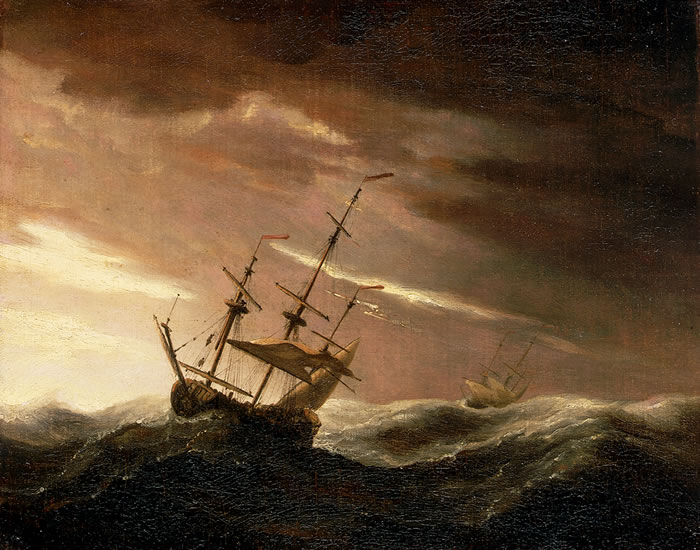
Whiting wrote the words on behalf of a student of his who was going to sail to America.  The trip to the United States in 1860 usually took six weeks, but storms and high winds could extend that time to as much as fourteen weeks, in which case food became short and disease became an issue.  And, of course, shipwreck was not rare. From 1847-52, 43 emigrant ships to the U.S. from England wrecked and over 1000 passengers lost their lives.  Whiting’s student must have certainly appreciated the prayer.

Eternal Father, strong to save,
Whose arm hath bound the restless wave,
Who bidd’st the mighty ocean deep
Its own appointed limits keep;
Oh, hear us when we cry to Thee,
For those in peril on the sea!

John Dykes named the tune Melita, which is the ancient name for the island of Malta. You will also remember that it is where Paul shipwrecked (Acts 27)—one of the three times (2 Corinthians 11:25), so the connection of the tune to the words is very apparent—as it should be in great hymns.

O Christ! Whose voice the waters heard
And hushed their raging at Thy Word,
Who walked on the foaming deep,
And calm amidst its rage didst sleep;
Oh, hear us when we cry to Thee,
For those in peril on the sea!

In 1879, Rear Admiral Charles Jackson Train began the tradition of closing the Sunday service at the Naval Academy with the first verse of this hymn. That may be how it has become to be known as The Navy Hymn.  It was also the last song sung at the April 14th Sunday service of the Titanic. Interestingly, the other hymnal melody associated with the Titanic Nearer My God To Thee was also written by Dykes.

Most Holy Spirit! Who didst brood

Upon the chaos dark and rude

And bid its angry tumult cease,

And give, for wild confusion, peace;

Oh, hear us when we cry to Thee,

For those in peril on the sea!

The sea has always been understood to be a dangerous and scary place. Monsters arose from the sea! Storms rolled inland from the sea!  Those who sailed the seas were considered short-lived!  Just think about the story of Jonah: storms and great fish!  The darkness of the night sea, the raging and thunder of waves—no wonder men were afraid of the sea!

O Trinity of love and power!

Our brethren shield in danger’s hour;

From rock and tempest, fire and foe,

Protect them wheresoe’er they go;

Thus evermore shall rise to Thee

Glad hymns of praise from land and sea

The prayerful protection for those on land and sea petitioned in this hymn has been extended to airmen, astronauts, special combat troops—almost all kinds of combatants—by additional verses written especially for different groups of military personnel.

For those of us who travel a lot, the hymn is of special comfort because when you are on the middle or over the middle of an ocean in the middle of the night, you realize how powerless you are against the forces of nature and how much our lives depend on the grace of God.

And we all are on our own journey, and on all of our journeys we have so little control over reaching our own destinations.  No wonder our souls cry out, “Eternal Father, strong to save . . . oh hear us when we cry to thee!”

One of the great experiences with Bible study is that moment when you are surprised by a very familiar text.  For missionary-types like myself who have been to hundreds of mission workshops, mission lectureships, and mission forums and who have delivered and heard countless sermons motivating Christians to do missions, the “Here am I! Send Me” text in Isaiah 6 is utterly familiar.

But this week it has been surprisingly new!

Poor King Uzziah—mostly remembered for the year he died! He reigned 52 years and was a pretty good king and God blessed his reign—until he became so powerful that he thought he could make his own religion with himself as the chief priest. He went into the temple in Jerusalem and offered incense on the altar, a function reserved for the Levitical priests. While raging at the priests who confronted him, God struck him with leprosy—which had the immediate effect of humbling him, but also making him an outcast until he died (2 Chronicles 26).

This backstory of King Uzziah is interesting because Isaiah’s vision in Chapter 6 takes him into the temple also, but here he sees the Lord on a raised throne, surrounded by winged seraph.  The Lord is wearing a robe that fills the temple—as does smoke—perhaps the smoke of his presence or the smoke of incense—what a scene!

Isaiah’s reaction in the temple is exactly the opposite of King Uzziah’s. Isaiah says, “I am ruined!”  He feels filthy  or “unclean” (as with leprosy) compared to the glory of the Lord.  And he is especially aware of how filthy his lips are—very interesting for a man who is about to be anointed a prophet!

And his people are also filthy!

There is no altar call, no pleading for forgiveness on Isaiah’s part! He cannot offer sacrifices as King Uzziah had attempted!  No, the initiative for forgiveness begins with God.  His messenger-seraph takes an ember from the altar and touches Isaiah’s lips—that must have been frightening!

“Your guilt is taken away and your sin atoned for!”  All passive construction—all God’s doing, not Isaiah’s!  Not ours!

Then almost immediately, with his lips and soul still tingling from the burning coal-cleansing, Isaiah hears the Lord asking for a volunteer.  Now who else was in this scene except the seraph??  The Lord could have chosen a winged heavenly being to deliver His message—but that wasn’t their task.  Instead He called on Isaiah to volunteer—and, of course, he does—because he is in awe of God and he has been  cleansed—but his people are still filthy.

God sends Isaiah with the word “GO” as He has so many of us missionary types. That’s why verse 8 is one of the bread-and-butter verses of every missionary calling!

But here is the surprise!

The message that God gives to Isaiah to proclaim to his filthy people is one of judgment! Isaiah’s commission is to be the watchman (to borrow from Ezekiel) who blows the warning trumpet, only to be ignored. The enemy will come; the towns will be wasted; the people will be carried away!  Even the remnant who might survive the main onslaught will be invaded again—and nothing and no one will be left!!

I believe in the wrath of God, and I believe in judgment—but I am really happy that I—we—have been sent with Good News!  We have been sent with “God so loved the world that He gave His only Son . . .  .“  Our message is that every one can be saved!

If the prophets could go out with such bad news, surely we who have been cleansed should not be shy or timid about going out with the Good News.


I was going to write my own thoughts about 9/11, but my son-in-law Tim Spivey posted this blog which captured my own emotions well.  

This morning I made the daily trip to Reidy Creek Elementary school with my first-grader, Anna, in-tow. The drive is only about a half-mile, but is full of traffic. We have some of our best talks during this time. Anna, like many first-graders, has a deeply inquisitive mind.

Her leadoff question this morning was a doozy. Daddy, what’s 9/11? How do you explain something like that to a kid? I was unprepared. The dialogue went
something like this:

“Well honey, 9/11 stands for September 11. It’s a sad day for grownups.”

“Why?”

“Because on September 11, some really bad men flew some airplanes into buildings full of people and a lot of people died that day. So we remember them and pray for their families today.”

“I don’t remember that.”

“Well sweetie, you weren’t born yet.”

“Oh.”

“Should I pray for the families too?”

“That would be great! And we should remember to be thankful every day for each other.”

“OK.”

“OK. You have a great day at school and remember your mommy and daddy love you.”

“I know. (She exits the car, and blows a kiss to me…and runs off.)

And I thought about the moms and dads and husbands and wives and children who didn’t know they were blowing a kiss to their loved ones for the last time that morning.

And I prayed.

Isaiah must have been reading the book right before his on the shelf because Chapter five’s first 4.5 verses sound so much like Song of Solomon:I will sing for the one I love . . . .“  You might question his choice of a vineyard as the subject of this love song. In our day, it might have been a beach or a mountain retreat, but a vineyard worked for Isaiah.

The writer sings the song of One who poured his heart and soul into finding exactly the right place for a vineyard, clearing it of stones, cutting a winepress out of the stones, even building a watchtower to keep its tender treasures safe.  Everything that could be done to make this vineyard happy was done—EVERYTHING!

“…but it yielded only bad grapes!” 

That’s all that needed to be said. It had just one raison d’etre – and it failed.

Down comes the protection, down comes the watchtower, back come the stones, the briars and thorns, the animals that trample the tender plants into oblivion—and it becomes a desert!

What had the people of Judah and Jerusalem done to deserve such a scathing reckoning?  It’s a very chilling list if we read this as a warning for us as well:

  • V. 8“What sorrow for you who buy up house after house and field after field,
    until everyone is evicted and you live alone in the land.”
  • V. 11,12“What sorrow for those who get up early in the morning, looking for a drink of alcohol
    and spend long evenings drinking wine to make themselves flaming drunk.12 They furnish wine and lovely music at their grand parties—lyre and harp, tambourine and flute—but they never think about the Lord or notice what he is doing.”
  • V.18,19aWhat sorrow for those who drag their sins behind them with ropes made of lies, who drag wickedness behind them like a cart!19 They even mock God and say, ‘Hurry up and do something! We want to see what you can do.”
  • V. 20What sorrow for those who say that evil is good and good is evil, that dark is light and light is dark, that bitter is sweet and sweet is bitter.”

Not a very long list brought total destruction by the One who loved the vineyard!

I couldn’t help but thinking about all the small lots in Southlake that are being bought up to build solitary McMansions ! About all the university students so eager to get back to college parties—something they probably heard their parents bragging about from their own glory days!

I couldn’t help but thinking about all the political rhetoric we have heard in the last couple of weeks—the twisting of truth, calling what is evil good and what is good evil . . . .

This chapter does not have a happy ending. Sorry about that, Disney fans. “If someone looks across the land, only darkness and distress will be seen.”

Are you better off than you were four years ago?

ImageFund raising—and giving—can be like pulling teeth! But when you pull them with a rocket, it’s a whole new experience!

Before we go any further, you need to watch the first part of this video—just the first minute and thirty seconds is enough!  VIDEO

Let’s Start Talking traditionally has used September for special fund raising efforts. We call it our Month of Generous Giving.  Most years, we are simply trying to make up budget deficits so that we can end our fiscal year in the black.

This year is special!  LST has been given a huge gift—a kind of matching gift in a way.  Last May, we were put on notice that we would have to vacate the office space that we have occupied for the last eleven years because the owners of our building were closing it.

While driving home in July, I noticed a “For Sale” sign in front of the Mid Cities Church building, so I called one of the elders to inquire. He told me they were selling their building for 1.26 million dollars—but that they really appreciated Let’s Start Talking and would sell it to us for much less.

On August 16, we signed a contract to purchase this building for just over 50% of the asking price. The leaders of that church gifted the ministry with a building worth twice as much as what we will pay for it.

What does this mean for LST? 

  • A nice new home in a central location with plenty of room to grow into the future!
  • Our own large training and event area. The auditorium seats 250 and is attached to a large kitchen.
  • More room for special uses like web conferences, recording/video studio, and continuous FriendSpeak usage.
  • A strong financial asset.

It also means that we need to raise an additional $104,000 for our down payment this month!

Those of you who are very sharp will now see the connection between the video and fund raising. It’s only taken me four days to figure it out:

  • The little boy had a big idea, but had to completely trust his father to accomplish it!  I’m the kind of person who has lots of ideas—some that work and many that don’t—but it was a wonderful day in my life when I gave the burden of success over to God and learned that “the horse is made ready for battle, but the victory belongs to the Lord” (Proverbs 21:31)
  • The boy had to push the button!  The dad could have done everything, but he asked the boy to make the decision and push the button.  God’s sovereignty does not make us Christians passive, as some would argue; rather, He has entrusted us to choose and to act upon those choices.  We have signed this contract and made commitments, believing that our Father wanted us to push this button.
  • The moment came suddenly!  Even though the preparations were made and even though the boy had to push the button, the actual moment of launch and loss of the tooth were sudden and surprising!  We were not even dreaming of purchasing in May, and our first inquiries with banks about financing were unanimously discouraging.  This new building burst on the scene unexpectedly, and within days we not only were able to come to agreement with the selling church, but we had secured initial financing from a local banker.  And now we are moving in on September 15!!
  • I think I see first fear, then thrill in the little boy’s eyes!  And I know how he feels. This may always be how people feel who are learning to walk with God.  You may feel this way too when you think about a gift more generous than you have ever given before! It’s scary sometimes to walk with God—but the thrill will follow!

I don’t want to stretch this metaphorical essay too far.  You certainly will have your own feelings about the video and what it says to you.

Let me just say that in this Month of Generous Giving at LST, we are blessed to receive not only the love and affection of thousands of people who make both large and small contributions, but each year, we are given a front row seat to watch and experience the goodness of God!  He is the Giver of every good gift (James 1:17).

Fund raising—and giving—can be like pulling teeth! But when you pull them with a rocket, it’s a whole new experience!


If you would like to make a donation to help LST during our Month of Generous Giving, just click here DONATE.

Finally, after all the despair and destruction, there is beauty—glorious beauty for the survivors.

We can hardly use the word survivor in our day without conjuring up horrible holocaust images: emaciated, skeletal survivors of Nazi concentration camps, sole familial survivors of the Rwandan genocide, refugees of innumerable civil wars, even the survivors of natural catastrophe like the tsunamis of Southeast Asia or the earthquake and atomic meltdown of Japan.

But the words Isaiah chooses to describe the survivors of Zion are beautiful, glorious, and holy.  Destruction and judgment have washed away the filth and removed the bloodstains.  Both the filth and the bloodstains, if left after the destruction would have tormented the consciences and souls of the survivors, but when the Lord brings a purging judgment, it is followed by olive trees and rainbows—not remnants and rubble of shame that would continue to mar the beauty of His new creation.

Then the Lord shows His steadfast love. Just as He did after delivering Israel from Egyptian slavery, He provides a cloud of smoke and a pillar of fire to lead them day and night.  You remember how the Israelites, trapped between the sea and Pharaoh’s army were also protected by the fiery cloud, which moved to the rear of the escaping slaves to stand between them and a certain return to bondage.

In addition to the cloud of smoke and the fiery pillar, God adds a new dimension to His loving care—a canopy!  Now a canopy does not seem like much of an addition—unless you are baking in the sun of the Middle East.

I have never been as hot as I have been in that part of the world. The nomads, even today, build canopies to shelter themselves. Every leafed tree—even large bushes—serve as shelter and shade from the heat of the day—

…and they also offer protection from the inevitable storm and rain.  Survival did not mean paradise on earth.  Israel did not become Hawaii. It was still a place where the heat seared and storms arose.  The difference is that the survivors now live under His Canopy of Love and Protection.

If you are a Christian, then you are a survivor—beautiful, glorious, and holy. The Lord has washed away the filth and covers you with His Canopy.

You have survived. You are the living. So live as one who has been saved.