Feeds:
Posts
Comments

A couple of years ago, I did a special Christmas CD for the grandchildren with quite a variety of music.  It was quite a hit, so I thought I’d share it with you! Our grandchildren range from one-year old to twelve, so I tried to make it a mix that the whole family would enjoy.



The Playlist is actually posted on ITunes, but I think all of this music is readily available from almost any source.  OK, here’s the mix.

  • For Unto Us A Child Is Born from “The Messiah” performed by Vienna Boys Choir
  • Carol of the Bells ( Straight No Chaser)
  • Santa Claus Is Coming To Town (The Andrew Sisters with Bing Crosby)
  • Little St. Nick (The Beach Boys)
  • Mary’s Little Boy Child (John Denver)
  • Children, Go Where I Send Thee ( Mary Chapin Carpenter)
  • Go Tell It On The Mountain (James Taylor)
  • The 12 Days of Christmas (Straight No Chaser)
  • The Little Drummer Boy (Harry Simeone Chorale)
  • Mary, Did You Know (The Von Trapp Children)
  • Come Darkness, Come Light (Mary Chapin Carpenter)
  • Here Comes Santa Claus (The Andrew Sisters)
  • Candlelight Carol (Mary Chapin Carpenter)
  • Hallelujah, It’s Christmas (Roger Whitaker)
  • Sweet, Little Jesus Boy (Straight No Chaser)
  • Darcy the Dragon (Roger Whitaker)
  • Still, Still, Still (Mary Chapin Carpenter)
  • I’m Gettin’ Nuttin’ For Christmas (Christmas All Stars)
  • Pat-A-Pan (David Archuleta)
  • O Holy Night (Andy Williams)
  • Highland Cathedral (Amy Grant album)

Santa is fat! When I was in the 4th grade, I played Santa Claus in our school play. Does that tell you anything?  I was the biggest kid in the class. If you want to work as a department store Santa, you have to either be fat or have a padded suit. The American Santa Claus is definitely fat.

Interestingly enough, most iterations of Saint Nick in the world are just the opposite.  Nikolaus in Germany is tall and lean. Some Nicks have scrawny beards and look like they have been sleeping on the streets since last Christmas.

Americans would never allow Santa to get so emaciated. We leave milk and cookies to fatten him up on the one night that he really works!

Now hold that thought!

Jesus is NEVER pictured as anything but lean! Occasionally in modern depiction, he might be burly—but NEVER fat!  Even Baby Jesus is never fat like the little cherubs that encircle the manger!

We have chosen our own pictures of both St. Nicolas and Jesus—since there are no photos of either.  So why are we only comfortable with a fat Santa and a lean Jesus?  It would be un-American to change one and sacrilegious to distort the other.

Here are a couple of thoughts:

  • It has to do with wealth and opulence. Santa is about gifts—lots of gifts! Santa is about feasts! Jesus, on the other hand, was poor. He had to borrow food from little kids or go to some wealthy person’s house for a big meal. His supper is just bread and wine.
  • It has to do with this world and the next.  Santa lives on top of the world. His “dominion” is material,  and he is celebrated because he operates in this world.  In contrast, Jesus’ message was about the kingdom of heaven being at hand. He left in a cloud, promising to come again and collect his own who will meet him in the air.

So the question is, who do we like better?  The guy who brings us stuff, who is fat and jolly and who loves a good party, or the lean, sober—sometimes sad—one, with no jingles, no cute stuffed red-nosed pets, and whose promises of good times all seem so long from now?

Knowing the world we live in, I suspect I know why Santa has stolen Christmas away from Jesus.

So who am I celebrating?


Christmas Shorts

As we lead up to Christmas and life is getting hectic with Christmas cheer, I’ve decided to use the blog to share some very small, short seasonal thoughts for you. 

Santa, Rudolph, and Snoopy were lying there on the ground, face down, emaciated, completely deflated. And it is still 12 days until Christmas!  What’s the deal?

That was my question as I was walking through our neighborhood this morning, looking at all the inflatables lying shrunken and withered in front of otherwise normal households.

The Christmas messages were all still in place. The electronic clock at one high-tech house was still counting down the seconds until Christmas, but there were the Christmas heroes—wasted!

And just last night, they had been bright, cheery, and all pumped up!

“Pumped up!” That’s when the similarity occurred to me: am I just like Santa??  Do some of us go to church or small group or BSF or camp or . . .  and get all pumped up, but the minute the sun comes up, we wither in the daylight?

Jesus talked about the seeds that fell on shallow dirt, took root, but then withered in the day’s heat! His parable holds together better than my deflated Santa Clauses, but I think it is pretty much the same point.

Inflatable Christians make a sad scene. Sure, they look great when they are all pumped up, but what’s the message when we lie face down, deflated by the normalcy of the world we live in?

I keep thinking about the opposite of these inflatables being something solid. The Hebrew writer talked about solid food being for the mature (5:14) and encouraged his hearers to eat solid food!

OK, that’s as far as we will go with this idea:  If you find yourself deflated, check your diet and make sure you are not just filling up on emotions or relationships or self-indulgence or anything less than the solids that God offers you!


Marley Is Not Dead!

Marley is not dead! Neither is Scrooge!

I had a dream last night about speaking at some kind of campus retreat with lots of college students! In the middle of the event, someone was leading a prayer, and during this prayer he said, “Lord, teach us to pray.” In my dream, this very nice looking young man suddenly stands up and starts to speak, saying that the word us is not in the original text and that this other student was misquoting Scripture and that he ought to be more accurate.  My dream skips a space and the prayer and event are over, but I go and find this student and take him aside because I didn’t want to embarrass him, but then I put my hands on his shoulders (yes, that much detail to this particular dream!) and say to him, “You’ve got to learn to be generous! Don’t be stingy!”

That’s the end of my dream!

But, of course, I woke up and wondered where this came from!  It could come from Christmas shopping! It might be the result of listening to the Republican Debate last night while I worked around the house. It might have also come from end-of-the-year fundraising at LST!  Or it might have just come from me!

I did not grow up with a spirit of liberality! It wasn’t my parents’ fault; it was my own fault. So I have worked my whole life to learn to give freely. Sherrylee has helped me; my children and their wonderful spouses have helped me. Aimee, very discreetly years ago after she and Philip first married, gave me a little wallet card with the scale for tipping at restaurants. I was a little embarrassed at her thinking I was not tipping enough, but she was right! I love her for loving me enough to take that risk! And I tip now, thinking about being generous, not just what the minimum amount might be.

I hate it that the politicians have made the word liberal a bad word for many peopleLiberal at its root means free and came to also mean generous. The word liberal or a form of it appears many times in the King James Version—even describing God, but then fewer times in the NIV, and not at all in the New Living Translation.  I do suspect it is because of the political hijacking of the word. I hope they have not hijacked the spirit!

Fortunately, liberality of spirit is not just a financial thing. As in my dream, we can be generous or stingy in our spirit of judgment toward others’ faults or errors as well. For most of my life, I did not know the following passage from James 2 was even in the Bible. I read it many times, but I didn’t know it was there:

Speak and act as those who are going to be judged by the law that gives freedom, 13 because judgment without mercy will be shown to anyone who has not been merciful. Mercy triumphs over judgment.

Thank you, Lord, for giving me freedom and releasing me from the chains that I dragged around by having a stingy faith, a judgmental faith.  Thank you for showing me mercy instead of judgment!

Marley is dead! At least the old man; the new man is alive, growing towards a fullness of God-reflective liberality in everything!

God bless us everyone!

How did that first Advent week go with your children?  Did you ask them the questions I suggested to see what their framework for Christmas looks like?  I’m very interested in their answers. Please share them with us all. Use the “Comments” section to tell us what your child/children said.

For the second Advent week, we want to focus on the angel telling Mary that she is going to have a baby and on the story of the three wise men.

Text:      Luke 1:26-38

Big Idea:              Nine months before Christmas Day, God told Mary she was going to have a baby boy. Jesus was born like every other baby—fully human—but the Son of God.

Activities:

  1. You have to read the story to your children, but read it from The Message or a Children’s Bible—but not a story book.  Then use these conversation starters to talk about it at the appropriately level with your child.
    1. Why do you think God chose Mary to be the mother of Jesus?
    2. Who was going to be the father?  (You don’t have to get into sexual questions here—unless you need to—but it is important for kids to learn that God is the Father of Jesus, not Joseph.
    3. Why do you think Mary was a little afraid of the angel Gabriel?  Would you be afraid?
    4. How do you think Mary felt when she found out she was going to be the mother of Jesus?
    5. How long was she going to be pregnant?  Do you think she could talk to people about what had happened to her?
    6. You might visit with a woman that you know who is pregnant, if your child has not really experienced this with you.
    7. Look at the calendar to see how long Mary had to wait for Christmas Day.
    8. You might make a 9-day calendar, representing the 9 months and use it as a mini-advent calendar, especially if your child is interested in Mary.  Each day you could do something that Mary might have done to get ready for her new baby: make diapers, find baby toys, a blanket for the baby, etc.

You can also include the story of the three wise men from the East

Text:      Matthew 2:1-12

Big Idea:  The birth of Jesus was for the whole world!

Activities:

  1. Look at a globe or map and figure out how far it is from Babylon to Bethlehem. Then figure out how long it might take them to make this journey if they were riding camels.
  2. You might go to the zoo and look at the camels. Talk about how you would ride one and how they would carry their gifts on the camels. If you don’t go to the zoo, then search the internet together to find great pictures and information about camels?
  3. Talk about the star that the wise men followed. Go look at the stars! Are any of them moving? What if you saw one that was moving! What would you do?  Why did these men follow the star so far? What did they believe?

—You might make a series of stars, graduating the size of the stars from small to large, one for each day until Christmas. Then you could hang or stick them on the ceiling, starting from the farthest corner of your house, but with the largest one above your nativity scene on the night before Christmas, to create your own journey of the magi.

  1. Of course, you can gather golden coins (get the $1 coins from the bank), perfume, and spices and make little presents out of them, like the wise men did.
  2. With older kids, you can talk about whether the men were kings or not, you can talk about astrology, and you can acknowledge that they probably showed up much later than Christmas Day (Mary and Joseph are in a house, and King Herod has all babies under the age of 2 put to death!), but that’s not necessary for younger kids.
  3. Be sure and ask the question, “Why did God want these people from a foreign country to know about Baby Jesus?”  That will give you the opportunity to go back to John 3:16 – For God So Loved the World!

Both of these stories contain much more that is important and interesting for adults, but don’t be tempted to overuse them with children.  You can use the age-appropriate ideas and help them learn some of the most important truths ever revealed.

Music:

I have two recommendations for you:

Star Carol (by Hutson and Burt). It’s a modern carol, very simple, but beautiful. Simon and Garfunkel did a nice version, but one of the most elegantly simple renditions is sung by Anna Maria Alberghetti. Here is a link to Youtube if you would like to listen to it. http://www.youtube.com/watch?v=CPeG0fMqPvE .

Mary, Did You Know?  is another good, modern carol. There are lots of good versions, so search  ITunes or Youtube and pick the artist you like.

No Gift Compares is a beautiful carol written by my friend Gary Bruce. You can hear his performance of it at Oklahoma Christian a few days ago on YouTube http://www.youtube.com/watch?v=rMBnoRVgzY4 . One of the early recordings on YouTube actually has the words to it.

I can’t wait to hear how it goes with your kids!

Next: For the Third Advent Week, we will focus on the Journey of Mary and Joseph to Bethlehem.

(reposted from 2012)

Oklahoma Christian University has been a best-kept secret for too many years!

Last night Sherrylee and I were on their campus again for the 35th Annual Cocoa and Carols, a wonderful program that our dear friend Dr. Ken Adams has produced and directed from its inception. He is retiring at the end of this year after forty-one years at OC, so we especially wanted be there to share it with him and his wife Lindy.

One of the reasons I enjoyed teaching at Oklahoma Christian for so long was that OC has always been committed to excellence, and excellence is difficult to pull off when you are small and in the middle of Oklahoma! Cocoa and Carols is a great example of this kind of excellence, however.

For thirty-five years, Oklahoma Christian has offered its community a classical Christmas program, almost always using a full professional orchestra to accompany its own student choir. Each year they offer their audience a master work by not only the likes of Bach or Mozart, but also modern composers like the Gloria by John Rutter this year! (You can find excerpts of this modern classic on Youtube, if you are unfamiliar with the work like I was.) And this Christmas gift has always been given free to the public! I love it!

I’ve always believed OC has had an excellent academic program, if anyone cares about that anymore! OC has strong majors in sciences, with an excellent record in students going into medical school and other health-related fields. The school of business is highly recognized and the MBA program is one of the best in the State of Oklahoma.  OC has an outstanding engineering program, with a very hands on approach because many of the engineering professors have come directly from their industry to join OC’s faculty.

Of course, I’m a big fan of the liberal arts, so I can say that OC’s English department, history and political science departments, music department, art and graphic design areas all have outstanding professors and, though small, give their students just as much with more personal interaction than is really possible at larger schools.

No, you won’t find a big football program at Oklahoma Christian, but you can find championship golf, tennis, and  track and field, as well as baseball, basketball, women’s softball, and soccer! Social clubs and intramural sports offer plenty of time for play

And I do believe that Oklahoma Christian is still committed to delivering a Christian education, something that not even all colleges with Christian in their name are doing any more.  You can go to church with your professors, or work in inner city missions with them—not just your Bible professors, but your accounting or your biology professor as well.  They may invite you to join them on an overseas mission project during summer break, or they may just sit down with you in the coffee shop to check on your life!

I was trying to decide what keeps Oklahoma Christian hidden from the mainstream of Christian education. Part of the answer is its location—Oklahoma. I have a friend here in Fort Worth, who although living only about 100 miles away from the Sooner state for decades, had never been to Oklahoma.  It’s not Malibu!

Sherrylee would admit to thinking that God had made a big mistake when He sent us to Oklahoma Christian in 1979.  We thought He had taken us way off the map, but I can truly say now, that our years in Oklahoma were just wonderful!  And, although Oklahoma Christian likes to identify itself with the Oklahoma City community, the town of Edmond, to which it truly belongs,  was selected in 2011 #1 on CNBC’s “10 Perfect Suburbs” list!

Let’s don’t keep Oklahoma Christian a secret! It’s not perfect! It’s not the right university for every student! But don’t skip over it just because . . . . You and/or your student might find a wonderful oasis of people who love God and who are committed to offering excellence.

Thank you, thank you to people like Ken and Lindy, to Stafford and Bailey, to Ron and James and Lynn and Bill and John and Joe and Elmo and Kim and so many others who have committed the major years of their lives to teaching young people to be excellent Christians!

Well done, Oklahoma Christian!

Don’t you love the Christmas season!  I love the colors and the music.  I love the school programs and the smell of Tannenbaum.  I love It’s A Wonderful Life and the Youtube videos of houses decorated for Christmas that play Mannheim Steamroller!

Everything good comes from God, so I truly believe that while most of the world has forgotten that Christmas is because of Christ, all of the goodness that belongs to this wonderful season of the year is because of His Goodness.

You know Sherrylee and I were just in Bethlehem.  That quaint little town of the song and of all the Christmas plays is now an embattled city, walled off by one side to contain the other, much like Berlin was. To get into Bethlehem, you have to show your passports to soldiers carrying deadly force.  You may be searched; your vehicle will certainly be searched for bombs that you might be bringing into the birthplace of Jesus to blow people up!

The Church of the Nativity is built over the traditional site of the birth of Jesus.  Nothing has been spared to decorate the lowly place of the manger. Gold, silver, jewels, incense, mosaics, paintings—and tourists! Most people wait hours in line to have a few seconds to kneel down before the silver star that marks the spot of Jesus’ birth.

Actually, the word pilgrim is used much more often in Bethlehem and the other “holy” sites in that part of the world than anywhere else we have been.  We Americans think of pilgrims as belonging mostly to our country’s early history and to Thanksgiving, but for centuries the word has been used to describe anyone traveling for religious reasons to what is considered a sacred site.

Christmas is an especially dangerous time in Bethlehem! If you wanted to create terror, the masses of pilgrims in Bethlehem are an easy target!

Perhaps Christmas is dangerous everywhere.  I was just thinking about all the reports of violence on Black Friday as people were shopping for Christmas presents. I was thinking about the thievery that happens daily at every department store where people walk out with unpaid Christmas gifts.

And what about just greed, which the Bible calls idolatry?  Most adults don’t wait for Christmas to get what they want! No, we adults just use this season to teach our children to want things and want more and want a lot!

Yes, Bethlehem is dangerous, and so is Christmas!

So, this year, whenever you hear the tune or sing “O Little Town of Bethlehem,” remember what that lowly manger can become if we forget about Jesus!

Next: Look for ideas to help your children prepare for Christmas!

Words create reality!

Christians should know this better than anyone!

“And God said . . . , and there was. . . .!” And again, “In the beginning was the Word . . . through whom all things were made!” (Genesis 1:1-3, John 1:1-3).

Baptism is one good example of words creating religious reality. Virtually no one argues that the original Greek word translated would mean dipping or immersion.  But most English translators have not translated the word into English, rather have transliterated the word, i.e., taken the Greek and simply imported it into the English language. Transliteration is something that is done all the time in living languages, so there is nothing wrong with that. BUT they somewhat cloak the original meaning of the word.  And once the original meaning is hidden, the door is open to redefinition, i.e., creating new realities!

In fact, this is what happened with baptism! It would be very hard to justify practicing anything but immersion if the original word was always translated, but because it was transliterated, the English word baptism now can be used for pouring, sprinkling, or spraying!

I’ve been thinking about the word pastor?  Within the tradition in which I grew up, we seldom used the word pastor, and when we did, we were talking about the office of shepherd or elder as described in 1 Timothy 3 and Titus 1. Probably with a certain degree of supposed spiritual superiority, we heard other religious groups call their ministers pastors—but we never did!

And now some of us do!  The first time I heard one of our ministers called pastor was in Africa, but they seemed to have a very good excuse. In their countries, the word minister was used almost exclusively for political officials, so they opted to go with the vernacular pastor.

Here in the States, I first heard it used among us when referring to the ministers of other churches who use it as their title of address, as in “Pastor Smith from First Baptist called me this week to . . . . .”  But most recently, I’ve noticed it spreading in how younger preachers especially introduce themselves to people outside churches of Christ: “Yes, I’m Bob Smith, and I’m senior pastor at the big church on the corner. . . .”

I have not yet seen it used as the official description for a minister in the Church of Christ—but I don’t think it is too far off in the future!

So what!

That’s what I keep asking myself.  I will admit to knee-jerking a bit the first few times I bumped into it, but I do have a degree in English, so I do know that words get their meanings from how people use them.  Just because pastor referred to the office of a church elder originally or in my youth does not mean that the connotation of the word could not change its denotation.

Did you know it is now correct to say, “He dove into third base” rather than “he dived into third base” which was the only correct verb form to use a generation ago?  With language and words, what is appropriate and what is correct can change.

So I got over my knee jerk and just accepted a new meaning for the word pastor.  There, that wasn’t so hard!

But then I began thinking about how words create reality, so I began to wonder what new reality might be created by this simple shift in word definition.  Here are some of my questions:

  1. Will using the term pastor diminish the sense of the ”priesthood of all believers?” ( Did you know priest is basically the same word as pastor?) Will changing words create the reality of a clergy-laity gap?
  2. Will pastors assume more of the role of overseers, shepherds, or bishops because of the historical meaning of the word? 
  3. If so, will they be held to the same standards of qualifications as recorded in 1 Timothy and Titus, or will they create a new office without qualifications, a non-shepherding pastor?
  4.  Is the use of pastor primarily an attempt to more accurately communicate or perhaps just  to create less differentiation with the greater evangelical world? Said another way: if we use all their words, do we become more like them?
  5. Are we OK with abandoning the restoration idea of calling Bible things by Bible names?  This mantra is not the Word of God, but speaking “as the oracle of God” offers a degree of certainty that we are not creating a new reality outside of God’s plan.

These are really questions, not answers!  I’d love to hear what you think!

I love the song Ancient Words by Michael W. Smith, and many of you do too! Perhaps the chorus summarizes what I’ve been trying to say:

Ancient words ever true
Changing me and changing you,
We have come with open hearts
Oh let the ancient words impart.


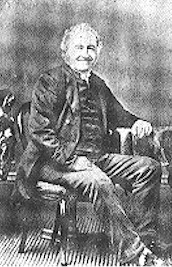
Edward Mote

In our post-modern love of all things new, coupled with the disregard, if not disdain, of all things old, I hope that some of the wonderful contemporary Christian music will still be sung 200 years from now.

You know that I walk most mornings and try to both pray and listen to God during that very quiet time. One of the half-dozen songs that I regularly sing (very quietly) to myself as I walk is the hymn My Hope Is Built On Nothing Less, written by Edward Mote around 1834.

Edward Mote was at first in the cabinetry business which explains the framing metaphors in the first verse of the song—something I missed completely until I really focused on the words in recent years.

I dare not trust the sweetest frame, but wholly lean on Jesus’ name.   These words still challenge me to think about the other things I construct in my life to give me stability! Sometimes these constructs are quite sweet as the song says, like family, friendships, even church—but all structures constructed from temporal materials by human hands will eventually fail.

Sweet parents die and leave us alone; the best of spouses turns out to be just as human as I am; friends drift away, and even the warmest church fellowship can cool—nothing is the same yesterday, today, and forever, except  Everlasting God!

I love this song because it does not try to dispose lightly of the ‘whelming flood . . .  when all around my soul gives way.  But Mote captured in the words—at least for me—not the inevitable eternal victory with Jesus that will make everything right, but rather the Beistand that is the very nature of Jesus.

Sorry to use the German word, but it is just better than any I can think of in English at the moment. Beistand is literally “standing beside” .  It’s not rescue from the ‘whelming flood, but rather  that Jesus gives—my Hope and stay!  I am not alone—ever—regardless—in spite of!

Jesus came in the flesh and dwelt among us! “I am with you always!”

And what a beautiful expression of the grace of God: When He shall come with trumpet sound . . . dressed in His righteousness alone, faultless to stand before His Throne!  I love the repetition of He, His, His!  It’s all about Jesus—from the Beginning to End—and to the New Beginning!

The music carries the message so well in the chorus: staying on the same note, lifted off the bottom of the scale: On Christ the Solid . . . then climbing one worshipful step up to the Rock I Stand . . . for me a very musical expression of personal  stability in Jesus!

My Hope is built on nothing less than Jesus’ blood and righteousness. . . . that’s my prayer and my declaration this beautiful Sunday morning!

Just a little historical note: Edward Mote was such a faithful minister that at the end of his preaching career, the church wanted to give him literally the keys and title to the church building.  Reportedly, his reply was, “I do not want the cha­pel, I on­ly want the pul­pit; and when I cease to preach Christ, then turn me out of that.”

He didn’t need the security of ownership. He enjoyed the security of faithful Hope!

My computer is having trouble, which has meant that I did not have good internet access, so I’m going to finish this series of traveling thoughts today even though we don’t actually leave Europe until Thursday.

Our granddaughter Cassidy flew by herself (again) from Dallas to Frankfurt, where we picked her up last Friday.  Since she was three or four years old, Mimi (Sherrylee) has been reading her the Madelein books about the little group of orphan girls who live in Paris and always walk in two straight lines!  We’ve told Cassie many times that someday we would take her to Paris, so this year we did.

Cassie slept in the backseat while we drove from Frankfurt to Paris.  Although she slept through most of the countryside, when she woke up told her all about World War I which had been fought in much of that region. The French have many new signs commemorating different nations who fought in France, probably as preparation for remembering the centennial of the beginning of the “war to end all wars” in 2014.

We had a dream Saturday in Paris: petit d’ jeuner, Notre Dame, Sant Chapelle, Musee D’Orsay, and the Louvre—being typical Americans and seeing lots instead of looking closely, but somehow it seemed to work better with a 12-year-old granddaughter, and this was all about her!

We finished the day with a trip to the summit of the Eiffel Tower on a perfectly clear night. I have to admit having been in Paris three or four times before and never really enjoying it that much. Somehow seeing it all through Cassie’s eyes on a beautiful sunny day has totally convinced me what an awesome city Paris is!  (See, I can even talk “teenager”!)

Our last three days in Europe have been at the Euro-American Retreat, held each year in Rothenburg ob der Taube.  About 140 Europeans and Americans, most of whom live in Europe, come together to be refreshed by worship and fellowship.  We try to come whenever we are in Europe in November.

Yesterday was a typical afternoon, where after the morning sessions, we had lunch with John and Beth Reese, who direct World Bible School. Then we took Tony and Leslie Coffey from Dublin, Ireland, as well as Paul, Carol, and Jesse Brazle (Antwerp) to Dinkelsbuehl, another walled city not far from Rothenburg that Sherrylee and I knew about.

We talked and talked, walked and talked, stopped for coffee and Kuchen (Black Forest cake), and even shopped a bit before heading back for the evening sessions.

Tonight is first the teen banquet and then the children’s singing program. Cassie honored us with an invitation to go with her to the banquet!  Tomorrow we pack up and start getting ready to go.

The small German towns of Reichenbach and Linden Fels will be our last stops on the way to Frankfurt, so that we can show Cassie where her great-great-great grandfather was born and where his family left to come to the United States in 1848.  Some things are better shown than told about—ancestors definitely belong in that category!

Happy Thanksgiving to all of you!  God is so good. Seeing so much of the world just makes me ever so much more grateful to Him for the richness of His blessings. He didn’t have to make anything beautiful or loving or fun—and, in fact, He made so MUCH that is beautiful and loving and fun!

Thank you, Lord!