Feeds:
Posts
Comments

Sherrylee and I took our oldest granddaughter and her friend to see Alice In Wonderland on Saturday. I was reminded that any time you take someone you care about with you to a movie, you see it through more than 3D colored lenses.  (My sister-in-law just told me a story of innocently and blindly taking her mother to see The Piano.  Afterwards she apologized to her mother, quite certain that her mother had barely avoided apoplexy, but Mom replied, “Oh, well, I’ve had three children. . . . “)  Anyway, back to Alice.

Overall, we enjoyed Alice a lot. It was clever, great design, well-acted, and full of interesting characters.  As in most dramatic productions, the villain was probably the most interesting, so let’s start with her, the Queen of Hearts.  Here are four ideas for talking with your kids about this film.

1.       People with big heads usually do not get along with other people.  Noticing the Queen’s unusually big head provokes a talk about how movies use costume and design to develop characters. It has always made sense to depict people who are too proud of themselves as having big heads (Notice even the innocuous Jimmy Neutron.) So don’t get the big head.

2.       Some of the biggest laughs from the kids were when the Queen was using the pink flamingo for golfing and the pig’s belly for her footstool.  Much of what makes us laugh is at the expense of others. People who use other people for their own benefit are not usually nice people—even if they are being used just for a good laugh.

3.       “Off with their heads!” The Queen was a person of judgment, not grace. People who always find punishment as the solution to their displeasure find that others  may obey them out of fear, but they will never be loved for who they are. Mercy triumphs over judgment.

4.       Beware the Jabberwock!  The Queen’s power depended entirely on her weapon of mass destruction!  We face people like this all the time who demand something from us OR, they will fire us, they will divorce us, they will throw a big tantrum, they will do something extreme  that will “destroy” their victim. Take away their WMD and they have nothing.  People whose power over others depends on WMDs are not nice people.

It is always good to have some conversation starters after movies with the kids. Maybe these will help you—and them—and you!

Next:   A Few Thoughts on Alice and the Mad Hatter.
I woke this morning to the report that Bill Gates is no longer the richest man in the world. Carlos Slim Helu of Mexico, worth 53.5 billion dollars, edged Gates out by just $500 million dollars. Also, Forbes reported that there were 1,011 billionaires in the world, with 40% of them being in the U.S. . (http://www.cnn.com/2010/BUSINESS/03/10/forbes.list/index.html?hpt=C2)

That news left me thinking about budgets, mostly our personal budget which is really tight this month with way too many days left.

Early in our married life, Sherrylee and I were committed to making the major decisions of life on the basis of what we believed was right, and the financial impact was not relevant to the decision.  This attitude was the result of compartmentalizing our financial decisions and our spiritual decisions, which we both believe now to have been a mistake.  God made that very plain to us.

We now have a new set of principles that we work under.  I believe that they represent a much integrated approach to faith and life.

  1. Everything belongs to God. Every financial decision is framed with the words, “It’s God’s_____, so what does that mean we should do?”  Includes money, time, energy, health, children—yeah, everything!
  2. God is lavishly generous.  I don’t believe God is conservative.  Look at the descriptive words in Ephesians 2: God’s “…great love for us, who is rich in mercy . . . that He might show the incomparable riches.”  I would like to be lavishly generous like God. If I were, I would be godlier.
  3. The purpose of wealth is to do for others.  The sin of the rich fool was that he thought his barns and wealth were for himself to enjoy. Wouldn’t it be a different story if he had said he was storing for the benefit of the poor and needy?  “You will be made rich in every way so that you can be generous on every occasion, and through us your generosity will result in thanksgiving to God. 2 Cor. 9:11.
  4. We walk by faith and not by sight.   This is the litmus test, i.e, what makes Christians different from just good accountants.  Help me figure out what this looks like though.  I do believe it means making financial decisions based on what God can do, not what Wall Street did last year; I do believe it means taking financial risks for the good of others; I do believe it means prayerfully attempting what seems to be crazy to auditors!  This one gets me into trouble sometimes with the powers that be.  (I still think I’m right !)

I’ve heard Irene Johnson Gatewood, long-time early missionary to Germany,  tell the story often of how she marched into the banker’s office in Germany to ask for a loan of thousands of German Marks to purchase property which is now Camp Gemϋnden.  She was a foreigner, had no collateral, no personal wealth at all, and was making a ridiculous request by anyone’s standards, and yet she believed this was important for the advance of the kingdom, so she did it. The banker believed in her—even more in her faith in God–and made her not only this loan, but continued to help her with the camp’s finances for many years.  Camp Gemϋnden has been the birthplace of faith for many people and continues now almost forty years later to be strategic for the work in western Europe—because one woman walked by faith and not by sight.  That just feels like the right answer to me!

Question:  What are the financial principles you use in making decisions?

Perhaps the fastest growing work in western Europe since the mid-fifties was a congregation that grew to 150+ in about seven years time—three times as large as most churches of Christ in Europe! LST worked with that church for several years, so after thinking about why this work was so successful, I came to the conclusion that the significant difference was that it was a large team effort!  Yes, there was a main missionary family (Americans), but they had recruited two other families (non-Americans) for the core team, AND  they always had 10-15 mission interns with 1-2 year commitment, AND THEN they invited short-term mission groups for 2-6 week stints throughout the year.  The total effort then was about 20-25 team members working all of the time and 5-20 additional workers for special efforts.  In our forty-year relationship with the work in Europe, I have never seen this much manpower focused in any one location.

Quite the contrary. Sherrylee and I were part of a three-family team to Germany in the 70s. Practically from the moment we arrived, other congregations and other workers begged us to split up and not hoard so many workers in just one place. Between external pressures and internal conflict, most mission teams do not make it to a fifth-year anniversary intact.

The team approach to missions in South America is exemplary with great encouragement from Continent of Great Cities. I know of a small handful of Asian churches that are the result of great team efforts, but there may be more.  The principle in North American churches looks different, but is, in fact, the same.

 What About US churches?

Vibrant, growing churches among us do have a visionary leader, but one of the primary characteristics of a strong leader, I believe, is the ability to build a great team of co-workers. The current debate about whether congregations are better off staff driven or elder driven may be slightly out of focus. I would suggest that churches grow that are team driven, and that team are best composed of those in the congregation with the gift of leadership (Romans 12:8) The title that one wears, whether it be minister or elder does not bestow the gift of leadership. Ministers and staff may function as employees, elders may function as a board of directors, but a team of leaders, each exercising his/her own gifts and who can resist the temptation to wish they had other people’s gifts—or even worse, ALL the gifts—this team is a real example of the body of Christ functioning as it should. 

Jesus chose twelve and traveled with many more; Paul always traveled with an entourage; Moses wisely gave up his role as sole judge and shared it with many. Is your church led by a team?

 9 Two are better than one,
       because they have a good return for their work:

 10 If one falls down,
       his friend can help him up.
       But pity the man who falls
       and has no one to help him up!

 11 Also, if two lie down together, they will keep warm.
       But how can one keep warm alone?

 12 Though one may be overpowered,
       two can defend themselves.
       A cord of three strands is not quickly broken.

                                    Ecclesiastes 4:9-12

Last night, one of my Twitter friends, who follows many of the same people I do, noted that there were no preachers tweeting during the Oscars—which is very rare when anything significant is happening!  Many, many legitimate reasons come to mind for this inattention, but the Tweet insinuated something often true of Christians, i.e., that they might not be interested in the most popular stories of our culture and time. 

Here are the reasons many Christians hate Hollywood:

  1. The majority of films depict a completely secular, godless worldview. 
  2. Some films/filmmakers are overtly anti-Christian and often resort to ridicule.
  3. Hollywood celebrities usually do not share conservative Christian moral or political values.

I myself see Hollywood, not as the enemy, rather as the reflection of the Enemy.  When you look around at your world, what do you see? I suspect that if you do not live in a church building or a Christian commune, you see a secular, godless culture, ridiculing Christian faith more than in the past, and that you do not share common values with very many people.  Hollywood zips the culture we live in down into two intensive hours—and such an intense confrontation disturbs us deeply—as it should!

Hollywood is the prophetic voice, not the First Cause of our increasingly secular and materialistic culture.  The best painters, musicians, authors, and, yes, filmmakers tend to operate from the fringe of a culture, not from the mainstream nor the lagging edge.   Years, sometimes decades are needed before mainstream society accepts as “the norm” what creative artists previously produced from the fringe.  Artists don’t create the future; they just recognize the first stages before most people do. (I recognize the influence of Thomas Kuhn’s Structure of Scientific Revolution in my thinking here.)

The numbers have not been reported, but most likely over 40 million Americans watched the Oscars this year. In 2009, Americans bought 1.42 billion movie tickets. Add to that the significant number of movies that are included in the twenty-eight hours of television weekly per capita in the U.S. and you get the feel that somebody out there is finding something they need or can identify with in these productions. Perhaps if we watched, not passively, not fearfully, but thoughtfully, we Christians might discover more connections from which to converse about Christ. “For our struggle is not against flesh and blood, but against the rulers, against the authorities, against the powers of this dark world and against the spiritual forces of evil in the heavenly realms.”  Ephesians 6:12 (TNIV)

Question:  Is disengagement from a decaying culture the only appropriate Christian response?

A church in Eastern Europe invited a campaign group of American Christians to come for about a week. For the last weekend of that effort, the campaign group’s schedule predicted simply “Baptisms.”  As was expected, over 1000 people were baptized that weekend with great celebration. Less than a year later, however, not one of those people was attending that church. Without judging what God did in the hearts of the baptized, we can say for sure that this growth strategy for the local church was not effective. 

 Another foreign church plant that we have worked with had virtually no growth for the first ten years! But the next ten years have seen an abundant harvest.  I would like to suggest that great churches understand two principles that help them develop strategies for real growth.

1.      Great churches understand that harvest is the result of a process that is particular and cannot be abbreviated.   Notice in this generic website explanation of how to achieve “successful growth” of seeds, what seem to be God’s laws about growth, then apply them to your efforts:

A seed is an embryo plant and contains within itself virtually all the materials and energy to start off a new plant. To get the most from one’s seeds it is needful to understand a little about their needs, so that just the right conditions can be given for successful growth.

  • One of the most usual causes of failures with seed is sowing too deeply. . . .
  •  Another common cause is watering. Seeds need a supply of moisture and air in the soil around them. Keeping the soil too wet drives out the air and the seed quickly rots, whereas insufficient water causes the tender seedling to dry out and die. . . . .
  • Most seeds will of course only germinate between certain temperatures. Too low and the seed takes up water but cannot germinate and therefore rots, too high and growth within the seed is prevented.  . . . .
  • Some perennials and tree and shrub seeds can be very slow and erratic in germination. This may sometimes be due to seed dormancy, a condition which prevents the seed from germinating even when it is perfectly healthy and all conditions for germination are at optimum. The natural method is to sow the seeds out of doors somewhere where they will be sheltered from extremes of climate, predators, etc. and leave them until they emerge, which may be two or three seasons later.

2.     Great churches have a strategy for each stage of development. The process begins with ground preparation and seed planting. After germination (length varies), the young plants must be cultivated and protected. Finally, the time—the right time–for harvest arrives.  Churches that hurriedly skip from one stage to the next—sometimes even omitting the more time-consuming steps—if they have any results at all, often  produce genetically weak Christians.

Two Questions: 

  1. What are the implications for mission philosophies that set specific timetables for new church plants to mature?
  2. What are your church’s specific strategies for each stage of development in the people you hope to harvest for the Lord?

 Next:  #4  Great churches are the result of group efforts, not individual efforts.

My wife and I watched the whole first season of Flashforward over the last few days, and I admit being captured by it. The characters are well-developed, the actors are good, and the drama is centered on the human dilemma.  For those not familiar with it, all of the story threads revolve around how people’s lives were/are changed by a global blackout, lasting 2 minutes 17 seconds, during which time everyone saw  themselves six months later doing whatever they would be doing in those 2 minutes 17 seconds. For some it brought hope, for others despair, but for everyone the question became what to do about now.

Today as I was walking, I was thinking about the young character that has learned that he will be murdered on March 15. That led me to the question: what would I do if I knew that in thirteen days I would die? There’s no time for a Bucket List kind of response; there is no illness to usurp mind and body over these last few days as in The Notebook. What would I do if I knew that March 15 I would die suddenly?  Here are my thoughts:

Things I would not do

  • I would not panic spiritually. I would be fearful of the process of dying, but I am confident in a gracious God.
  • I would not feel “robbed” of future days; I’m a strong believer in “All the days ordained for me were written in your book before one of them came to be” (Ps. 139:16)
  • I would not publish this on FB, Twitter, or a blog—that’s just me.
  • I would not join the March Madness office pool or prepare for the fantasy baseball draft.

Things I would do

  • Get my will and financial affairs in order for my wife’s sake.
  • Make appropriate arrangements for the LST ministry to minimize the effect of my sudden absence.
  •  I would once again do something proactively to mend relationships with a few people.
  • Yes, I’d probably do some kind of video for the grandkids—they are so young that they would scarcely remember me. I would not want to be maudlin, but maybe tell them stories from my life. (I have a cassette tape of my Granddad telling stories of homesteading in Arizona in first years of the 1900s, and it is much of what I remember about him.)

What would you do/not do?  Having made my lists, I have now decided that I need to take care of all of this as if my last day were right around the corner.

And by the way, if this kind of conversation makes you uncomfortable, you might try to figure out why because as Shakespeare’s Hamlet says, “If not today, then tomorrow….”

We visited a long-established congregation in Europe a few years ago to talk about future LST projects there. It was a wonderful group of people—around 40—but they were located in an area of town that was widely known to be dangerous because of gang violence and drug trafficking.  These Christians were moderately affluent, drove to their building from other parts of the city, and were not prepared to reach out into their neighborhood. Their vision was for people like themselves and their strategies for the occasional public events were directed to people like themselves—who would likely never come to their part of town for any reason. For quite obvious reasons, this was not a growing church, but one that had settled into a comfortable size and a resignation with things as they were.

So why were they located there and why didn’t they move?  The answers were simple: they had been at the current location a long time and had invested heavily to make their facility very nice, and it would cost too much to move out of this district, so they accepted their circumstances as fait accompli.  

Another European church that LST has worked with over the years started from the desire of one national family to plant a church in their city. Before they even had a meeting place, they hosted an LST team with outreach to their entire city of several hundred thousand. Their first meeting place was quite adequate for perhaps fifty people, but after only a few years and long before they reached fifty, they moved to a larger more central facility, which itself was replaced a few years later by another larger, better situated facility. This group of Christians never outgrew their facility, but moved because they intended to outgrow their facility.

Great churches expect to grow, not just to assemble. They have a “be-fruitful-and-multiply” Vision and they make their decisions and plans (strategies) based on a trust in God’s promise that His Word will not return empty-handed. The fields they are given to work may be difficult—as is the case in Europe in general—but what God states in the familiar Isaiah 55 passage is, “my word…will accomplish what I desire and achieve the purpose for which I sent it.”  

Great churches seek the vision of God in prayer, then expect and plan accordingly, assuming that God is both truthful and faithful.  Great churches seek both their goals and strategy in what God can do, not what they themselves can accomplish.

Question: Not what are the wishes, rather what are the expectations of your congregaton?

Next: Observations on Great Churches #3: Process Precedes Growth

Just this week, I received word that Outreach Magazine, a leading evangelical magazine with a readership of 80,000 people, had selected the Let’s Start Talking Sycamore Series as the #1 small-group curricula for 2009 (See www.outreachmagazine.com .) Since most people do not know about Sycamore yet, I thought I’d use this opportunity to share with you enough to tempt you to investigate more. I believe it has the potential of being a game-changer –but then I am totally biased—so I’ll let you decide.

For 30 years, LST workers have been trained to “let the Word be the Teacher, and you be the illustration,” also, that faith begins with the story of Jesus (“These things are written so that you may believe that Jesus is the Christ, the Son of God—John 20:30,31). Working this strategy creates a very non-threatening, natural relationship between two people in which a Christian can easily find natural words for sharing  faith with another.   About five years ago, returning LST workers began asking for materials to use here in the States with their family and friends. All LST materials prior to Sycamore used a person’s desire to improve their English as the starting point for the relationship; what our workers wanted was something they could use with anyone.

As we sat down to work on this project, we set the following goals for this new material:

  • It would continue to be Word-centered, starting with the story of Jesus in the Gospels.
  • It would assume no faith on the part of Readers (LST jargon for a Christian’s conversation partner).
  • It would be for a post-modern culture, which meant that it would not be linear sequential, i.e, logically building upon biblical truths in order to reach a rational conclusion.
  • It would nurture authentic relationships.

We currently have three workbooks published, titled The Life, Encounters, and Stories, but have six more in progress. In addition, we produced a valuable training DVD with a training guide that is essential in order to use Sycamore most effectively.

Finally, let me say as a father how proud I am of our daughter Emily, the author of the series, who bears with my ideas and intrusions and whose love for Jesus and sensitivity to those who seek is found on every page. And she is great on the DVD too!

If you would like to know more about the Sycamore Series, go to www.sycamoreseries.org .

Sherrylee and I often joke that all we have ever seen in the 60+ countries we have visited is the airport, the road to the church building, and the missionary’s living room. While this is not literally true, it is true that we have had opportunity to visit with hundreds of churches around the world and to talk with hundreds of missionaries and national Christians. This proximity has given us an unusual vantage point for observing what I believe to be essential qualities for great churches.  And by great I do not necessarily mean the largest, but I do mean those churches that seem to me to be truly living and breathing as a strong body of Christ in their culture/country. Allow me to share these with you over the next few days.

Great churches and great missionaries realize that neither the church nor the work belongs to them.  “Unless the Lord builds the house, its builders labor in vain.” (Psalm 127:1) Missionaries/Ministers/Leaders may give their lives to a country or a congregation, but regardless of how much they have given for how many years, the church belongs to Jesus who paid for it with His sinless blood. Too many mature congregations have been “owned” by charter members, by large contributors, by family dynasties, or special interest groups. Equally as many have been owned by founding missionaries, legacy ministers, or irreplaceable elders. I have seen churches forced to literally ban their founding missionary from their building to escape their ownership.

 Great churches have leaders who know that they are replaceable; in fact, great leaders plan to replace themselves. It may feed some egos, but it is no compliment to admit that a work might die if a particular leader were not there. A great leader would be working intensely to remedy that situation quickly.

Even Jesus, the Greatest Leader, said, “Don’t believe me unless I carry out my Father’s work” (John 10:37). He also said, “But I tell you the truth: It is for your good that I am going away. Unless I go away, the Counselor will not come to you” (John 16:7).  

Great churches have great leaders who acknowledge with every word and deed the One who owns them as slaves and who intentionally give up a posture of “ownership” for the health of the body of Christ. The practical result of accepting this principle is the absolute end of turf wars, of jealousies over resources or results, and of battles over authority and control.

Question:  How would you know if YOU were acting as an “owner”?

Next:  Great churches work from a prayer-sought Vision with a prayer-based Strategy. 

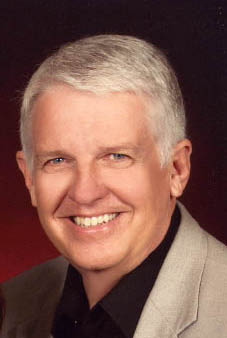
Mark Woodward

Over forty years ago I wrote a weekly column for the Harding Bison called “Faith, Facts, and Fun.”  (Please don’t attempt to find those articles. I think a review of the movie The Graduate (1968) got me into big trouble!) Although I have written much in the ensuing years, I have not attempted weekly writing since then. So with just a little trepidation, I must confess that I’m pretty excited about starting this blog.

                Here’s the direction I would like to go and the promises I am willing to make (This feels like the scene in Citizen Kane when Kane buys his first newspaper company…)

  • I will be honest and truthful, but not blunt.
  • I will try to limit myself to what I know about and not write about things I don’t know about.
  • I will try to be helpful to you the Reader rather than just cathartic for my own benefit.
  • I will stop when I’m finished.  

In addition, it seems that blogging is better with a focus, so here is my current thinking. The areas I feel most comfortable in, where I believe that you might be interested as well, are as follows:

  • Christian missions –especially foreign missions, and even more narrowly short-term missions.
  • Christian culture – especially juxtaposed to western culture, and even more narrowly in family cultures.
  • Bible study – I really want to share regularly things I learn about the living Word—it’s just who I am.

I look forward to the conversation with you.