Feeds:
Posts
Comments

Posts Tagged ‘movies’

“It all begins  . . .  with a choice.”  And so I felt last night when Sherrylee wanted to go see the third Twilight movie.   We told our friends at supper that we were doing it so we could still have intelligent conversations with our daughter and daughters-in-law as well as the young women on our staff. We entered the theater with low expectations, but we were both pleasantly surprised by the film. For us, this episode in the Twilight Saga films was far and away the best.

Lest I end up with either a stake or a silver bullet (depending on your lifestyle) through my heart, let me just say that I have not read any of the books, so my only information is from the films themselves. My second disclaimer is that I am a male, and these movies are 100% for near-adolescent girls through women whose self-image is 18-25—and I truly do not mean that disparagingly. Don’t we all think of ourselves younger—locked in at a certain age—which makes crossing those birthday milestones that force you to re-think your age just that much more painful!

One of the reasons we had expected less from this film was anticipation that it was all about the war between Victoria’s army of vampires and the Cullen Clan–don’t you love the names! Clans conjure up images of either wild west feuds or Braveheart—but it wasn’t; rather, it did focus on the main characters and their choices—mostly choices about love.  Talking about love choices with your teenage girls should be fun!  I think I would start with questions, not comments. Try these questions and then listen to what they say. After that, you might get to make an observation or two—that’s your choice!

1. Why does Bella love Edward? He’s a pretty face, he’s an “older man,” he’s chivalrous (I’m sure they won’t use that word!), but he also tries to control her and he’s only as passionate as a cold guy can be! So what’s the attraction? . . . You are going to learn a lot about your girls if you can get them to answer this question with something besides giggles.

2. Why does Bella love Jacob? Jacob is the opposite of Edward in many ways. He’s more physical and more physically attractive, warm, same age, much more passionate, and less “mental”—meaning driven more by his feelings than his mind.  Which one appeals to your daughters? Again, if you can listen, you will learn a lot.

3. How can Bella love both of them? You may get some answers that lead to a conversation about attraction versus love—with your girls being more or less able to differentiate. You might also get hit with a taste of the postmodern (or millennial) , that is, you can’t help who you fall in love with, so you are just a passive pawn in a universe driven by nothing. This is a great opportunity to start the real meat of the conversation about love being a choice.

4. Love is a choice! Ok, finally you get to make a statement—and this is really an important one.  Especially this film shows the personal choices that not only Bella, but all of the characters are making. Bella is choosing Edward, not only out of great romantic love, but also because she has always felt like an outsider and powerless and with the Cullens, she feels like an insider and powerful!  Edward is choosing to do the most selfish thing he has ever done, endangering Bella’s soul because he loves her (This might lead to a great conversation on whether this is really love!)  Jacob chooses to fight for Bella’s love because he loves her and believes he is better for her.  (Here’s a thought question: Would Jacob turn Bella into a Wolf if he thought it would cost her something as precious as her soul??) True motivations are always complicated.

5. Is Bella making good choices? I’m not really fond of this character. She’s broody and conflicted, too much so for my tastes.  I don’t like it that she tries to take Edward to bed. (BTW, if I had teenage daughters I would tell them that very few guys will resist if a girl comes on that strong. The boys should—but very few will! ) I understand her conflict with marriage—so typical of young people today who are mostly the product of broken marriages—but I don’t like her choice of not marrying.   I do like that she respects her parents; but she doesn’t really listen to them enough—another bad choice.  She, like many kids, is not a bad person, but  I see her making lots of bad choices . . . . so how does a girl not make these or other bad choices?

6. In our story, does God have a role in any of these choices? Take every opportunity to remind your teens (and yourself) that any story that leaves God out is not the story we want to live out.  That’s our number one choice that should frame ALL other choices. You don’t have to preach a sermon—just let your kids know that for a Christian, this is the most important choice of all.

As I said, those of you who have read all the books may have a completely different view of motivations; I’m only talking about what I see in the films.  Apparently at least two more sequels are already in the pipeline: Breaking Dawn, Part One and Part Two. Whether you are a Twilight fan or not, your daughters/granddaughters probably are, so I’d suggest you use the opportunity to listen first, then talk about love and choices.

And it wouldn’t hurt you Dads/Granddads to be a part of this conversation either! Suck it up and see it! (Oops, wrong metaphor!)

Read Full Post »

Not many remakes really stand well against the original, but the 2010 version of The Karate Kid is so true to the original that it holds its own.  Jaden Smith has a great screen presence, but is so small—even for the 12-year-old he is portraying–that it makes the physical punishment, the teacher-student relationship, and especially the little romantic involvement a little unbelievable for me. It is easier to imagine this particular story with an older teen like Daniel (Ralph Macchio) was in the 1984 version.

With younger actors, this movie feels more like a young kids movie, probably for 10-14 year-old boys. I wish they had left out the 12 year-olds kissing, and I thought the beatings and hitting were too harsh for this film’s intended audience—or maybe it was just the parents of the kids watching who were closing gasping.

I also found myself wishing they had not set up the Chinese as villains. Maybe I’ve seen too many Asian mob movies, but I’m not much for any film that encourages negative ethnic or nationalistic stereotypes to children, who might internalize a negative response to certain nations, much like kids did about Germany and Japan after WWII because of constant exposure to war movies and cartoons that were used as propaganda during and long after the end of the war.

I did love the beautiful photographic tour of China, although the narrative relationship of those trips was pretty thin.  I don’t know if the kids will even notice the scenery, but perhaps it will stick as somewhere they would like to go someday—to see the lady standing on one leg with the big snake in front of her!!

Here are some topics for talking to your kids after you’ve seen this movie together.

  1. Are the Chinese people mean? I’d love to know what your kids say if you ask them this question. Can they differentiate between the bullies and the Mr. Han—who is also Chinese? This conversation goes to my statement above about helping our children recognize good and bad are not national or ethnic characteristics.
  2. What would you do if kids tried to bully you like those boys did? Dre could have walked away from even the first fight, but he didn’t. He did not have to throw the bucket of liquid stuff on the boys to antagonize them. Most of the time, we have a choice about fighting. That’s the first lesson kids need to learn. Secondly, fighting generally leads to more fighting.  What finally won the respect of the bullies was not beating them up; it was achievement, excellence, competency, and courage—with integrity.
  3. “No weakness. No pain. No mercy.” This motto of the bad Kung Fu master is a great teaching moment to show that Jesus was the exact opposite. He gave Himself up, He suffered pain for us, and He is full of mercy!    Even our children will likely meet those coaches/instructors/mentors who think that there is one ethical standard for church and another for “real life,” where you do whatever it takes to win.
  4. You don’t get good at something without a lot of hard work. This fits in with our children learning delayed gratification.  If you haven’t read Outliers by Malcolm Gladwell, you should.  He argues that the great successes of people are a result of a minimum of 10,000 hours of practice for which other people either don’t have the opportunity or the patience.
  5. Was it more important for Dre to win or to continue in the match? It wouldn’t have been as good a movie for sure if he had lost, but it might have been truer to life for most people. We should acknowledge to our kids that life is not fair. Sometimes people cheat, and they hit us hard, and it hurts.  Our first choice—and maybe the only choice—is to either get up and continue, or to stay down and quit.  Even if you get up, you may not win—ask the US Soccer team about that! But you have greater self-respect and respect from others, if you choose to get up!

Good movies create real emotions. The Karate Kid is a good film, which is why audiences have clapped and cheered at the end of the film. You will have fun checking your own emotional responses against the ones your kids have. That will be the stuff of great conversation.

Read Full Post »

“Pity the fool” – I can still hear our 10-year-old son laying this line from the original A-Team­ television show that ran from 1983-86. I must admit that I was not a regular viewer, but for some random reason, we saw it last night in Flagstaff, AZ, on our way home to Texas—and we both enjoyed it.

Virtually all of the characteristics of the TV show are maintained in the film: same characters, same plotlines, new high-tech ways of exploding things—and everything explodes—and, although some people die, it is so cleanly done, you sometimes wonder if they were killed or not!  We laughed a lot, and although the film was a bit too long, maybe it was just because it was midnight when it was over!

The main audience for this film is probably 10-15 year-old boys and then the mid-thirties guys who want to relive their childhood. No matter which children we are talking about, here are a few things that would make good conversation about the film.

  1. Make sure everyone knows the movie is really a cartoon! Just like the coyote gets boulders dropped on him and Elmer Fudd’s rifle blows up in his face, there is lots of violence but it is not real—and not intended to be.
  2. What a great film to instill the value of team work! Much of the film is spent getting the team together—twice—after being split apart.  The bad guys even put them in different countries because they know that individually they are harmless; together they are impossible to stop.
  3. It’s a great opportunity to talk about how you deal with conflicts of conscience. B.A. Baracus (the Mr. T character) becomes a pacifist in a stint in prison and tells the team that he can’t kill anybody anymore.  He sticks to his position even though he is threatened with death and could easily fight his way out of it.  What a great ethical situation to talk about. Of course, Hannibal is able to share another viewpoint and the real Baracus comes back, but even that is an opportunity to talk about how we train our consciences.
  4. Take the opportunity to teach your kids about Gandhi and the non-violence movement that he used to overthrow the British in India.  Both Baracas and Hannibal use Gandhi to ground their philosophies, so it is a natural time to teach about a man who changed western culture. I myself would extend that conversation to Dr. Martin Luther King and the civil rights movement. Dr. King consciously imitated Gandhi, so there is an obvious connection.

Don’t get too heavy though. It is just a cartoon.  Let the kids enjoy it.

Read Full Post »

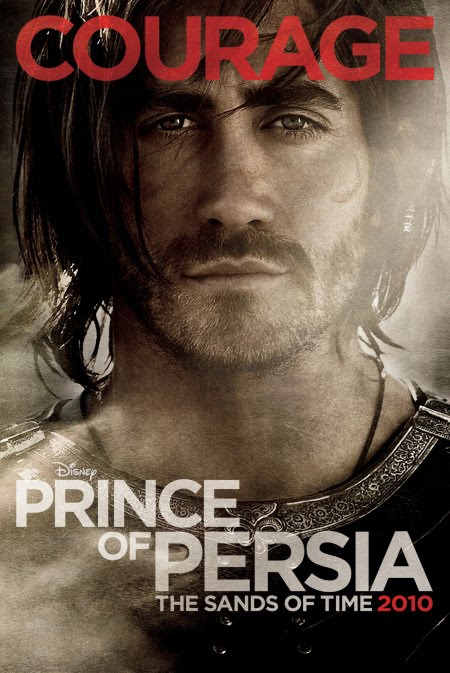
Prince of Persia (2010) is based on a 1989 video game, so the obvious audience for the film is young teens—probably boys more than girls. Parents and grandparents who take their kids and grandkids will not be embarrassed or bored.

You will probably find it a diminished, postmodern Indiana Jones film, by which I mean lots of humor, snakes, whips, a beautiful but slightly treacherous girl, and supernatural weapons of mass destruction. Jake Gyllenhaal is not Harrison Ford, but Ben Kingsley makes a great villain and Alfred Molina has some very funny lines. The ostrich races are a great touch.

As you drive home from the film with the minivan full of kids, here are some conversation starters that might help the kids think about the film both intelligently and spiritually.  Remember, these are conversation topics, not lecture topics—oops, got a little preachy, didn’t I J!

  1. You don’t have to be born a prince to be a prince! Dastan was a street kid with nothing but a strong sense of justice and right. Then he was an adopted kid with lots of stuff, but no power or future. He continued to stand out and become the best of the brothers because of his courage and his character. Kids don’t all start out equal; many start with huge disadvantages, but all can become people who others look up to, people who do good and not evil.
  2. Beauty can be used for good or evil! This is a great topic for boys and girls both. The princess had great beauty which gave her both opportunity and power.  She had to make many choices of whether to use it for good causes that helped others or just for her own benefit. And sometimes her beauty got her into trouble. Beauty can’t be the goal; beauty is just a tool to be used for good or bad.
  3. Good people have bad things happen to them. Dastan did not try to kill his father, but he is blamed for it and has to run. The city of Alamut is conquered even though it had not rebelled. Life is not fair, so the only real question is what you do when you are treated unfairly.
  4. Stand up for what you believe to be right. In real life you don’t get a do-over! In the film Dastan knows from the beginning that attacking the city is wrong, but he lacks the self-confidence to speak up against his older brothers. In the film, he gets a second chance, but in real life that rarely happens. Teach your children to be strong and courageous and to not be afraid. Stand up and speak up for what is right—all the time.

If your teens are a little older and would like something really challenging, ask them if they know  the prince of Persia story in the Bible. Then when you get home, point them to Daniel 10 and let them think about the role of angels in spiritual warfare.  You won’t have the answers to all of their questions, but it’s a great chapter to open our eyes to the unseen realities of the world we live in as well.

Prince of Persia is a typical Disney film, very clean with just a touch of violence to rate it for older children. And by the way, don’t miss the small political jabs in references to taxes and WMDs.

Read Full Post »

In celebration of our first anniversary (April 1972), Sherrylee and I drove our little Chrysler Simca down the autobahn from our home in Munich, Germany, to the city of Verona in northern Italy. It was just far enough away that we could do this on a long weekend and a short budget. And since both of us were English majors, well what more needs to be said.

Perhaps this is the reason that we saw Letters To Juliet last night when we could have seen Robin Hood. We don’t go to much fluff, having avoided all the latest round of Nicholas Spark tear-jerkers and their lookalikes. Perhaps it was that we had my in-laws with us, and they hardly go to the movies at all. When both of you are in your 80s, I suppose you have seen everything!

Nevertheless, we entered with low expectations and left having thoroughly enjoyed one of the best fluffy movies that I have seen in a long time.

The plot is absolutely predictable: a young woman (Amanda Seyfried) goes to Verona with her fiancé on a pre-honeymoon, where she becomes involved with the local women who respond to lovers’ notes left under Juliet’s balcony. She discovers a note that has been hidden for over fifty years, answers it, which leads to an older British woman (Vanessa Redgrave) and her grandson (Chris Egan) coming to Verona to find Lorenzo!

You can imagine much of the rest, so I won’t spoil it for you, but let me tell you what made the film delightful. First, Vanessa Redgrave does an amazing job of not letting her character—the woman chasing love lost 50 years ago—become schmaltzig. Instead she plays her role with extraordinary sensitivity, perhaps more than the film deserves—but it makes her character believable and sympathetic.

Amanda Seyfried may have started as a Mean Girl (2004), but most recently she has taken on roles that exploit her very blonde innocence—and I don’t mean that disparagingly. I enjoyed her in Mama Mia and again in this film, where she manages to pull off a very tricky role. Her character Sophie has to show disappointment in love, ambition, intelligence, abandonment, but most of all vulnerability. With only a few exceptions, I thought she was fun to watch.

Her counterpart is Chris Egan, playing a stuffy, British prig who is captured by Sophie’s winsomeness. Franco Nero, the famous Italian actor, enters on a white horse….yes, it is true—without any damage to the film whatsoever.

It is a very clean, little romantic comedy—nothing that embarrassed my in-laws at all—and some scenes that are quite funny.  (I do wish they had just said the word “marry” once.)The beautiful Italian countryside and the scenes of Verona and Siena are just about worth the price of the tickets alone.

For a light, fun, clean night out, you won’t be disappointed with Letters To Juliet.

Read Full Post »

« Newer Posts