Feeds:
Posts
Comments

Archive for the ‘Christian Culture’ Category

I’ve always been a fan of All I Really Need To Know I Learned in Kindergarten by Robert Fulghum because of the simplicity of his insights. Part of what he says is that it is never too late to start learning what we should have learned in kindergarten!

This last Saturday, I spent part of the day going to two basketball games: Carter (6) played at 9:00 in a league tournament, and Kellan (8) played his final season game against a team that had not lost in two years—according to him!

Youth basketball has some different rules which help the kids not only enjoy playing more, but gives them a chance to learn parts of the game that they otherwise might be tempted to ignore or leap over for the sake of a quick win, but at the expense of developing proper techniques and skills.

I was just thinking this morning that we could all learn something from youth basketball’s adaptation of the these rules.

  1. Youth players must pass at least once before anyone on the team attempts a shot. I’m sure the intent is to keep one dominant player from “hotdogging,” that is, taking the ball from one end of the court to the other and not using the other team members. For us grownup players, however, it is a good reminder that team play is a better strategy. A player who won’t pass the ball thinks too highly of himself.
  2. No more than one defensive player is allowed to guard the opponent with the ball. There is no worse feeling than being outnumbered and surrounded by opponents! That threatening sense of impending loss that makes your stomach churn when called to account before a panel or when two or three scowling colleagues enter your office at the same time—our experiences are bad if cornered!  Few people survive being ganged up on without feeling the need to fight back—fairly or unfairly!
  3. Defensive players may not guard the offensive players as long as the ball is in the backcourt. For young players who don’t dribble well, who can’t run and dribble at the same time, they need a chance to get started before they face the opposition, so this rule awards them half the court without interference. Young people, young Christians, young marrieds, young students, young employees often need the same kind of gracious allowance. Give them a chance to learn to run and dribble at the same time.
  4. Referees are not required to blow the whistle on every foul or penalty. Especially in the six-year-old league, the boys sometimes run five or six steps with the ball before they dribble; they start and stop their dribble, they commit backcourt violations—just all kinds of rules are flagrantly broken—most to which the boys are quite oblivious!  The referees see the violations, but they do not call them every time; in fact, really only the most flagrant violations get the whistle.

This drives the parents crazy! The parents are screaming “double dribble,” three-second violation,” “illegal screen,” – I haven’t heard “goaltending” yet, but almost everything else. The referees who graciously overlook the violations of the kids have to put up with parents who did not learn anything in kindergarten, I’m afraid!!

 

So, I spent a couple of hours with the grandkids and learned to be gracious, to pass the ball and be a team player, but not to gang up on people and not to blow the whistle every time someone commits an offense.

Even granddads can be schooled!

By the way, Carter lost his game pretty badly, but afterwards he really didn’t even remember the score. Kellan’s team beat the previously undefeated team with a long shot in the last ten seconds of the game.

They both got trophies!


Read Full Post »

Since we are big Matt Damon fans and since there have been no good releases for months, Sherrylee and I were really looking forward to The Adjustment Bureau which opened in our area tonight. We were disappointed. The acting is not bad, the special effects barely special enough to be noticed, and the dialogue worked ok, but the film overall was too big an idea for too little a movie.

I won’t spoil it for you, but even from the trailers you can figure out that the plot revolves around a young politician David Norris (Matt Damon) who falls in love with a ballerina (Natalie Cook).  Because a continued romance is not part of “The Plan,” a squad of men in hats starts intervening in their lives to make sure they never meet again.

Inadvertently the adjustments are messed up, the couple meets again “accidentally,” and the rest of the story is about their trying to find each other, hold on to each other, and ultimately choose each other–or not.

The film is a fairly inane romance, wrapped in a very artificial theological cloak! It’s not as if the questions of free will and/or determinism are not almost a standard part of cinema’s repertoire.. Some recent similarly romantic films that you might remember are Serendipity (2001), and 500 Days of Summer (2009).

In fact, manipulating reality is the essence of the cinematic art, so choices—or non-choices—which are also choices—or to place it in theological terms, free will or determinism–are not far removed from any film’s narrative—in the same way free will and/or determinism lie embedded in every human action’s cause and effect.  But, now I’m getting deeper than the film deserves.

If you want to test the theological prowess of your date for this movie, you might try the following questions!!

1.The Adjustment Bureau assumes that the Chairman’s plan is not comprehensive. In other words, some things are directed to happen according to the plan, but other things just happen by accident.  Can free will and determinism exist in the same world side by side?

2. Is David Norris’ choice of submitting to The Plan the same as the biblical choice of submitting to the will of God?

3. “The Chairman” seems to have the obedience of his staff, but what seems to be lacking in them is any sense of relationship, anything resembling faith, trust, or love.  How do these emotions change the debate between free will and determinism?

4. Multiple plans seem to exist as if the Chairman’s plan is based on current knowledge and contemporary events. Many Christians have this same view of God’s involvement in the world, i.e., that He limits his foreknowledge to the present and limits his actions to that which is solicited prayerfully by his people.  Are there really many different outcomes possible to human history?

5. The final message seems to be that the goal of the whole Bureau, from top to bottom, is to educate the human race to make good choices. Once people learn to make good choices, then the need for determined direction becomes moot.  Do you find this to be a Christian viewpoint?

That’s all the space this film deserves.  It’s not a bad date movie. But if you are easily irritated by faulty theology or shallow philosophy, maybe you ought to read a good book instead!


Read Full Post »

Our children all married well–wonderful, thoughtful Christian spouses. Today I want to introduce you to Amber Rogers Woodward, Ben’s wife. She is a dental hygienist, a mother of three, and much more. She has a great blog about her family mostly, but a couple of days ago, she posted the following vignettes from her life that blew me away.

I had just been at a conference where the word missional was used thousands of times, often in an attempt to define it. Here, I thought, is what missional looks like in the real world. Missional is a Christian woman, listening at the right time, naturally talking about her faith at the right moment, a woman who is in tune with what God is doing and does not live in the false dichotomy of a life in the church building and another out.

I have to share this with you–with her permission, of course. I believe you will be inspired as I was.

Every day I have patients that AMAZE me with their stories of faith, struggles, fear, and joy.  I know I say this every time…but I never quite get use to the fact that I have such a unique job position that drops me into people’s lives, literally face-to-face:), to be a sound board for each of them. Hearing my patients stories  over the last 10 years has truly changed my life in SO many ways!  So every so often  I like to write a few of them down…to remember…and to share with whoever is reading this:).

Mr. J.  and I were talking about the fact that he use to smoke, how he quit 2 years ago, and how he managed to quit.  He was kind of ho-humming around about how he quit…I kept pressing  him saying, “I’ve heard it’s really difficult to quit…you just quit…no medication or anything?”  Finally he began to tell me his story.  He started by saying, “Let me preface this story by the fact that I am not all that spiritual…I believe in God…but I don’t really go to church anywhere…I’m a really good person…but just really haven’t had the time to look into church stuff.  So I had tried to quit smoking numerous times in my life…I tried everything…hypnosis…medication…cold-turkey…none of it had worked.  One day I literally decided that I could never do this on my own.  I got down on my knees one night before bed and I prayed to God to take this desire away from me…that I was giving up total control…and I needed His help.  When I stood up, I can’t explain it, but I knew I would NEVER touch a cigarette again.  I just felt different.”   I was telling him how great that story was and how neat it is that God chose that particular way to show Himself to him…when he tells me, “I know that God has WAY more important things to do in the world than care about my desire to quit smoking, yet I can’t explain it, that is exactly what happened!” Of course that led to a great discussion on how God cares about every little desire of your heart because he LOVES YOU!!!”     I smiled all the way home thinking about how Awesome God is to show that big burly man that he cares about every little desire…if you surrender it to His Will!

This next patient, 60 yo female,  I had not seen before.  She doesn’t come in all that regularly.  I had seen in her chart that her husband had died about 6 months ago.  While I was cleaning her teeth we were talking about her husband, life, etc.  I had seen on her chart that she had been diagnosed with sleep apnea and  so I asked her if she was sleeping with a machine to help at night.  She was telling me that it was uncomfortable and noisy and that ever since her husband had died she had not worn it.  So we kept talking, I was encouraging her to wear it, and I told her about my dad having had it and that he passed away at the age of 40!  I got up to go get some x-rays and as I was sitting back down to finish cleaning her teeth she looked at me with big tears in her eyes and said, “I think you are an angel that God sent to me today to tell me your story of your dad.  I’ll be honest I have stopped wearing it, because I want to die, and I feel like that would be the easiest way to go…just go to sleep one night and not wake up!  Because of our conversation today I promise you that I will never go another night without wearing it!”   I really do not even have words to describe how I felt…we talked a little while longer…she left…and I was in AWE of the conversation we had just had!  WOW!!

This next patient I had seen a few times before and I knew that her daughter was expecting twins any day.  So she came in to get her teeth cleaned and I was asking her about the babies.  She told me that about 4 months prior they had discovered in an ultrasound a large mass on one of the babies tailbone…and that they were told that it meant she would be born with spina bifida.  Her daughter had delivered the babies a couple of weeks prior and discovered that the mass was only a cyst…it was removed…and she is perfectly healthy now.  She was talking about how they had been praying for the mildest form of spina bifida to be the outcome.  What she said next was such a good reminder for me…she said, “I can’t believe that we didn’t have enough FAITH to pray that there would be NO spina bifida…we just believed the doctors…they said they were 99% sure!”  This was such a good reminder for me to have enough faith to be BOLD in my prayer life…that ANYTHING is possible with God!

See more of Amber’s posts at her blog site. You can get to it in the Blog list in the right column on this page.

Read Full Post »

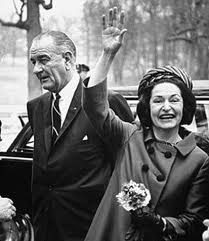
Concluding this short series is a woman whose name was known around the world, but who lived long enough to be forgotten by many. I appreciated the chance to be re-introduced to her and to get to know her more as a person than as a figure in the news.

Lady Bird Johnson

There is a whole section in the LBJ Library dedicated to his wife Lady Bird. Of course, I knew her as having been an advocate for wildflowers in Texas and as the one responsible for removing the billboards from the interstate highway system, but that was all.

Again, I was struck by a strong person who found herself in a position to do good, so she searched for avenues to do as much as she could. She was very active in lobbying for both the civil rights legislation and for the education agenda of her husband. She consciously searched within his agenda to find areas where she could make her best contributions—and she made a lasting impact on the country.

Lady Bird 2004

Then she was widowed when she was just 59 years old in 1973.  She lost her husband, but she did not lose her platform nor her will to serve, so she continued her humanitarian activities right up until her death in 2007.

Conclusion

These people may not be spiritual giants, but everything good comes from God and when we see perseverance, optimism, a passion for the oppressed, even a passion for beauty—when we see these in people and when we recognize them as God-given gifts, then, I find, when I am inspired and encouraged—that’s spiritual.

I’ve got three more biographies that I want to read now.

Read Full Post »

On our second day in the hill country, we went to Stonewall, Texas, to see the place where the 36th President of the United States had been born, had worked, and had died.  I thought it would take thirty minutes and we spent several hours there.  I did not expect to meet real people there–just historical figures, but we met a man with big ambitions and a big heart.

Lyndon Baines Johnson

On the land where he was born in Stonewall, Texas, just outside of Johnson City, LBJ lies buried in a family cemetery. His ranch became known as the Texas White House during his presidency (1963-1969). He was the first president to have enough technology to really conduct affairs of his office away from Washington, spending over 500 days of his presidency on this typical Texas ranch.

Unlike H. Nelson Jackson, LBJ is a well-known historical figure in American history. I remember his tenure in office as extraordinarily turbulent years. Assassinations, demonstrations, burning cities, and above all, Viet Nam filled the news reports all those years.

Johnson was not a well-loved president when he left office–maybe unjustly disliked–, but here is what I came to admire as I learned more and more about him.

  • He was a passionate advocate for the poor and for the disenfranchised. He used all of his political power to get sweeping civil rights legislation passed, to build the social net for the poor and aged that we now take as just basic human rights, and to secure equal educational opportunities for all children.
  • He probably worked himself to an early death, and I don’t really admire him for that, but I do think that without his almost inhuman ability to work long, continuous hours, he would not have reached the high goals he set for his presidency. He worked himself to death doing what he thought was right!
  • Johnson is a perfect example of the 10,000 hour principle that Malcolm Gladwell made notable in his book Outliers—which I highly recommend.  Johnson started as a political volunteer when he was twenty-two years old and served at virtually every level, working his way up to the top, so that when he became president, he knew as well as anyone else in Washington how the system worked.  He was able to put thirty-three years of political experience/preparation to achieve in just five years amazing things.

    LBJ meeting with Civil Rights Leaders

After touring his ranch, we went to the LBJ Library and Museum on the campus of the University of Texas at Austin.  We love presidential libraries. I’ve toured four of the twelve now: Truman, JFK, Reagan, and LBJ. I hope to see them all someday. To see all the positive accomplishments of a person stacked up—and knowingly ignoring the dark side—well, almost anyone would inspire us, but these are all men who have faced hard decisions, made hard choices, and have all tried their very best to promote the common good!

May we all spend our lives doing good!

Read Full Post »

Sherrylee and I took last weekend and went to the Texas Hill Country, just west and south of Austin. It’s beautiful during the spring bluebonnet season, but just different in February. We spent a day in Fredericksburg, center of the German settlements in the previous century. It’s becoming quite a tourist stop, but is fun!

In our traveling over the years, we have learned that our best trips are those where we get to explore something that catches our historical fancy.  This trip was no different. We spent time with three historical figures, and coincidentally, all their last names began with the letter J.

I won’t try to recount their history which you would do better to get from Wikipedia or other sources, but I would like to share with you briefly over the next three days what impressed me about each of these people.

The first is a rather obscure person from Burlington, Vermont. We met him late one night as a serendipitous choice on Netflix!

Horatio Nelson Jackson

In 1903, this 31-year-old man bought a used car, hired a mechanic to go with him, and became the first person to drive a car across the United States. It took them sixty-three days, twelve hours, and twenty-three minutes to drive from San Francisco to New York City.

But it is not the feat itself, rather the perseverance of this man that is amazing. In 1903, there were no gas stations, there were no road maps, and there were often no roads—just wagon and horse trails. The car had no windshield, no service manual, and no spare parts to speak of.

Jackson had to use his only spare tire the second day of driving! In the course of the trip, they were lost, they were stranded, they were stuck in river beds, they were misled, they were days without food—this was a dangerous adventure in 1903.

Virtually every part in the car had to be replaced somewhere along the route! When the car broke down, first they had to find a telegraph to order parts from San Francisco, then wait days for the train to bring the part.

In all of his letters to his wife, letters which document the adventure, Jackson never loses heart! He believes that every day will be better, that nothing worse can happen, and he never ever doubts that they will complete their journey.  His optimism in the face of insurmountable odds is amazing!

Sherrylee and I watched the Ken Burns PBS documentary called Horatio’s Drive which told the story as only his documentaries can and loved it. It’s an inspiring story of what optimism and determination can accomplish. You’ll enjoy seeing the documentary too!


Bud rode with Jackson across the U.S.


Read Full Post »

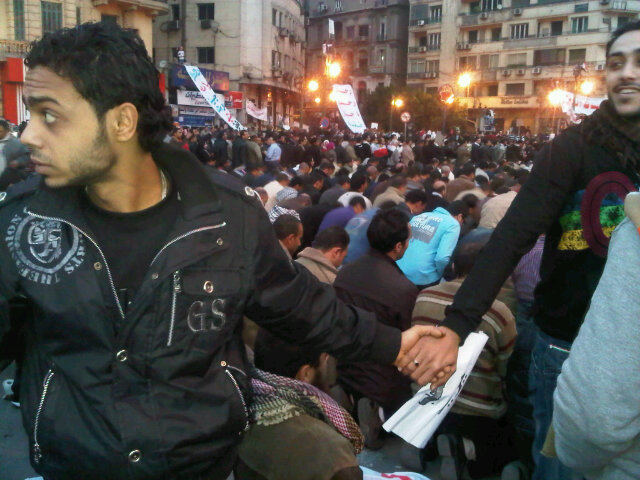
Did you hear the broadcast from Egypt on Sunday that told of Coptic Christians conducting mass in Tahrir Square?  What caught my attention was the report that Muslims surrounded the Christians in order to protect them while they worshipped. (Reuters, February 6 2011).

This action follows many reports of Egyptian Christians protecting Muslim men in the same square as they prayed last Friday. Coptic Christians make up approximately ten percent of the population of Egypt, perhaps the largest Christian community in the Arab world. (For background information, you might want to read this article from Foreign Policy.)

Have you heard about the big controversy among some Christians over whether Christian churches should rent church space to Muslims to conduct their prayer services. What do you think your church would do?

Recently, Christianity Today has featured several articles that raised questions about the relationship between Islam and Christianity as well as between Muslims and Christians.

Why We Opened Our Church to Muslims | A response to “Muslims in Evangelical Churches.” (January 27, 2011)

Muslims in Evangelical Churches | Does loving your neighbor mean opening your doors to false worship? (January 3, 2011)

From Informant to Informer | The “son of Hamas” senses God in his life before coming to Christ. (June 8, 2010)

Dispute in Dearborn | Small ministry creates big waves at Arab festival. (August 18, 2010)

Out of Context | Debate over ‘Camel method’ probes limits of Muslim-focused evangelism. (March 31, 2010)

How Muslims See Christianity | Many Muslims don’t understand Christianity—especially the idea of salvation by grace through faith. (March 1, 2000)

The above list appears in a lengthy article discussing the use of the phrase “Son of God” in Bible translations used in Muslim countries. It is an excellent discussion of the difficulties inherent in cross-cultural evangelism (Christianity Today, February 4, 2011).


If you are having trouble even reading the word Muslim without thinking terrorist, then I think you are a pretty normal American Christian.  Unfortunately, I think the dominate word in that last phrase is American, not Christian. But it is very difficult for many of us to separate the flag from the cross, isn’t it!

I am encouraged that in the middle of the political tumult, Christians in Egypt have acted like Christians to those who sometimes even persecute them.  I’m equally thrilled to see Muslims responding favorably to the Christians.

It begins to sound like the early chapters of Acts, you know those verses that describe the good that the first followers of Jesus did among the people who had killed Jesus (2:47) and the “good favor” that ensued from the entire community.

We and LST have been involved in faith-sharing work with Muslims for many years now. Our first experiences were in western Europe–which is struggling with a mushrooming Muslim population. Then later we began work in places that were secular politically though Muslim culturally, both in Asia and Africa.   I have no personal experience in the fundamentalist Arab Muslim countries, but I do know people who have worked there.

So I have many more questions than I have answers, but I am more and more convicted that not only is vilification of Muslim people wrong, but that either intentionally or indifferently ignoring them is equally ungodly.

I am convicted—as you are, I believe—that God so loved the Muslim world as well as the Christian world that He sent His only Son to die for the whole world!  Isn’t that what you believe too?

So how does that change anything for you today?


Read Full Post »

In anyone’s list of great American speeches, Dr. Martin Luther King’s “I Have A Dream” speech is among the very best.  As I thought about great modern speeches, I thought about Franklin Roosevelt’s “The Only Thing We Have To Fear Is Fear Itself,” delivered early in the Depression that brought America to dusty knees.


I thought about John Kennedy’s “Ask Not What Your Country Can Do For You” speech, delivered when a country was afraid it might be losing its place in the world to Communism.

Then, in a very different time, Ronald Reagan lifted a nation’s broken heart after the Challenger disaster in just about four minutes of carefully planned rhetoric, including the final words about the ill-fated astronauts who “slipped the surly bonds of earth to touch the face of God.”  He also is created practically with the fall of the Berlin Wall with his “Tear Down This Wall” speech.

I wonder if we will ever have another speech of this caliber by an American statesman?  Bill Clinton was a great speaker, but both his most famous as well most notorious speeches seem to all deal with infidelity.  Both Presidents Bush could occasionally produce a reasonable sound bite, but I don’t believe either will make the rhetorical Hall of Fame.

President Obama has great moments!  His eloquence is apparent, but history will judge if his words and ideas inspire future generations as great speeches do!

Of all of these, I believe Dr. King’s is the one that will last the longest. His words are not pretentious; the metaphors are simple, but the power of his rhetoric stirs people to tears even now, some forty-eight years after that day in Washington D.C., on the mall.

If you just think about each of the speeches above, some commonalities are strikingly obvious:

1              The address is unashamedly bipartisan—universal. King does not talk only to or about African-Americans. He talks about “all of God’s children!” Kennedy talks to “my fellow Americans.”  Strident, partisan rhetoric may capture the votes of the masses, but the words have no lasting power.

2.            The words are all meant to bring people together, to unite people behind great ideals! Freedom, universal needs, human rights, these have been ideas that have inspired great work and great words since men could speak. Petty people have petty ideas. Great people rise above pettiness.

3.            Lofty language carries lofty ideas. Sherrylee and I visited the JFK Presidential Library in Boston last year. I remember clearly reading the instructions that JFK gave to his speech writers for his inauguration. He asked for brevity, he asked for simplicity of ideas, but he also asked for memorable language.

We do not live in an age that appreciates lofty language. In fact, perhaps the opposite is true. We are suspicious of rhetoric and we don’t understand metaphor.  Brief attention spans, 24-hour news cycles, and information overload have made extraneous words obsolete!  But are the right words ever unnecessary??

President Reagan could have closed his Challenger remarks by saying, “We are all saddened by their death!” instead of quoting the poetic lines about touching the face of God, but would anyone have remembered it?

President Kennedy could have said, “Don’t expect government handouts; get busy and accomplish your own goals and we’ll all be better off!—but who would remember what he said?

Dr. King could have argued legally the case for civil rights, or simply scathed white Americans for lynching the civil rights of Black Americans. Instead he found rhythm and poetry that lives on!

They all chose lofty words, inspiring words, words that were delivered to bring people together, words that captured people’s imaginations with images they understood.

I have a dream that we can talk civilly to each other in public, that we will expect our leaders to do the same, that we will vote out abusive rhetoric in politics.

I have a dream that we will allow sublime language back into our churches to lift our spirits, to inspire us, to unite us, to help us imagine God, to help us hear His Spirit.

“In the beginning was The Word, and The Word was with God, and The Word was God!”

We once made the acquaintance of a young Greek girl named Mary. She was a wonderful person, but unchurched, so we gave her a copy of the New Testament in Modern Greek. When we gave it to her, we opened it to the Gospel of John and asked her to read these first verses. As she did, she began to cry. She said, she had never read anything so beautiful!

She did go to church with us, but then we lost contact, so I don’t know if the beautiful words became saving words for her or not. I have no doubt, however, that salvation is beautiful, that it is lofty! After all—The Word IS God!

Read Full Post »

Sunday, January 9 was the first official Sunday at the new Southlake campus of The Hills Church of Christ.  Sherrylee and I attended the service as did 524 other people—a number too large for the sanctuary—a wonderful problem to have!

The energy was high and the sense of anticipation strong. Lots of young families were there, lots of children! Chris Hatchett, the campus minister, did an excellent job of introducing himself to those attending the adult class at 9:00.

That things were different was obvious from the moment you walked in the door and were greeted with the bulletin and worship program from The Hills.  The worship team on this Sunday was mostly from The Hills, and even the call to prayer and benediction were The Hills style.

God provided a little icing for the cake: as the back doors of the auditorium were swung open at the end of the service, all were surprised to see that it had begun to snow during services—a Bing Crosby moment for everyone!  We left feeling the Breath of Blessing on this place in the Kingdom of God!

As I told you in the initial post about the Southlake/Hills merger, I am not in any way involved in any of the decision-making groups nor in any of the leadership groups, so whatever I report to you as well as any thoughts I have are strictly from the pew.  (But I do like to sit up front!)

I woke up this morning, thinking about the kinds of questions that these leaders are asking and praying about. I guess this kind of thinking is just in the blood of us missionary types. Sorry! I still drive by vacant commercial property and briefly evaluate it as to whether it would be a good place to locate a new church, just like we did in Germany so many years ago.

Anyway, for those church leaders who might be in similar situations—or who are thinking about being in similar situations—I suspect these are some of the questions our church leaders are facing—questions you might need to ask at sometime as well:

How alike and how different should the campuses be from the mother church? The current metaphor governing The Hills new campuses is, according to the public announcements, that the campuses will be “twins, but not identical twins!” This approach is probably based on this assumption: The Hills has a successful program, a successful style, one blessed, so why change the formula?

While this approach is perfectly rationale, I suspect the leaders have had to wrestle with some or all of the following questions—and if they haven’t yet, I think they will certainly be on their agenda in the future.

Question  1.  Is it possible that different campuses will have different demographics from the mother  church  which might require significantly different approaches?

The Hills is currently launching two new campuses, one on the west side of Fort Worth and the Southlake campus in the northeast corner. The west campus is about thirty miles from the Southlake campus. Both satellite campuses are 10-18 miles from North Richland Hills, where The Hills is located.

Having grown up in Fort Worth, my sense is that the west side campus is located in a more western, pick-up truck demographic, and the Southlake church in a suburban, SUV demographic. The mother church is enough of a megachurch to draw from a much wider area than its geographic location.

What this says to me is that you have the potential of very different subsets of people likely to attend the different campuses. If these differences are real, that would argue to me for allowing enough variety and differentiation on each campus to address those differences.

Question  2.       Is a blended church different from a new church plant? The west campus is a true church plant while the Southlake campus is a merger/blend—two very different starting points.  The Hills has provided all of the new leaders and staff for the west campus by either reassigning people from the main campus or hiring new staff.  The Southlake campus had a full slate of elders and a small staff. The elders resigned and the staff members were kept on the staff of The Hills—at least for a while–though some were given different assignments.

I kept wondering yesterday if the working assumption—a perfectly natural one– is that the main campus staff and leaders were more gifted than the ones inherited from the merged church?  I raised this question at lunch yesterday and a corporate attorney  friend  replied that in his experience,  in every takeover there is a winner and a loser and whoever takes over is the winner and calls all the shots! He said, all corporations talk about equality in the new blend—but it never happens. The winners stay and the losers go home!

I know this is true in the business world, but my prayer is that churches who are seizing an opportunity to merge or blend will never frame any of their decisions with this winner/loser framework! I don’t believe The Hills/Southlake leaders did this.

Not using this corporate framework, however, would mean that even the bigger church would be open to learning from the smaller, that the stronger church would recognize the golden nuggets that even weaker churches might contain.  What if the minister of____ from the subsumed church is more gifted than his/her counterpart at the main church? Who should be setting the agenda for that ministry? Is it automatic who goes and who stays? Could the main church be improved by the campuses?

Question 3.  Isn’t it likely that each campus will grow and change at a different rate? Won’t the need for the inevitable changes that accompany growth occur at very different moments? A good example of this is that the Southlake campus began with just one service, but probably needs to move to at least two services already. The plan currently is for two elders from The Hills to shepherd the Southlake campus, and for “local” elders to be selected sometime in the future.  Having two or three services immediately, mushrooming  children/youth programs, greater benevolence needs, unique outreach opportunities –all of these evolutions demand more leadership, more prayer, more attention and more resources.  And each campus will face them in different moments!

Finally, I’m thrilled that The Hills has had the vision, the boldness, and the courage to accept these Kingdom challenges. I’m sure these questions have been raised and discussed by church leaders at The Hills  who think about these things 24/7! It is a great time to learn from their experiences.

I also believe the option of merging churches for the good of the Kingdom will be seriously considered more and more in our fellowship, and if we talk and think and pray together, God will do even greater things than we can imagine! Thy Kingdom come! Thy Will be done!


Read Full Post »

I must say that the shooting of a member of Congress does not surprise me! I have often thought the atmosphere is ripe for such horrible violence. After all, where can the completely polarized, virtually radicalized current political situation lead to except to attempts to eradicate the enemy.

Almost no one in our country will condone the violence done today—almost no one! It’s the Few that make it dangerous for everyone else.

But do you think it is possible we in the U.S. could ever see things on TV like those reported from Pakistan this week, where the assassin of an outspoken governor is publically celebrated as a hero by those who would further radicalize Pakistan?

Our historians know of many times like this in U.S. history.   In my own times, I remember much too vividly the jokes being made that JFK better not come to Dallas—and then the jokes became reality!

The harsh divisions in the United States during the Sixties and Seventies over Viet Nam, Civil Rights, as well as the resulting political extremism represented by Watergate, these all led to an era of assassination. Let me just remind those of you who are younger what kind of atmosphere such political radicalization can create:

1963       –              President Kennedy assassinated

1965       –              Malcolm X, Civil Rights leader, assassinated

1968       –              Martin Luther King, Civil Rights leader, assassinated

1968       –              Robert F. Kennedy, presidential candidate, assassinated

1972       –              George Wallace, Governor of Alabama, paralyzed by assassin’s bullets

1975       –              President Gerald Ford , escaped assassination attempt

1975       –              President Gerald Ford, two weeks later, survived another assassination attempt

Four killed, but all afraid during those twelve years of bitter strife and division. And now our heated, uncompromising rhetoric suggests a similar atmosphere is on the horizon, unless we repent.

I’m also puzzled by the widely touted description of today’s post modern society holding one of its chief values to be tolerance! Those who know say that post moderns have moved from the dispassionate “whatever” to a passionate spirituality, but one that is for each person individually and probably of their own making. The individuality of it all means that it is not really considered right  to coerce—nor even try too aggressively to persuade—someone to accept your own values as theirs.

Religious radicals have seemed to be worse in very recent years. Radicalized Christians assassinate doctors who perform abortions, and radicalized Muslims carry explosives in their shoes and underwear with which to kill as many as possible,

I’m afraid this worst brand of religious passion is infecting the political process. By making every debate a moral debate about absolute truths, all are trying to claim God for their caucus.

And what do we say about a nation of people who make stars out of radio and TV personalities who promote themselves and their products by consciously radicalizing their political language and purposefully polarizing those who listen to them? Does this type of entertainment promote harmony, good will, peace on earth?

Christians must start with themselves and be full of grace and truth, speaking the truth in love. Christians should vote for those politicians who show a spirit of grace and truth. Christians must avoid H-rated radio and television, those who fill your ears with Hate and who call for anything but Grace and Truth.

My prayers are with Representative Giffords. My prayers are for our country and the world! My prayers are for you—and me!


Read Full Post »

« Newer Posts - Older Posts »