Feeds:
Posts
Comments

Archive for the ‘Other’ Category

On our second day in the hill country, we went to Stonewall, Texas, to see the place where the 36th President of the United States had been born, had worked, and had died.  I thought it would take thirty minutes and we spent several hours there.  I did not expect to meet real people there–just historical figures, but we met a man with big ambitions and a big heart.

Lyndon Baines Johnson

On the land where he was born in Stonewall, Texas, just outside of Johnson City, LBJ lies buried in a family cemetery. His ranch became known as the Texas White House during his presidency (1963-1969). He was the first president to have enough technology to really conduct affairs of his office away from Washington, spending over 500 days of his presidency on this typical Texas ranch.

Unlike H. Nelson Jackson, LBJ is a well-known historical figure in American history. I remember his tenure in office as extraordinarily turbulent years. Assassinations, demonstrations, burning cities, and above all, Viet Nam filled the news reports all those years.

Johnson was not a well-loved president when he left office–maybe unjustly disliked–, but here is what I came to admire as I learned more and more about him.

  • He was a passionate advocate for the poor and for the disenfranchised. He used all of his political power to get sweeping civil rights legislation passed, to build the social net for the poor and aged that we now take as just basic human rights, and to secure equal educational opportunities for all children.
  • He probably worked himself to an early death, and I don’t really admire him for that, but I do think that without his almost inhuman ability to work long, continuous hours, he would not have reached the high goals he set for his presidency. He worked himself to death doing what he thought was right!
  • Johnson is a perfect example of the 10,000 hour principle that Malcolm Gladwell made notable in his book Outliers—which I highly recommend.  Johnson started as a political volunteer when he was twenty-two years old and served at virtually every level, working his way up to the top, so that when he became president, he knew as well as anyone else in Washington how the system worked.  He was able to put thirty-three years of political experience/preparation to achieve in just five years amazing things.

    LBJ meeting with Civil Rights Leaders

After touring his ranch, we went to the LBJ Library and Museum on the campus of the University of Texas at Austin.  We love presidential libraries. I’ve toured four of the twelve now: Truman, JFK, Reagan, and LBJ. I hope to see them all someday. To see all the positive accomplishments of a person stacked up—and knowingly ignoring the dark side—well, almost anyone would inspire us, but these are all men who have faced hard decisions, made hard choices, and have all tried their very best to promote the common good!

May we all spend our lives doing good!

Read Full Post »

Sherrylee and I took last weekend and went to the Texas Hill Country, just west and south of Austin. It’s beautiful during the spring bluebonnet season, but just different in February. We spent a day in Fredericksburg, center of the German settlements in the previous century. It’s becoming quite a tourist stop, but is fun!

In our traveling over the years, we have learned that our best trips are those where we get to explore something that catches our historical fancy.  This trip was no different. We spent time with three historical figures, and coincidentally, all their last names began with the letter J.

I won’t try to recount their history which you would do better to get from Wikipedia or other sources, but I would like to share with you briefly over the next three days what impressed me about each of these people.

The first is a rather obscure person from Burlington, Vermont. We met him late one night as a serendipitous choice on Netflix!

Horatio Nelson Jackson

In 1903, this 31-year-old man bought a used car, hired a mechanic to go with him, and became the first person to drive a car across the United States. It took them sixty-three days, twelve hours, and twenty-three minutes to drive from San Francisco to New York City.

But it is not the feat itself, rather the perseverance of this man that is amazing. In 1903, there were no gas stations, there were no road maps, and there were often no roads—just wagon and horse trails. The car had no windshield, no service manual, and no spare parts to speak of.

Jackson had to use his only spare tire the second day of driving! In the course of the trip, they were lost, they were stranded, they were stuck in river beds, they were misled, they were days without food—this was a dangerous adventure in 1903.

Virtually every part in the car had to be replaced somewhere along the route! When the car broke down, first they had to find a telegraph to order parts from San Francisco, then wait days for the train to bring the part.

In all of his letters to his wife, letters which document the adventure, Jackson never loses heart! He believes that every day will be better, that nothing worse can happen, and he never ever doubts that they will complete their journey.  His optimism in the face of insurmountable odds is amazing!

Sherrylee and I watched the Ken Burns PBS documentary called Horatio’s Drive which told the story as only his documentaries can and loved it. It’s an inspiring story of what optimism and determination can accomplish. You’ll enjoy seeing the documentary too!


Bud rode with Jackson across the U.S.


Read Full Post »

Do you remember Gulliver’s Travels from your literature class? Or maybe you saw the pretty silly Jack Black movie recently. In either case you know that Gulliver is challenged with being extremely large in the land of the Lilliputians and extremely small in the land of Brobdingnag.  In both countries, he is a celebrity/curiosity of sorts, but he is not successful in either country, neither as the All-Powerful nor as the No-Powerful!

Not many of us think of ourselves as all-powerful, although there are people we see in the news who do! No, our problem is more often seeing ourselves as small—powerless, without influence!

God wrote a letter once to a group of Christians that He described as small, but he had a much different perspective on their smallness! Listen to what He says:

8“I see what you’ve done. Now see what I’ve done. I’ve opened a door before you that no one can slam shut. You don’t have much strength, I know that; you used what you had to keep my Word. You didn’t deny me when times were rough. . . .  10“Because you kept my Word in passionate patience, I’ll keep you safe in the time of testing that will be here soon . . . (Revelation 3:8-10, The Message).

When we think of ourselves as little, it makes us either envious or afraid of what is large!

But doesn’t it seem to you like God always had a special place for little people, people who used what strength they had to obey—and God blessed that!. Maybe David and Goliath is the first story that comes to your mind (1 Samuel 17) or perhaps you think about how God took the large army of Gideon and whittled it down until it was a small army (Judges 6ff).

When we are small, we understand better that we are not really able to do things that only BIG can do. You see another word for BIG is GREAT! And only God is GREAT!

OK, so we can understand that we are small and He is Great, but instead of charging through open doors, we use our “small strength” to excuse ourselves . . . .

After all, I don’t have very much

After all, I really don’t know much

After all, I’ve never done that before

After all, I am  . . . .alone!

After all, I am too young   ….too old  .. ..too poor ….too nervous . . . too afraid

To the church/Christian that is too small, He says, I have opened a door just for you that no one can close! Because you have obeyed, because you did nothing more than use all your pitiful little _______________( strength ,money, ideas, time, age, energy—fill in the blank!) I will bless you!  You can go through the door that He has prepared and do something that NO ONE CAN STOP because God is Great!

So, to all of us who find ourselves inadequate, that’s GREAT! If you think of yourself as a pygmy Christian—GREAT! If you think your church is pretty weak—GREAT!

If you can just be obedient and use that little cupful of whatever God has given you to be obedient, then He will do with you what He will–and He will be GREAT!


Read Full Post »

The Second Year!

One year ago today, I started this blog–and I must confess that I have enjoyed it immensely!  If it didn’t sound so melodramatic, I would probably say that blogging regularly has changed my life in meaningful ways.  Just a quick list will show you what I mean:

  • I spend most of at least three and sometimes more mornings each week writing. I started writing this post before six this morning because I woke up thinking about it. It usually takes me somewhere between one and two hours to write each post, edit, find pictures, apply tags, check category boxes, and post it.  That’s a significant amount of time each week.
  • I hardly go anywhere any more without someone mentioning the fact that they have enjoyed reading one or keeping up with my posts.  I don’t mean lots of people because in the blogworld, mine is microscopic; I just mean I do have a widely spread and wonderful set of readers.
  • It has been a great challenge to address even highly sensitive topics positively, which for me means not just to criticize–probably not even criticize at all–but to offer a positive idea that if adopted or practiced would achieve a positive change.  One gets the impression that the only way to be heard in our media world today is by being both cynical and offensive. I’m still of the persuasion that we can speak the truth in love.
  • I love the task of seeing what is going on around me and looking for that which might be of help to someone else.  I’ve enjoyed doing the movie reviews as I have for many years, but I’ve especially enjoyed writing the “How to Talk To Kids About Movies” reviews. I probably should have done more. I’ve loved talking about the British TV series that Sherrylee and I have been hooked on. In my imagination, these posts help a few people experience a TV world that they wouldn’t even have tried otherwise, one that opens up their world in a positive way.

Well, I said a short list, didn’t I. Brevity continues to be a challenge. I’ll work on that this next year.

In my first post, I made you some promises which I want to post again.

  • I will be honest and truthful, but not blunt.
  • I will try to limit myself to what I know about and not write about things I don’t know about.
  • I will try to be helpful to you the Reader rather than just cathartic for my own benefit.
  • I will stop when I’m finished.  

These still work for me. I hope they don’t surprise and that you find them consistent with the blogs that you have read.

In addition, I promised a focus to the posts, which were

  • Christian missions –especially foreign missions, and even more narrowly short-term missions.
  • Christian culture – especially juxtaposed to western culture, and even more narrowly in family cultures.
  • Bible study – I really want to share regularly things I learn about the living Word—it’s just who I am.

I only feel that I did not do nearly as much Bible study with you as I had planned. We did do the Luke 10 series as well as the Advent series, but I really want to do a lengthier study of Acts with you this year.

As we begin this next year together, let me say how much I appreciate your comments, both online and in person. It’s much easier for me to write for people with names and faces than to just write out into cyberspace, so just be aware that I’m really thinking about you when I write.


Read Full Post »

Sherrylee and I got tired of CSI–regardless of the city! Don’t the Survivor-type reality shows start running together for you too? When you’ve reached your limit—like we did a few months ago—try something completely different! Try British TV  series! We get them through Netflix, but I know that they often show on PBS channels as weekly series.

Just last night we finished Bleak House (2005 TV series, Rated PG), and, I must say, although I am not a big fan of Charles Dickens, this plot and these characters captured me completely.  In this fifteen-episode series, a string of memorable characters appear with fanciful names like Lady Dedlock,  Mr. Krook, Mr. Guppy, Mr. Tulkinghorn. Say these quickly and with a pronounced British accent and the playful names reveal clues about each character.

Set in the first half of the nineteenth century, the plot revolves around a legal dispute (Jarndyce vs. Jarndyce—but sounds like “jaundice vs. jaundice) over a large inheritance that has been in the courts for many years with no likelihood of being resolved.  Three young people and their guardian of the upper crust mix and mingle with some of the most treacherous and/or despicable characters that Dickens ever created.  Murder, secret love, stolen identities, family shame, even small pox all make their way into a plot that moves quickly and is never boring.

Well acted—especially Gillian Anderson as Lady Dedlock–and interestingly edited, Bleak House should be on your watch list. If you have a drop of anglophile blue blood at all, you’ll love it.  I even plan to read the book!

Doc Martin (2004 TV series, Rated M) is a universe away from anything similar to Bleak House. Doctor Martin Ellingham (Martin Clunes) is a renown London surgeon who develops a phobia for blood. He leaves London and takes a post as a general practitioner in the seaside village of Port Wenn in Cornwall. Here he meets all kinds of eccentric small town personalities, each of which presents him with very comic complications because the doctor himself is extraordinarily socially dysfunctional.

Doc Martin is rude, abrasive, insensitive, and kicks dogs—but the town takes to him anyway—especially the local schoolteacher Louissa Glasson (Caroline Catz) whom the town adores. Their attempts at romance carry a good many of the episodes.

Doc Martin is not another Dr. House. He is not edgy or cynical; rather, he is a brilliant and dedicated doctor, but one equally oblivious to his own handicap and naïvete about people in general.  The supporting characters—and I do mean characters—are equally brilliant (as the British are prone to say!) and entertaining.

The Mature rating is likely because of some mild sexuality and perhaps some British swearing—I don’t always catch all of their words!

For a slightly different series, try Monarch of the Glen (2001 TV series, Rated G). Set in modern Scotland, the ancient MacDonald clan tries to hold on to its vast estate Glenbogle by making the only surviving son Archie the newest Laird of Glenbogle. He is reluctant to assume this responsibility, so his elderly father and devoted mother use their wiles to win his attention.

The estate includes a whole community full of tenants, servants, employees, and families, so not only does Archie try to apply modern business techniques to rescue the ancient estate fiscally, he is also compelled to settle disputes, to hire schoolteachers, and to marry!!

The series ran in the UK for seven seasons, the final episode seeing Glenbogle facing foreclosure. Of course, help arrives. The cavalry comes over the hills in Scotland as well.

It’s fun, interesting, comic, romantic, and not silly. Once you get the feel for the Scottish brogue—which isn’t all that easy at first—you’ll wish you could hop right over to Glenbogle and hang out with the MacDonalds.

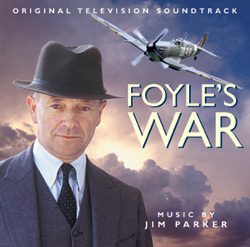
Finally, and I’ve saved the best for last, Foyle’s War (2002 TV series) is an incredible series! Michael Kitchen plays Christopher Foyle, a detective for a small town on the south coast of England in 1939-40, which feels threatened daily by the clouds of the European war. Foyle’s unquestionable integrity drives him not only to solve the local crimes of theft and murder, but also to delve into the murkier crimes that arise out of greed, passion, and local attempts to profit unlawfully from the war.

Each episode in the seven-season series has the prerequisite crime that Dectective Foyle investigates and solves, but the series so much more about the people than about the crimes. And I mean about what it is like to know the German army is just across the waters from you, to watch your sons and daughters join the RAF, knowing that only a small percentage will survive, about good people who are corrupted by war, or crippled, or deprived . . . .

From the first episode as war with Germany looms until the conclusion of the series at the end of WWII, each episode is a story of a country at war and what ordinary people do during war!

Michael Kitchen is terrific, as are Anthony Howell and Honeysuckle Weeks, his supporting  characters for most of the episodes. You will be sorry to see it end—and you won’t be alone. The series actually concluded in 2007, but popular demand brought in back in 2008. The most recent episodes aired in 2010.

You can get all of these through Netflix, but if you don’t subscribe, watch for them on your PBS channel and then set your DVR to record them weekly so you don’t miss even one!

Read Full Post »

Resurrection Requires Radical Action!

Sherrylee and I were just in California for a week, doing Let’s Start Talking Training and visiting with good friends and family—many of whom are church leaders in their respective congregations.  Much of our conversation revolved around the situations in which their local congregation and other congregations in California found themselves.

For instance, one congregation—very stable and financially secure—was struggling with being very stable and financially secure! Being comfortable may be the most precarious situation of all. At least one of these churches had recently hired a new preacher that was thinking out of their box, getting involved in the community and not staying put in his office!

The question for these kinds of churches is: who gives up first? Do the members give up the comfort of predictability and familiarity or does the New Guy give up . . . .just give up?

Then there were the churches discussed that had had glory days 10-20 years ago, but today they are either below or about to slip below a critical mass of members. They may have had as many as several hundred, but now they are in double digits—low double digits in some cases.

The leaders of these churches are burdened with their dilemma. They know that to do nothing is to die. They have been trying everything they know to do these last few years, and nothing seems to have stopped the constant seepage of members, moving away or going to other churches—usually the lively community churches.

The question for these churches is: in spite of the desire of the few remaining, can this congregation be resuscitated or is it time to pull the plug? As painful as it sounds, even Jesus said that sometimes death must precede life.  If planned well, the death of one congregation might even spawn multiple new congregations that have a chance at life.  But something radical must happen or life will just slip away.

What kinds of radical actions might result in resurrection of a dead church to any kind of new life?

1.            Close the doors for a year. Re-start with a new name, a new concept—and new leaders!

2.            Import new people as “missionaries.”  Do whatever it takes to support them, both financially and with permission—no, begging them to be as aggressive as they will in penetrating the community.

3.            Liquidate the assets and distribute them to new church planting efforts.

4.            Seek out a healthy church and either merge into something new or unconditionally submit to the leaders of the healthy church!

Radical is the operative word here!  Nothing less will succeed.

The faithful few who keep a church’s doors open are almost never the ones to resurrect it in any form. Regardless of the magnificence of their service or generosity in previous years, there comes a time in almost everyone’s life when they have to step back and let others lead the way. Those who do that graciously finish as great leaders and are well-loved! Those that cling to power or reputation are destined to wither with the congregation or even worse—be asked to leave by the new leaders.

The last of our church groups are those new churches, either new plants or migrations of people wanting a new start. The heady first days of these churches are full of great promise, new ideas, experimentation, fresh wind and fire.  I’ve experienced this as a church leader, and I would wish it for everyone.

Nothing is more exciting than a fresh new congregation birthed out of a desire to expand the Kingdom of God.

There are big questions for these churches as well, but for the moment, it feels like enough just to celebrate them!

Thank you for launching out, thank you for accepting the challenge of starting ex nihilo! Thank you for the courage  to risk failure. Thank you for the boldness to follow God into the Unknown.

Does your congregation fall into any of these categories? If so, what radical action are you going to take?

Read Full Post »

In anyone’s list of great American speeches, Dr. Martin Luther King’s “I Have A Dream” speech is among the very best.  As I thought about great modern speeches, I thought about Franklin Roosevelt’s “The Only Thing We Have To Fear Is Fear Itself,” delivered early in the Depression that brought America to dusty knees.


I thought about John Kennedy’s “Ask Not What Your Country Can Do For You” speech, delivered when a country was afraid it might be losing its place in the world to Communism.

Then, in a very different time, Ronald Reagan lifted a nation’s broken heart after the Challenger disaster in just about four minutes of carefully planned rhetoric, including the final words about the ill-fated astronauts who “slipped the surly bonds of earth to touch the face of God.”  He also is created practically with the fall of the Berlin Wall with his “Tear Down This Wall” speech.

I wonder if we will ever have another speech of this caliber by an American statesman?  Bill Clinton was a great speaker, but both his most famous as well most notorious speeches seem to all deal with infidelity.  Both Presidents Bush could occasionally produce a reasonable sound bite, but I don’t believe either will make the rhetorical Hall of Fame.

President Obama has great moments!  His eloquence is apparent, but history will judge if his words and ideas inspire future generations as great speeches do!

Of all of these, I believe Dr. King’s is the one that will last the longest. His words are not pretentious; the metaphors are simple, but the power of his rhetoric stirs people to tears even now, some forty-eight years after that day in Washington D.C., on the mall.

If you just think about each of the speeches above, some commonalities are strikingly obvious:

1              The address is unashamedly bipartisan—universal. King does not talk only to or about African-Americans. He talks about “all of God’s children!” Kennedy talks to “my fellow Americans.”  Strident, partisan rhetoric may capture the votes of the masses, but the words have no lasting power.

2.            The words are all meant to bring people together, to unite people behind great ideals! Freedom, universal needs, human rights, these have been ideas that have inspired great work and great words since men could speak. Petty people have petty ideas. Great people rise above pettiness.

3.            Lofty language carries lofty ideas. Sherrylee and I visited the JFK Presidential Library in Boston last year. I remember clearly reading the instructions that JFK gave to his speech writers for his inauguration. He asked for brevity, he asked for simplicity of ideas, but he also asked for memorable language.

We do not live in an age that appreciates lofty language. In fact, perhaps the opposite is true. We are suspicious of rhetoric and we don’t understand metaphor.  Brief attention spans, 24-hour news cycles, and information overload have made extraneous words obsolete!  But are the right words ever unnecessary??

President Reagan could have closed his Challenger remarks by saying, “We are all saddened by their death!” instead of quoting the poetic lines about touching the face of God, but would anyone have remembered it?

President Kennedy could have said, “Don’t expect government handouts; get busy and accomplish your own goals and we’ll all be better off!—but who would remember what he said?

Dr. King could have argued legally the case for civil rights, or simply scathed white Americans for lynching the civil rights of Black Americans. Instead he found rhythm and poetry that lives on!

They all chose lofty words, inspiring words, words that were delivered to bring people together, words that captured people’s imaginations with images they understood.

I have a dream that we can talk civilly to each other in public, that we will expect our leaders to do the same, that we will vote out abusive rhetoric in politics.

I have a dream that we will allow sublime language back into our churches to lift our spirits, to inspire us, to unite us, to help us imagine God, to help us hear His Spirit.

“In the beginning was The Word, and The Word was with God, and The Word was God!”

We once made the acquaintance of a young Greek girl named Mary. She was a wonderful person, but unchurched, so we gave her a copy of the New Testament in Modern Greek. When we gave it to her, we opened it to the Gospel of John and asked her to read these first verses. As she did, she began to cry. She said, she had never read anything so beautiful!

She did go to church with us, but then we lost contact, so I don’t know if the beautiful words became saving words for her or not. I have no doubt, however, that salvation is beautiful, that it is lofty! After all—The Word IS God!

Read Full Post »

A couple of days ago, I asked you to help me with word choice for a revision of what we used to call “Guidelines.”  I received many good suggestions, so I thought you might like to see what the current final product is.

I went with Expectations, which was by far the most popular suggestion.  I like expectations too because it carries some weight while not feeling as negative or authoritarian as rules. Several suggested great words like covenant and promises, but expectations won!

I don’t know when the idea of a two-part entry hit me, but I thought it might be helpful to separate the principle from the concrete actions. By separating these, it certainly allows us to appeal to the principle even if a corresponding action has not been mentioned specifically.  We were desperately trying to avoid any attempt to capture every possible situation or every possible disruptive action that might occur on an LST project. We did not want to become Scribes and  Pharisees!

Feel free to ask questions or comment on any of these expectations and commitments. There is a story behind each one. If you will apply to go on an LST project, you will get to hear the story, though I suspect if you read enough of these blog posts, you will hear the stories as well.

EXPECTATIONS AND COMMITMENTS!


EXPECTATIONS COMMITMENTS
1)      God first! 1) I will begin each day with my team devotional and put God first in all I do and say!
2) Put others before Yourself! 2) I will put the needs of my project first and my teammates next. I will not insist on my way!
3) Be affirming, not critical. 3) I will affirm my missionary, my team members, and the local church. I will not criticize, correct, or debate with anyone, either in person, or in my communication to people at home!


4) Serve those you came to serve 4) I will not use electronic access to keep me from engaging and serving. I will not be distracted or disengage from the project to which I have committed.
5) Develop spiritual relationships 5) I will not get involved romantically in any way with anyone. All relationships will be pure and not perverse, chaste and within God’s boundaries for single and married Christians.
6) Adapt in culturally appropriate ways.


6) I will dress, speak, and act in ways that the host church holds to be spiritually and culturally appropriate
7) Protect the integrity of your testimony! 7) I will abstain from tobacco, alcoholic drinks, illegal drugs, bars, discos, nightclubs, and any other activity or situation which I, my team, LST, or the host church believes will diminish my witness for Christ.
8  Be responsible for yourself! 8  I will make only myself legally, financially, and morally responsible for my own actions, and I will not blame others.
9) Submit to the local host. 9) I will cooperate completely with the local host. I will bring all Readers asking about salvation to the local host, and I will only help local people financially through the local host, so that the most good can be accomplished. I will not try to be independent of the local host.
10) Submit to the Let’s Start Talking Ministry I will cooperate fully with the Let’s Start Talking Ministry by following the letter and the spirit of these expectations, as well as all other instructions given by LST. I will not commit LST funds, LST teams, or the LST ministry unless specifically authorized.


Read Full Post »

I am almost at the end of my first year of blogging, so an email from WordPress that arrived yesterday surprised me.  I did not know that I was going to get an evaluation from them.

Of course, I was interested in the raw statistics. As of just sixty seconds ago, WordPress recorded 14,972 views since the first blog on February 10. Now that does not represent a large number in Blogworld, nor is it the actual number of people who read some post. It could have been my mother clicking hundreds of times, trying to figure out how to get my blog to come up with her WebTV (yes, it still exists!). No, really, I know people are reading because you tell me—and I appreciate that!

I have to say that I have really enjoyed writing this year. I’ve enjoyed the discipline, the challenge, the exchange of ideas with many of you, both on and offline, but perhaps most of all, I’ve enjoyed being of some benefit to you.

Many commented on the “Great Churches” series. A lot of you enjoyed the “Raising Your Kids To Be Missionaries” project, and I got lots of great feedback on the “History of LST” I did in September. On the other side, the Advent series did not seem to resonate—or maybe we were all just too busy. Timing does seem to make a difference, and I have a lot to learn there.

As we start this new year together, here are some of the things that I want to do make this site more useful to you and to the Kingdom!

  • Re-do the basic site so that I can control the pages a little better and make them friendlier.
  • Allow comments to show up more readily and try to encourage more dialogue.
  • Show popular posts that some may have missed.
  • Make the site more useful with ready links to other pages like LST, and FriendSpeak as well as other important blogs.

Content-wise, I want to focus a lot this next year on the area of Leadership. I’ve already got two major projects I want to tackle, one being a look at the leadership style we promote at LST called 1A Leadership.

The other area I want to explore with you will draw on Sherrylee’s and my experiences over the last thirty years in starting, building, and continuing to lead a non-profit ministry. The non-profit sector is growing rapidly. More than 30,000 new non-profits registered with the IRS between January and August 2010, and many of these are faith-based.

In addition, I’d like to go a little deeper into some of the topics we touched on this last year—not too deep, just a little more, along with a chance to respond to some of the comments you made.

I’d love for you to make suggestions, comments, or criticisms. Tell me what you would like to talk about. I promise you that I will listen!

If you and I were sitting down in a cozy room together with an hour to talk about anything, what would you want to be sure and talk about?

Read Full Post »

Some people are more inclined to reflection than projection! I tend to wonder more about the future and what it will be like!

When I was a boy, the future was way off in 1984! That date was so far away that George Orwell still had time to project his own dystopian fears into what has often been called a Orwellian future!  (And, by the way, Social Security was predicted to be bankrupt by then and our government in danger of spending us into financial collapse!)

As 1984 approached, the far-out year became 2001! Of course, you remember Stanley Kubrik’s movie 2001: A Space Odyssey , which, in a very realistic way, cinematically showed space travel, video phones, robotics, and created the infamous HAL—a computer that (or who?) developed its own morality in jeopardizing competition with the humans.

The New Millennium actually came in a year earlier with great fanfare—or fan-fear. Remember the 2K end-of-the-world predictions, when all the computers on earth were going to crash, when people stockpiled canned goods and bought rifles to defend their underground cellars if need be!.  All of this future came and went, Social Security was still solvent, and the government was still in place.

Here we are ten years later—2011. Occasionally some report will surface about how things will be in 2025—just fourteen years from now—and that seems like a really long time off—except 1997 doesn’t seem like very long ago at all.  So how should we feel about looking into the future?

In the last three weeks, two men that I have known died of massive heart attacks—one was 60 years old and one was 29 years old.

A pretty common joke circulating among older people says something to the effect of being so old that they don’t even buy green bananas anymore. On the other hand, my little one-year-old granddaughters could live into the next century—into 2100–if blessed with long lives.

When times are good, be happy; but when times are bad, consider this: God has made the one as well as the other. Therefore, no one can discover anything about their future.  Ecclesiastes 7:14

The Preacher is always disturbingly blunt! His father David was just as precise –with better rhyme and meter–when he said in Psalm 37:37:38

Consider the blameless, observe the upright;
a future awaits those who seek peace.
But all sinners will be destroyed;
there will be no future for the wicked.

So what about 2011? What about the future?  Here’s what we can say

  • 2011 will surprise us with things expected and unexpected
  • 2011 will not be the end of the world—but it might be!
  • 2011 will be a season of beginnings and endings!
  • 2011 will be memorable for a while—but quickly forgotten.  (What happened in 1911?)
  • 2011 will be a long time ago soon!

The older I get, the less I worry about much of the future, about whether social security will be around or which party is in control, about malware and oil reserves.

The older I get, the more I think about using today well. I think about leaving a story that will point my children and grandchildren towards God just as Joshua left stones by the river so future generations would know what God had done there (Joshua 4:6).

Happy New Year in 2011! May we be righteous and seek peace, so that we can be certain of our future—as certain of our future as we are of the eternal, everlasting, infinite I AM.


Read Full Post »

« Newer Posts - Older Posts »