Feeds:
Posts
Comments

Archive for the ‘Other’ Category

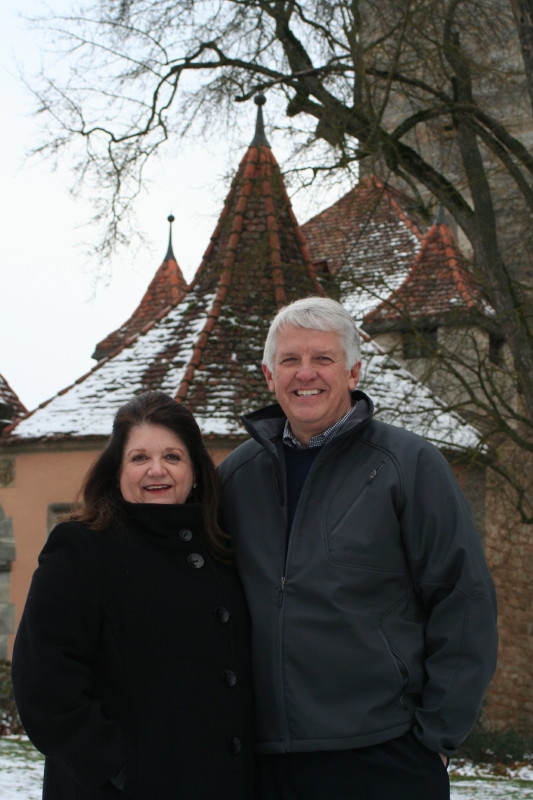
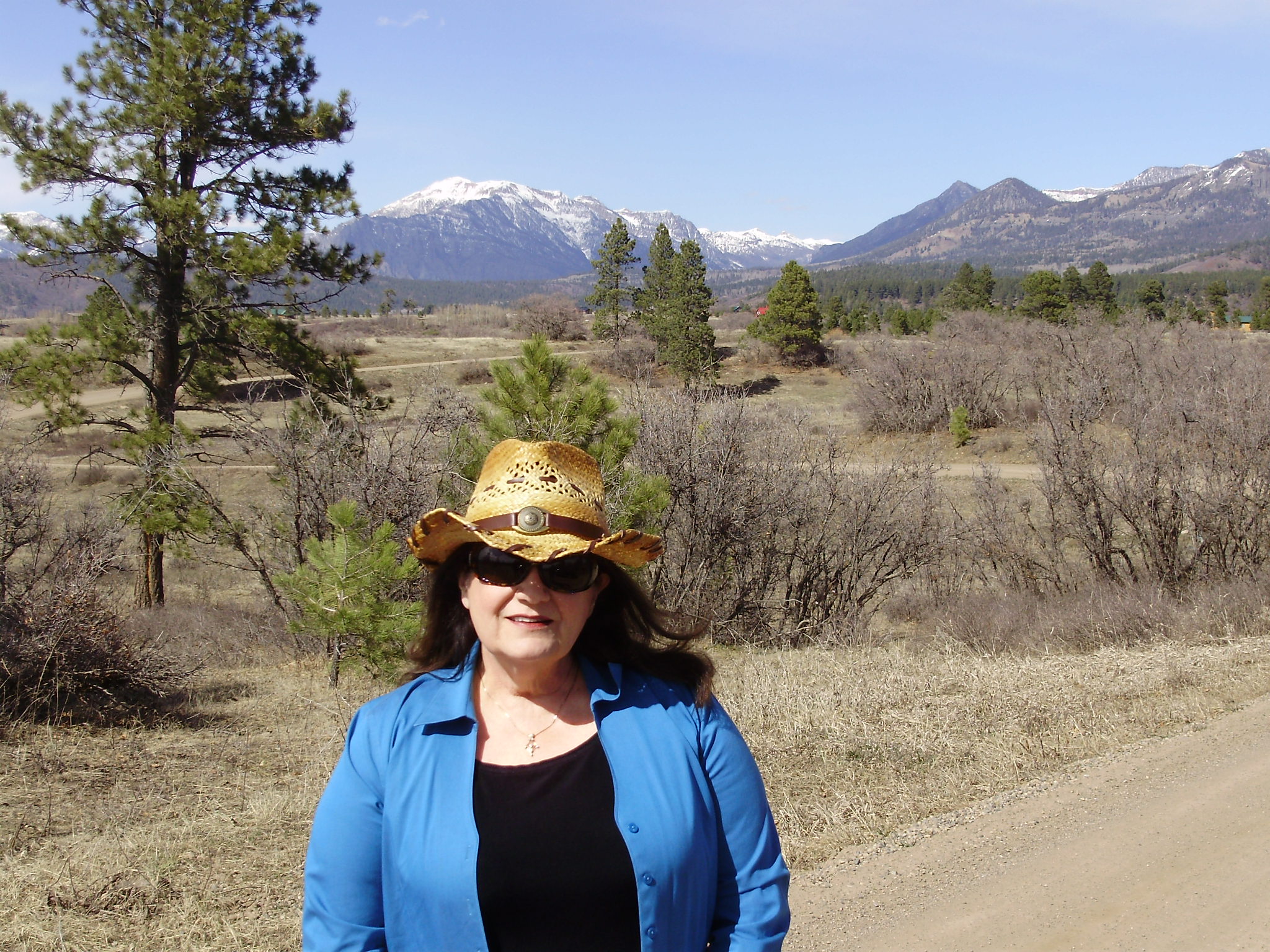
Sherrylee in the Colorado mountains

Sherrylee and I love the mountains! She grew up in Florida, so she loves to wiggle her toes in the wet sand and to walk the beach. Of course, I grew up in Fort Worth with no water in sight and in an era when good Christians did not go mixed swimming, so I’m just not much of a water person.  And everyone is more aware now of the dangers of too much sun, so Sherry and I don’t really long for beach vacations.

(By the way, I was at a Texas Ranger’s baseball game with a friend who is married to a dermatologist. He kept us in stitches telling us about what pool parties are like for a bunch of dermatologists! Think about it!)

Anyway, so Sherrylee and I almost always choose mountains over beaches, if given a choice. When our dear friend offered us the use of his company’s lake house in Colorado this week, we re-arranged everything to make it happen!  Let me tell you about Pagosa Springs, Colorado!

The city itself is about 7100 feet above sea level. As I sit here by a small little lake, I look out the window to the east and see snow-covered, rugged mountains—part of the San Juan mountain range. Just about ten miles up the road is Wolf Creek Ski area at Wolf Creek Pass. We drove up there yesterday to have a look at the Continental Divide. The lifts were not operating, but the pass was open and so was the Divide, so we stood near the very top of the continent. where the mountains send the rivers in opposite directions.  All the while, I kept thinking how grand it must have been to be an angel and watch God raise these mountains up by His Word! Our God is a Mighty God!

One of the most beautiful surprises of mountains are the beautiful valleys and mountain rivers that produce the breathtaking mountain lakes. You almost always get this 3-fer when you go to the mountains!

At the Continental Divide

The San Juan River runs through Pagosa Springs, but interestingly enough, it is not the most important water in the area. No, the hot, mineral springs are what put this spot on the map.

Pagosa probably comes from a Ute Indian word meaning healing waters. Perhaps as early as 9000 years ago, but certainly 1000 years ago, native Americans discovered the hot water rising from the center of the earth and made this a sacred place of healing.  The Utes and the Navaho Indians seem to have been the most populous tribes in the area in more recent history.

The story is that these two tribes fought over access and rights to the healing waters so often that finally the two tribes decided to settle the matter permanently by having a duel of champions.  The Navaho were bigger, so they really liked this idea. The Utes decided to pull out a secret weapon and asked a white man Colonel Pfeiffer, who had married a Ute woman, to be their champion. He wasn’t a big guy, but he had a big knife—a Bowie knife.

The duel was held a good ways from the springs, apparently not to defile the springs with human rancor. The Navaho brave and the skinny, white man circled and parried, but Colonel Pfeiffer was quicker and killed his opponent. Thereafter, the Navajo never again made any claim to the hot waters of Pagosa.

I’ve been thinking about sending this story to the president to see if it might work in Afghanistan, Iraq, and all the other places the U.S. is involved in armed conflict. Perhaps if we just used Bowie knives and sent our champion, we could settle things without so much loss of life—and do it away from all holy places!  What do you think?

One of my favorite books of all time is Pilgrim At Tinker Creek by Annie Dillard. I brought a copy with me to read on this trip. In the very first chapter, Dillard contrasts creeks with mountains:

Valleys, mountains, and lakes near Pagosa Springs

The creeks. . . are an active mystery, fresh every minute. Theirs is the mystery of the continuous creation and all that providence implies: the uncertainty of vision, the horror of the fixed, the dissolution of the present, the intricacy of beauty, the pressure of fecundity, the elusiveness of the free, and the flawed nature of perfection.  The mountains . . . are a passive mystery, the oldest of all. Theirs is the one simple mystery of creation from nothing, of matter itself, anything at all, the given. Mountains are giant, restful, absorbent. You can heave your spirit into a mountain and the mountain will keep it, folded, and not throw it back as some creeks will. The creeks are the world with all its stimulus and beauty; I live there. But the mountains are home.

Sherrylee and I love the mountains, the quiet, the coolness, the majesty. I’m pretty sure the River of Life in heaven flowing from the high throne of God is a mountain river!

Read Full Post »

Only once on the way to Pagosa Springs did we think we were going to die! From North Richland Hills, Texas to Pagosa Springs, Colorado is approximately 775 miles. Mapquest says it is thirteen hours drive time—and it is every bit of that!

Part one is Hwy 287 which is the highway from Fort Worth to Amarillo through Chillicothe, so if you read yesterday’s blog, you know that this is a stretch of small west Texas farming and ranching towns. Conditions are pretty treacherous right now because there has been no rain since October. The radio evangelist on Sunday morning began the service with a prayer for rain.  We should join him in that prayer.

(By the way, I saw an old Indian sign once that said: Rain dance tonight at the campsite—weather permitting!)

From Amarillo, Tx to Santa Fe, New Mexico changes to interstate highway, much of it 75 mph. Although the flat, dusty fields of west Texas give way to the small canyons and low mesas of western New Mexico there is still nothing to look at! The billboard guiding travelers to Fort Sumner and Billy the Kid’s grave wake you up momentarily—but no time for detours, if we are going to make it to Pagosa Springs today!

We love Santa Fe! A few years ago we had our LST Development Council meeting in Santa Fe and had such an enjoyable time with the old town and the surrounding history! But today we just saw the loop around it and enough adobe houses to wish for another time to come back.

The last 162 miles from Santa Fe to Pagosa Springs on Highway 84 have some breathtaking views. The ascent upwards begins in earnest, first with the low hills and then towards the snow-capped mountains of the Rockies. But it is R-E-M-O-T-E ! It is a stretch of highway that if I had known how uninhabited it was, I would have thought twice about driving it after dark in a car with 145,000 miles on it. I do worry sometimes about having car trouble in the middle of the night in the middle of nowhere in the middle of no cell phone service—but Sherry laughs at me. She’s not afraid of anything!

Just as we crossed into Colorado about 8:30pm, driving about 60 mph—I don’t usually drive too fast—this huge buck starts across the road right in front of us. Sherry yells and throws her hands straight up—a very unproductive physical response to danger in my opinion! I start to break and swerve at the same time . . .

I’ve got two deer notches on the side of my car already. Once in college I hit a deer on an Arkansas highway, but I won that time and drove away from it. The second time was one night in Mississippi on the way to visit my girlfriend in Florida (Sherrylee). Another small deer ran in front, but this time it went under the wheels of the car and jerked the wheels around so that I lost control of the car and crossed over the highway and went off into the deep ditch on the opposite side of the road. I remember thinking, “Well, this is it!”—but it wasn’t. I wasn’t hurt, just scared, and was able to drive the car out of the ditch. I did have a hole in the radiator, punched by the antlers, I suppose, so I had to have that repaired before I could keep driving.  The thing about hitting deer in the deep South is that there is always someone eager to help you and take that deer home as the reward!

But this buck was twice as big as either of those dead deer—so just as I started to emergency brake and swerve, the smart buck also slammed on his brakes, turned around just on the shoulder of the road and ran back into the woods. We said, “Thank you, Lord!” It was neither our day— nor his!

We pulled into Pagosa Springs about 9:00pm, found the lovely lake house that friends of ours made available to us, unloaded the car, and did what we often do at night—turned on a movie (Notting Hill, if you must know!) and snuggled on the couch to unwind.

Safe travel is not something we take for granted—but something with which God blessed us once again. His guardian angels had to do a little work that we know of—and maybe some we didn’t—but we are thankful for all of it.

Tomorrow I’ll tell you about Pagosa Springs and the duel that was fought here between the champion of the Ute Indians and the champion of the Navajo.


Read Full Post »

Sherrylee and I are on a 40th Anniversary vacation road trip!  And I want you to come along with us, so I think I will include regular updates on our road trip, starting with Friday, April 9.

Saturday, we flew in from Omaha on an earlier flight, so we decided to just hit the road and go until about 10pm—got as far as Wichita Falls!

Sunday, we had a 12-hour trip in front of us, so it was very tempting not to stop for church. We drove away from Wichita Falls, thinking that we would do a Rick Atchley podcast in the car and break bread together (seriously) at Crackerbarrel along the way—BUT, about 10:15, we were driving through these very dry, little West Texas towns when Sherry said, “Let’s stop at the next church we see!”  I agreed and within 60 seconds we saw a sign for the Church of Christ in Chillicothe, Texas, so we decided to stop there.

I asked for directions at a convenience store and a woman offered to guide us to the church, for which we were grateful. (Interestingly enough, she later appeared at church—I don’t think she had been planning to go—at least she didn’t say she was going at the store—so maybe we helped encourage her to go!)

We walked into the Bible study—and there were six people there! The preacher was leading the study of the Lord’s Prayer. I noticed on their Attendance sign—you know the one that says “This Sunday”, Last Sunday, and Offering in black letters that slide on and off—that the attendance last week was 41.

I don’t believe there are even six degrees of separation in our church tribe! Here we were 200 miles away from home, having Bible study with six complete strangers, and would you believe that as we were visiting after the class—you don’t slip in without being seen in  churches like this!—one of the women there had attended church for many years with Sherrylee’s sister and brother-in-law in Arlington, Texas, and knew them well.

The auditorium was built for 200, so nobody sat on the first 7 or 8 rows except the two men who would later serve communion.  You could tell they were the communion servers because they were dressed in gray suits and ties and their best boots.

An elder (not an Elder anymore because the other Elder had died) made announcements that two sisters 91 and 94 years old had been visited and were doing well. By the way, there would be a potluck next Sunday to celebrate Sister ____’s 90th birthday.  Are you getting the picture?  But to be fair, at least two families with children showed up for worship—at least one set were great-grandchildren, if I observed correctly—and a lot of the people were kin!

We sang from songbooks—nothing more electronic than the microphone in sight. All the men present served communion, including the preacher!  The prayers were of the “guide, guard, and direct us” variety.  Psalm 100 was the text for the sermon which was an excellent exhortation to worship the Lord meaningfully, to “shout to the Lord”!  I couldn’t imagine anyone shouting in this crowd—but we did do a responsive reading as a trial run.

I was glad we were there! It reminded me that perseverance takes many forms, but they lead to godliness. Most of these saints had been faithful for a long lifetime! Sure their “liturgy” was often in the same language of their grandparents—but so are the liturgies of high churches that are in such vogue now! I don’t doubt their prayers of concern for the “sick and afflicted” were as heartfelt as those in more post-modern words.

They sang, they broke the bread and drank the cup and remembered Christ!  They were VERY friendly and concerned about their congregation.  Their preacher is moving in two weeks, so they are looking for someone retired because they can’t offer full support. They do have a parsonage.

But they also would really like to have a bi-lingual retiree to preach for them! They want to reach out to the growing Hispanic population.  This is a mission-minded church!!

I’m grateful for every little struggling group of Christians, whether they are in houses or 1950’s church buildings, whether they use praise songs written in this millennium or the last, whether they create their own liturgy each week or use more comfortable words of saints before them. I’m thankful for their faithful witness, for their benevolence—whether they have a program or just call it being a neighbor!

I’m so glad we went to church in Chillicothe, Texas!


Read Full Post »

How to Stay Married for 40 Years!

Today is our 40th wedding anniversary!  Forty years! I don’t even feel that old—but we weren’t that young when we got married, so I guess we are. But we have been blessed beyond our imagination with everything that comes with a marriage from God.

I told most of the story last year on our 39th, so go back to April 2010 if you want to read the story of our wedding—it’s fun!  The starting is always fun and beautiful. The staying is the real story. Today, I’d like to reflect on why we have been able to stay married for 40 years.

1.            Let God choose your mate! I do believe in arranged marriages—God arranged. I can’t say that I wasn’t looking for a wife—but I wasn’t trying to make it happen either. You remember how Abraham got a little impatient and thought he would figure out how God probably was going to re-arrange things to provide an heir by making his household servant the heir of promise instead of the son God had promised. Lots of good Christian people make the same mistake. They pray that God will give them a wonderful partner for life—and then they panic when it doesn’t happen on their time schedule! They force it, they settle, they supplement—none of which show confidence in God.  Now God overcame Abraham’s momentary lapse and he can that of you and/or your children, but wait on God and He will provide

I graduated from college with plans to leave in two years for Germany with a mission team of four couples—and me—without even a girlfriend. I had barely dated my senior year because I was waiting for someone.  I also believe you will know when your prayer is answered: Sherrylee tells a different story, but I think I knew almost from the day I met her that she was the one! We dated long distance over the next year, so there were ample opportunities to be distracted, but I can say for my part, I believed in faith then and after 40 years now know that she was the God-given answer to my prayers. She was the only plan!

2.            We learned to talk to each other! At first this meant that we just enjoyed talking about almost anything.  With her in Florida and me in Mississippi for almost the whole time we dated, we drove a lot together—and never ran out of things to talk about.  But later–more importantly–I think we learned then to talk about the unpleasant things: our irritations with each other, our disappointments with each other, our different feelings about the way our life together was going!  Sherrylee taught me this! I brought nothing about self-disclosure or open, honest conversation about difficulties to our marriage. In fact, she forced me to learn to do this—and I’m eternally grateful—because I don’t know how couples can stay together through the hard stuff of every marriage if either of them has not learned to talk about it.

3.            We learned that conflict did not have to be destructive! Sherrylee is passionate and I am stubborn. When we fight, it tends to be passionate and loud!  My parents always went to the bedroom to “talk,” but since Sherrylee and I have worked together publicly most of our lives, we have not had that luxury. Our children have seen us fight and our staff has seen us in conflict—but while it is not pretty, I think neither our children nor our staff has ever felt like we did not love and respect each other.

4.            We have not let our lives take separate paths! Again, I thank God for Sherrylee because she, more than I, has been the one who did not let me develop my own little “work” world. She consciously joined me in the early days of LST, becoming the first employee of LST, and she will tell you that it was because she did not want our lives growing apart.  Men have to consciously include their wives and wives should persist in defending their right to be included in every area of their husband’s life—no exceptions!   This doesn’t mean you are never apart—just that there is no area of your life that is hidden or off limits or “none of your business” to your spouse.

5.            We remind each other of God’s goodness, not just on the good days, but on the horribly dark days as well. Sometimes people look at our marriage and our family and our life from the outside and they see a Disney storybook—but I will tell you that no one leads a storybook life—you haven’t and we haven’t.  We have had very serious issues with work, employment, ministry, our children’s health, our own health, our finances, we have been painfully attacked by people we thought loved us, we have been accused of evil that we did not do—but we have not yet lost a firm belief in the goodness of God. Part of the reason I have not become cynical is because Sherrylee’s presence in my life reminds me that has not withheld His richest blessings from me!

I know there are wonderful Christians whose marriages have been disasters.  I know there are wonderful Christian parents whose children are not good and who have left God. I don’t know why! What I do know is that God loves you and is doing everything in His power to bless you. Don’t lose faith! Don’t lose hope!

We are all living the lives God has given us through His grace and mercy. All I can really say to you who are seeking a 40-year marriage and having a hard go at it, is to echo the words of Jesus: seek first His kingdom — and all these things will be given to you – somehow!

Sherrylee are starting today on the next 40!

“Father, be our faithful Guide through the days or years of the rest of our lives together!”

Read Full Post »

When I was in the first grade, our class memorized this poem and recited it over the loudspeaker system to the whole school during the morning devotional time.  (Public schools were different then!) It is a poem, you know, not just a psalm. Remember how Job, Psalms, Proverbs, Ecclesiastes, and Song of Solomon were the division of the Bible called the Books of Poetry! The Spirit of God is a prolific poet.

Add to the pure poetry then the lyrical words of songs that Moses sang, Miriam, Deborah, and all Israel together with the Magnificat of Mary and the probable hymns of the early Christians reflected in Paul’s writings. I think God really likes poetry!

I think you will like poetry better, if you learn the technique of close reading. Let’s read this favorite poem of mine together and I will record my thoughts as I do a close reading so that you can see a concrete example of what I’m talking about.

A close reading of a biblical text for me means that the reader looks more closely at the detail of the text, but probably does not do a historical or linguistic analysis.  Let me show you what I mean. Stay with me and let’s read the text together. It may feel a little disjointed, but the goal is to experience the poem and understand it in a meaningful way.

The LORD is my shepherd; To claim the Creator of the Universe with the word my is pretty audacious! Either the speaker is a pompous fool or he has an extraordinary sense of relationship with his God! And why does he choose the shepherd metaphor? Why not king or mountain or ocean or sun? Or if he’s choosing a profession, why not carpenter or farmer or winemaker? Probably in this case, the poet wants to reveal the relationship that the shepherd establishes with the sheep. The writer puts himself in the position of being a sheep by calling the LORD his shepherd.  Is being a sheep a good thing? Aren’t sheep a little dumb? Oops, maybe that’s part of the poem?  Well let’s go on.

The LORD is my shepherd; I shall not want. What confidence in the shepherd! Can a human shepherd provide everything for the sheep as well as protect them from all harm? Not really, but the poet says his shepherd can—the LORD can.

He maketh me to lie down in green pastures; he leadeth me beside the still waters. I must admit, this sounds pretty good. Green pastures for eating and still waters for drinking—but, in fact, it doesn’t seem to me that creature comforts are not what the writer focuses on. No, he is describing a place of quiet rest—perhaps just a place of contentment where the sheep don’t have to worry about their needs because they can just look around and see that everything is there that they need—so they can relax.

He restoreth my soul. Yes, that seems to be the whole direction of this poem so far—restoration. Not just meeting physical needs, but feeding and watering the soul is what the poet means when he says, “I shall not want.”

He leadeth me in the paths of righteousness .  . . The word righteousness gets in the way for me. It’s too churchy, too theological. Would it be just as right to say, “He leads me down the right path,” or, “He makes sure that I stay on the path?”

. . . for his name’s sake: Then the poet just reminds us that while the shepherd is doing so much for the care of the sheep, ultimately the sheep are there for the benefit of the shepherd! It is the shepherd’s will for the sheep that will ultimately be done, not the sheep’s will for themselves. They will be petted, they will be shorn, some may be eaten—they belong to the Shepherd, not to themselves.  The Shepherd cares for the flock for his own sake!  And that seems to be OK with the poet.

4Yea, though I walk through the valley of the shadow of death, I will fear no evil: I know that it is a misreading of the text, but I can’t help but love the Yea, because it sounds like “Yay!!” or maybe YES!! Sometimes poets use words to mean one thing, but to suggest other things. I wish that were the case here, but I don’t think it is.  Well, that is probably a sidetrack.  Not being afraid as one is threatened with death is not normal! But the poet didn’t say he wasn’t afraid; rather, he said he would fear no evil! His fearlessness is certainly because of his confidence that he is being led along the righteous path where evil does not prevail.

For thou art with me! One of these words is shocking!  It’s OK to talk about the Majestic God of heaven as the Shepherd, even though it is a lowly image. It was bold to call Him my Shepherd, but at least the poet is still speaking metaphorically and positions himself well below the Shepherd, but suddenly here, the poet switches voices and addresses Almighty God directly—with one of the most common words in the English language—and one of the most familiarly intimate words:  YOU! Most languages have forms of address for royalty, for class or gender differentiation. In English, the poet just says, “YOU” to God. I don’t think a Muslim could be so familiar with Allah.

Thy rod and thy staff they comfort me.  Thou preparest a table before me in the presence of mine enemies. The rod and staff are for protection and rescue mostly, I suppose, therefore to know the shepherd has all he needs to protect and rescue me is comforting.  But to spread a picnic in the middle of a battlefield, that’s a peculiar image—unless his enemies were not yet active, not yet aggressive, still his enemies, however.  We too live in a world of intrigue. Think about your family drama, the tensions at work—or at church as people trample others to get what they want or where they want.  OK, I’m getting a better picture of sitting down to eat among people who are after me, but without fear because . . .

Thou anointest my head with oil! Because I’m a sheep of the Almighty Shepherd and I have been chosen, anointed, so the Shepherd and I stand together.

My cup runneth over! My cup of wine or cup of blessing or cup of joy or cup of thanksgiving—any of those work for me.

Surely goodness and mercy shall follow me all the days of my life, It’s all based on this relationship between the Shepherd and the sheep. If the Shepherd is as good as He seems, then surely that sheep need not worry one day of his life that he will be left to evil and judgment—the opposites of goodness and mercy!

And I shall dwell in the house of the LORD forever. Sheep in the house?? I don’t know about that. I think with the shift to YOU, the poet starts giving up the sheep metaphor and is wrapped up in the goodness of his own relationship to the LORD.  And the house of the LORD could be just where He is, but it could be the metaphorical temple—which was the house of the LORD! And could it be the household of the LORD or His family?

Don’t you love the word forever! There is no forever to anything that we know in the physical universe. So by using the word forever, the poet carries himself and us with him far beyond anything that we know! That says to me that anything we even conceive of in the image the house of the LORD is wrong and whatever it is, it is so much more than we can imagine—and I shall dwell there forever!

I love to read closely—to read poetry closely, but especially to read God’s poetry closely because the richness is completely satisfying—but never exhausted.  I’m glad my English teachers taught me to love poetry. I’m quite sure we will do poetry readings in the house of the Lord forever!

Are you ready?


Read Full Post »

The land was ours before we were the land’s.

She was our land more than a hundred years

Before we were her people. . . .

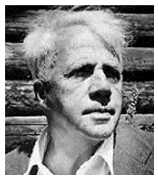
When he was 86 years old, Robert Frost was invited by the freshly elected young president to read a poem at the inauguration in Washington. The year is 1961, the president is John F. Kennedy, and the poem that Frost wrote for the inauguration was one entitled “Dedication” – which does not contain the above lines.  The glare of the sun off the snow on the ground blinded the elderly poet to the point that he could neither read nor recite the newly written poem. Frost stopped and in a strong and commanding voice, he began quoting a very familiar poem of his “The Gift Outright.”

Other poets have spoken powerfully at political moments. One of the earliest may have been Walt Whitman’s “O Captain, My Captain” upon the assassination of Abraham Lincoln:

O Captain my Captain! our fearful trip is done,
The ship has weathered every rack, the prize we sought is won,
The port is near, the bells I hear, the people all exulting,
While follow eyes the steady keel, the vessel grim and daring;
But O heart! heart! heart!
O the bleeding drops of red,
Where on the deck my Captain lies,
Fallen cold and dead.


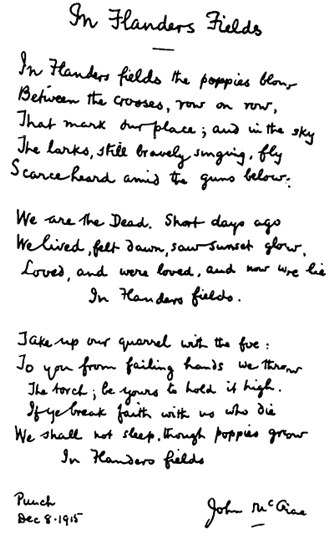
Lt. John McCrae’s famous poem “In Flanders Field,” written during the horrors of WWI continues to represent that whole event in literature as does the novel All Quiet On The Western Front. Somehow when we move to WWII and the arts, things seem to shift to film and music—until the late fifties and sixties when poetry once more joined the triumvirate!

Lately, when I find myself thinking of pure poetry, I find myself thinking mostly of African-American poetry, starting, of course, with Langston Hughes and not ending but certainly finding one of its mountaintops in Maya Angelou. Certainly because of the racial conflict of the previous decades fourscore, these poets have been voices heard when more virulent voices were not.

Poetry and politics are not from different edges of the globe. Poetry is often the purest expression, the most concentrated form of the arguments of the human soul.

My thesis at Ole Miss is entitled “Frost Among the Leaves: The Dark Side of Robert Frost.” I’m sure you can find it in the university library in Oxford—probably untouched by human hands. I had always liked Frost’s poetry, and although I’m quite aware that he is considered second tier by some scholars who prefer more obscurity, I believe that very few can equal the depth of emotion that he captures in quite carefully crafted language.

He wrote of pastures, he wrote of paths in woods, he wrote of cows, but he also wrote of death, of fear, of betrayal, of angst, of the quest for meaning—and he wrote about God.

Next I want to read closely perhaps my favorite poem, written by another pastoral poet, also about sheep and pastures—and also about God.  I learned this poem in the first grade—and it continues to move me to quiet and to faith.

I bet you know this poem as well!


Read Full Post »

Love and Limericks!

The Sixties loved poetry! The Beat poets of the 50s like Jack Kerouac and Allen Ginsberg were being read everywhere.  Everyone loved ee cummings lack of capitalization—very anti-establishment! The Beatles not only were writing great poetical lyrics, but using the poetry of published poets as well, a la Edwin Arlington Robinson’s Richard Cory.

And everyone wrote poetry! I think it may have been the freedom from rhyme and meter that was so popular, that allowed everyone to think of themselves as a poet.  Absence of these discipline releases lots of totally undisciplined rubbish—but we all did it anyway.  Especially if we were in love!

“At the touch of love, everyone becomes a poet” (Plato)

OK, here is the gem you have been waiting for.  When Sherrylee and I first started dating in 1969, she had just joined our summer mission campaign team in Scranton, Pennsylvania.  I, being much older and wiser, made the first flirtatious moves, including teasing her—a very sophisticated thing to do, I know.  So I wrote her a limerick—a very educated verse form, of course. It went something like this:

There was once a girl from Bononson

Who liked a young man name’ed Hanson.    (my first name)

She had a cute lisp–

S and J weren’t too crisp.

Too bad she was named Sherry Johnson!

Terrible, I know, but we—at least I—still laugh about it!

And then there was Rod McKuen! Every girl had Rod McKuen books of poetry sitting on her nightstand—typical flower child kind of poetry. Very much about nature, love, fluff, and more love.

While Sherrylee and I were dating long distance—she was in Ft. Walton Beach, Florida, and I was in Oxford, Mississippi, so I would drive down about once a month to visit her—I would lie on her living room floor and listen to Rod McKuen’s album called The Sea, which was his sea/beach/love poetry set to music with sounds of breaking waves through the transitions.  I guess it was such a hit that you can’t find it anywhere anymore!  Not even on ITunes—not that I ever looked J

I need to just say that all of these stories occur before I took my aforementioned course in Modern Poetry, so I can just plead ignorance.  Then I read Gerard Manley Hopkins, William Butler Yeats, T.S. Eliot, W.H. Auden, Wallace Stevens, Dylan Thomas, and many others who opened a whole new world of reading to me.

Of course, I took courses in the Romantic Poets (Shelley, Keats, Byron, etc), but the more modern poets I was reading captured me mostly because to understand the modern poets required an exegesis—much like I had learned to do in my biblical studies.  Why does the poet choose this word that you stumble over? Why does the alliteration carry you only this far and not further? What other possible meanings could this word or this phrase have?

You know how the best movies make you think as compared to the superficial ones that you figure out about five minutes into it. Great writing is often difficult enough that you can’t get it with just a cursory reading, but a close, thoughtful reading rewards you with something magnificent!

Yes, I’m on a crusade to bring poetry back from oblivion!! Have I whetted your appetite at all?  Here’s a great poem from T.S. Eliot that you should be able to read and enjoy with thinking—but not to the point of a headache J!  It’s a Christmas poem—or is it?

Journey of the Magi

“A cold coming we had of it,
Just the worst time of the year
For a journey, and such a long journey:
The was deep and the weather sharp,
The very dead of winter.”
And the camels galled, sore-footed, refractory,
Lying down in the melting snow.
There were times we regretted
The summer palaces on slopes, the terraces,
And the silken girls bringing sherbet.
Then the camel men cursing and grumbling
And running away, and wanting their liquor and women,
And the night-fires going out, and the lack of shelters,
And the cities hostile and the towns unfriendly
And the villages dirty, and charging high prices.:
A hard time we had of it.
At the end we preferred to travel all night,
Sleeping in snatches,
With the voices singing in our ears, saying
That this was all folly.

Then at dawn we came down to a temperate valley,
Wet, below the snow line, smelling of vegetation;
With a running stream and a water-mill beating the darkness,
And three trees on the low sky,
And an old white horse galloped away in the meadow.
Then we came to a tavern with vine-leaves over the lintel,
Six hands at an open door dicing for pieces of silver,
And feet kicking the empty wine-skins.
But there was no information, and so we continued
And arrived at evening, not a moment too soon
Finding the place; it was (you may say) satisfactory.

All this was a long time ago, I remember,
And I would do it again, but set down
This set down
This: were we lead all that way for
Birth or Death? There was a Birth, certainly,
We had evidence and no doubt. I have seen birth and death,
But had thought they were different; this Birth was
Hard and bitter agony for us, like Death, our death.
We returned to our places, these Kingdoms,
But no longer at ease here, in the old dispensation,
With an alien people clutching their gods.
I should be glad of another death.


Read Full Post »

Some of you don’t know that I have a M.A. degree in English from the University of Mississippi. For two years of my life, I buried myself in literature of all kinds. I had all the standard courses in Shakespeare, Milton, and Chaucer, as well as specialized courses in both American and English literature. Of all the courses I took, perhaps the one that I enjoyed the most and that served me best—surprisingly– was a course in Modern Poetry.

My dad introduced me to poetry as a child. He had been required to learn hundreds of lines of poetry at a time when educators thought memorization to be a part of everyone’s education. He was far from sophisticated in his tastes; no, the poems I remember from my dad are mostly narrative poems like The Song of Hiawatha (Henry Wadsworth Longfellow),  Abou ben Adham Leigh Hunt), and The Deacon’s Masterpiece, or The Wonderful One-Hoss Shay (Oliver Wendell Holmes). But I did grow up thinking that poetry was fun!

He also introduced me to The Charge of the Light Brigade“Cannon to the right of them/Cannon to the left of them/Cannon in front of them . . . into the valley of death rode the six hundred”  And then came the lines I heard a million times: “Theirs not to reason why; theirs but to do and die!”  For my dad, this took the place of “Because I said so!”—and I remember it today with great affection.

Since today is Opening Day  (capitalized you notice!) of  the 2011 baseball season, I have to mention one of his favorite poems—Casey At The Bat by Ernest L Thayer. Having been a fairly arrogant young baseball player, I suspect he was trying to teach me something about pride coming before a fall because I heard this poem often.  He used to walk up behind the dugout behind where I would sit after a vain at-bat and softly say, “Somewhere the sun is shining and somewhere the children shout, but there ain’t no joy in Mudville—Mighty Casey has struck out!” He didn’t quote it exactly right, but he made his point!

April is National Poetry Month so this is my start to a few musings on, about, and with poetry. Stick with me and follow the links to read the poems–you can skip Song of Hiawatha—and you will enjoy them, I’m sure.

Here’s a short verse that is a clue to the next piece. Can you identify the poet?

Fireflies In The Garden

Here come real stars to fill the upper skies,

And here on earth come emulating flies

That, though they never equal stars in size

(And they were never really stars at heart),

Achieve at times a very starlike start.

Only, of course, they can’t sustain the part.


Read Full Post »

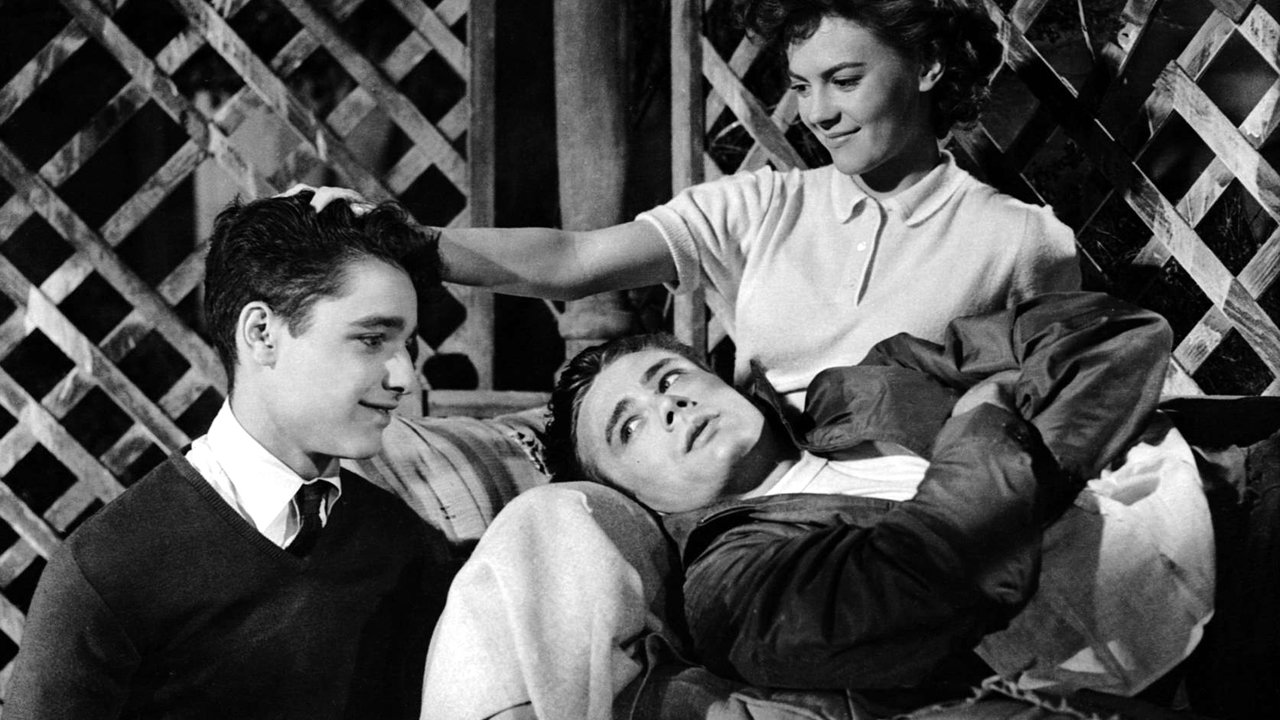
I bet many of you have never seen Rebel Without A Cause (1955), although most have heard of it and some even know it to be a classic coming-of-age film starring James Dean, Natalie Wood, and Sal Mineo. As I have been writing about parenting/grandparenting these last few days, this film keeps popping into my head.

To tempt you a bit to rent the film or downstream it on Netflix, let me just say that the three teen idols of the 1950s all play troubled teens from good families. Jim Stark (James Dean) has a painfully weak, ineffective father and a dominating mother; Plato (Sal Mineo) is pretty much abandoned by his parents, and Judy (Natalie Wood) has the most “normal” parents, but she is the one that has haunted me the most through the years.

Let’s talk about Judy!  She is a beautiful girl, popular, fun, and successful at school—so what’s her problem?

The tell-tale scene for me is when she comes home to her good family and she tries to connect with her father, who appears to be uncomfortable around her. She practically begs him to hug her or let her sit on his lap like she did when she was a little girl, but he is so uncomfortable with her sexuality that he pushes her away—both physically and emotionally.  This refusal of affection pushes Judy into the arms of Jim Stark, and they sneak into a vacant house and, with Plato, create their own ersatz family where their needs for love and relationship are all met!

No, this is a 50s movie so they don’t sleep together, but the comfort Judy finds in her new boyfriend’s affection is not really sweet. It’s painful to me because I know her father’s rejection drove her to this point.

And this is the point I want to share with you, especially you fathers, something about raising children that I believe to be true and that we certainly practiced in our home. To be physically affectionate with your children will help them remain pure and holy until they leave father and mother and are physically loved by their marriage partner.

For some parents, showing physical affection is the most natural of all acts they do as parents—but not for all parents—especially some dads—especially those dads whose fathers never touched them except to punish them.  Even if this is you, your children need for you to change the channel, to learn to show them your love in ways they can feel.

(We are so highly sensitized to abusive touching and fears of child molestation that I find myself wondering if we can even talk about this; nevertheless,  I’m asking you to read this article within a framework of healthy relationships that would result in healthy and wholesome physical loving.)

Most of what I know about anything female, I learned from my wife Sherrylee. She was the one who  taught me how important physically touching our children was, beginning with changing their diapers and rocking them to sleep, then reading to them in your lap and wrestling with them on the floor.

How a parent expresses affection changes as the children change—but it should never cease! When our older son was just starting school, we would always send him out the front door with a hug, but when he started second grade, he thought he had outgrown that. The game was to let him get out the door, then run after him, catch him, and give him a hug before he went one step further.  The game was fun for both of us for a while. He’s 37 now, happily married with three of his own children, so he usually gets the hug when he comes in, but the grandkids get the hugs as they leave!

When your girls become teenagers and ever so self-conscious about their bodies, the uninhibited expressions of physical affection between fathers and daughters can disappear—as they did for Natalie Wood’s character—and too often with the same results!  I don’t think I can tell you exactly what works and what doesn’t work for you and your daughters, but I do believe that you can continue to show each other love and affection physically. Maybe your kisses move from her cheek to just the top of her head. Maybe sitting in your lap becomes just a snuggle-up on the couch. Like I said, physical expressions of affection are given their meaning by the people who do them, so how you have defined your early relationship to your children will dictate how your later relationship can be expressed.

Children, then teens who are not hugged by their mothers and/or fathers seem almost driven to look for someone else to touch them! One of the best and most wonderful things you can do to make it easier for your teenager to be pure and holy is to hug them a lot! Show them as much affection as you and they are comfortable with.

Solomon the Wise once reminded his readers in his blog that there is absolutely a right time to embrace someone (Ecclesiastes 3:5)!  Without plagiarizing Solomon, that’s what I want to say too! Hug your children, and love on them a lot!

And don’t be afraid!


Read Full Post »

Sherrylee and I are reading in 1 Peter right now. I was re-reading chapter one yesterday and got stuck on the phrase “empty way of life handed down to you from your ancestors.”

18 For you know that it was not with perishable things such as silver or gold that you were redeemed from the empty way of life handed down to you from your ancestors, 19 but with the precious blood of Christ, a lamb without blemish or defect.

Is Peter writing to Gentiles and talking about the empty life handed down by Greek philosophers to most of the Gentile world of the first century? Or did he intend to include the empty life the Jews had received from Jewish legalism and scholasticism that developed after the fall of Jerusalem to the Babylonians?

Or was Peter actually talking to the grandparents of Cassie, Kellan, Canon, Carter, Caroline, Leighton, Anna, Olivia, and Norah?? Don’t we have to take his words personally?

If I am going to be an ancestor, then I really don’t want to hand down an empty way of life to the gkids—not a single one of them. So what do I do as a grandparent to avoid this?

According to Grandparents.com, there are more than 70 million of us grandparents in the United States today, and perhaps surprisingly, the average age is 48. If you live to be 80, you could be a grandparent for over thirty years!!  You need to make some plans and commitments if you don’t want to leave your grandkids an empty life.  Here’s what I’m thinking

  • Grandparents have money! We control 75% of the nation’s wealth and have the highest average income of any other age group.  So, do I pass on a life built around consuming, around accumulating, around toys, around entertainment? Or do I pass on a life focused on generosity, on unselfish giving, on modest living so that others may thrive?
  • Grandparents want to have fun! Grandparents spend 100 billion dollars a year on entertainment and another $77 billion on travel (www.grandparents.com). We’ve worked hard and now we want to play hard—what’s wrong with that?  Well, what the grandkids see is the playing hard, not the working hard, so they learn to play. What they see is me spending my time and money on myself, and that is what they learn to do for themselves as well.
  • Grandparents volunteer more! So take the grandkids with you! Now that’s the way to fill up a child’s life!
  • Grandparents contribute 45% of all cash donations to non-profits! So let your grandchildren help you select where you will give. Let them put the check in the envelope or go online and show them the website.
  • Grandparents have influence! Seventy-two percent of grandparents care for grandchildren regularly and almost six percent of households are multi-generational. I wonder what that number would look like if it included grandparents who live within five miles of their grandchildren!  How do you spend your time with the grandkids? Is it just random, is it only about fun? Do you ever talk? Do you ask them about important stuff—not just their little league batting average.

I can hear the moans now, “But I raised my kids and I’m finished thinking about others. Don’t I deserve to just do what I want?” Do you remember Solomon’s conclusion after he used his power, his wealth, and even his wisdom to research what life is like if you do what you want! He did just what you are feeling and the results were  . . . emptiness!  Is that really the inheritance you want to leave for your grandchildren?

I really love my children and my grandchildren. And you do too! So

  1. If I am going to be a good ancestor, then I can’t retire from being a person of active faith.
  2. If I am going to be a good ancestor, then I will never earn the right to be selfish!
  3. If I am going to be a good ancestor, then I must intentionally teach my grandchildren the way of God, by the way I live and directly in conversation with them.

. . . to him be glory in the church and in Christ Jesus throughout all generations, forever and ever! Amen (Eph. 3:21)


Read Full Post »

« Newer Posts - Older Posts »