Feeds:
Posts
Comments

After making most of the first decisions, the potential missionary still lacks two very essential components before he/she can go to the mission field: financial support and oversight.  Historically, Churches of Christ have opposed missionary societies  and/or sending agencies, primarily because of a belief that the New Testament pattern requires congregational autonomy, especially in the area ultimate accountability for both the mission funds and the missionary.

Just a quick tangential comment:  in spite of a strong belief in congregational oversight, the major decisions about the mission work, such as the place and type of work, team members, training needs, and date of departure, are usually made independent of and prior to acquiring funding or oversight.  This is probably because these first decisions can be made independently, while the potential missionary is totally dependent on others for financial support and oversight. In addition, these first decisions  are part of the mission package that must be created  to sell  to congregations that might assume support and/or oversight. I wonder whether the “promotional” aspect of this package doesn’t have the potential to skew the strategic possibilities of the mission plans??

Current models for securing support and oversight among Churches of Christ

  1. Single congregation model – The potential missionary meets with a larger congregation (500+ members) and convinces either the elders and/or the mission committee that he/she is worthy of their support and that the mission project is worthy. The local congregation then provides all of the personal funding as well as working fund and assumes complete oversight of the work.  This model is usually viewed as the ideal arrangement for missionaries in Churches of Christ.
  2. Multiple congregations model – The potential missionary finds one larger congregation (500+ members) who accepts oversight of the mission project, but only provides partial funding. The potential missionary then solicits funding from other congregations until full personal and working funds are secured. The number of additional churches needed may vary from few (2-5) to many (20+). These contributing churches then funnel their funds through the “overseeing” congregation. They have no oversight responsibilities.  This model dominates Churches of Christ.
  3. Church/individual model – Same as the multiple congregations model except that in the place of multiple congregations, the potential missionary also finds individuals who wish to support them independently.  These individuals may or may not funnel their funds through the overseeing church.  This model has become much more common in recent years.
  4. Individual model – Occasionally, wealthier Christians are bypassing local churches and themselves sponsoring missionaries. The funds may be funneled through a local church for tax purposes only, but the local congregation is otherwise disengaged from the mission work.


Common Assumptions About Oversight and Support

  1. One must usually first find oversight before support is secured. This is because churches and some individuals want assurances that the funds are properly managed and that the potential missionary is accountable to someone before they are willing to make any financial commitment.  The expectation is also that the overseeing church will be a major contributor to the worker. Other potential contributors see themselves as only supplementing the overseeing churches contribution.
  2. The overseeing church must also be a major contributor. .  If the worker happens to have grown up in a larger church or is a relatively long-term member of a larger church, then that is where their hopes lie. However, since only a handful of these churches are actually expanding their mission program in any given year, it is not uncommon that the desire of the potential missionary for funding and oversight and the schedule of the home church for expansion of their mission budget do not coincide.

If the potential missionary’s most familiar congregation cannot or will not accept  oversight, then there remain only two options for obtaining oversight and support:

  1. They can start looking for another large church—all of which are overrun with solicitations–or find a small church who will give them “temporary oversight” so they can solicit funds from other small churches and individuals until such time that they can find a larger church to assume oversight. The assumption is that if enough financial support can be found to reduce the financial demands on a larger church, it will be more willing to assume oversight.
  2. They can accept oversight from a smaller church—probably one that knows them well–and spend weeks, months, and sometimes years visiting other small churches  and individuals, trying to collect enough commitments to realize their mission plans and go.

As you can readily see, neither of these latter options is promising! But many, many potential missionaries find themselves left with only these options.  The most ambitious for God are sometimes even successful, but most potential missionaries are lost to the mission field, giving up on their call   because they

a) have only a small number of congregations who know them personally and none of those is willing or in a position to offer oversight and/or support, or

b) they personally do not have the resources to fund weeks, if not months, of cross-country travel for full-time fund raising, or

c) they simply do not have the skills for fund raising. Their desire and training, perhaps their giftedness, is being a missionary, not a fundraiser.

In the next installment, I will expand on the problems and challenges caused by bundling oversight and support—which is where I see that our current paradigm creates the greatest barriers to mission work.

The person who desires to become a full-time missionary supported by churches of Christ has an extraordinarily difficult mountain to climb—unduly difficult—before they will ever reach the mission field. Many never attempt to climb the mountain, and others fall off the mountain in the attempt.

 The current support/oversight paradigm among churches of Christ discourages both potential and existing missionaries. The results are too few long-term missionaries which means less mission work and fewer souls hearing the story of Jesus—none of which can possibly be pleasing to God!

I want to challenge us to rethink the oversight-support model for long-term mission work from churches of Christ and look together at a different model of oversight/support that will lead, I believe, to more missionaries who stay longer and can reach more people more effectively.

Let’s first work our way through the whole process of becoming a missionary as it generally happens among churches of Christ.

First Decisions

 When someone is motivated to become a missionary, he/she/they usually will go through a series of decisive steps before they actually can begin their work.  The basis for all of these decisions is usually the point of first inspiration.

  • If they were inspired by a short-term mission experience, then they want to return to the field they first experienced and work in a similar manner to the missionaries with whom they have worked.
  • If they were inspired by a teacher/mentor, they will make their choice based on the teacher/mentor’s experiences.
  • If they were inspired by a challenge or a public presentation, they will look for an expert (mission professor, missionary, preacher, mission organization.) to help them proceed.
  • Decisions about the field of work are most often driven first by inspiration, followed usually by short-term mission experience in a field or a short survey trip. The experiences and information gained are then supplemented with interviews with current and past missionaries to whom the potential worker might have access.
  • Decisions about the type of work are more difficult.  
  1. First plans are often very broad plans, such as church planting, strengthen the local church, campus ministry, even community outreach.
  2. Some plans are method specific; for example, potential missionaries might decide to start house churches, or do children’s work, or do media-based evangelism.
  3. First plans made by mission teams are often very personality and role specific. For example, the team might have one couple that likes children, so they will plan to do children’s work, while another team member wants to preach, so they will plan for public preaching. Overall their plans still tend to be broad.
  • Decisions about means and types of preparation depend mostly on those advising the future missionary.
  1. Undergraduates/graduate students at Christian universities may begin by taking general mission courses and seeking contact with mentors in mission study groups.
  2. Some desiring to do mission work may seek out higher level mission training, for example, through ACU Summer Mission Seminar, SIBI Advanced Mission Training.
  3. A few parachurch ministries offer mission training.  Continent of Great Cities and Missions Resource Network come to mind right away.
  4. Other people will look for short-term internships on the desired field, if possible, with a current missionary.
  5. Many will work with American churches—often required by sponsoring congregations– and learn to work with and evangelize through an American model.And there are those who will go with little or no specialized training other than their own life/church experiences. This is especially true of those who are a bit older when they decide to become missionaries.

If you haven’t already, go back through this first section and notice the following:

  • All initiative and initial actions come from the person desiring to become a missionary, who is most often untrained, inexperienced, perhaps not completely educated, but highly motivated.
  • While capable professors, mentors, and friends are available for guiding potential missionaries, the number of options for fields, types of work, and for training are enormous. In my experience, most go along a path of inspiration and least resistance rather than a strategic path.

And this is the easy part! Next, I want to lay out the ways we in churches of Christ have typically supported and overseen foreign mission work—and why it is an unsuccessful paradigm.

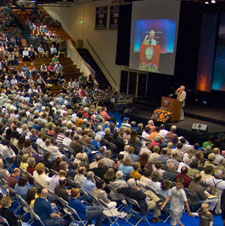
Opening Night of the Pepperdine Bible Lectures is why it is still alive when virtually all other Christian college lectureships have faded!

Opening dinners start at 4:00pm, one for the women sponsored by Associated Women of Pepperdine and one for the men.  I suspect this gender-divided agenda is a fossil remnant once required so that the many women leaders who raised over $250,000 for Pepperdine last year can stand at the microphone, and so women like Emily Spivey, the dinner speaker for the AWP Dinner, can speak the Word of the Lord as powerfully as the preachers I have heard at the men’s dinner.

No one really sees this as an issue at Pepperdine—because the people who are looking for fights don’t come to Pepperdine Bible Lectures. 

Helen Young continues to grace the dinner and the lectures with her godly presence. She is a continuing inspiration and a link to the past that reminds us that there have always been gracious, forward-looking people in our fellowship!

In a matter of minutes after the dinner, I had short conversations with national evangelists from Senegal and The Gambia, with church leaders from Greece, and with Christians from Rwanda and New Zealand. With each of these, we had true koinonia—true fellowship in the gospel—hugged, shook hands, whatever was appropriate and talked about the work of God in their country.  This is why we and thousands of church leaders come to Pepperdine.

I especially loved the moment when Dennis Okoth, an African evangelist of the first order, led the thousands of saints in prayer, beginning with these words, “Brothers and sisters, let us believe and pray!”  Oh, yes! Let us believe and pray!

I don’t know how many people were at this opening service, but I would guess about three thousand, Christians from all over the world and from across the United States. We have already been with friends from Michigan, Georgia, Tennessee, Oklahoma, Texas (of course), Oregon, Washington, and Florida—just on the first day—oh, and California too!

My personal moment to remember though was every voice singing Great Is Thy Faithfulness, the great hymn written in 1923 by Thomas O Chisholm. I was introduced to this hymn by Owen Olbricht in 1966 when I was a part of Campaigns Northeast. We used it as our theme song, so we sang it often. Sherrylee and I adopted this hymn as ours and have certainly sung this song with each other more than any other hymn, I’m quite sure, so to sing it with the Pepperdine crowd was very special.

The theme for this year’s Lectures is “God’s Unchanging Faithfulness” based on the Psalms. The program  variety is huge! The number of classes so many that hard choices are made all week. The singing groups are the best in our fellowship. There is nothing missing from the Pepperdine Bible Lectures.

But what truly sets these lectures apart is a sense of fellowship!  In years past, Christian college lectureships were known for their “Open Forums” where Bible professors would pontificate on every conceivable question.  Other lectureships were known for “defending the faith.”

Make no mistake, the Pepperdine lectures have not avoided the hard questions. On the contrary, probably most “hot” topics are discussed here—but they are discussed in an arena where people are respected, not ridiculed, and where at the end of the day, we join hands across the aisle and sing “The Lord Bless You and Keep You!”  It’s the spirit of a fellowship on the mission field where fellowship is precious—where fellowship is unity!

I’m not sure the lectureship format will last another generation—but if it does, Pepperdine’s Bible Lectures will be the shoulders the future gatherings stand on!

The killing of Osama bin Laden immediately reassembled moral questions that followers in the Judeo-Christian tradition—have struggled with for centuries, if not millennia.  As I read the comments and tweets, it seems to me that most of the questions gather themselves into two main dilemmas:

1.            Can a God-fearer purposefully take the life of an evil person?

2.            Should God-fearing people celebrate the death of an evil person?

As with many moral dilemmas, I think I was first confronted with the question of pacifism through reading war novels as a teenager. I remember reading Mila 18 by Leon Uris and the struggle the Jewish citizens of Warsaw had as the Nazis first captured the city, then literally walled them off into a ghetto, followed by aggressively eliminating them.  I still remember vividly the tense debates between the rabbis who argued for patience and trust in God to deliver them and the Jews that wanted to take up arms and resist the evil perpetrated upon them.

The same dilemma occupied faithful Christians in National Socialist Germany. I just finished reading Bonhoeffer by Eric Metaxas. In some ways, the whole Confessing Church struggled with resistance to the evil Hitler began introducing long before he was powerful enough to begin killing Jews.  One of the first things he did was to corrupt the church, installing leaders more faithful to him than to Christ, re-writing creed and doctrine to fit new moral standards, and imprisoning those Christians who refused to adopt the new church order!   What would you have done as a Christian when the God-ordained government (Romans 13) corrupted the church?  Would you have disobeyed the government or sought ways to “live at peace with all men?” Would you compromise by keeping silent and not resisting your church leaders  because you were to submit to those who rule over you?

Then, of course, Hitler and his government changed the social rules of morality: no commerce with Jews, report any bloodline discrepancies, have babies for Hitler, ad nauseum! What would you have done when ordered to act like a bigot or to betray your neighbor?

A German friend of ours told us that one day her best friend—a little Jewish girl—didn’t  show up at school—anymore. No one dared to ask—she didn’t ask—because if you asked, you would be the next one who disappeared in the middle of the night! What would you have done?

Would you have hidden Jews in your home as the ten Booms did? Would you have lied to protect them when the Gestapo knocked on the door?

Six million Jews died in concentration camps, four million German civilians died in WWII, seven million Russian civilians, six million Polish civilians—none of these numbers include the soldiers who died.

“Shall I shoot? I can get inside the Fuhrer’s headquarters with my revolver. I know where and when the conferences take place. I can get access!”  In November 1942, Werner von Haeften, a staff lieutenant of Hitler’s High Command, could no longer hold his burning question in check. The man confronted Bonhoeffer with this question because they both were Christians with deeply held convictions.

The two men reportedly talked for hours. Bonhoeffer offered him no easy answers, but one part of their conversation I’d like to share with you to think about. Bonhoeffer told von Haeften that he should not make his decision based on guilt because guilt was going to be the result of either decision. If he did nothing in the face of evil, he would be guilty; if he killed in the name of Good, he will be guilty. He could not emerge without guilt, “but then that guilt was always a guilt borne in suffering.” (quoted in Bonhoeffer, 425-6, Kindle Edition)

Von Haeften was part of the July 20, 1944 failed assassination attempt on Hitler and was executed the next day. Bonhoeffer too decided that he could actively participate in attempts to kill Hitler.Eberhard Bethge, Dietrich Bonhoeffer’s best friend and confidante, explained

We now realized that mere confession, no matter how courageous, inescapably meant complicity with the murderers, even though there would always be new acts of refusing to be co-opted and even though we would preach “Christ alone” Sunday after Sunday.

Thus we were approaching the borderline between confession and resistance; and if we did not cross this border, our confession was going to be no better than cooperation with the criminals. And so it became clear where the problem lay for the Confessing Church: we were resisting by way of confession, but we were not confessing by way of resistance.” (Essays on Dietrich Bonhoeffer. Grand Rapids: Eerdmans, 1995. P. 24).

As I sort through this difficult question myself, I come to what I believe to be true from my own understanding of God. God never asked his people to do anything that was intrinsically evil. He repeatedly told the Jews to purge themselves of those who did evil and to put them to death (Deut. 13:5; 17:5, 7, 12; 21:21 and more.)  He did not order them to do evil.

Moses ordered the killing of Israelites who chose the golden calf. God’s judges killed those who did evil. David, the man after God’s own heart, killed Goliath.  What do you do with these executions of evil people, apparently approved by God?  God does use servants to punish those who do evil!

But if you do wrong, be afraid, for he does not bear the sword for nothing. He is God’s servant, an agent of wrath to bring punishment on the wrongdoer.”    (Romans 13:4)

God hates evil. Yes, he is longsuffering so that all can come to repentance—and we must be also. He is rich in mercy–and we must be also, but His wrath is frightening and the wages of sin is death.

Although Scripture says he was not handsome, I bet his eyes were unforgettable! Over and over again, the Gospel writers report that Jesus saw someone, some crowd, some situation, then acted on their behalf.  Most interesting are those passages where He saw their faith (Matthew 9:2, 22; Mark 2:5; Luke 5:2)! Now how did He do that?

What do we see when we look at people? The story of Jesus and the man born blind, recorded in John 9, has always fascinated me. Recently I recognized that it reveals a lot about how people look at others in contrast to how Jesus sees people!

The comparison starts at the onset of the story when Jesus and his disciples see a man born blind. His disciples say, “Why was this man born blind? Was it because of his own sins or his parents’ sins?” (9:2) They look at this blind man and see a theological question!

I’ve seen this happen often on the mission field. People who walk in the door of our churches bring BIG questions with them, quite often about divorce, re-marriage, even polygamy, but also abuse, addictions, alternate lifestyles, criminality—yes, pretty much any theological problem that a person can embody!

I’ve always been amazed—and sometimes guilty myself—about thinking, “Oh, he/she would make a good Christian”—usually about someone who is very good, maybe even attractive, probably successful.  I don’t think that’s the way Jesus saw people.

This happened so the power of God could be seen in him,” was Jesus’ answer to the disciples’ question (9:3). Then he healed the man’s blindness—but was not there when the man came back healed. As the story progresses, we see that Jesus healed the man’s eyes, but his heart and soul—his faith–needed perfection as well.

His neighbors looked at the man born blind and could not recognize him (9:8-12). This could not be the man they had seen begging pathetically by the gate everyday—because he was not doing what they expected him to do—so they could not even see him.  I wonder how many people we don’t recognize because we don’t expect/believe that Jesus can dramatically change a person?

The religious leaders just did not believe his story—it was too good to be true—and besides, it had some theological issues. Jesus had healed him on the Sabbath, so it couldn’t be an act from God. Like you can’t find Jesus in the wrong church, or if your salvation was not sequenced properly, or you don’t worship scripturally!  Your healing can’t be valid if isn’t free of issues!

Don’t forget, it is those with the most knowledge of Scripture, the most concern about faithfulness, the most commitment to doing things right, the most invested lives—it is these people who did not recognize, who totally missed the work of God on this blind man! That’s a little scary, isn’t it!

The blind man’s parents were just too scared to admit what they saw! They admitted he was their son born blind, but they abandoned their own son for fear they might be kicked out of their own church! I just don’t want to even think about how this might apply to parents and their grown children in our churches today. Can I just say from my own experience that parents sometimes have the opportunity to learn about Jesus from their children—even though what they learn is very different from what they thought they knew!  Don’t be like the blind man’s parents and disown your children because they have experienced God differently.

Did you notice as you were reading John 9 the growth in the healed man’s faith in Jesus as he is interrogated? Look at his answers to the question, “who did this to you?”

  • 9:11 – “The man called Jesus . . . .”
  • 9:17 – “I think he must be a prophet.”
  • 9:33 – “If this man were not from God, he could not have done it!”
  • 9:38 – “Yes, Lord, I believe!”

Jesus saw a blind man, healed him, then left him to go through trials that would teach him to believe! We often demand faith before healing, but Jesus seemed to be able to see the convergence of faith and healing less in sequence than we do.

Jesus draws this story to a conclusion: “I entered this world to render judgment—to give sight to the blind and to show those who think they see that they are blind” (9:39).

Today, as I go to church, I will again look out the car window at the people who are walking their dogs, jogging, hitching their boats to their cars, people who seem to me to be blind to the Light of the World, but . . .

Lord, help me to see people as you see them, to leave judgment to you, and to believe that blind people can see!

End of the Road!

Even the 7th day of creation came to an end! So does our road trip of April 2011. Tomorrow we start a weekend of training, Sherrylee in Malibu and I in Seattle. Then we will be at the Pepperdine Bible Lectures until Friday next week and then will start on our way home.

So far, we have driven 3332 miles–and we are not quite finished.  Let me just bring this little series to an end though with these thoughts about driving long distances!

1.     If you can set your own agenda and if you have enough time so that you don’t have to rush from one spot to another, then driving is a very relaxing way to travel!

2.    If you can travel with your wife or your best friend or your family–or all of the above–then driving is a wonderful way to travel. The time to talk, to listen to each other, to be quiet together–it’s all almost vanished with the hectic of our lives!

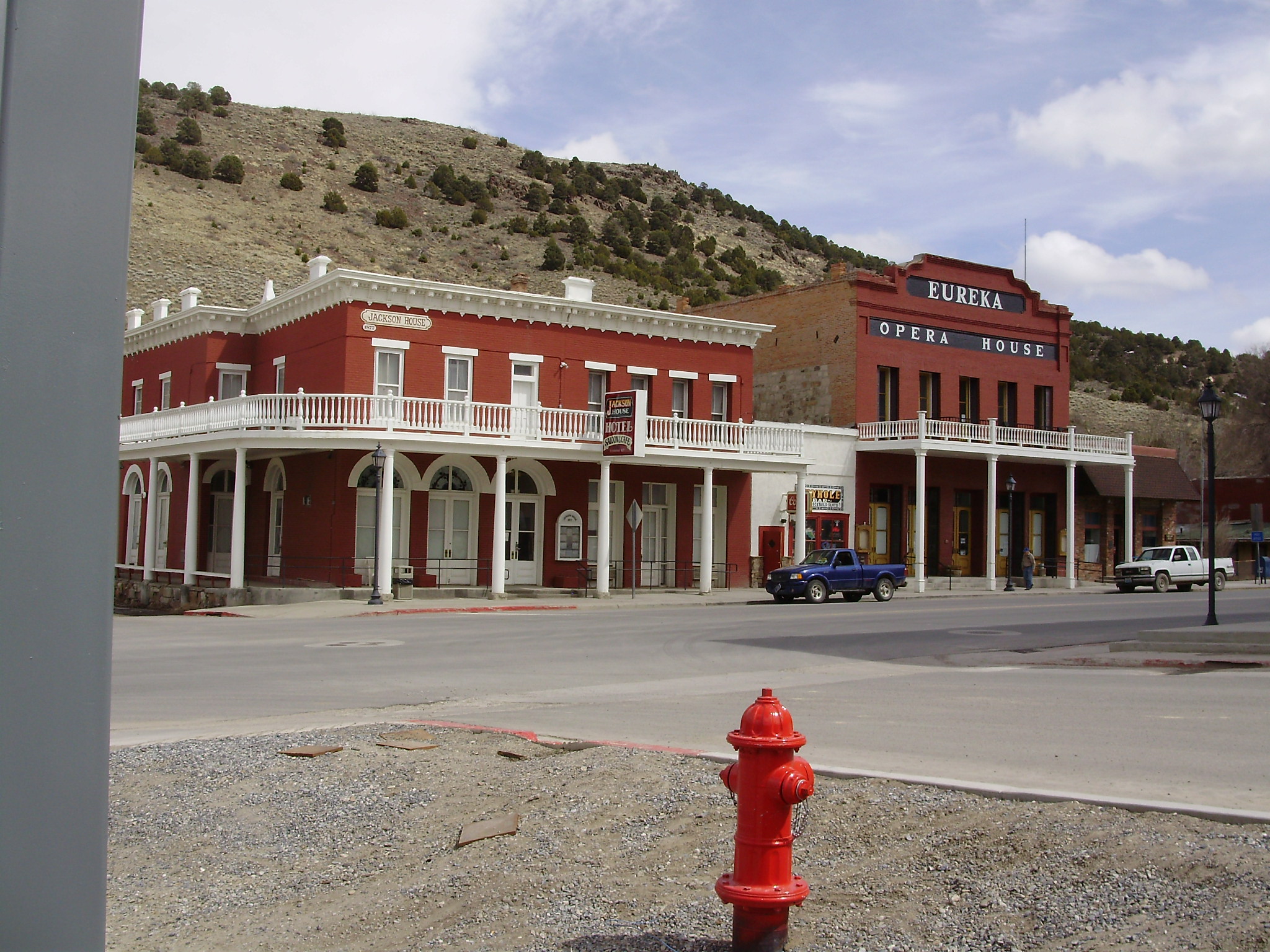
3.   If you like to be spontaneous–like “turn around, Mark, and let’s talk to those cowboys!!”–that’s really hard to do in an airplane.  Or “let’s eat at that old stage coach stop in Eureka!” OK, but I thought you wanted to . . . . it doesn’t matter . . . . let’s eat there!”

4.   If you like really seeing where you are going.  Walking is the best, but next to walking, driving let’s you see so much more. I’ve flown over Utah several times but had no idea of its beauty until we drove through it on this trip.

5.   It can be cheaper–a lot cheaper–to drive. Even at $4.00/gallon, we got about 400 miles for $50. That’s a lot better than two airplane tickets!!

I’ve noticed that young families rarely think road trips are even possible any more.  When I was a boy, my family went yearly to Kansas from Fort Worth to visit grandparents–that’s about all the vacation my dad got from work.

Three times, however, we did 4-5 day trips through Texas–five of us in a non-air-conditioned car–but I remember the adventure, the excitement, singing in the car–all kinds of wonderful things about each of those trips.

Think about the memories you can make on a road trip with your kids–and maybe it will be more appealing to you.  You can play the alphabet game, the license plate game, 20 questions–especially on the Bible–and you can even sing together!  On our day trips to Yosemite with Anna and Olivia and we’ve cranked up the opening song of Phantom of the Opera and   until we are almost voiceless.  They even sang Roy Orbison with me–or to humor me, I’m not really sure.

What great times in the car. Go take a test drive some Sunday afternoon. Just drive 50 miles out into the country and stop somewhere unplanned for a snack and drive a different route home.  It may change your life!

Thanks for going on this great trip with Sherrylee and me. We’ve enjoyed it a lot.

I began my last post by imagining that the giant sequoia that fell over three hundred years ago suddenly some Sunday it appeared upright and alive again. What would the world do?

1.            The story would be printed and broadcast all over the world. For about five years, the site would almost rival Disneyland for yearly visitors.

2.            In spite of all the pictures and reports, some would not believe that it was true! (We talked about this in the last post: Fallen Monarch and Faith.

3.            Some people would begin worshipping the tree! Every Sunday there would be a gathering of thousands to talk about life and death and trees. Even hundreds of years later, those who now dance at Stonehenge on the spring equinox would come to California to dance around the wondrous sequoia, now called the Phoenix!

4.            Some would explain it through extraterrestrial powers.

5.            Scientists would immediately start searching for a rational explanation. Investigations of the tree itself would commence immediately. Although the very act defies scientific explanation, prominent arborologists would offer a whole spectrum of speculative explanations for the phenomenon.

6.            And some century in the not-too-distant future, someone would challenge the old story that the tree had ever been dead, suggesting that the more primitive science of the 21st century could not really know if it were dead or not.

You are much too smart an audience to need me to connect the dots for you between the fantastical sequoia story and the resurrection of Jesus.  And we have already talked about why we believe that Jesus is alive, so now let’s talk about something much harder:  how has this historical event changed your life?

Try to finish this sentence: Because Jesus was raised from the dead and is now alive, I ______________.I’ll go first:

1.            I have confidence that his claim to be the Son of God is true. If the resurrection is not a lie, then I become more confident of all that He said.

2.            I believe that if he conquered death, he is powerful enough to do the miracles attributed to him. He can calm the storms, he can feed the multitudes, he can raise the dead.

3.            All the dead people he raised died again! That’s not enough. I once read a fictional account describing Lazarus after Jesus called him out of his tomb and it was not pretty. Lazarus suffered from all kinds of skin and health issues for having been dead for four days.  But to restore life never to be lost again, now that is something I long for. That’s what Jesus has promised, confirming his promise with his own resurrection!

4.            I can live my life now with less fear of death. I do sometimes fear dying—the process is often difficult—but  that is a different fear than one of death as annihilation.

5.            I can approach my own death without a horrible sense of loss—because the promise of resurrection means that everything good, every person I have ever known who has sought God will continue to be a part of my life—forever! All the beauty of God’s creation will be redeemed. Whatever wisdom and truth I have discovered in my life will not be lost, but will be confirmed as God’s own truth—meant to be discovered.

6.            Because Jesus was raised from the dead and is now alive, I have a purpose and a task worthy of spending one’s entire life doing, that is, doing good and telling the story so that it is easier for others to believe that Jesus is alive.  My own resurrection does not depend on any success quota or measurement of skill, rather my own resurrection was accomplished on that Sunday when Jesus rose.

Do not leave this page without having answered the question: What difference does the fact of the resurrection make in your life? 

That’s my gift to you today!

Fallen Monarch in Mariposa Grove

After you park in Mariposa Grove in the southern part of Yosemite, you walk past a sequoia that probably fell over three hundred years ago, which today is called the Fallen Monarch. White people first saw it in 1857, but the tree was already on the ground. The bark contains chemicals that help it resist decay, not eternally but for much longer than average trees.

What if next Sunday, visitors to the park came, parked in the parking lot, reading their usual park material, walked to the edge of the parking lot and saw this huge tree standing upright, roots in the ground, leafed out completely, and apparently growing again!  If they ran to tell the park rangers, the rangers would think they were crazy! If they published pictures on Facebook, people who had seen the dead tree would think the pictures were forged.  What would it take to convince the world that this tree that had been dead for 300 hundred years was now alive????

What if over 500 people told you that they had seen the tree alive?  What if they wrote accounts about it and published them on the internet?  Would you believe it then?

I keep thinking about the people who don’t believe that men ever landed on the moon or that JFK is alive on the top floor of Parkland Hospital in Dallas—or that the president was not born in Hawaii. To believe that something is true requires more than evidence; it requires faith!

What happened the day after the resurrection of Jesus from the dead?  I know that the priests and the elders paid off the guards to spread the story that the body was stolen, so whoever talked to them had their disbelief confirmed by “eyewitnesses.”

I don’t know how the high priest explained the ripped curtain in the temple, or how the people in Jerusalem who saw those bodies of the godly men and women who were raised and who had wandered into the city and “were seen by many.”

Even the remaining eleven of the inner circle had trouble believing.  Mark reports, probably as Peter reported to him, that Jesus “rebuked them for their stubborn unbelief because they refused to believe those who had seen him after he had been raised from the dead” (16:14)!  And Thomas held out at least another eight days!

How much harder must it be 2000 years removed to believe that Jesus rose from the grave! But for those of us who do believe it to be true, it changes everything—absolutely everything!

So the question for today is why do you believe in the resurrection of Jesus? If you only give me “evidences,” then I think your faith is vulnerable to rational attack. If your belief, however, includes “the substance of things hoped for, the evidence of things not seen (Hebrews 11:1), then you need have no fear that you’ve been tricked!

God gave life to the tiny seed that fell to the ground 2000 years ago that became the giant sequoia. He was there when it fell over. God is not only the First Cause, He also creates the essential Effect of every cause.  I believe God caused the Virgin Mary to conceive and give birth; I believe that Jesus was killed on Friday, and I believe with all my heart that He not only was raised on Sunday but is just as alive today. It’s my choice to believe. But I can choose to believe because God gives life to tiny seeds!

Next: What does the resurrection on Sunday change about Monday for you?

Sherrylee, Anna, Norah, and Olivia in Yosemite

We have always wanted to go to Yosemite, but to be able to see it for the first time with our daughter Emily and the three gkids was just more wonderfull-ness than can be described.

On Tuesday this week we all packed up and drove into the park. Only Sherrylee and little Norah got carsick on the winding, mountain roads!  But we stopped often enough to avoid in-car disasters.

Driving through Yosemite valley was breathtaking! Many of the roads in the park are not yet open, but we were able to do the entire valley loop, seeing Half Dome, Bridalveil Fall and many other lesser falls. They say the falls this year will be extraordinary because of all the snow during the winter.

Our favorite adventure was hiking up to the Lower Yosemite Fall—actually, hikingis an exaggeration. We walked a very well-paved path, the girls jumping on every boulder or trying to walk every downed log near the path.  At the bottom of the falls, the enveloping spray made the moment cold and damp—but one never to be forgotten.

On Wednesday, we decided to stay in the vacation rental in Groveland. As they drove in on Monday,  Anna (8) had seen the large Iron Door Saloon sign—the oldest saloon in California—and she declared, “Oh, I love saloons!”  She didn’t get that from her grandparents—but we had no choice but to eat there.

The girls spent most of the day collecting “jewels” which were really quartz stones in various colors. Olivia decided they were now rich—which her dad will be glad to hear!

Emily and Norah at the Lower Yosemite Falls

Sherrylee and I had rented the house through Friday, but Emily needed to get home Thursday to help Tim with the Good Friday service and preparations for Easter. We all wanted to see the giant sequoia, but they were too far away to do and return to our house in Groveland. Emily and I decided that she would  see the trees on Thursday on her way home, and we would finish our rental, then see them on Friday as we drove to her house.

Sherrylee heard the plan and thought we were crazy. She said we just needed to leave together—that being together was the most important thing—and she was right!

That’s what we did. We packed up a day early, left together and spent a wonderful couple of hours seeing creations of God that truly deserve the word awesome!

We only saw what we could easily walk to with the children, but to think that some of these trees were seedlings about the time Israel was going into captivity. Others could have been planted by King David—that’s how old these trees are.

One cluster of sequoia is called The Bachelor and Three Graces. Nobody wants to be alone. My understanding is that the sequoia are all connected via a root network. They are really a family of trees, quite interdependent on each other.  I like that.

It's not good for man to be alone!

You know, God didn’t create Yosemite alone. He had his co-parts, the Word and the Spirit, and maybe the angels—I don’t know about that. When he wanted to bless the world, he created a whole nation of people to walk out of Egypt. Jesus didn’t walk around by Himself either. Paul took an entourage wherever he went on his missionary journeys.

Driving through Utah, Nevada, and these sparsely settled areas in Northern California, we have seen many, many houses, trailers, double-wides that were miles from the next one. Sherry and I have asked aloud a hundred times, “What kind of person lives so alone? Do they have to? What kind of life do they live?”

It wasn’t good from the beginning for Man to be alone!  We need family, we need neighbors, and we need the community of saints.  God just doesn’t do things by Himself!

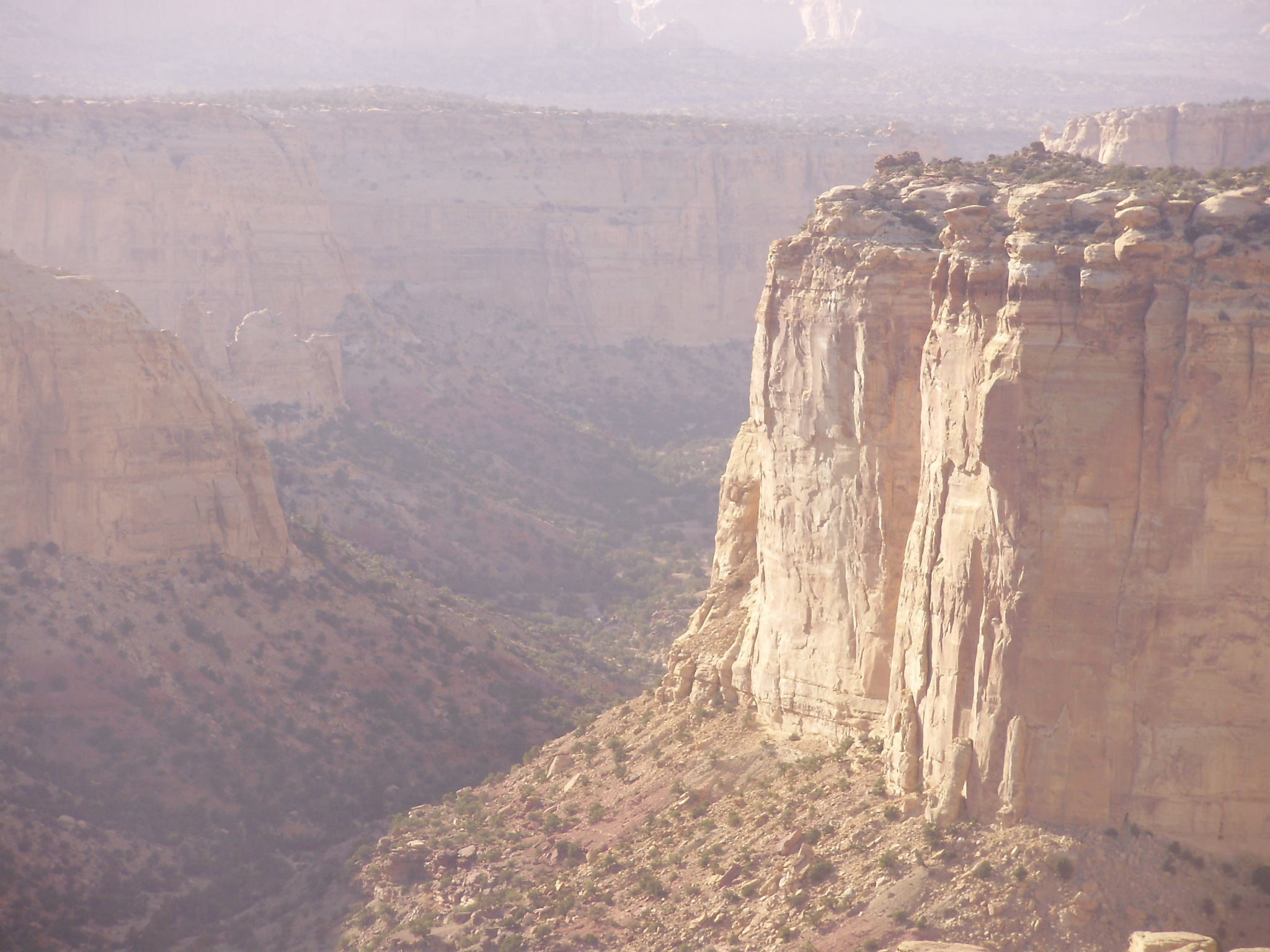
Canyonland in Utah

We left beautiful Pagosa Springs, Colorado–in a frosty temperature of 18 degrees–and started west. I knew that we were going to spend all of one driving day crossing Utah and then all of the next day crossing Nevada, with our final destination being the Tahoe area of California—but I had no idea what to expect. We had never been in either state—except for flying through their hub airports.

I had flown once to Seattle via Salt Lake City, and I remember looking out the window of the airplane and thinking that I was looking at moonscape below—the most barren and the most unusual landscape that I had ever seen—but I wasn’t quite sure exactly where we were in the air, so I didn’t know if we were driving toward the moon or not!

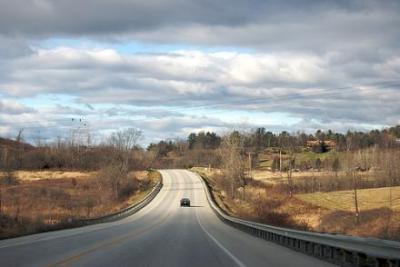
Those two days of driving , however, were two of the most fascinating and interesting days of driving that I have ever done.

Millions of years ago—give or take a few days—a large body of water we now call Lake Bonneville covered much of the present state of Utah as well as parts of Nevada and Idaho. At the bottom of the lake was sand rich in iron ore, so when the lake was gone, it left a lot of red sand that then under pressure became sandstone. Over the years the wind and the rain have eroded the large sandstone rocks to carve out huge and beautiful cliffs and gorges, mesas and canyons, arches and every other imaginable shape rock—not just in one place like you might think of the Grand Canyon being, but across the whole state of Utah. We drove over 400 miles across the whole state with our mouths gaping (I know, that’s not a pleasant thought, is it!) at the beauty God created

What was God thinking as He spoke Utah into existence? Maybe, let’s just see what We can do with sand. After all, look what we did with mesquite trees in Texas and what We did ex nihilo in Kansas! We already did mountains in Colorado, so let’s try just sandstone in Utah!  Great choice!.

Nevada stop on the Loneliest Road in America

The next day we took Highway 50 across Nevada, called “The Loneliest Road in the United States!”  It was not the ugliest road, but the towns are few and far between. Across the entire state, we ascended   one beautiful mountain pass, going down the other side to enter into an even more beautiful valley with another range of snow-crested mountains right in front.

This is the route the Pony Express riders took!  No wonder that mail service only lasted about eighteen months. Those passes in the winter must have been miserable riding conditions. Add hostile cowboys and Indians, and it is amazing the mail ever arrived in Sacramento—but it almost always did—an amazing story!

It was also the route of the Wells Fargo stages, so whenever there was a town, it was typically also a stagecoach and pony express stop as well.

As we were going by one box canyon, Sherrylee saw a large herd of cows being rounded up and tended by a group of cowboys on horses about 500 yards back off the road.  We drove by—but, of course, I was persuaded to turn around, so we drove back and took this gravel road  up to a barbwire fence about 300 yards from this group of working cowboys. This was going to be a great foto op, I thought, until Sherry decided to open the gate and go up and talk to the cowboys!!

Sherrylee approaching the herd!

Well, I decided to stay and just take pictures, but she walked about 100 yards toward the herd, when suddenly a group of about fifty cows seemed to spot her impudence and started heading down toward her. I wouldn’t say it was a stampede, but they were not walking toward her either.

Well, she sees them coming her way and starts—well, I wouldn’t say it was a dead run, but it was not walking either. She gets to the fence, throws it open and gets through it about 60 seconds ahead of the cows. She can’t get the gate quite back together, what with her feet moving so fast through the gate, so I quickly put the gate up and lock it down—as we had found it!

The herd –except for one calf—begins heading a bit more to the west and one of the cowboys follows them down and runs them back away from the fence.  All the while, Sherrylee is hollering at him, “Did I do this? Oh, I’m so sorry! Did I do this?”—thinking that she had at the best created a lot of work for these cowboys.

He came over and told her, no, no! The cows weren’t really interested in her at all! In fact, the cowboys were driving the whole herd down that way because they were finished branding and were turning them out into new grazing areas. Sherry and I had dodged a bullet!

The cowboy stopped and visited with us for a while. Turns out he is an electrical linesman and just does a little cowpunching on the side. In fact, he had brought his whole family—including children—so this 4-5 day event was their family’s spring break adventure!

He was very nice. They let Sherrylee go and promised not to warn the cowboys working other herds ahead of us!  And we had a great adventure and a story we will laugh and enjoy for the rest of our lives!

Sherrylee resting in Tahoe

We rested Sunday then in South Lake Tahoe, going to church, then sitting by the lake and enjoying the beauty of the world God created.

I thought about how much dust we had seen! Rocks are just compressed dust, the sand is big dust, now the salt in the Great Salt Basin is a different kind of dust, but smashed down, it is dust also.  Everything eventually returns to dust. Dust to dust! My dust too!

But I don’t think mountains sit around and marvel at the beauty of the alpine lakes, nor do the canyons marvel at the colorful rock with which they are created.  No, it is the imaginative, creative image of God in me that marvels—not my dust! I

It is that image of God that recognizes the Creator and praises Him for wonders of nature—all the gifts of His Hand. Thank you, Lord.