Feeds:
Posts
Comments

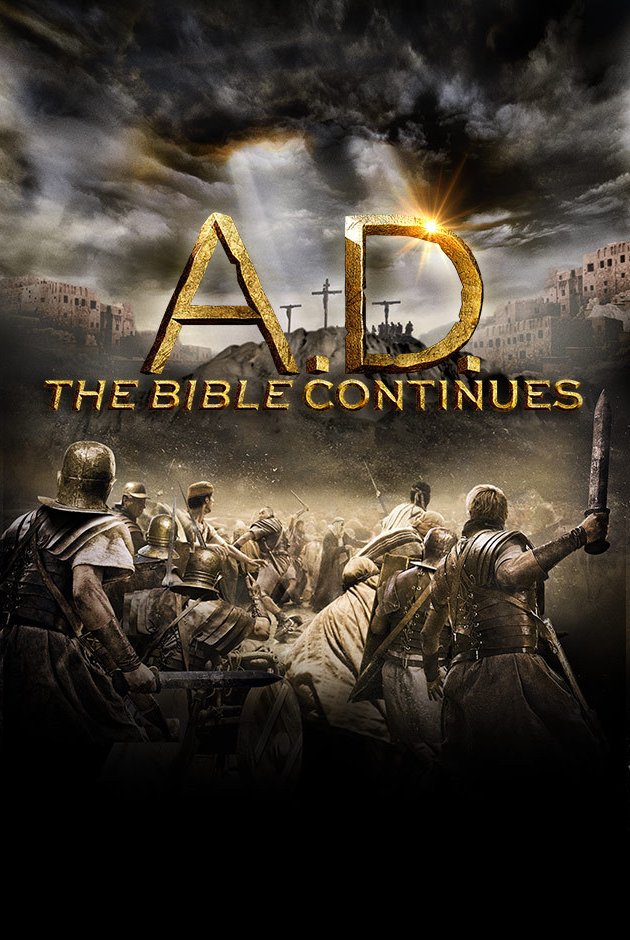
ADI hope you were among the many who watched the NBC mini-series A.D. The Bible Continues which premiered Easter Sunday.  This series, as you likely know, is a welcomed sequel to The Bible which aired on the History Channel in 2007 with extraordinary ratings.

Sherrylee and I did not see the first series as they aired, but we bought the DVD and used them as part of our devotionals for several weeks.  The only negative thing that I will say here about A.D. is that it is going to be much better when watched without all the commercial interruptions.  It’s pretty difficult to jump from the raw emotions of the crucifixion to car commercials appealing to your most materialistic pleasures.  We intend to DVR the program and skip the commercials in the future.

The executive producers Mark Burnett and Roma Downey have kept the scripts well within the biblical context, while—and this is their genius—adding the creative imagination to the gaps in Scripture. Of course, the writers take some license with the biblical text, but not so much that most of us who believe are offended as was the case with some recent attempts of Hollywood to appeal to Bible-readers—think Noah (2014), which you may not have even seen.

Probably to take advantage of opening on Easter Sunday, this first episode rehearsed the entire Easter Story again. Fortunately in my opinion, while the horrific suffering of crucifixion is not mitigated in any way, the focus is more on the drama surrounding the death of Jesus and the struggle for faith of its witnesses.  Joseph of Arimathea must go against his own high priest to bury the body of Jesus in his tomb—because it is the right thing to do.  The few disciples who have even found their way back to the others wrestle with whether to wait three days and see if there is really any chance of His return—or not!  Even Pilate has to deal with his wife who is convinced by her dreams that Jesus is a good man.

But the Burst of Resurrection is the best moment!  I love the angels in these two series.  They are warriors!  We first see this in the two who go to Sodom to test and rescue Lot and his family.  The “wings” crossed over their backs are swords with which they fight their way through the wicked city.  On Resurrection Sunday the angel, standing in dazzling light, pulls his sword, challenging (unnecessarily) those who guard the tomb.  I love the show of strength and power as opposed to wispy, softly-blurred angels.

Just as with the angels, the other characters are a little stronger, a little more raw, a little more Middle Eastern than we have often seen—and it makes this production better!  I can’t wait to see what they do with Stephen and Paul and Simon Magus and Lydia.

In addition to the mini-series itself, NBC and the co-producers are launching what they call a digital talk show called Beyond A.D. , which will be taped with a live audience and will basically be a dialogue between audience participants and some of the cast, the producers, and other special guests.  The description says that both historical and spiritual topics will be discussed.  Beyond A.D. will launch next Sunday night April 12 and should create wonderful new possibilities for people to explore the Story.

Cynics will argue that NBC is just lining its pockets with a sure hit—taking advantage of the many American Christians starved for something decent to watch on television–and I’m sure there is some truth to the comment. Surely, however what St. Paul said to the early Christians in Philippi is true here also:

It’s true that some are preaching out of jealousy and rivalry. But others preach about Christ with pure motives. . . . Those others do not have pure motives as they preach about Christ. They preach with selfish ambition, not sincerely, . . . But that doesn’t matter. Whether their motives are false or genuine, the message about Christ is being preached either way, so I rejoice. And I will continue to rejoice.        (Philippians 1:15ff).

9.5 million people watched A.D. last Sunday.  That’s good!

Rainy-Day-HD-ImagesI woke up this Saturday to a bright, sunny spring world—horribly incongruous to the reality of what happened on Friday.  If this were a movie—which it is not—Saturday would be overcast with a weepy downpour, not the crashing thunder of Friday evening, but the low rumble of distant disruption.  The creation would be mourning the death of its Creator.

The disciples were huddled together behind closed doors on Saturday.  A few were so weary with fear from Friday that they had slept. They had slept while Jesus prayed in Gethsemane—the spirit is willing, but the flesh is weak.  Some perhaps wandered in early Saturday morning after a sleepless night of hiding, lest they too be crucified.

Only John had actually been at the cross. Had he and Mary the Mother cried together all night? He was now responsible for her and he didn’t know what that meant.  Over and over he had had to tell the others what he had witnessed: the nails, the jeering, the darkness, the Words, the End. He told of the surprise that Nicodemus and Joseph had shown up to bury the Body.

The women disciples were with the men—all the Marys, Joanna, the others—they had wanted to finish annointing the Body, but they had not been prepared on Friday evening to finish before the sun set, so they would get it all together on Saturday, then go early Sunday morning and finish.

Peter—Jesus had called him a Rock, but it turns out he was just dust! He had been so brave when Judas and the others had shown up among the olive trees, but Jesus had healed the very one he had slashed.  How was he supposed to feel about that? It really took the wind out of his sails. He did follow as they led Jesus away, but he couldn’t—didn’t—follow as far as John had gone—and that had been when it happened.  He hadn’t meant to curse—it just came out of his fear!  When the rooster crowed, his heart broke.  He was no Rock.  He was as bad as Judas.

For three years this small group had been with Jesus.  For three years they had seen him do the unexplainable! He turned water to wine, walked on water, healed the lame and the blind—even raised the dead. They believed in him. He was the Messiah they had hoped for—though different from what they expected.  He had promised to be with them—but he had lived very dangerously, even talked about going away—about dying—as  if he expected this!  They  had tried to protect him, but when he headed toward Jerusalem—they knew it was trouble!

Now here they sat. He was dead, his lifeless body lying shrouded in a tomb, sealed with a stone and guarded by the Romans so that no one could steal him away and fabricate hope. They were alone—and afraid.  The Jews and the Romans could have saved the expense of guarding the tomb.  These disciples were not leaving the room! Saturday was a bad, bad day!

And what about Jesus?

On Friday afternoon, His Spirit had left His Body and gone into the Hands of God the Father. Peter would later write about Jesus preaching to the spirits in prison and there are several references to his descension, so perhaps He spent Saturday harrowing hell and bringing Good News to those who had longed for His coming, but died before the fullness of time.  Much we don’t really know, but this we know:

His body was in the tomb, but His Spirit lived. He knew He would be reclothed—the temple would be rebuilt—in three days, so He was obediently waiting for the plan of God to unfold and Resurrection power to be released.  Where He was on Saturday was not dark and hopeless, rather the Light was brighter than ever, just waiting to explode and blow away the stone and the darkness!

Now the brilliant sunshine of this Saturday morning is starting to make sense to me.

On Good Friday

The_Church_of_the_Holy_Sepulchre-JerusalemOne of my biggest disappointments on our visits to Jerusalem is that the traditional site of Golgatha and the garden tomb of Jesus are completely encased, totally overwhelmed and obscured, by the church that was built to preserve and honor them.

Not long ago, I was driving in Dallas with our grandsons after a hockey game, when I realized that we were not far from Commerce Street and Dealey Plaza, so spontaneously, I decided to drive by and give them a little glimpse of the history of what happened there in 1963.  Little has changed on that historical spot.  The “grassy knoll” is there, the overpass, and the street follows the same path, so you know as you drive over the marker on the street that you are passing over the very spot where JFK died.

What Christians have done in Jerusalem would be like Americans enclosing all of Dealey Plaza in one or more connected museums, covering the grassy knoll in marble to “preserve” it, and allowing tourists to peer through a window the size of a 1950s TV screen at the X on the street, marking where the first bullet struck.

It’s quite true that landmarks, especially open-air landmarks, if not protected, tend to erode and disappear.  Even the museums that are built to protect them cannot really prevent disaster. The Church of the Holy Sepulchre in Jerusalem  has burned several times, was literally shaken to pieces by earthquakes, and has been severely damaged by wars over the centuries.

One conclusion, therefore, is that in our attempts to preserve, we obscure at best and perhaps destroy that which we seek to venerate.

Sometime before 1839, a workman placed a ladder on a ledge above the door of the Church of the Holy Sepulchre. Shortly thereafter, the Christian churches (and Muslims) who were fighting over political control of the physical site agreed to a status quo for the sake of peace.  Today, 175 years later, that ladder remains above the door of the church.  Once again, because of the extreme desire for preservation, which in this case meant maintaining the status quo in all respects, even the peripheral becomes “holy.”   The ladder is today called the immovable ladder and is pointed out by the tourist guides.  Though not yet holy, I have no doubt that someone will find a way to sanctify it.

Another conclusion is that preservation often leads to defending the status quo, which inadvertently can transform common elements into sacraments. 

Today is Friday, the Friday before Easter Sunday. We are remembering that Jesus was crucified.  For six hours, he suffered physically and spiritually because of our sins.

Finally, he died; the Son of God experienced the Curse in His flesh, but His Spirit passed into the hands of His Father who honored His death with Life.

It’s really not very important for Christians to preserve the hill or the cross or the robe or the tomb.  Preservation seems a dangerous and ultimately fruitless occupation.  It can lead to obscuring, even destroying that which is real!

What happened on that Friday really happened! Let’s don’t build museums around it; let’s don’t die warring over the status quo.

Let’s let the simple fact be true enough that we spend our lives believing it and living out its implications:

But God showed his great love for us by sending Christ to die for us while we were still sinners.And since we have been made right in God’s sight by the blood of Christ, he will certainly save us from God’s condemnation. 10 For since our friendship with God was restored by the death of his Son while we were still his enemies, we will certainly be saved through the life of his Son. 11 So now we can rejoice in our wonderful new relationship with God because our Lord Jesus Christ has made us friends of God. (Romans 5:8-11, NLT)

Tomorrow is the day of crucifixion. Today, as I write, is a beautiful sunny morning, just cool enough to refresh everything living!  But tonight comes the darkness of betrayal, and whippings, and thorns, and curses, and lies.

And tomorrow will end in total darkness, utter depravity, the death of innocence, separation from God! We call it Good Friday!  I don’t think so!

Perhaps my atheist friend can find some good in martyrdom and be satisfied that Friday accomplished all that needed to be done. Many people’s deaths have changed history—maybe everyone’s death changes history.  But Jesus was not about changing history.

And why was the tomb sealed with victory on Saturday?  Was it to prove death to the superstitious and the unbelievers? Was it to prove death to the believers? Was it because Jesus had souls to preach to in the spiritual world (1 Peter 3:19)?

Perhaps so we could mourn for what we did on Friday!

But Jesus was not surprised by Sunday morning! The women were; the disciples were; but Jesus never doubted.  The earliest chronicler says, “He then began to teach them that the Son of Man must suffer many things and be rejected by the elders, the chief priests and the teachers of the law, and that he must be killed and after three days rise again” (Mark 8:31).

Surprise, however, is not a prerequisite to joy!  He had told his disciples on Thursday, “Now is your time of grief, but I will see you again and you will rejoice, and no one will take away your joy” (John 16:22). When his followers wept, Jesus wept, so I’m quite sure that bringing eternal joy to his disciples brought Jesus himself great joy!

And what about Easter bunnies and eggs and little girls in frilly dresses and white shoes?

 Well, what about Spring? Does the cycle of seasons with death yielding to new life every Spring sound familiar?  Who do you think created the seasons in order to proclaim the Victory over Death?

On his first missionary journey, Paul and Barnabas gave the first century pagans the same answer that we who doubt the source of our joy should hear: Yet he has not left himself without testimony: He has shown kindness by giving you rain from heaven and crops in their seasons; he provides you with plenty of food and fills your hearts with joy” (Acts 14:26).

So I’m pretty sure Jesus would smile at baby chicks and bunnies and little boys with their hair spiked and in their first bow ties, and  say, “Don’t forget that life began on Easter Sunday! Don’t forget that there would be no beautiful Spring days without Easter Sunday! Don’t forget that there would be no joy and no empty tombs—ever—without Easter Sunday!

Would Jesus celebrate Easter?  He did, He does, and He will—until the very last Easter—Resurrection Day!

dying-rose-bwc-big.jpgSince my Mom’s death in January, Sherrylee and I have spent five weeks in Europe, doing what we call site visits for the Let’s Start Talking Ministry

I think you will understand if I share with you that much of my thinking since January has been about death and dying.  I consciously decided not to write about it then because we Americans just don’t want to be reminded about our mortality too often.  We like happy endings.

The Germans even have the word Happy-end to describe American culture.  We like that—but they don’t really mean it as a compliment. They use that word more to describe Pollyannaism or a naïve positive bias toward life.

However, . . . .

Here we are just a few days from Easter, moving rapidly towards the Cross and the Tomb on Friday, so I suppose we must talk about death and dying.

The TV version of Bill O’Reilly’s book Killing Jesus was shown last Sunday. I didn’t watch it. I still haven’t recovered from Jim Bishop’s The Day Christ Died (1957) that preachers used over and over again to describe in lurid detail the horrors of the crucifixion.  You certainly haven’t forgotten the images of the savagely beaten and crucified Christ from Mel Gibson’s The Passion of the Christ (2005).

But here is what I’ve been thinking:  the horrible physical suffering of Jesus was not the death that Jesus pled with His Father about in Gethsemane.  Other people have died more violently than Jesus did. Others have been tortured longer than the six hours that Jesus hung on the Cross.

Our fascination with the details of his physical death represent our own fears of death—especially a violent, painful death.

Three weeks ago, Sherrylee and I flew one stretch of our European trip on Germanwings, the same airline whose plane crashed in France last week.  That same co-pilot who on that day killed himself and all the passengers might have been sitting in the co-pilot’s seat of our flight the week before.

Should we be afraid to fly Germanwings?   Should we be afraid to fly?   Should we be afraid?

Jesus was not afraid of death.  He turned his face toward Jerusalem, saying “It’s time!”  He rode the donkey through the gates of Jerusalem amid the Hallelujah’s and the waving palm branches, fully aware that the next crowd he saw would be calling for his crucifixion.  He praised the anointing of his feet because he knew the poor would always be with them, but he would not be.  He broke the bread and drank the cup of Passover with his closest followers, knowing that his next drink would be vinegar.

Jesus was not afraid of death. He went to his death, not because of the scheming of the Jews, not because of the callousness of Pilate, not because of the cold-bloodedness of the Roman soldiers, but because He was obedient:  by becoming obedient to death—even death on a cross! (Philippians 2:8)

Jesus was not afraid of death.  He knew that Friday must come before Sunday, so every day of his ministry, really every day of his life, he walked deliberately toward Friday, not rushing, but at the appointed pace, and when the Friday had come, Jesus was there.

We should not be afraid of death. We have the same promise of Life that Jesus had, but as with Him, so with us, Friday must come before Sunday.  To walk in His steps means to walk deliberately toward Friday, not rushing, but at the appointed pace.

There is no promise of eighty years, no promise of a peaceful passing, no promise that we won’t die before or after someone we love, no promise of anything but that our Father will receive our spirits and keep us until Sunday morning when the dead in Christ will rise!

Life is more certain than death!  Don’t be afraid of death.

For our children, Easter has become more about baby chickens, bunny rabbits, and egg hunts and hardly anything about Jesus! Part of the reason is that the story is sad, brutal, and gory. We have sanitized the lives of our children to the point that the real Easter story just doesn’t work.  We need a Disney version for our young children.

On the other hand, my 8-year-old, 7-year-old, and 5-year-old grandsons have all seen Star Wars, and some of them have seen at least the first episode of Lord of the Rings. They have all seen the Narnia movies—and they have all been to funerals.  I think they can handle the basics of the passion story.

I’d like to just suggest to you today a schedule of possible readings and activities to do with your young children. You are the best judge about what age is appropriate to participate, but I think you can start younger than you probably imagine.

Each day will have four primary activities:

1.            Create a timeline and put it on the child’s wall or in a place where you do activities. These can be a sheet of paper for each day, or, if you can easily find it, a roll of paper that you can write/draw on.

2..           Read the story from the Bible, if appropriate. You can try the Children’s Bible version or some other easy-to-read version. You also can substitute a storybook version if the children are very young, but use the real Bible if at all possible.

3.            Have your child draw a picture to go with the story that they heard. Talk to them about their picture, letting them explain it to you.  Listen, don’t talk too much.

4.            Do the suggested craft or activity with your child/children and be sure to connect it to the story for the day.

I’ve arranged this so that you can start on Monday, even though the triumphal entry was on Sunday. This will give us an activity to do on Wednesday which was a day of retreat for Jesus.  I hope this adjustment doesn’t bother you. We will keep the timeline we make accurate.

Day Story/Scripture Activity
Sun Entry into Jerusalem  /Matthew 21:1-11 Child should sense joy—doing things that make God happy. Cut branches/tall grasses/have one parent be the donkey and let the child ride while the other parent or other children wave the branches.
Mon Cleansing of the temple/Matt. 21:12-17 Help child understand that Jesus was mad about people disobeying God, but he was not trying to hurt the people! Set up tv trays with coins or other objects “for sale” and let the child go through and knock them over.
Tues Widows Two Mites  /Luke 21:1-4 Your child can learn early to give “all” because you gave them to him/her. Give your child two pennies. You or other children then should drop 10+ pennies into a jar. Your child drops 2 and then you ask who gave more!
Wed (This happened Tues. night, which is Wed on Jewish time. Judas Betrays Jesus for 30 pieces of silver/ Matt. 26:1-5 & 26:14-16 Not only are you telling the story but you are teaching your child that money takes its moral value from how it is used, not how much one has. Bring out the two pennies from yesterday and then bring out 30 dimes or 30 quarters and put them in a sack or bag of some kind. Then ask the child which money was used for good and which for bad.
Thurs Last Supper /Luke 22:7-38  You can talk about how much Jesus loved his disciples. Eating together should be happy, but the one empty chair should be ominous, not mysterious.  Jesus knows what Judas is going to do. Find a recipe on internet and bake unleavened bread together.  If you want, get grape juice and have a little meal together—but leave one chair empty. One of Jesus’ friends with 30 pieces of silver got up and left—what is he going to do?
Friday Crucifixion / Matt. 27:33-50 What you are wanting to convey here is the sadness, not the grimness of Jesus’death. This is tricky and depends on your child/children. I suggest you find a small room which you darken as much as possible, then  light six long-life candles. Take the child in each hr and put out one candle. When the last candle goes out, explain that Jesus died—and it was dark!
Saturday Jesus was buried on Friday, but was in the tomb all day Saturday. The Tomb   John 19:30-42 Just make the point that Jesus was dead and in the grave just like all the dead people in the visited cemetery. Nobody really expected what was going to happen. It would be great to go to a graveyard and just walk for a while, reading what is on the tombstones. No need to make it heavier than the child will.
Sunday Resurrection/  John 20:1-18 Your goal is to create excitement that Jesus is not dead. He is alive! If possible, use the previous room that went dark. Just as the child wakes up on Easter morning, take him/her into the room, bright with sunlight and, if possible, lots of lit candles!

Even if you don’t use these exact activities, perhaps they will spark some ideas. I’d love to hear your ideas for sharing the Easter story with young children.  Let’s pool our ideas and reclaim Easter for Jesus!

This is a repost from 2011, but it has been one of the most popular and many new readers will be seeing it for the first time. 

bluebloodsBlue Bloods, the CBS TV series about the New York Police Department starring Tom Selleck, may be the best Christian drama on television.  I know that seems like an odd thing to say, but let me elaborate.

Blue Bloods premiered on CBS in 2010 and has remained a Friday night staple since, with a viewership of 10-13 million weekly.  While there is always the police versus criminal element in the show, much of the drama surrounds the Reagan family, four generations of law enforcement in NYC.

Frank (Tom Selleck) is now the Police commissioner, the Top Cop, of NYC, after serving on the force his entire adult life.  His father Henry (Len Cariou) had also been police commissioner, but is now retired.  Both father and son are widowed.

Frank has three grown children: Danny (Donnie Wahlberg), Erin (Bridget Moynahan), and Jamie (Will Estes). Danny is a top detective though highly volatile. Erin is a rising Assistant District Attorney, and Jamie is a Harvard graduate with a law degree who has given up law to take up the “family business” as a beat cop.  Another son Joe was murdered in the line of duty before the series opened, a loss that is always close to the surface in this very tight-knit family.

Danny is married to Linda (Amy Carlson) and they have two sons. Erin is divorced and is raising teenage daughter Nicky (Sami Gayle), a good girl but very strong-minded, and Jamie is very eligible.

Every Sunday this entire family sits down to dinner together. Every episode includes this often moving, sometimes humorous, and occasionally tense intersection of the family’s personal and professional lives.  And every meal begins with a prayer!

The Reagan family is Irish Catholic, and they are devout, not in the maudlin manner of Christian TV with everyone holding hands in church, but in what I believe is a more realistic way, in a way that affects every minute of their lives. Sure, there are often references at the dinner table about the homily at Mass that day, and sure, their saying grace is sometimes just a simple family ritual—but there is an assumption in this family that their faith is real and that it is an omnipresent, all-encompassing framework for both their private and their public lives.

And that is why I think Blue Bloods might be the best Christian program on TV!

As police officers, all of them face moral dilemmas almost daily.  Does the right outcome justify using any means to achieve it?  Is life fair when the victims of crime lose and the “perps” walk free on legal technicalities?  When does one keep the letter of the law or opt for the spirit of the law?

Last week’s episode was especially interesting, involving a detective who was cleaning up neighborhoods of drugs, but then buying up the drug houses, cleaning them up, and flipping them for a big personal profit.  After being investigated by Internal Affairs, no one could find anything illegal about this cop’s actions, but Frank maintained it was wrong, even if it wasn’t illegal!  His moral point was that the police must use a higher standard than just the criminal code to evaluate themselves. Not everyone agrees with him—and so the ethical and moral debate characteristic of almost every episode begins.

The drama of the debate, the challenges of their lives are brought to the family dinner table each week.  Often it is the two young boys who innocently raise the moral questions:  “So are you going to kill the bad guy who shot the cop?”

Of course, there is family drama as well: Will Danny be tempted to be unfaithful by women he meets in the line of duty?  Will he cross boundaries in trying to get justice?  Erin and Nicky have the usual single Mom versus teenage daughter issues, and Jamie has such a soft heart—the heart of a priest, as they say in one episode—that he is often in conflict with what is right legally and what is compassionate.

These are not perfect people.  All of them make choices that you wish they had not made, but don’t we all!  The show is almost completely free of profanity—almost—which is refreshing. You can actually admire all of the main characters.  The action and drama are absolutely engaging.

Evil is always evil and never good.  That fact sets this show apart from almost all drama in our increasingly amoral culture.

And God has a lead role.  If you have Catholic hang-ups, get over them and be thankful for a TV show that shows serious believers, practicing their faith publically and privately in the real world. Be thankful for people who believe in truth.  Be thankful for people who pray.

Previous seasons of Blue Bloods are available on Netflix and Amazon–maybe others as well.

In Memoriam: Mom

sc00858ca6_face2Two weeks ago today, my mother Daisy Belle (Lyles) Woodward died peacefully in her home.  One week ago today, we buried her in a small country cemetery where her parents, grandparents, and great grandparents are buried—as well as my dad and many of her brothers and sisters.  I just wanted to share with you today the eulogy that I delivered at her funeral.

Today is a day that we always knew would come; today was a day we never thought would come; ultimately, we bow our heads and say, “Today is the day the Lord has made. Rejoice and be glad in it.”

There is much to be happy about today.

  • We the family are happy that you have honored our mother by coming to this service today. Thank you for your kind words, the beautiful memorials, the food you have brought, and for all your expressions of love.
  • We are happy because Mom was taken just as she had always prayed. She died quickly and peacefully in her own bed, not from disease, but from the call of God to her reward.
  • We are happy today because we believe God is faithful, so when He tells us the those who die in the Lord are happy, then we are happy because there is no doubt that Mom was in the Lord
    • Born in 1923, Mom was raised on a farm near Justin. Her’s was a Christian family. In fact, just a few years ago, while we were out with her on a Sunday drive, we drove past the old White’s Chapel cemetery and she told us that she and her father had ridden a wagon from Justin to White’s Chapel—sometime before she was 13 and I’m guessing, shortly after she was baptized at 12—to go to a Brush Arbor meeting on that site. If she grew up like that, it’s no wonder that she made sure we were at church every time the doors were open!sc00721ccf-001
    • Shortly after they married, my dad was immersed. Dad became a Sunday school teacher, a deacon, an elder at Midtown all during their marriage—and I’m pretty confident that Mom’s gentle and quiet spirit had something to do with his spiritual growth.IMAG0129_face0
    • We her children are thankful for what we have learned from her—both as children and as adults.
      • She loved us enough to discipline us: a fly swatter or ping pong paddle was always nearby. Once, I threw a dirt clod and hit Gary in the head and she put me in the closet to pray!!
      • She loved us enough to teach us to work. Mary K reminded me of how Mom would rise early on some summer mornings, wake us up, so we could all go out and pull weeds before it got too hot.
      • She taught us to share—Gary, Mary K, and I all shared a room (Betty, the baby was in Mom and Dad’s room) until I was almost 12. Then we moved out by Fort Worth Christian and had a three bedroom house—finally! But then Kenny was born, then Grandma Lyles came to live with us, then Grandma Woodward, and then a family at church had to move away in their son’s senior year at FWC, so Mom offered to let him stay with us!   We learned to share pretty much everything!
      • Mom taught us about perseverance in adversity. She was raised on a fairly poor farm during the Depression. Her father was killed in a wagon accident when she was 14, one that sent her mother into a depression. Her older brothers went to war, so she went to college (I believe the only one in her family to graduate from college). Mom and Dad had a happy marriage, but after about 20 years and five children, Dad got sick and Mom had to really support the family.  Then Dad died in 1989, so she has been a widow for 25 years—but she continued teaching school, substituting until she was in her 80s (once for the football coach as she loved to tell), and working at Foley’s until then as well. sc00373bf8-002She watched first her 7 brothers, then her two sisters precede her in death—along with all of their spouses, until she was the last of her family.  Mom was strong!
      • We learned to be curious from Mom! I grew up thinking that Mom was the Mom and Dad was the intellectual one in the family! I wasn’t wrong about Dad, but when Mom started at FWC, she was the Home Economics teacher, and they asked her to design the first home economics lab—which she did—without asking Dad…Wow! Then they asked her to teach high school chemistry—because she had had Chemistry in college 20 years earlier—before they had even invented atoms!! Then they asked her to teach Chemistry at the college level!  And she loved it!  Then, one day, they asked her to teach Microbiology the following year, so that summer she took Microbiology at TCU, so she could teach it the following year. I remember clearly her getting up at 4 in the morning and studying the lesson so she could teach it to her students.  /////    She loved taking the Grandkids out to the backyard to look for snakes or frogs or worms.  In fact, even after Dad was gone, we’d come to visit her from Oklahoma and Sherry and I would get up, hoping for the smell of bacon, but rather finding her and our children all out in the backyard doing “experiments” or something.  It wasn’t unusual to find a centipede or something in a bottle of formaldehyde in her pantry—sometime the refrigerator!!  Even in these last couple of years, she learned to use an IPad that Gary gave her. She also kept large medical books near so she could read up on whatever medicine the doctor had just prescribed for her.IMG_0444-001
    • Mom was so curious about God—not in a theological way, but in a very practical way. At the end of her questions, one of her favorite phrases was, “Life is a Mystery!”  Some curious people like Mom choose to turn their back on God because they can’t know everything.  Mom taught us to just believe—especially when you don’t know all the answers.  Mom was not one of those of the older generation who was afraid to die because she might not have done enough!  She may have raised that question occasionally—as all of us do who want to please God more than anything else and fall short!   No, Mom was a doer—even when she couldn’t find the answers to her mysteries.
    • One of our earliest pictures of her as a mother is teaching the toddlers at Sunday school at the old Riverside congregation. She always taught SS at Eastridge. I don’t know how many flannel graph characters I have cut out for her. She did backyard VBS at our tiny house.  She stopped teaching so much at church when she started teaching school, but I suspect all her classes were implicitly Bible classes.  In these last years, she loved going to Mission Printing to prepare literature for mission churches—even bringing it home with her when she couldn’t go.  She was a FriendSpeak worker and had a couple of young women that she helped with their English, but using the Let’s Start Talking material based on the book of Luke to share her faith with them.  She loved going to church—was there two weeks ago—and she and her sweet caretaker Lydell even used her IPad to stream services and sermons when she didn’t feel like going.  They read the Bible and prayed together every day.  Even fact, because they had missed it that morning that Mom lost consciousness, Lydell went in at 2:30am and had her devotional together with her—her last one, just a couple of hours before she died.  Mom loved God. And she wanted her family and friends to love God too.
    • IMG_0456-001
    • Have you heard the old joke about God writing a letter to all the good people on earth? Do you know what it said?  What, you didn’t get one!  Mom used to write letters too. I’m quite sure all of us children have had one, some of the grandchildren, and maybe some of you here in the audience as well.  If Mom was worried about you spiritually, then you might very well get a letter from her.  She was not going to confront you and have a long talk. But if she was worried about you, you could be certain she was praying for you and that you might get a letter. In these letters, she would tell you she loved you, that she was praying for you, but that you better get your life right with God!  These letters were not always well-received, but I know they were always well-intentioned, written from  the heart of a woman who loved her family and loved God—and she wanted all of us to share eternity with her!
  • It’s a happy day because Mom loved being with her church family. She tried to never miss any service; she loved the potlucks; she loved Game Night!; she came to Visitation Night;  within the last couple of months, she attended the shower for a young mother from College Hill. Getting old was not an excuse to retire from church. You don’t retire from being family. It was hard for Mom to get to family events this last year or two, but she did not miss anything!!  Christmas dinner this year was quite an ordeal for her, but she told me when I took her home how wonderful it was—how much she enjoyed watching the children—no amount of chaos, no amount of infirmity could steal her joy of being with family.

And this church loved her so well. Until she was about 83, she was still driving and picking up the “old people” for church! But when she needed your help, so many of you were there to help her too. The Wasners were her lifeline to her church family for these last few years! We can’t thank you enough for what you did.

Finally,
IMG_0565

Mom was not perfect! It is not our place to confess her sins, but she would be the first to tell you that she was saved by the tender mercy of Jesus.

“Blessed are the dead in die in the Lord! For they rest from their labor and their works will follow them.  (Rev. 14:13)

Mom is happy. She’s together with Dad; with her 11 brothers and sisters whom she loved dearly, and she’s with the whole church who is singing and praising the glory of God and the mercy of Jesus.  She’s also looking for something she can do to be of service.  Somebody will have to remind her that she can rest!

We her children, grandchildren, great grandchildren, her nephews and nieces, her neighbors and church family—we are the good works that follow after her!  She is with God, but her legacy are the lives that we live as a result of her work in us.

God gave her 91 years and she used all of them until she had nothing left!  We will honor her if we do the same with however many years God gives us—that’s what she would want—and if you don’t, she may still figure out a way to send you a letter!

We love you, Mom!  We will see you soon. We know it is well with your soul!Wood28-001

Martin_Luther_King_Jr_St_Paul_Campus_U_MNI can’t remember ever believing that I had absolute freedom to say whatever I wanted to say. 

Terrorists in France attack and kill cartoonists for publishing words and pictures that Muslims find offensive—sometimes even blasphemous.  The world media is appalled at the attack on what many consider a basic human right, that is, freedom of speech.

Most Christians in the United States would stand on the side of freedom of speech, but we are sometimes among the first to want to censor those who oppose what we believe to be true.

Moving out of the world arena and into just a congregational context for a minute, think about how “freedom of speech” is sometimes controlled and/or completely censored among Christians.

I personally know of one congregation where the leadership does not want non-Christian visitors to attend services because they might say something that was not true!  The argument is that if they say something that is not true, then that might lead other people to follow them into untruth.

I know of another congregation where the preacher was instructed never to talk about hell because one of the leaders of the congregation doesn’t believe in hell and nobody wants to offend him.

Some forms of censorship at church are more subtle.  How many of our congregations, for instance, would tolerate the preacher saying anything positive about Obamacare from the pulpit?  Or what about anything negative about the U.S. military establishment? Or something complimentary of Pope Francis?

And it is not just the preacher whose freedom of speech bumps into arbitrary boundaries. I just heard about two congregations who weren’t speaking at all to each other because one of the churches refused to speak out publicly, condemning the use of musical instruments in the assembly.  They were not actually using instruments, but they wouldn’t/didn’t judge others who did. They would not say the right words, so other Christians won’t speak to them!

No one really believes in absolute freedom of speech.  All believe in laws against libel, that is, purposefully publishing damaging remarks about someone which you know are not true.  We Americans don’t believe anyone has the right to threaten the life of the president.

Once we were driving to California when Sherrylee saw a minivan that was splashed with painted slogans all over in 1960s hippie fashion.  The largest words painted on the side which we passed said, “Kill Obama!”  Or so we thought.

She called 911 and reported this to the local police who promised to investigate.  Shortly, thereafter, she got a call on her cell phone from the Secret Service wanting more details, and asking her if it were possible that the painted van said “Kill Osama,” not “Kill Obama,” since they had found and investigated people in an anti-Osama minivan matching her description!  Oops!

God talks a lot about speech—but I don’t think He ever mentions free speech.

Today, at LST we read Ephesians 4, where the Holy Spirit through St. Paul speaks about speech.  These are good words for all of us to hold on to:

          15 Instead, speaking the truth in love, we will grow to become in every respect the mature body of him who is the head, that is, Christ. . . .

        Therefore each of you must put off falsehood and speak truthfully to your neighbor, for we are all members of one body. 26 “In your anger do not sin”: Do not let the sun go down while you are still angry, 27 and do not give the devil a foothold. . . .

         29 Do not let any unwholesome talk come out of your mouths, but only what is helpful for building others up according to their needs, that it may benefit those who listen. . . . . 31 Get rid of all bitterness, rage and anger, brawling and slander, along with every form of malice. 32 Be kind and compassionate to one another, forgiving each other, just as in Christ God forgave you.

Something seems to be more important than freedom of speech and that is the truthfulness and the intent of the words, as well as the heart from which the words come.

       “If I speak in the tongues of men and of angels, but have not love, I am a noisy gong or a clanging cymbal” (1 Corinthians 13:1)

toilet_2I’m never going to try to fix my own toilet again!  That is not a New Year’s resolution; it is a “why-haven’t-I-learned-this-already” resolution.  I confess: I’ve had the chance to learn this lesson before.

In reality, this last December’s incident was not very dramatic.  The toilet upstairs was just constantly running. That’s an easy fix!  I’ve replaced the little red flapper in toilets many times.  But as I was slipping the corroded flapper-off and the new one on, I broke the arm on the float!

Not to worry! I’ve replaced those too, so off to Home Depot I go in order to fix the damage I’ve caused.  While inside, I succumb to looking at all the gadgets for toilets and make the fatal decision to upgrade the mechanism in the toilet to one without an arm to break.

Resolutely—and proudly confident, I return home and tackle the job, but the line in from the wall spicket does not fit into the new mechanism, so I take the whole tank off the toilet, bend the wall line until it does fit! Brilliant!  I put it all back together, turn the water on, and —  it leaks everywhere!!! Arghhh!

Suddenly it all came back . . . . this minor moment flooded me with flashbacks of my last toilet repair incident fifteen years ago.

That time it was just a cracked toilet tank lid—nothing else, but it was in the small guest bathroom by the front door, so very unimpressive to all of our guests who stopped there to rest.  I told Sherrylee that I’d take care of it. I’m always pretty proud of myself when there is something that I can fix around the house because. . . well, I was an English major, not an engineer—if that explains anything to you.  Nevertheless!  I could do this.

My first minor defeat was learning that you can’t buy just a replacement lid for a toilet tank.  But you can buy just the tank—so I did.

But in spite of my best intentions, the tank did not fit properly, so I took the plunge and bought an entire toilet—not an expensive one. These were extremely tight days for us financially, which is why I was doing all this anyway.

Well, the new toilet looked great—but it did not match the drainage hole in the floor. Oops!

The cracked lid had already cost me $150, so, instead of a plumber, I called a friend to come in and finish this little plumbing job for me–but our house was too old and the toilet was too new, so he got a lot of water on the carpeted floor and worked a long time before he said it was fixed.  Finally!

Except that the old carpet did not fit around the foot of the new stool.  The newly installed toilet sat on bare concrete and frayed carpet edges…not acceptable.

So now we had to go find a new piece of carpet not just to install around the new toilet, but, of course, to cover the whole bathroom. $$$

Laying the carpet and trimming around the toilet was not that difficult to do myself since I have a Ph.D . . . except when it was finished, Sherrylee informed me that the beige in the new carpet no longer matched the beige in the old wallpaper in that bathroom, so the re-carpeting now required that I re-paper that bathroom.

Which I did—and that was the end of that drama! By the final curtain, I had spent three days and more than $300 in order to repair a cracked toilet lid that I had thought would take me one hour and maybe $25.00 at the most!

So I told Sherrylee that I was never going to try to fix the toilet again!  And her reply was, “Good!”

I did have another sobering thought.  I wonder how many people I have tried to fix?

Without the right tools, with embarrassingly  false expectations and unrealistic assumptions, with too little time, and without the necessary knowledge but with the best intentions—I wonder how many people we try to fix?

Dear brothers and sisters, if another believer is overcome by some sin, you who are godly should gently and humbly help that person back onto the right path. And be careful not to fall into the same temptation yourself. Share each other’s burdens, and in this way obey the law of Christ. If you think you are too important to help someone, you are only fooling yourself. You are not that important.      Galatians 6:1-3 (NLT)