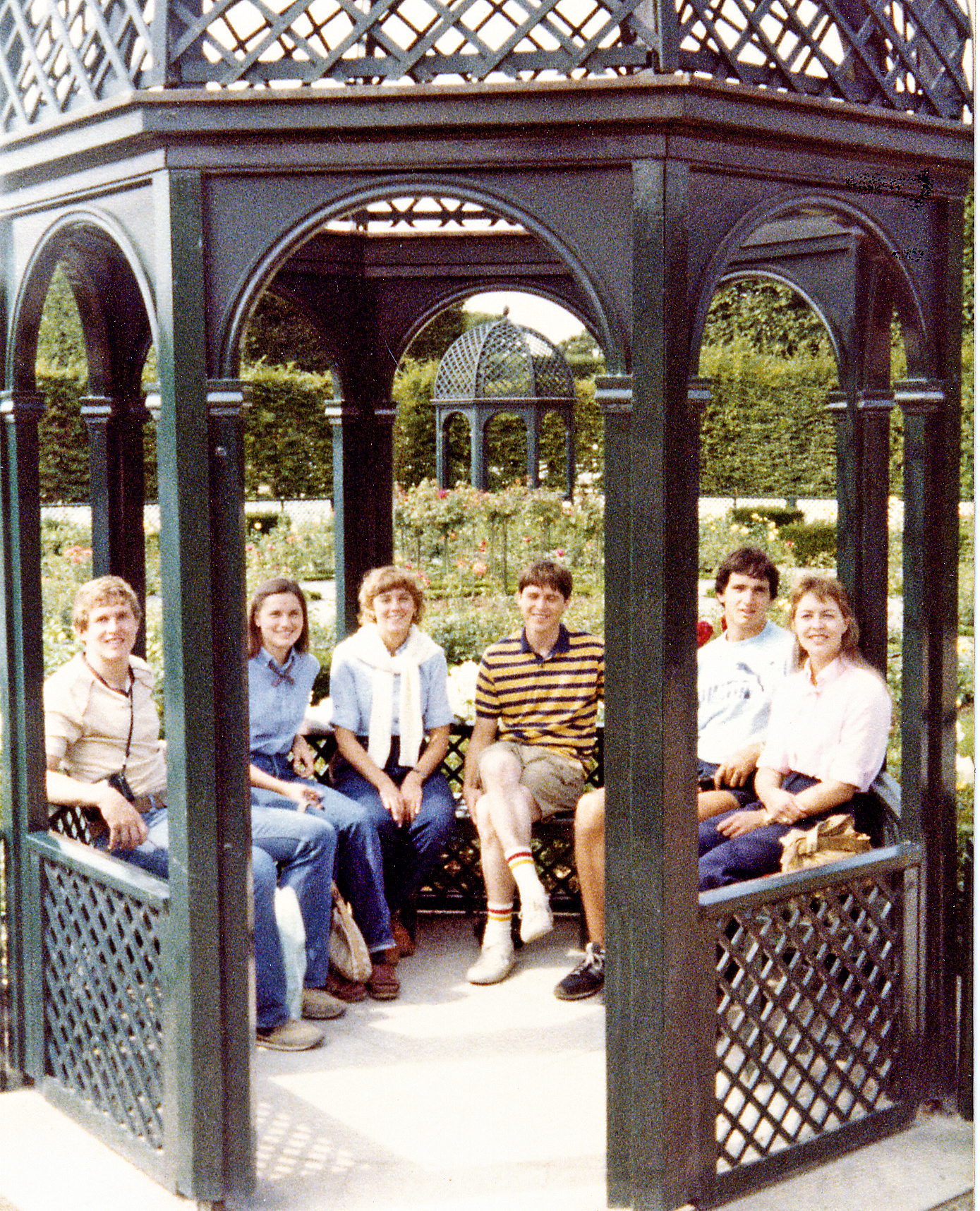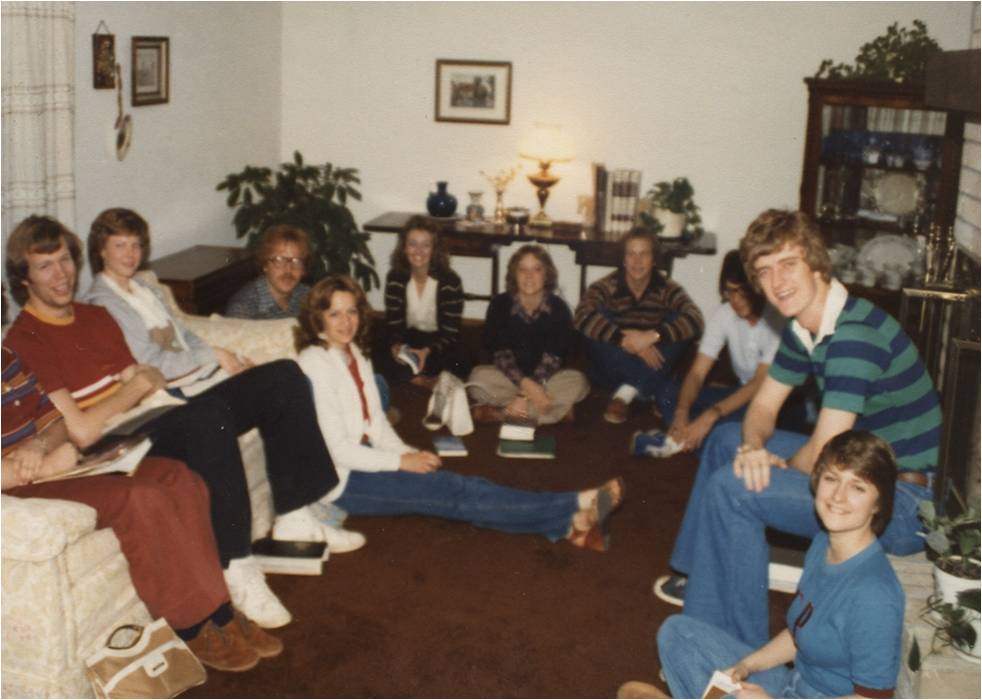
Feeds:
Posts
Comments

Posts Tagged ‘short-term missions’

My task this weekend is to re-write what we have long called the Let’s Start Talking Guidelines. They are a list of non-negotiable behavior expectations that have grown up over the thirty years of our history.

For instance, we do not wish our workers to get involved with anyone romantically while on their mission project, so we have a No Romance policy.  I hope this seems reasonable enough to you, but because we work with many college students and because being away from home creates an exotic ambience even for adults, this is one problem area that seems to surface every year!

There are only sixteen such guidelines in their current form, so it is not cumbersome,  but over the years we have continued to revise them to the point that sometimes the primary expectation is no longer obvious.  For instance, our No Romance guideline now reads:

“Dating team members is a major distraction to the commitment you have made with LST. Spend that love, time, and attention on those who need it in order to find Jesus. Romantic relationships with Readers will block their ability to find Jesus. Involvement with church members will create undesired problems. From our years of experience, this area is one of the most sensitive. Keep your focus on spending all of your energy sharing Jesus.

See how mushy this is!  So let me tell you what my biggest problem is in this assignment. Maybe you can help!

I cannot find the right word!   Which word or phrase will describe this important document in a way that is neither offensive nor condescending to both our college and church workers? Which word might perhaps even motivate or inspire them to full ownership?  HELP!!!

Rules of Behavior is too authoritarian, but Guidelines sounds like The Ten Suggestions, which has no teeth.  Standards does not ask for commitment, but Commitments is a pretty strong word that makes people run for cover!  A Code sounds military (just think about A Few Good Men), Pledges makes me reach for my wallet, and Promises evokes strains of The Wedding March! Where is Shakespeare when you need him??

As we talked about this in our office common room today, it was interesting to notice which personalities went for which words!

Wait a minute! Therein lies a clue! Outside of gross criminal actions, we live in a society where no one really wants anyone to infringe on their own right to make their own decisions about their own behavior!!  Everybody wants to choose their own word!

How can we live in such a community? How can we live and work together?  How can two walk together unless they agree—on how to describe the mutual expectations to which they are willing submit?  I begin to think my semantic problem is a symptom of a spiritual problem!

After I finish my assignment, I’ll tell you some of the stories behind our guidelines, so you can consider them for your short-term mission project.

What word or phrase would you suggest I use?

Read Full Post »

On these kinds of trips, Sherrylee and I get to talk to lots of different people. That’s a funny sentence actually. First, there are only different people, and secondly, the differentness of the people is most of the reason why we make the trip, so why should it be unusual. Well, as the French say, vive la difference!

As we are talking to these different people, one of our favorite ways to get to know them first is to ask them to tell us the story of how they became Christians.  On our last night in Turkey, during a visit with A and K, they introduced us to M and T, two Russian Christians that are their co-workers in Antalya.  As they told us their stories, I was reminded again that God’s ways are not our ways, or as the old hymn says, “God moves in mysterious ways His wonders to perform.”  Read the short version of their stories and delight with me in the different and unexpected ways God finds people who want to find Him.

M’s parents were atheists, so he had no religious thread to his life. He was, however, brought up with a sense of morality and a tender-heartedness towards people–not traits highly regarded among his peers. When he entered the Russian army as a very young man, he says he was beat every day. If it was not other soldiers taking advantage of him, it was instructors or officers trying to toughen him up. For the most part, they just humiliated him.

Of course, he left the army as soon as it was possible, but then he decided he needed to be tougher, so he started drinking more, carousing, confronting people and picking fights whenever he could in an effort to be a tough guy.  But M, as much as he tried and as depraved as he could act,  was not a tough guy at heart, so when his conscience would catch up with him, he said he would just lie on his bed, cross his arms over his chest, and wish to die–right then and there. He had lost his soul!

One day after lying all day on the couch and wishing to die, he got up to go outside and get something and a complete stranger came up to him and began talking to him and being friendly–pretty unusual for M who really only had friends who humiliated him. Out of the blue, this stranger invited M to church with him.  That’s all it took.  M went and found God and was found by the love of God, and now he is spending his life serving God!

T, his wife, has a very different story.  Her parents followed the party line under Communism, not believing in God and not teaching her about religion, but her grandmother was different. Everyday, her grandmother would go into the sitting room in their house and shut the door for a while. When T was about seven, she followed her grandmother into the room and discovered that her grandmother was reading the Bible and praying to God during these secret times.

From that moment on, T believed in God–in her own way. God became her secret friend, she says. She would talk to God but not in a religious way, rather in a child-like way, not really knowing anything about him. But He knew her, so the story just gets better.

As was pretty common in Georgia, when T was about 15 or 16 years old, her mother took her to a fortune-teller to have her future told.  As T tells it, the fortune-teller looked at her hand and used her cards, but then did not want to tell them what she saw. Mother insisted that the fortune-teller tell them even if it was bad, but eventually all the fortune-teller would say was that she could only see until T was 21 years old and then everything went black.

T was baptized when she was 21!  The seeds that her faithful grandmother had planted grew into a beautiful Christian young woman who was among the leaders in her church group. The devil had lost claim to her soul–no wonder the fortune teller’s powers could see no further. Tamoona belonged to God now!

T was at the church that M first visited–another providential act. They married and have promised to give their lives in God’s service–and we got to have supper with them in Antalya, Turkey. 

Tomorrow, I will tell you about our visit in Bucharest and about our friends and hosts Albert and Lavinia Cook.  The story just gets better!

PS. I have not figured out how to get pictures from my phone into this blog yet using public computers in Eastern Europe, but if you want to see pictures of the people I’m talking about, you can find them on my Facebook page–eventually.

Read Full Post »

Jetlag  —  The disorientation your body feels when the plane you are flying crosses multiple time zones, leaving your appetite and your sleeping pattern at home!  Generally speaking, jetlag just feels like you stayed up all night and have to work the next day–so it is survivable!  I’ve read that it takes one day to recover from jetlag for every hour adjustment that you need to make. 

So, for instance, Sherrylee and I left Thursday afternoon and flew about nine hours to Frankfurt, Germany.  Our bodies thought it was midnight when we landed, but the clocks all said 6am–so what should we do?

In the years we were taking groups to Europe every summer, we only had one answer:  you wake, eat, and sleep by the local clock from the minute you arrive.  We would land in Frankfurt at 6am, rent a car,  drive four hours to Hannover, spend the afternoon getting the team settled with their hosts, then we might even have the big information meeting that evening when we would meet the people we would be reading the Gospel of Luke with all summer.  In other words, no time for jetlag!

Now that we are traveling more independently, I have discovered a few alternative remedies for jetlag:

  • Caffeine and coffee will keep you awake at the right times–that’s easy–but what will help you sleep when it is dark? You could read old blogs that you have printed out and taken with you–but I use Melatonin myself. One gram for every hour that you need to recover–up to six.  Melatonin does not put you to sleep; it just helps reset your body clock a little faster.
  • Stay outdoors as much as possible!  Sunlight helps reset your body clock as well.
  • Plan for jetlag and compensate for it.  That’s what we always do now, if our schedule will allow it.  Yesterday in Germany, we went straight to a hotel, got a dayroom, and slept for six hours.  Then we got up and flew on to Turkey.  It made all the difference yesterday because our Turkey flight was delayed two hours and we did not arrive in Antalya until 3am–but because we had slept, it only felt like 9pm body time.  We slept then until 10 this morning and now I feel like we are almost turned around!!

Sometimes you just have to ignore jetlag–especially on short trips where you don’t have time to get turned around.  But that is just part of the adventure!!

This Turkish keyboard is driving me crazy! They use a dıfferent letter i and they put it in the same place as the i on an American keyboard.  If some letters look lıke symbols ınstead of letters, that is the reason.

Our hosts A & K  are here to visit, but I will tell you about them later.

Read Full Post »

Today Sherrylee and I are leaving for three weeks of extensive travel through Europe for Let’s Start Talking. From the beginning of this missions ministry thirty years ago, we have felt that it was important to know well the sites that we are sending LST teams.  It’s important also for them to know LST well.  If we don’t know them well, we might send a team to a site that was ill-suited to them.  If the mission site doesn’t know us well, their expectations of what would happen when an LST team came could be totally misaligned.  Either of these errors can lead to very poor mission projects!

For the next three weeks, we are making very short stops in Turkey, Romania,  Ukraine, Hungary, Germany, the Netherlands, and Belgium. At the end of our trip, we will attend the Euro-American Retreat in Rothenburg, Germany.

I will not be taking my own computer, so my hope is to be able to get on the internet as we travel in order to keep you up to date.  This could mean that the blog schedule for the next few weeks is a little erratic, so I hope you will understand.

It’s going to be a great trip with many good conversations with great missionaries. I hope to introduce you not only to the cities and countries, but to the great heroes of faith that we get to visit on these kinds of trips.  You’ll enjoy it, I promise.

So, Auf Wiedersehen–well, not really.

The Germans actually not only use this phrase which means literally “until we see each other again”, but also Auf Wiederhoeren, which they use formally on the telephone to say “until we hear each other again.” I guess I’ll say Auf Wiederlesen–until we read each other again–or something like that!

Read Full Post »

You are not the preacher. You are not the head of anything at church. But you have a great ministry just started, or a great ministry idea that you would like to see get traction and grow.  What do you do now? Here are a few tips from our experience of trying to get Let’s Start Talking established in lots of churches. This is what we have learned from watching people enthusiastic about short-term missions try to work with their home congregation.

  1. Don’t even start unless you are committed to doing whatever it takes to succeed yourself! Lots of people want to start things for other people to do. Just forget it! You should be able to accomplish the ministry yourself—at some level—or you will never get others to buy into it. For LST, this means that if you are not willing to go, you will not be successful in getting other people to go.
  2. Try to get the blessing of church leadership from the very beginning. If the preacher and/or church leaders are opposed to your ministry idea, it is not likely to survive. It might possibly survive if they are indifferent, but the chances are much better if you have their blessing.  Notice, I said blessing, not commitment. See below!
  3. Do not expect to get leadership commitment to your ministry until you have proven that it will be successful! LST actually made this mistake in our Centurion project which launched about three years ago. We asked churches to commit to a goal of sending 100 workers with LST over a five-year period—with no financial commitment whatsoever.  Although a few churches committed, we were absolutely shocked at how resistant most churches were to making any kind of a commitment at all.  We have since modified our approach, so that we only ask for permission to test run LST in their congregation to see if their members have a good experience with it.  Church leaders are much more open to us with this approach.
  4. Don’t reinvent the wheel! Join with established ministries who have proven track records and who can help jumpstart your ministry. So you think your teens should do mission trips to learn to share their faith! Rather than asking your youth minister or some parents to plan and organize such a trip, why not ask a ministry like LST YoungFriends to help you, since we have been planning short-term missions, including special ones for teen groups, for thirty years! If you want to start something for the poor, why not contact existing ministries and partner with them–or after-school programs, or abused women, or English As A Second Language outreach??
  5. Be spiritually prepared to be ignored. If I were a church leader and if I knew what kind of transformation happens to every person who spends two weeks on an LST project, I would do everything in my power to make it possible for every person in the church I was leading to participate—there, I said it as boldly and honestly as I can.  However, the fact is that a very small percentage of Christians really want to engage their faith as actively as most ministries require. If you, as the promoter of your ministry, let the massive indifference discourage you, then you are defeated! You must be willing to do your work without recognition, without popularity, and without any other reward than the smile of the Father!  If you need more than this, you will give up!
  6. God has His own schedule for growth! I love flowers—Sherrylee calls them annuals and perennials and I have a vague idea what that means. But I really love flowering trees. I love the blooms on our fruit trees, I love the beautiful white flowers of the Bradford pear trees, and I really love the Oklahoma redbuds!! The time from seed to bloom is very different for these plants. In reality, only God knows the proper time and season for your ministry to bloom. You can choose to acknowledge God’s sovereignty here—or you can try to set your own schedule. Occasionally, we may be able to hothouse something into rapid growth—but these efforts are rarely long-lived. I recommend you let God be in control.
  7. If you are called by God to a ministry, you will never be truly happy until you are answering the call—so get on with it!  I love the story of Jeremiah, called by God to be a prophet to the nations, who yells at God and says, “You deceived me! I did what you called me to do and I’m having a terrible time! In fact, I’ve tried to quit several times . . . but I couldn’t because your word is in my heart like a fire, a fire shut up in my bones–and I can’t keep it in.” (Jer. 20:7-9)

One of the biggest problems ministries have is surviving the exhilarating start-up phase.  I’ll give you some suggestions about that in the next post.

Read Full Post »

Consider the lilies of the field!

Just one month ago, Let’s Start Talking began our annual general fundraising drive.  We had approximately five weeks left in our fiscal year and were $135,000 short of our 2010 budget projections for fund raising—a very serious amount for LST.

We had a multi-pronged approach for reaching our fundraising goals: We all committed to prayerfully ask God; Sherrylee committed to calling all general donors (not worker donors) from the last two years; the staff committed to calling all our former LST workers who had been out of college at least five years, and we would ask the guests attending our Harvest Call Benefit Dinner on September 25th in Fort Worth to give. Our need/goal  was much greater than we had every even dreamed of attempting before.

By God’s grace and mercy, I’m happy to say that we received enough donations to cover the entire ministry shortfall!  I’d like to share with you, not how-to’s, but lessons remembered and learned in this month of intense fund raising!

  • God is rich! He has all the money in the world. If we look at money has something that belongs to us, then we should worry about the hard economic times many of our supporters are facing! If we understand that God is the Creator and Donor of everything we receive, then we and the people we ask for funds are just caretakers/managers/temporary users of His things!  And He is not short of funds!
  • God is grace-full! The core idea in the word grace is that of a gift!  When we ask people for gifts, we are asking for grace. If they give us a gift, they extend grace to us. If God is the First Donor of every good gift (James 1:17), then His generosity is the same as His graciousness—and He is rich in grace (Ephesians 2:7), full of grace (John 1:14), there is no end to His generosity!
  • Asking is part of God’s plan. I know we hate to ask, but this must be our problem because over and over, God has told us to ask!  Listen to these explicit instructions from God:

“If you believe, you will receive whatever you ask for in prayer.” Matthew 21:22

“Until now you have not asked for anything in my name. Ask and you will receive, and your joy will be complete.” John 16:24

“We have confidence before God and receive from him anything we ask, because we obey his commands and do what pleases him”. 1 John 3:21-22.

Maybe our problem is that we have gotten into the habit of asking for ourselves.

When you ask, you do not receive, because you ask with wrong motives, that you may spend what you get on your pleasures.” (James 4:3)

  • Offering others an opportunity to be blessed is a wonderful act of Christian love! Donating is a special opportunity to receive God’s blessing, if we really believe  Jesus’ words, “It is more blessed to give than to receive” (Acts 20:35)

A Choice Between Fear and Confidence!

The economy is poor, everyone’s budget is tight, our home church just launched a huge capital campaign, the economic future is unpredictable—these are all good reasons to fear asking Christians for special gifts to meet big goals.

God is rich, God is generous, and God is good—these are all better reasons for not being afraid to ask Christians for special gifts to meet big goals.

The last month of asking for LST and the astounding goodness of God in fulfilling all of His generous promises has confirmed for me again that fear is a sin, not a choice.

Read Full Post »

Oklahoma Christian team 1982

The first three summers of Let’s Start Talking (1981-83) were the years when God continued to teach us how to do what we have done now for thirty years.  For instance, the second summer we wanted to give the OC students who went with us T-shirts to help advertise and attract Readers while they were in Germany. The LST sweatshirts/T-shirts now have an iconic place in our history with a few people who have whole closets full.

Well, the first shirts were a mustard yellow (YUK!) and said on the front, “Ask me, if I speak English!” Sherrylee and I blame each other, but it was probably my idea.  After a week or two in Germany, dutifully wearing their T-shirts whenever possible, some of the girls came to us and said that they didn’t want to wear the shirts any longer. I couldn’t understand why until they explained that the “ask me, if I speak English” sentence was written right across the front chest area, so it made all the men and boys stare at their chests!!  That was the end of our first marketing fiasco.

As I mentioned in the last post, we carried actual Bibles the first year, the New Easy-To-Read version published by World Bible Translation Center. It was a version originally prepared for deaf people, but perfect for what we were wanting to do because the syntax and vocabulary were approximately fourth grade level.  These were the Bibles that during the second summer, we literally cut passages out of Luke, pasted them onto sheets of paper, then photocopied the newly created pages in order to make the first “workbooks.” I don’t really think we had any questions or vocabulary with the texts those first summers, but I’m not sure.

We chose to use Luke as our text from the very beginning for some fairly obvious reasons, We were committed to starting with the story of Jesus , so first of all, Luke was more narrative—more of a complete story, from Jesus’ birth to his death.  Also,

  • Matthew alludes to the Old Testament too often, and we didn’t want to have to continually drop back into Jewish history with our Readers.
  • Mark was just too brief and left out some of the chronological story—like Jesus’ birth.
  • And John was too abstract, too theological for people who had no faith.
  • Luke had an obvious sequel (Acts), so we could already see the path for continuity.

For three summers (1981-83), we took 11-13 students from Oklahoma Christian. Divided into two, later three teams, they spent the summer in the northern German (then West German) cities of Braunschweig, Bremen, Hannover, and Cologne, working with the mission churches there that Sherrylee and I had been most familiar with.  Our family would usually stay in Hannover as our base, but visit each of the teams once each week to check on them and encourage them.

We were pretty content with this pattern and had no further grand design or vision, but God had more in mind.  In the fall of 1983, one of the OC students Amy Keesee (Gordon) who had gone with us each year, began graduate work at Oklahoma State University, fifty miles away from us.  She called one evening in the fall and asked if she could continue to go with us, and we agreed, of course. Then she asked if she could recruit a team from the great campus ministry program that the Stillwater church had had at OSU for many years. After a little conversation, we agreed—and the first embryonic division had occurred! In the summer of 1984, instead of 12 workers, we had 28. Instead of two sites, we had five! Instead of approximately 100 readers, we had 280.

Oklahoma State University team

With this one additional school sending workers, the potential for sharing the Story had more than doubled!  We began to get a sense of what could be . . . . In reality, God was just beginning to stretch our rubber bands.

Factoid: The first printed workbooks (white covers with the LST logo on the front) were designed and illustrated by OC professor Michael O’Keefe. He is personally responsible for the two little characters with spiky hair that are still LST icons—and still unnamed. (It has always been a fear of mine that someone would call them Mark and Sherrylee and it would stick forever!!)

In 1986, two former workers Kurt and Marilyn Siebold were living in California and wanted to go with us again, so we built our first church team around them with members of the Culver Palms Church of Christ.

Another first in 1986 was the first LST team outside of Germany. Kyle and Susan Bratcher had some history in Austria and wanted to go there, so we contacted our friends in Graz, Austria, and worked out the arrangements for the Bratcher’s team to work with the Graz church for the summer.

In the fall of 1986, Sherry and I were teaching a class on our new way of working in Germany at the World Mission Workshop at Columbia Christian in Portland, Oregon.  Two Pepperdine students walked through our classroom, looking for a session on Italy, but heard something about Germany, so they stopped, listened, and were hooked.  Ian Morgan and his future wife Lisa went back to Pepperdine and recruited the first team from Pepperdine—which has continued to be a great partnership.

With Pepperdine now fully on board, the fledgling LST program jumped from approximately 20 workers each summer to over 40 by the summer of 1988. Amy Keesee had moved from OSU to San Luis Obispo, CA, so now we had teams from there as well. Pete and Janine Brazle began to share responsibilities with Sherrylee and me for overseeing the summer teams. They took the southern four teams and we took the northern four—the birth of LST regional representatives.
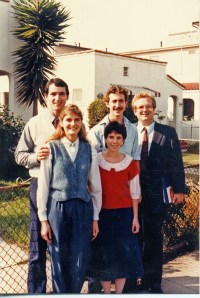
First Church team from Culver Palms Church of Christ

By the summers of 1988 and 1989, LST was working in Italy and the Netherlands as well.  A Dutch family (Hans and Ans van Erp) had invited us to help them start a new church in Eindhoven, a church which is still growing and flourishing! And approximately 60 workers were going each summer.

People were beginning to ask us if we were trying to do too much. Sherrylee and I always responded that we were just trying to manage what God put in front of us. In fact, in 1986, we almost left OC to return to the European mission field with European Christian College. I had finished my doctorate and was invited to become the dean of that school—which we agreed to do if they could afford to bring on a family of five!  That door shut very firmly about the time all of these new doors were opening with LST, so we began to see God’s plan a little better—or so we thought!

We never dreamed what God would do in the next 24 months in the Soviet Union. No one suspected that the Iron Curtain was about to be torn down and what opportunities that would present for Let’s Start Talking.

Read Full Post »

Project Germany team in Woodward home for training (Fall 1979)

I’ve heard Sherrylee tell the story many times of how I was sitting in the bathtub and had the ideas that became the core of the LST philosophy, but I think that is creative memory—mainly because I am a shower person, not a bath person! Here’s my version of the genesis of LST’s core philosophy.

Sometime before we left Germany in April 1979, I read a short article from Glen Jones, missionary in Kiel, Germany, about the power of the Word itself based on John 20:31:

But these things are written that you may believe that Jesus is the Christ, the Son of God, and that by believing you may have life in his name.”

I asked myself if I really believed this to be true! And I didn’t know the answer because my experience was all about teaching people what the Word meant, explaining, clarifying, and supplying the missing historical, linguistic, or logical information that they needed to really come to faith.

Even if we believed that the Word was powerful, how were we ever going to get German skeptics to read the Word? With the exception of a few true Seekers, we knew that the masses were not open at all to reading the Word!

This was then the moment that God put all the pieces together! What could we offer the Germans that they really wanted? We could not count the times while living in Germany that people had sought us out to practice their English or to help them translate something important to them from English to German. So what if we offer to help them with their English language skills??

The question that every service ministry faces, however, is how to move from loving service to the Gospel story that produces faith! (This is such a difficult question for many ministries that they simply avoid answering it, sometimes even rationalizing the need for that bridge to faith-sharing as unnecessary. I think that is rowing with only one oar—but that’s a topic for another time!)

Sherrylee and I talked a lot and decided in the fall of 1980 to try something completely new—at least we knew of no one else doing anything similar at all. We decided to recruit a team of college students to go to Germany with us for eight weeks. Instead of moving from city to city in short campaigns, they would stay in one place to enable them to develop stronger relationships with the people they would be talking with.  They would be a small group (4-6 people) rather than a large group, so that they could function more as a “family” rather than as a tour group and so they would not be such a burden on the small German churches that they would be working with.

Members of LST First Team: Valerie Kinnell and Chip Kooi

But the riskiest part of this experiment was that we were going to ask the German church to advertise free English conversation classes and see if anyone would respond. It was very important to us not to trick people into using the Bible, so we had people respond to the advertising by calling a member of the local church who was instructed to always tell them that this group would be using the Bible as the textbook for these conversations.  That’s where we had no idea how Germans would respond!!

In the fall of 1980, Sherrylee and I recruited ten students from Oklahoma Christian, several of whom had been a part of the Project Germany group that we had led under Ralph Burcham the previous summer. We meet with these ten students weekly throughout the school year, sharing our experiences and knowledge about the German culture and training them to open the Word and release its power in a relational and non-confrontational way.

One team worked in Braunschweig with the Gemeinde Christi and the other worked in Bremen, Germany, both German churches that Sherrylee and I knew well. The teams lived independently, cooked for themselves, rode public transportation, and made their own schedules—all of which was pretty new strategy for campaign groups at this time.

The first signs that God was doing something new and wonderful were that there was an amazing response to the advertising and many, many people called, seeking help with their English.  The next amazing discovery was that most of them expressed surprise that they were going to be using the Bible as the conversation guide, in fact, they always asked why; nevertheless, most of the people agreed to register for the program in spite of their skepticism!

At first our workers tried to just open their Bibles to Luke’s Gospel as the conversation guide, but this really put many of their early Readers (our new term for the people who participated with us!) off, so we decided to cut sections out of Luke and make a little worksheet  with a few little exercises for them each time they came—and this made all the difference! They had no problem reading the same biblical texts if they were part of a workbook of some kind.

But would this be an effective strategy? The most common opening statement by every person who came that first year was, “Thank you for offering to help me with my English, but I want you to know that I do not believe that anything in the Bible is true! Is that OK?” That’s when we learned how important it was to serve them unconditionally by helping them with their English, forcing us to believe even stronger that the Word was powerful enough to break through this unbelief!

LST First Team Members Galen and Larale Rawlins (1981)

At the end of this first summer, we came back to the States and told our friends who had sent us that we had seen a miracle! We had seen skeptical Germans read the Bible every day for weeks with our students. The numbers had grown as the summer progressed, not diminished—which we did not expect—because the Germans loved their experience.  They even asked who would continue the program after the Americans left, so we were able to introduce them quite naturally to the local American missionaries.

But the real miracle was that some of those same people whose opening sentences were so defensive and skeptical had been touched by the living Word. Now at the close of the first year, in answer to our prayers, the most common summary of their experience that we heard was “I came only wanting to know English, but I got so much more. Now I also know Jesus!” And a few added, “And I believe!”

They had been changed, and we were changed—and Let’s Start Talking was birthed—although we didn’t know it.

Next:  The 1980s — Genesis Expanded!

Read Full Post »

Are you waiting until your children are teenagers before you think about going on a short-term mission trip with them?  DON’T!

I know what the popular wisdom is here:

  • Young children won’t understand or appreciate the experience, so wait until they will get more out of it.
  • Young children are a pain to travel with.
  • Young children are not really useful, so it is hard to justify the expense.
  • Young children are impossible to fund raise for, so you can’t afford to take them.

EVERYTHING ABOVE, I BELIEVE TO BE TOTALLY WRONG!

  • The best time for children to experience missions first is when their young minds and hearts are still soft and impressionable–not after their hormones create havoc in them for a few years.  We have 8 grandkids under the age of 8. Only the two born this year and the 3 yr old have not been on a foreign LST project, and most of them have been multiple times. They have friends in Japan. They are not afraid of foreign languages. They know what the grown-ups are talking about when they tell of teaching others about Jesus. They are very disappointed in the years they can’t go.
  • There are challenges to traveling with young kids–but they make little kids suitcases and backpacks.  They will sleep in the airplane seats. Travel is quite a fun game if the parents will invest just a little time to make it so!
  • Children are magnets on the mission field. No matter whether it is Germany or Africa or China or Turkey, adults accompanied by small children find it much more common to get into conversations with people.  I know of 6-8 year olds who have “helped” other children with their English, while their parents read the Bible in English with LST workers.  Children may be the best missionaries ever!!
  • Unfortunately, the previously mentioned misconceptions do make it difficult sometimes to raise money for children to go. We faced this even more strongly back in the 80s, when the Woodwards were starting LST, towing 3 small children behind them. I just dug in my heels and said, we don’t go without them–and tried to educate people on the good a whole family does who goes together. God provided.

Many, many mission churches do not have whole families. Often only the mother and children come, or only the father, or only the children.  To see a whole family–parents and kids–being Christians together is inspiring to onlookers, no matter what country you are in.

Your decision to take your children on a short-term mission trip will be one of the best decisions you have ever made!  And when you do it the second time, you will thank God for removing the doubts that you had.

And your children, when they are young adults,  will put their arms around you and thank you for doing something wonderful that dramatically changed their lives and helped them know God!

And is there anything in this world you want more than that?

Don’t wait!

Read Full Post »

Several years ago, Sherrylee and I were at the Tulsa Soul-Winning Workshop and heard Harold Shank quote a statistic in his keynote address that said that the number one correlating factor with continued faith in God and a relationship to His church after high school is a summer mission experience.

Sherrylee and I turned to each other literally and said that is what Let’s Start Talking has been offering college students!  But if what he said is true, we can’t ignore high school kids any more. So we put together a mission package for high schoolers called YoungFriends that LST now offers to churches as part of our comprehensive church transformation ministry (Centurion Project).

Several challenges surfaced in presenting this opportunity to youth ministers. One of them concerns me more than the others.  Here is the general list. Can you guess which one concerns me most?

  • Youth ministers are sometimes organized and sometimes not—not any different from anyone else, except it takes a lot of organization and planning to pull off a good summer mission project.
  • Youth ministers are often trumped in money decisions by senior ministers or elders who may or may not share their vision.
  • Youth ministers are also at the mercy of parents, so only to the degree that parents trust their youth minister are they willing to let him step very far out in faith.
  • Youth ministers generally tend towards service projects over evangelistic missions.

Of course, this last point is the one that concerns me most.  In our presentation to Youth Ministers, we have tried to present an evangelistic mission option—one where kids learn to tell the story of Jesus and share their own faith in a natural and non-confrontational way– as one that makes sense in a stair step approach to mission experiences.

Young people start by learning to have a heart for people, but perhaps don’t have the social skills or cross cultural experience yet to really share their faith, but by the time they get to be juniors or seniors in high school, why isn’t it time to help them verbalize their own faith story and show them natural ways for them to share their faith in Jesus with others?

Although this idea seemed to resonant with lots of people in theory, when it got to decision time, most youth ministers opted for the service project over anything evangelistic.  I think they go this way for any or all of the following reasons:

  • Service projects are tangible. Your goal is to paint a house. You buy paint and brushes, you go to the house, you paint, you clean up, and then you go home, knowing that you have accomplished your goal. You have painted a house and done good for the sake of Christ.
  • Service projects are more predictable. Things can go wrong, of course. You can run out of paint, but then you can usually buy more pretty easily. You might not finish, but it looks better than it did. Things that do go wrong are fairly easily remedied.
  • Service projects are generally low risk.  They often can be done relatively close to home. A large group can all do the same thing in the same place for mutual protection. Not much interaction with strangers. Easily supervised.  No risk of rejection.
  • Service projects are familiar to both the youth minister and other adult sponsors, as well as parents and church leaders.

Faith-sharing mission projects are a harder sell for the following reasons:

  • Faith-sharing missions are harder to describe to parents, elders, and kids.  What “strategy” or “method” are you going to use to talk to people? How are you going to meet the people you want to talk to? What if they don’t want to talk to you?
  • Faith-sharing takes most people way out of their comfort zone, so it is a harder sell. (Of course, I’m pretty sure if we did it more, we would be a lot more comfortable doing it.)
  • Faith-sharing has greater risks. Again, what if someone rejects you? What if you mess up and don’t say the right things?  What if they ask you a question and you don’t know the answer?  Isn’t this why most adults don’t share their faith?
  • Faith-sharing mission trips are much less predictable. What if the local church doesn’t prepare well? What if no one responds to advertising? Why if local Christian teens don’t warm up to the visiting group quickly? What if it rains all week, so no visitors come? Because a faith-sharing mission is totally dependent on people, LOTS of things are unpredictable!!
  • Faith-sharing mission trips are not familiar experiences for most Christians.

And they never will be familiar unless we find a way–starting with our young people—to learn to share faith as one of the most natural activities of the Christian lifestyle.

A professor of youth ministry at one of our Christian colleges, when asked why youth ministers do not tend to choose evangelistic mission opportunities, told us that he had queried all of his youth majors about this and that NONE OF THEM had ever had a personal faith-sharing experience. They themselves had only experienced service project missions, so, of course, they tend to do with their youth what their own youth ministers had done with them.  If our ministry leaders have never shared their faith personally . . . .?

If we don’t teach our kids to tell the story of Jesus, who will do it?

Read Full Post »

« Newer Posts - Older Posts »