Feeds:
Posts
Comments

top-10Between Christmas and New Year’s for the last several years, I have re-posted the top ten posts of mine for that year. You’ll find the list interesting as I did.

1. How To Prepare For Your Mission Trip: Spiritual Preparation
2. A Letter To the Grandkids On Baptism
3. Mean Girls and Mean Christians
4. Do Your Church Leaders Have A Code of Ethics?
5. Why Europe Is A Missionary’s Dream!
6. A Letter To the Grandkids: On Tornadoes
7. Hold To God’s Unchanging Hand
8. Sunday Hymns: God Of Grace and God of Glory
9. What’s A New Word For Modesty?
10. Give Us This Day Our Lifetime Supply of Bread

I’m deeply moved that the Number 1 for 2013 was also on the Top 10 list for 2012. I will try to pay attention to that topic more in 2014.

In addition, my letters to the Grandkids seem to have been helpful in thinking in simple terms about some very serious topics. We get only one opportunity to pass faith to our children and grandchildren, so we all want to do it well.

In a day when new praise songs hit the charts, therefore our worship services, almost daily, we would do well not to forget the rich words and music of the hymns that have moved Christians of many generations.

Ethics—a code for how we treat people—and the spiritual motivation for that code seem to be embedded in at least two of the top ten topics.

And I’m so glad that missions again made the list! This is our life as a Christian, whether we travel are stay home to do it.

Enjoy these posts again and share them with a friend if they are meaningful to you.  If you subscribe to this blog, then they will come to you when re-published. If you don’t, you can follow the links above.

Merry Christmas and a Blessed New Year. May God’s Face shine upon you!

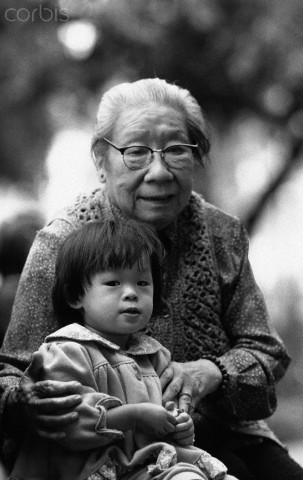
Chinese Grandmother with GrandchildIn 1925, George and Sally Benson took a “slow boat to China” one month after they were married.  With $35/month support, they were determined to be missionaries.  After skirmishes with the emerging Communist Party in China, they left for a short while for the Philippines, but courageously returned to China as soon as they could and began the Canton Bible School where among other things they taught English using the Bible as the textbook.  The Bensons had learned Chinese using the Gospel of Mark as the textbook, so they found this to be a culturally appropriate and effective method of evangelism.

I just returned from China, where I visited five cities where Let’s Start Talking either works or has been invited to work, helping Chinese people with their English using the Gospel of Luke as the text.  One of the cities I visited was Guangzhou—formerly Canton—where the Bensons worked almost a century ago.

Again I heard the “grandmother stories.”  Everyone who has done any work in China in recent years has heard some version of this same story many times.  Probably a Chinese university student or young professional says, I’m a Christian.  My parents are not, but my grandmother was, and she told me the Christian stories, so when I went away from home and met some Christians, I was immediately attracted to them.

Throughout the centuries, Christianity would thrive for a period of time, then be driven to extinction by anti-western, anti-foreign rulers.  Some form of early Christianity in China is documented as early as 635 A.D. The Jesuits began to penetrate China in the 16th century but were later banned because of a Roman church ruling that Chinese folk rituals amounted to idolatry.

Protestants list Robert Morrison, sent by the London Missionary Society, as the first missionary to China in 1806, but within two decades Europeans were (again) sentenced to death for spreading Christianity in China.  Not until the period after 1860 did Christian missionaries return to China, but because of China’s opening to the west, the missionaries then came in droves!

In 1865, J. Hudson Taylor established the China Inland Mission and became what some historians have called the greatest missionary of all times after the Apostle Paul. I mention the CIM because the Bensons were advised on how to begin their work in China by CIM missionaries Mr. and Mrs. W. C. Smith.

Many Christian missionaries were massacred during the Boxer Rebellion of 1899-1901.  Not long afterwards the Bensons and the first missionaries from Churches of Christ courageously entered China.  This wave of missionaries had a window of just about ten years before the first conflicts of what became WWII broke out and threatened their lives.  Some sent their families to the Philippines and stayed, but most left China.

In 1949 Mao’s Communist won control of China and Christians were no longer welcome, neither foreign nor Chinese.  What pockets of Christians remained in China even through these earliest Mao years were further purged during the Cultural Revolution of 1966-76 when all forms of religious expression were banned and severely persecuted.

These are the years of the Grandmothers!  The 1930s-60s were the years when young girls (and I’m sure there were some grandfathers also!!) who had been raised in Christian families hung on to their faith very quietly while their lives were in danger.

These were the young people taught at the Canton Bible School by George and Sally Benson and all those teachers in the 1930s who stayed in China as war became imminent.

I worshipped in a family church with 75 university students in Guangzhou (old Canton) last Sunday. Scripture was read, songs of praise were sung, and prayers were prayed. One young lady said she was ready to be baptized. When I asked how many family churches like this were in Guangzhou, the preacher just waved his hands to say too many to count! 

While the growth rate of Christianity in China today is breathtaking and while the government seems to be aware but not terribly concerned, surely the history of Christianity in China reminds us that there have been many windows like this through the centuries, but those windows have most often been slammed tightly shut at some point.

  • We should earnestly pray that this window stays open and that the Chinese Christians remain free to follow Jesus.
  • We should give thanks for those early missionaries like the Bensons who took great risks, sometimes gave their lives, to introduce, and re-introduce the Good News for China.
  • And we especially should give thanks for the Grandmothers, often the result of the work of those missionaries, who not only held on to their faith in direst circumstances, but then passed it on—often secretly—to their children and/or grandchildren.

The Christians in China, those who go to China, those who today work in China, and those who pray for China have a great cloud of witnesses who have lived and worked there before—for centuries–who spur us on!

And we can never forget:  “For God so loved the world . . . .:

chinese_busI wrote this about a week ago, but China does not allow WordPress on the internet, so I could not publish while there. My apologies for being absent so long.

Normally, I’m the kind of traveler that likes to know where I’m going.  Before we drive away on a trip of any kind, I usually have all the arrangements made:  all the hotels booked, the rental cars reserved, and, on a work trip, I like to have the meeting times set.

Now, having said that, I’ve learned that flexibility is a great quality, so it does not upset me in the least if meeting times are changed or the rental place has a different car for me than what I rented—which is often the case.

In spite of not only my compulsive efforts, but those of a very detail conscious staff, on my current China trip, one leg of my international flight was cancelled which required a total re-route and cost me a night and half a day in an already tight schedule, two of the hotels where I was to stay have not found a record of my reservations, and what was sold to me as a three-hour bus ride was much closer to five hours—but so what!  I have not slept on the street yet, and I have met and talked with all the people whom I expected to visit with so far.

We need to expect the unexpected and to plan for the unplanned. If we don’t, we haven’t given God very much room to work.

This trip to China was relatively last minute as it became obvious to us at LST that most of our relationships with sites in China were experiencing some transition, mostly because of change of personnel in China.

Just at the last minute, our staff person who receives all the invitations worldwide from sites who want to invite LST teams said to me, “Don’t you want to go to see B_______ in H+++ since he has been inviting LST to come for two years?”

There were many reasons not to visit him.  His city was far out of the way and would eat up at least two full days of my very short trip.  He is not a full-time missionary, rather a temporary teacher of English. He was not an American, not from a church with which we have any connections, and he did not really have a church or house church even where he was.

I don’t know why I said yes. Nothing about his situation as I knew it suggested that it would be productive to go there.

But his emails had been so passionate, so full of faith in God’s working.  It became for me one of those situations where you would like to say no, but to do so would violate the spirit in you and probably the Spirit in you.  So I said yes.

It meant leaving Beijing just 17 hours after arriving, getting up at 5:30am to catch a 7:30 flight, flying three hours and then getting on a Chinese bus for five hours, sitting in seats made for Chinese people—if you know what I mean—and listening to Chinese music videos the whole way!

On the way, the brother who invited me told me that he had lost his job at the school where he was teaching English and that his visa to stay in China was therefore pending, so he might be going home soon (did I mention that he was a foreigner in China?)

Great!  So now I very literally started praying that God would just do something to make this trip meaningful because I did not see any signs of a “plan.”

When we got off the bus after the five-hour ride, we caught a taxi to go to the school that had let him go. The taxi driver took on two other passengers, then drove the wrong direction with the trunk of the car open and my suitcase just wedged between two others.  My friend fussed at him in very broken Chinese, and finally just persuaded him to let us out, so that we could catch another taxi which would take us to his old school as were the original plans before we were “shanghaied”!

It may seem funny to be going to his old school to meet with the administrators who had fired him, but apparently his bosses got friendly again with him when he said the American “director” was coming to visit.  We spent an hour with the leaders of that school, but even though it was very cordial, I did not see any possibility for LST to work with them.

I was very tired and ready to call this leg of my trip a bust . . .  when God began to create the unexpected.

My new friend wanted me to meet the parents of children whom he tutored privately. In fact, one particular family arranged a private dinner for several of us during which I found out that my friend is a VIP among a fairly large group of pretty influential people in this community—totally outside of the school that had let him go.  And these people LOVE him!  So when he introduces me to them, they open their doors to LST immediately!

One of the parents had arranged a room for about 20 people for a get-together with any other parents that would like to meet “the American”—and we had 50 show up. I told them about LST, that we used the Bible. I showed them our materials, and all I can say is that this group of Chinese parents appeared to be as eager for what we offer as any group I have ever seen!

As far as I know only one Chinese person in the room claimed to be a Christian, but when I talked about having an English camp for parents and kids, they started clapping!  One father was a Chinese government official and he specifically offered his services in helping if we are able to organize such a camp.

As I hope you can tell, I left this small Chinese city of only 5 million people—still not knowing exactly what God wants us to do there—but having met some wonderful people whom He loves.

I continue to learn that it is not so important to know exactly what God is going to do; rather it is important to open up our plans enough so that God can do whatever He wants to with us.

Anyone want to open up a little time for God to do something special with—whatever He wants to do with it?

Anyone want to go do a summer camp in China with LST next summer?

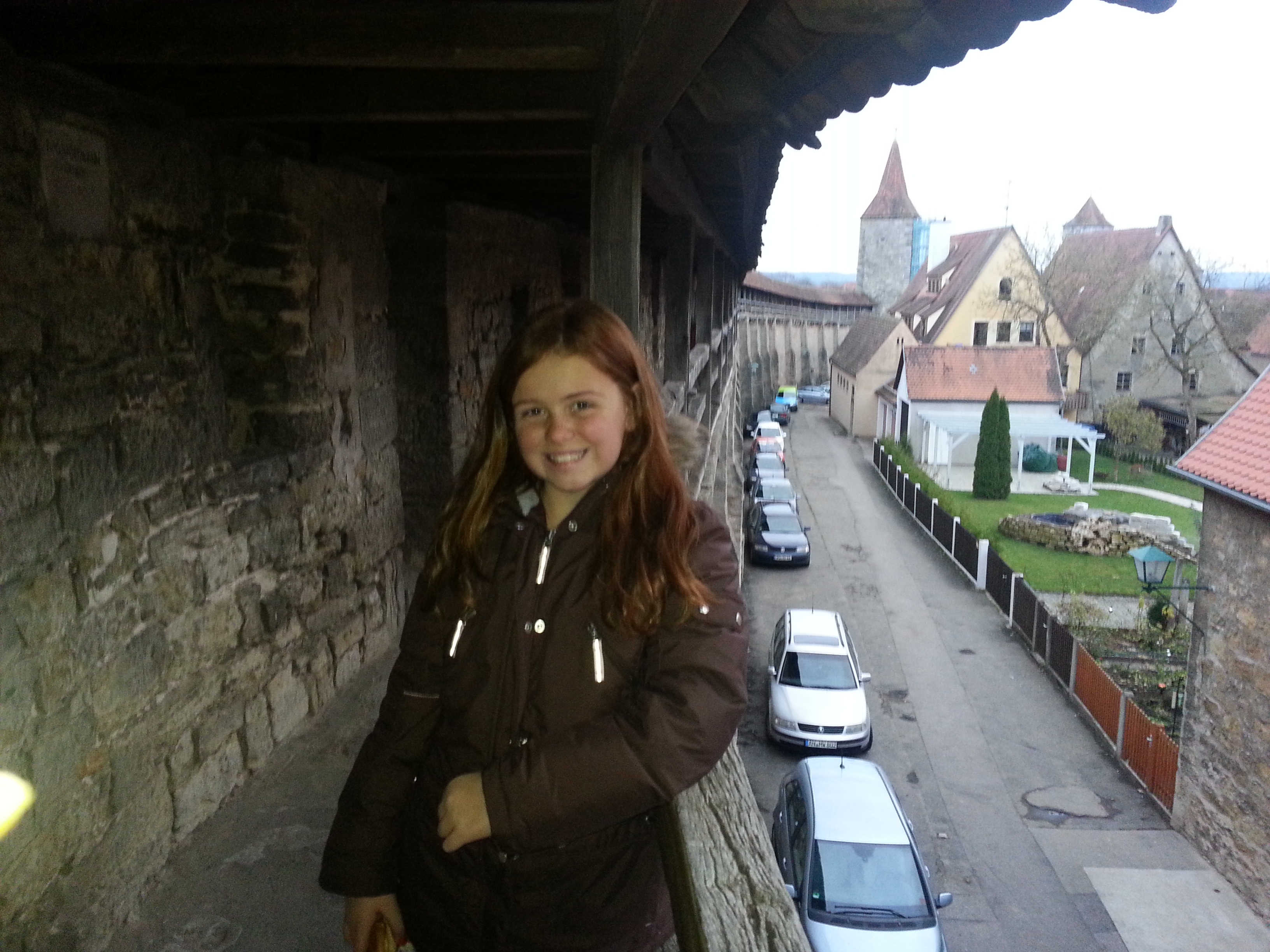
20131122_174550I wrote last week about the wonderful experience we had with our granddaughter Anna the last week we were in Europe for LST. Again, taking your grandkids with you when you do mission work is truly a formative memory for them. You can leave them no greater legacy than to show them what faithfully doing God’s work can be.

But there are some tips I can give you for making your trip more rewarding for both you and your grandchildren.  Let me just say that Sherrylee and I took our three children with us every summer of their lives until they were college-aged, we have sent many other families with children through LST, and now we have begun taking grandkids with us, so we have lots of experience to share with you.

Tip #1            –           Make sure they are old enough.  If they are your own children, you can take them at every age, but for grandkids, they need to be able to function for an extended time away from their parents. In my experience, 11 or 12-years-old is about as early as you want to start. In fact you have a window between 11 and 14 when it is probably ideal.

  • They may need to be old enough to fly by themselves.  Our two granddaughters both flew individually as unaccompanied minors across the Atlantic by themselves. Of course, a flight attendant always escorts them on and off the plane, but they still had to negotiate the nine-hour flight on their own.
  • At this age, they should be able to entertain themselves (reading, listening to music, video games, etc) when you are busy, but they can also visit with and relate to adults—especially at meals.
  • They also are old enough to try new foods—more or less—and when they don’t like what is served, they don’t make a big fuss, but wait until later to catch up.
  • They are old enough to understand and manage their own jetlag.
  • They are old enough to want to make their own memories, by taking pictures, keeping a journal, or collecting postcards.
  • They are old enough to carry their own luggage and keep up with their own things. (If you teach them to travel light, this shouldn’t be a problem.)

Tip #2            –           Make your plans early enough

  • Their Mom and Dad need to be fully on board with the plans, of course.
  • Determine early on who is going to pay for what.  With ours, the parents paid for the flights and the extra site-seeing costs. We provided ground transportation, lodging, and most meals. Since the kids slept in the room with us, that was rarely an extra expense. Since we almost always rent a car and drive ourselves, that too was no extra expense.  And until they are teens, they really don’t eat that much either.

Tip #3            –           Make sure everybody knows and understands that it is a mission trip             and that the work comes first! 

  • For our gkids, that means that they travel on our itinerary to places we must go and they see the people that we need to see. Our time with them is not built around showing them Europe.

Tip #4 –          Of course you try to squeeze into the schedule something especially                           interesting for the gkids.

  • For our first foray with a grandkid, we spent an hour in Ghent, walking the pedestrian zone before our meeting with the missionaries. Then we stopped at the Heidelberg castle for a walk on the grounds, not even a tour, on our way to the airport in Frankfurt the day before we flew back. The next year with her we planned one day out of eight for an outing in Paris.
  • This year we planned one day out of nine for sightseeing, so we drove to Amsterdam and saw Anne Frank’s house and museum and then went to Zaanse Schans (about 30 minutes further down the road) to a chocolate museum and an open air dutch village full of working windmills. The one other touristy thing we did with her was the Night watchman tour one afternoon in Rothenburg, where we were attending the Euro-American conference for three days.
  • You can sometimes get free layovers in London or other great sight-seeing places either going or coming home. We did that this year, which gave us half a day and an evening in London. We just saw the London Tower and Phantom—but she loved it.
  • Of course these were all fun and special for them, but I hope you can see that we made a balanced effort to do something special for the kids, while not really taking anything away from the work we were there to do.

Tip #5 –          Don’t be afraid to go one on one with your grandkid!

  • We are tempted sometimes to take two at a time, or to let them invite a friend—but I’d suggest you resist that and just take one!  Each one will have their own story then, and you will know that you have made an impact on that one child’s life.  If they are alone with you, then your experiences together will be yours. If they have another friend with them, you will lose many of those special moments you might have had.

Tip #6 –        Give them something meaningful to do!

  • Regardless of the kind of mission trip you are doing, find something meaningful that your grandchild can do. On LST projects, they often read the Gospel with other children. Or they entertain smaller children while the parents read. On our trip this year, we attended a missions conference, so Anna not only participated in the youth program, but she helped work with the younger children.  Meaningful is the key word here.  Even children know when they are just being given busy work or when they are just accessories.

Tip #7 –          Help them remember!

  • With our oldest grandchild, we talked a lot of history as we drove. We told her all about the Reformation and World War II.  Since we’ve returned, we’ve “reminded” her of some of those conversations, even occasionally giving her a little something to remind her of something we talked about.  Just keeping memories alive.
  • With our next grandchild that we took this year, our experience was completely different in that while we drove around, we played “Who Came First” with Bible characters, and we sang and sang and sang.  I’m thinking about making her a Playlist of “Songs We Sang in Germany” or something like that to help her remember.
  • In addition, for both of them, we have given them a photobook with our pictures of them and their activities with us—all the good times!  I’m pretty convinced that most of our childhood memories are directly from pictures that we have seen over and over again.  These photobooks are a very inexpensive way of capturing those memories and giving them to our grandkids in a more permanent and accessible medium than anything digital.

Just do it!  If you put God first, and just enjoy the grandkids, it will be a great experience for both of you!

20131124_155115Sherrylee and I have just finished spending most of the month of November in Europe, visiting mission sites and talking to some of the most committed Christian people in the world about how to accomplish more for His Kingdom and how to talk to more people about Jesus.

I was able to stop and write a couple of posts during this trip (“Writing An Alternate Religious History for Spain” and “Cathedrals or Storefronts—Does It Matter In Europe?”), but for the most part, we were moving too quickly and too often to generalize our thinking into blog writing.  I apologize for that, but sometimes it is more important to do the work than to write about it.  I know you will understand.

So you don’t know, for instance, that our 11-year-old granddaughter Anna joined us for the last nine days of our trip in Europe. She flew all the way from Los Angeles to Frankfurt, changing planes at DFW by herself! What a girl!

For almost a year now, she has known that it was her turn!  Sherrylee and I have made a commitment to take one of our grandkids with us each year as they become old enough to travel with us.  Three years ago, we took our oldest grandchild Cassidy (also 11 at the time) and then took her again the next year when she was 12.  Kellan would have been the next because he is three weeks older than Anna, but his parents were already taking him to Germany, so he will be invited next year.

But this is not a “let-us-show-you-Europe” trip, oh no!  This is a Mimi and Grandad’s mission trip and the grandkids are invited to join us in the work we are doing. We tell them from the very beginning that we are visiting with missionaries and attending mission conferences; we are not going to Disneyworld in Paris.

On Tuesday morning at 8:30 am, we met Anna at the Frankfurt airport. The airlines are excellent about handling unaccompanied minors, so she was really never unattended during her 24 hours of travel!  The kids just have to be brave enough and independent enough to handle the emotional distance from their parents, not the physical distance.  And Anna was great!

By noon, we were in the car driving to the Netherlands to visit our friends Hans and Ans van Erp, who were the family who invited LST first to Eindhoven in 1987 to help them plant a new church there.  This church is now one of the strongest churches of Christ in Europe.

Anna was especially eager to meet Hans and Ans (yes, we all love it that their names rhyme!). She reportedly told her sister before she left, “I’m going to meet Hans and Ans van Erp. They knew Mommy when she was my age and now they are going to get to know me too! 

Within the first four days that she was with us, we had visited with the van Erps, then the Reinhardts in Wunstorf, Germany, as well as the Roehrkasses, Bratchers, and Smelsors in Hildesheim, Germany.  All of these visits involved long conversations about their local works and how LST was working or could work together with them.  Anna was there for all the conversations—of course.

On Saturday after her arrival, we drove five hours to Rothenburg ob der Taube, Germany, for the Euro-American Retreat.  This was the 50th anniversary of this retreat, which this year brought 230 people from all over Europe together for worship, prayer, Bible study, and lots of fellowship.

We were there a little early because I was speaking at the opening service. There was a children’s program, but Mimi went and got Anna because she wanted her to hear Grandad “preach.”  Well, it’s just one more little memory that may be meaningful to her in her own Christian life, knowing that she is from a family of preachers and teachers! I was glad she was there.

Over the next three days, Anna participated in worship, was part of the children’s classes, hung out with a few of the younger teens who were so kind to include the almost-teens, and she helped the small children prepare for their program on Tuesday night in front of the whole assembly.

Does that sound like a European vacation to you?  Does that sound like your grandkids dream trip?  Well, it could be if they know how much being with other Christians and encouraging them means to you!!

Of course, we planned some tourist things for Anna.  Of course!  We took one day and went to Anne Frank’s house and museum in Amsterdam, then drove a few minutes over to Zaanse Schans and toured a chocolate factory and working windmills.  It was a cold, blustery northern European November day, but she loved it.

And to cap off her experience, we planned a London layover on the way home, which gave us half a day there.  We drove by Big Ben and Westminster Abbey, but got to tour the Tower of London.  The real treat for her was attending a performance of Phantom of the Opera because Anna herself is very musically gifted.

Take your grandkids with you when you plan your next mission trip!! Sure, you have to make a few adjustments, but you will plant seeds in them that may change them forever. If you haven’t read Cassidy’s recent post about her view of missions, you should stop and read that now!

If we left no other legacy than to have given our children——a vision of what they can do with their lives for God in gratitude for what He has done for them, that would be so much more of an inheritance than anything else we could leave behind.

Take your grandchildren with you when you do His work!  Don’t make it all about them; make it about Him!  Let them see what your greatest love is!

That’s the motivational part of this post.  Next, I’ll come back and share some tips with you on how to take your grandkids on a mission trip with you successfully.

It’s good to talk again!

churchbuildingAs you know, Sherrylee and I are traveling through Europe, visiting with mission points about hosting Let’s Start Talking  short-term mission projects. We’ve done this kind of trip for over thirty years now, so there is very little that surprises us, BUT that doesn’t mean that we don’t continue to have new experiences that cause us to ponder about how God’s work is done in Europe.—or anywhere for that matter.

I’ve been thinking this morning about church buildings and/or meeting places and how important—or not important—they are.  Sherrylee brought this up yesterday as we were driving—she is the first mover if not the primary source of much of my thinking.

One of the churches we visited has a beautiful three-storey brick building, marble floors, multiple classrooms, a very large terrace where they have their baptisms as well as church socials. In addition, they have an auditorium with a stage, stage lighting, sound system—the whole works—for approximately 150 people with theater seating.  I have never visited a mission church of their size in Europe that had such a nice building.

At another city, we met with a missionary that has planted three different churches in his region.  They all meet in garages that are revamped to serve as meeting space.  They are roomy, multi-functional, and are friendly—but they are a garage. From the outside they look like a garage, and from the inside they look like a nice garage.  Each of these garages will hold a group of 30-50 people sitting down.  One garage they have outgrown and are looking for new space—don’t know if they are looking for a garage or not. I think they usually start in garages because the garage belongs to someone who is either a member or a friend of their church and they can use it at no great cost.

Another church we visited met on the fourth floor—walk up—of an older office building. It was just an opened space—nice, clean, some minimal decoration to let people know it was a church.  It was also the space they used for office space, for their kitchen (in the back corner) and for any other indoor activities they might have as a church.  Many starting churches in Europe choose space like this and never grow out of it. This work has existed for about ten years and they have a community of about twenty people.

Our most recent visit has been with a young missionary family who has only been on the field for ten months.  They have come and are working with a local established religious organization whose main outreach has been summer camps for children through teens. The camp is in a much smaller town about an hour from where this couple lives, and a church of about 150 has grown up in the smaller town around the camp work.

This couple is here to try to plant a new work in the larger city now.  The organization has already rented a small but well located storefront just off of the main street of the city.  Currently they are not meeting here as a church, but they use these rooms for community activities, for Bible studies, and for any other activities that are organized in this city by their sponsors.  They describe it as either a clubhouse or a community center.  It is furnished with couches, nice sitting areas, some tables and chairs, and a catchy pop art mural on the main wall.  Nice space—very post-modern—not churchy at all.

If I were choosing the “best” strategy for Europe with regard to church buildings, I would likely say to start with the community center idea until there was a core group of disciples. Then I might jump to the real church building to demonstrate a real presence, a commitment, and significance. 

But I don’t know any European group that can afford to build its own building like that, and I don’t know any American churches that would invest in a building in Europe like that! 

Interestingly, Willow Creek built a building in Spain for 500 people about 10-15 years ago—and the work there has been unusually successful for Europe.  I don’t know all the details, but the results are unusual enough that I can wonder if a substantial investment in a substantial building didn’t pay off for their work there?

Which begs the opposite question:  how great is the impact on the work in Europe of a complete unwillingness of our churches to invest there, not only in buildings but in the high cost of supporting workers in Europe?

God has blessed the work in the garage, on the fourth floor, in the clubhouse, and in the marble-floored church building.  He doesn’t dwell in temples made with hands!  But I keep thinking that He did not stay in a tent in Israel forever either

I know all about the empty cathedrals.  But I still wonder what our buildings—and non-buildings—say about our God in Europe today??

SpainI particularly enjoy the alternate history  genre in fiction—often found in the science fiction section of Barnes and Noble.  These works are usually built on suggesting alternate outcomes of major historical events and the author’s imaginative description of the consequences of those alternate outcomes.

For instance, I recently finished Stephen King’s 11-22-63: A Novel, which describes a time traveler’s attempt to stop the assassination of President Kennedy in Dallas. The protagonist believes that by keeping Lee Harvey Oswald from shooting the president, that he will not only save Kennedy’s life, but also the lives of many lost in Viet Nam and that it will prevent much of the chaos of the late 60’s, perhaps even the deaths of RFK and Martin Luther King.

You will have to read the book to find out what happens, but just let me say that it is very difficult to write alternative histories because the real world is full of unexpected consequences!!

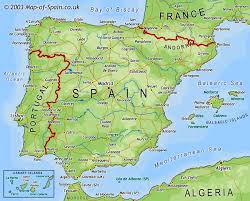
I was thinking about alternate histories because Sherrylee and I are in Spain on a Let’s Start Talking site development trip.  We landed in Madrid and have already spent good time with a good church in Malaga and a missionary in Murcia.

In the course of our conversation on Sunday, we were asking the brother in Malaga to tell us about the religious climate in Spain.  He began by saying, “Well, you know that Spain never experienced the Reformation like much of Europe.”

Although I have a general overview of Spanish history, that is one of those facts that is so obvious, that I don’t think I’ve ever thought about it.  Of course they didn’t!!

Spain received Christianity most likely from Roman Christians—perhaps St. Paul’s disciples who wanted to complete their teacher’s dream of taking the Good News to Spain.  In the year 711, however,  North Africans crossed the Strait of Gibraltar and brought Islam to the Iberian peninsula.  In just seven years, Islam became the predominant religion as well as the ruling political power—and stayed so until 1492, when the last Muslims were driven from Spain by Ferdinand and Isabella.

You church historians will quickly recognize that the first signs of the Reformation in northern Europe were appearing at this same time, but because of Spain’s history, this country experienced the Inquisition—also an attempt to purify Christianity–instead of the Reformation. The Inquisition was not banned in Spain until the early 19th century, but even then Spaniards did not receive religious freedom—not in the 20th century during the Spanish Civil War or under Franco either.

In fact, not until the restoration of the monarchy in 1976 did the Spanish people gain the right to worship God according to their own convictions and religious groups other than Roman Catholicism gained equal legal footing in Spain.

Today, 71% of Spaniards identify themselves as Roman Catholic, but 24% of the general population consider themselves as having no faith.  Islam is the second largest religion in Spain, if you ignore atheism as a religious group.  In spite of the strong Roman Catholic presence, only 3% of Spaniards listed “religion” as one of their three most important values, which is even lower than the 7% across secularized Europe.

So let’s write an alternate history:  what if Ferdinand and Isabella had come under the influence of a Spanish reformer like Juan Valdez, who at 18-years-old published a small work called Dialogue on Christian Doctrine (1529), in which he in a very gentle manner suggested there were only two sacraments—baptism and the Lord’s Supper—and that the Lord’s Prayer was a better model than praying to Mary.

He also suggested that Christians were really only obliged to keep the teachings of God, not the church if the church’s commands were different from God’s. Although Valdez never argued for a break from the Roman Catholic Church, in 1531, his little book was banned by the church for heretical teachings and he had to flee to Italy to save himself from the Inquisition.

Well, when I look at the benefits of the Reformation in northern Europe—at least from a spiritual perspective—I do not see greater faith in Germany, for instance, than Spain. And the native countries of Tyndale, Wyclif, Calvin, and Zwingli are some of the most completely secularized in the “Christian world.”

So after 500 years, the spiritual results of the Inquisition and the Reformation do not appear to be all that different!  That is a very sad conclusion.

What Spain and all of Europe need is an alternate history—one that is written on their hearts and not just in imaginative literature. I’m thankful for every believing  Christian here in Spain, who not only shows their love but bears witness to His great love by living the life of a Christian, by resisting secularization, and by publicly speaking the name of Jesus.

That’s the only way the alternate history of any person, any people, any nation is ever written because, in reality, the God of all nations is the Only One who writes history!!

Thank you Guille and Suzanne, thank you Erick and Sira for being leaders in the real new history of Spain!!

Dan BouchellePart 2 of a series of guest posts by Dr. Dan Bouchelle, President of Missions Resource Network

Here are a couple more suggestions for doing STM in ways that bless both those you go to serve and those you take on the trip. For earlier entries see my last two posts.

  1. Do what the locals cannot do themselves: It is tempting to take groups of Americans to developing countries to do hands on projects that make Americans feel useful in fighting practical problems. So, we take dozens of people thousands of miles and spend tens of thousands of dollars to do carpentry, plumbing, concrete work, painting, pass out fliers or hand out food and clothes. This is good and hard to criticize. It is doing good and not wrong per se. But often it makes no sense to the local people and can create resentment in places where people with the needed skills in the church or community badly need the work and can do a better job for a fraction of what Americans spend getting there. Not to mention, hiring local people helps the economy, fights poverty, and creates opportunities to form relationships that could lead to making disciples. If you are going to do a service project, bring something the locals cannot do or hire done with your help. If you are bringing a group of people with special skills, e.g., medical personnel, and the local church requests you come as part of their ministry strategy, that is a good use of your trip. Also, doing an English as second language ministry is a great way to help out. People in many parts of the world are desperate to learn or improve their English and will jump at a chance to talk with Americans even if that involve reading the Bible together. Let’s Start Talking does this extremely well and I highly recommend them to any church wanting to do short term missions. LST logo
  2. Do what you are asked to do: It is easy to forget our reason for going and decide we want to rid the world of ____________ and then try to find someone who will let us fulfill our dream in their location. For example, we all want to see people get clean drinking water, end sex-trafficking, reduce preventable diseases, etc. We see the news about huge problems around the world. We feel guilty about our blessings. We want to “make a difference.” So, we develop this dream to go and fix problems other places. But, when our goal becomes to satisfy our need to feel significant rather than help people who really want us there and can benefit from our presence, we can end up being a problem and spend lots of time and money on projects that come to nothing after we are gone. Most of the systemic problems we want to solve are too complicated to address meaningfully by a trip of a week or two. A short-term mission trip may not be the way to address the issues we want to fix and no one may be asking us to fix them anyway.
  3. I know of one ministry that recently spent tens of thousands of dollars drilling a water well in an African village so the people did not have to rely on contaminated river water over a two mile walk away. However, when they returned, they learned the women of the village walked past the new well as they continued to make the two mile hike to the river to get water. Turns out, this was the only time the women of the village were able to talk among themselves and get away from their husbands’ expectations. That meant more to them than clean, convenient water. Perhaps that well should have been drilled two miles away, or maybe the ministry should have listened more closely to what the people in this location believed they needed. There are broken water wells all over the developing world lying unused because no one was taught how to maintain them. But, the people who put them in have some cool pictures to show back home about how they made a difference. The stories like this are endless. The point is, we don’t always know what is needed and need to listen and think long term as we follow the lead of the people on the ground. This is not about us.

Dan BouchelleDr. Dan Bouchelle is the President of Missions Resource Network, one of the most central missions organizations serving Churches of Christ in the world.  He is writing an important series on short-term missions that addresses the mixed feelings that many missionaries and congregations have about short-term missions, but he is also offering very positive and specific guidance, which I appreciate.  He has given me permission to share these writings with you.

Last week, I posted an introductory piece on the conundrum which is short term missions (STM). Few things can breathe life into a church and help believers rediscover their purpose quite like doing ministry in cross-cultural settings. On mission trips, life is so different that we can’t take anything for granted and serving others in the name of Jesus there changes us. Something about having our routines and expectations shaken by being in a place we don’t understand, and cannot manage well, opens up a path for God to grab ahold of us and us to grasp him back in fresh ways. Being useful to God among people who don’t look like they can do anything for us does much for us and we come away with the greater blessing. However, sometimes getting the benefits that come from going on mission becomes the goal instead of the serendipity and we become a burden on those who provide us access to other countries and settings.

So, how can we do STM in a way that provides a worthwhile blessing to those we serve without creating a problem? Here are the first two of several suggestions to come in subsequent posts.

  1. listenListen and submit to the leaders on the ground: Don’t go assuming you know what is needed, overly eager to make a difference in ways that make sense to you. You don’t live there. Even if you speak the language, you don’t understand much of what is being said and not said. You don’t know what is needed. You don’t understand the unintended consequences of your presence after you leave. Focus on building relationships with local leaders, especially national leaders, which are strong enough they can tell you what they need and then submit to their direction. This will take time and patience. Go as servants not saviors. Help them with their objectives in ways that fit their operations. Don’t compare them to churches in the US on some scale of “conservative” v. “liberal” because you don’t understand how the gospel speaks in their setting. Don’t carry your American culture or church culture with you. The way you dress, the way men and women interact, who prays and who doesn’t, the way you shake hands or look at people, all communicate things you don’t understand. Ask for guidance and submit to what you hear without judgment. Remember, this is not your country, culture, or community. You are there to help them, not to have an experience that fulfills you. Go without an agenda so you can serve a better one.
  2. Only go where you are invited: If you ask to bring a team of people to a missions location, especially one your church supports financially, you are likely to hear “yes” even if you are not needed and are not helpful. You will probably get a “yes” even if you are a burden. Why? Because Americans are green and most of the world is polite. Americans look like money and many church leaders around the world know that where Americans go, money often follows. Turning down an American team risks offending donors or potential donors and that is a frightening prospect to churches who are often in an unhealthy state of dependency on Americans anyway. On top of that, saying “no” requires a level of confrontation that is considered rude by a high percentage of the cultures in the majority world. Hospitality is a core value of many cultures and they just can’t refuse to take people in, even if they are a burden or problem. Believers around the world will host Americans and provide for them in ways they would never provide for themselves because that is part of their value system. They may not want you or need you, but if you tell them you want to come, they will probably smile and act like your presence there is a great honor and blessing when it may be an expensive distraction they cannot afford. But, they also may think they can’t afford to say “no.” American teams, whether a group of unskilled teenagers or a team of highly skilled medical professionals, can do a great deal of good and bless ministries around the world if properly utilized. But, American churches often don’t do enough cultivation on the front end and unknowingly do as much harm as good because they assumed too much. Not everyone needs us or wants us to come, especially when the value we bring is not a fit or a priority for the work.

You have to stop and read this! Cassidy is a young member of the Body of Christ, but her voice is already powerful and the Spirit of God is strong in her.  And she tells the truth.  She is special to us for many reasons, but let’s just all give thanks for her and for all the other teens who really love God with all their heart! Their devotion and commitment encourage our hope  for tomorrow.

20130621_171423Teenager. The word teenager makes some people nervous.  Loud, strange music. Weird clothes.  Completely different vocabulary.  Teenagers have the reputation of being concerned about clothes, popularity, dating, reputation and having fun. But if you’ve spent time with teenagers at The Hills lately, I think you’ll be surprised! And I mean surprised in a good way! Most of the students I know are concerned about the world—we want to make a difference. We care about friends, family, school, making the most of our lives and even missions. We want to stand out but not for our clothes or our music or even for what we say. We want to stand out because of what we do.  We want our lives to reflect Christ and we want to make Him look good. We aren’t afraid to do big things for God and we love being at a church that encourages us to dream big!

I was born into a family that loves the church and loves international mission work.  I’m 14 years old and I’ve been to 11 countries on 5 continents to share Jesus with people who don’t know Him. My parents and my 2 younger brothers and I went on a Let’s Start Talking project to Italy this past summer where we helped people practice English using the Bible—we went with 2 of our friends who also go to The Hills. Last summer I was on a team to Rwanda with several families from The Hills. God has definitely given me lots of adventurous ways to serve Him with our church family.  And each adventure has helped me grow closer to Him.

In July of 2011, I went on a 3 week LST project with my mom, my brothers and some family friends to Natal, Brazil.  Let me confess something…I was a brat.  I had just turned 12 years old and, honestly, I had not been very kind to my family for a while.  I don’t know why but I was just always frustrated with them and my brothers were really, really annoying to me all the time.  I left the USA dreading this non-stop time with my family. I don’t know exactly what happened to me on our mission trip but I came back changed.  I returned loving our time together and being grateful for my family. I had been baptized a couple of years earlier but the Holy Spirit was really working on my heart during those 3 weeks.

I had been on several mission trips before this one but this would be my very first time to read the Bible alone with people.  There I sat, 12 years old, across from 5 different non-Christians ranging in age from a 11-year-old Brazilian boy to a 52-year-old woman who was practicing Spiritism. I didn’t know it but my mom would sit across the room praying for me, reminding herself that the Spirit in me was stronger than anything in this woman.  Maybe that’s the beauty of being young and innocent—I wasn’t intimidated at all—only the usual nervousness of meeting someone new and sharing Jesus with them.  The Bible says that God can use the weak and overlooked of this world to show His wisdom and power (1 Corinthians 1).  Who would choose a 12-year-old bratty girl to share Jesus with a Spiritist over 4 times older? God, of course!

If you want to change your child or grandchild’s life, take them to do mission work.  You don’t even have to go to another country! There are people in this city who don’t know Jesus! There are people in your neighborhood who don’t have hope! And if you can take them to another country, go! There is something life-changing about spending every day for 3 weeks focused on the Good News of Jesus. It’s hard to be unkind to your family when you’ve read the story of Jesus with people all day.  It’s tough to be a brat after you’ve shared your faith with a stranger. And when you read about how great God’s love is, you want to love people even more.

Even little brothers.