Feeds:
Posts
Comments

While flying back from Nashville last week, I picked up an airline magazine and found myself captured by an article entitled “The Pursuit of Happiness.”  The article opened up a whole new area of psychology to me called “positive psychology.” Positive psychology has been out there for over a decade now, long enough to even have detractors, but the success of a recent publication by Dan Buettner Thriving: Finding Happiness the Blue Zones Way has rekindled the conversation.

Buettner’s conclusions and those of several other well-known positive psychologists are backed with very large and well-documented studies that might be interesting to many of you, so here is the link for further details:  Celebrated Living/Spring 2012

But I want to jump to the conclusions of positive psychology as reported in this article:

  • “The most powerful determinant of happiness is the quality of your relationships with other people.”
  • Money does play a role in happiness, but only up to an annual income of $75,000 at which point no increase in happiness can be measured with further gain.
  • Individuals with altruistic as opposed to financial goals experience greater happiness.
  • Church attendance, participation in social events, and regular exercise increase happiness.
  • Choosing to spend money on others makes people happier than spending it on themselves.
  • Place and your surroundings matter! Beauty does affect people positively.
  • Performing meaningful work makes people happier.

As I was doing some superficial research on this psychological scene, I came across a TED video, recorded in 2004, by Dr. Martin Seligman, whom many designate as the founder of the positive psychology model.  (I can’t help but point out the irony that his Germanic surname means literally “blessed man” or “happy man”!) He claims to have classified the happy life into three distinctive types:

  • The Pleasurable Life – characterized by the accumulation of as many pleasurable experiences as possible
  • The Good Life—characterized by intense engagement with work, play, people, and love that “makes time stand still!”
  • The Meaningful Life—knowing one’s personal strengths and using them for something larger than oneself.

His conclusion is that the Pleasurable Life as a lifestyle brings very minimal satisfaction and is far surpassed by the other two. The Meaningful Life offered the greatest happiness. Interestingly, pleasurable experiences, however, could increase happiness when they were an add-on to both the Good and the Meaningful Life!

My favorite authors on happiness concluded all of this and more long before positive psychology appeared. It makes me happy just reading their writings again:

  • Happy are those who know they are spiritually poor; the Kingdom of heaven belongs to them!
  • Happy are those who mourn; God will comfort them!
  • Happy are those who are humble; they will receive what God has promised!
  • Happy are those whose greatest desire is to do what God requires; God will satisfy them fully!
  • Happy are those who are merciful to others; God will be merciful to them!
  • Happy are the pure in heart; they will see God!
  • Happy are those who work for peace; God will call them his children!
  • Happy are those who are persecuted because they do what God requires; the Kingdom of heaven belongs to them! (All of the above from Matthew 5)
  • How happy are those who have no doubts about me! (Matthew 11:6)
  • How happy are those who hear the word of God and obey it! (Luke 11:28)
  • How happy are those servants whose master finds them awake and ready when he returns! . . . How happy they are if he finds them ready . . . (Luke 12:37-38).
  • Happy are those whose wrongs are forgiven, whose sins are pardoned!(Romans 4:7)
  • Happy are those who do not feel guilty when they do something they judge is right! (Romans 14:22)
  • Happy are those who remain faithful under trials, because when they succeed in passing such a test, they will receive as their reward the life which God has promised to those who love him. (James 1:12)
  • Happy is the one who reads this book, and happy are those who listen to the words of this prophetic message and obey what is written in this book! (Revelation 1:3)
  • Happy are those who have been invited to the wedding feast of the Lamb. (Revelation 19:9)
  • Happy are those who wash their robes clean and so have the right to eat the fruit from the tree of life and to go through the gates into the city. (Revelation 22:14)


The words meaningful life and larger than yourself become so much more than just psychological jargon when put into this spiritual framework.

George Bailey may be “the biggest man in town,” and Lou Gehrig may be “the luckiest man alive,” but Christians have the potential and the promise of being the happiest of all people.



My dad bought me my first camera in 1956. It was a Kodak Brownie—very simple point and shoot. No flash! I took it to a TCU football game to watch Jack Spikes play. Later, I became the school photographer at Fort Worth Christian, so most of the snapshots in the 1962-65 yearbooks, I took.  Those pictures were taken with my dad’s Yashica camera, but all of them were on Kodak films.

Kodak has been as American as apple pie and Chevrolet—but Kodak is almost gone.

I recently read a very interesting article called “A Century On Film: How Kodak Succumbed To the Digital Age” by Ulrich Fichtner in Spiegel Online International.

In his article Fichtner shows how Kodak grew to be synonymous with the film industry over 132 years, how all of the Oscars from 1928 to 2008 were shot on Kodak film. In the 1970s, Kodak was making 90% of all of the U.S.’s film and 85% of the cameras.  In 1975, it was Kodak who developed the world’s first digital camera.

But around 1980, one of their own vice-presidents reported to the company that unless they made fundamental changes within about thirty years, everything that Kodak was doing would become obsolete and Kodak would be in danger of failing as a business.  That report must have sounded like words from another planet since the company was dominating, hugely profitable, and still growing.

Kodak never found its way into the digital age. The company tried out cheap digital cameras, making digital printers, apparently even thought about making wallpaper and sandpaper—since they were primarily a chemical company, but nothing really worked for them.

The author of this article then writes a very telltale sentence: Rochester was gripped by an understandable but still fatal attitude: They had given the world pictures from the surface of the moon, they reasoned, so someone else could give it wallpaper.”

I’m reminded of the Churches of Christ in the 1950s and 60s—the one that so many of our current elders and the most respected of our opinion leaders grew up in.  It was a booming religious group. We passed among ourselves statistics that described us as the fastest growing church in the United States. We were among the first groups into war-torn Europe, one of the last out of Saigon. Our Christian colleges had Olympic athletes, and we even had movie stars like Pat Boone who wouldn’t kiss anyone on screen! Those were glory years!

The last twenty years don’t feel like glory years to me. We feel more like a group trying to re-invent itself, searching for something new that will make us relevant.  We tried to become charismatic for a while, but we apparently are too Lockian for that movement to transform us. We have tried and succeeded in joining the worship wars, with some of our best churches even turning instrumental as the key to the future.  Others of our fellowship are abandoning evangelism in favor of redeeming the poor and destitute of this world—a false dichotomy in my view!  Our attempts to re-invent ourselves seem pretty ineffective.

Are we having a bad Kodak moment?  Kodak has not been able to come up with a radical enough solution, so they have now gone into bankruptcy and survive only as a shadow of their former greatness.

The Church is not Eastman Kodak.  While Kodak founder George Eastman shot himself in the head in 1932, the founder of the Church is still very much alive!  Resurrection is crucial to His story and, therefore, should be to ours as well.

You probably don’t like it that I have jumped from talking about the Church of Christ to talking about Christ’s church—but I did that quite intentionally.

Our historical position—and that of our founder as well—is that there is only One Church!  I believe Churches of Christ gave that theological position up sometime in the 1970s. We decided that we were just another denomination, something much less than what we had believed ourselves to have been.

I know why we gave up our claim of singularity! We had been much too exclusive in our claims, thinking that the sign above the door and the mode of baptism—but especially our worship—made us so right that we were the only members of the church of Christ.  Most of us, however, since then have repented of our proud self-righteousness which was our sin.

In our sack cloth and ashes, we, however, have mistakenly diminished His Church! In spite of our prideful abuse of the truth, the gates of hell still have not prevailed against the Church of God! And they never will!

Rather than re-invent the Church of Christ, perhaps we need to rediscover the Church of Christ—the only Body of Christ, the beautiful Bride of Christ. This is the community of faith that is undefeatable, that does not grow weary—and there is only One Body, One Church because there is only One Lord and One God and Father of us all!

Kodak may disappear, but the Church—the only one to which you and I truly belong—will never die!

Yesterday, I described my doubts about our business/corporate organizational model for churches, where elders act as owners/directors, ministers/staff are employees, and church members are either customers or unpaid volunteers.

Today I want to flesh out the statement that our churches would be better served and our ministers would not live without loving friendships if we used a family model for church instead of a corporate model?

What would a family model for church look like—especially focusing specifically on money and relationships?

  • In our family, all of the money belongs to everyone. Mom and Dad have more to say than the young kids about how it is spent, but everyone has a degree of input and control. And as the kids mature, they have more input, more control. The assumption is that all of the funds are used for the good of the whole. Who earns it, who spends it, who needs it–none of these factors has anything to do with who belongs to the family and how valued (loved) each member of the family is.  Nothing at all!
  • We are family because God brought us all together, not by our own choice and not because of how we perform. No one is in danger of being “fired” because of their failures or lack of productivity.  Everyone is accountable, however, and everyone is subject to rebuke and correction.  Mom corrects Dad, Dad corrects Mom, parents correct kids—and there even comes a time when mature kids correct Mom and Dad! Sure, tragic situations might force the family to exercise “tough love”—but only for the good of the one being disciplined.
  • A family problem is “our” problem, not “your” problem. A son’s dishonesty is our problem; Mom’s depression is our problem; a daughter’s need for college tuition when money is scarce is a family problem. Problems are resolved together. A family is the safest place to resolve problems because each person in the family is loved unconditionally!  Nothing can separate us from those we love the most!
  • Dad is the head of the house, but that doesn’t mean he dictates everything. For instance, a good Mom (Proverbs 31) may manage the financial household:

14 She is like the merchant ships, 
   bringing her food from afar. 
15 She gets up while it is still night; 
   she provides food for her family 
   and portions for her female servants. 
16 She considers a field and buys it; 
   out of her earnings she plants a vineyard. 
17 She sets about her work vigorously; 
   her arms are strong for her tasks. 
18 She sees that her trading is profitable, 
   and her lamp does not go out at night. 
19 In her hand she holds the distaff 
   and grasps the spindle with her fingers. 
20 She opens her arms to the poor 
   and extends her hands to the needy.

And, besides, the elders/pastors are not the head of the church; Christ is the head of the church . . . and there is only one head!

  • Dad, Mom, and kids each have specific roles to play.  The family relationships work best when Dad does not try to be a kid and when kids are not expected to be breadwinners. It’s better for Mom to be a Mom and not teenage daughter’s best friend.  But these distinctive roles enhance love; the family is dysfunctional if the roles create jealousies or mistrust.
  • Secrets destroy families. Dad’s secret life at work; Mom’s fantasies; kid’s secret addictions! Truth sets us free. Transparency is the sign of a healthy family—even with money.  It’s better that the kid’s know why Dad takes an extra job. It’s better Mom and Dad work out their plan together for getting out of debt. It’s better the teenagers know the family’s general financial condition, so they understand why they can’t …. or they can . . . . Closed door meetings and leadership secrets produce and are the product of distrust. The truth sets us free!

Wouldn’t churches work better using a family model, a model where ministers are family members, not employees? Wouldn’t  a family model work better where elders and ministers and members were brothers and sisters instead of owners, employees, and customers? 

I can’t stop without pointing out that the church is called the “family of God” (1 Thess. 4:10, 1 Peter 2:17) and the “household of God” (Eph. 2:19, 1 Tim. 3:15, 1 Peter 4:17), but never the business or the corporation, not even the organization of God.

Ministers who are family will not be treated like ministers who are employees! Ministers who are family will not be afraid to have close friends in their church—because those friends are their brothers and sisters, not their constituency or their stockholders.

The love of money breaks apart families as well as churches—we all know that. But a healthy family uses money to love each other and to love others, not to control each other and control others.

Churches need to be healthy families!

Several ministers have responded to my last post “Can A Minister Have Close Friends?” commenting on the difficulties created by being a paid minister for a church. In general, their comments run something like, “When people think of you as their employee, it is hard for either one of you to be close friends!”  Or they say, “When people think they are paying you to do what they don’t have time or desire to do, they are generally not in a position to be a friend.”

Let’s think together about why these ministers feel this way.  See if you agree with these statements:

  • The “power” of an employer to hire or fire a minister makes close friendship almost impossible.
  • The “class distinction” between the ministers who are hired and the members who do the hiring makes a close friendship of equals almost impossible.
  • The financial dependency on the congregants to approve of a minister and his/her work never allows the minister to be authentic enough to form truly close friendships.
  • The common notion that a minister should be financially sacrificial, but the leaders and/or the members are free for unrestrained financial gain creates a tension that precludes true friendship.
  • The requirement in many churches of semi- or fully public disclosure of the minister’s salary creates both jealousies from those with less and/or condescension from those with more rather than close friendships.

Certainly there are exceptions, but isn’t there enough truth in every one of these statements to demand that we pause and reconsider why our churches are entrenched in a financial system that creates deep inequities, social liabilities, and fosters anything but a spirit of love?

I continue to believe that using a business/corporate organizational model —whether intentionally or by cultural default—is highly detrimental to our churches.  I’m talking about the elders being either the owners or the board of directors, the ministers/staff being the employees, and the congregation usually being the customers, with some exceptional churches seeing the members as unpaid volunteers.

Just limiting ourselves to the question of finances and friendships, I believe our churches would be better served and our ministers would not live without loving friendships if we used a family model for church instead of a corporate model?

Tomorrow we will look at the differences between a corporate model for church and a familial model. 

Sherrylee’s parents were in ministry all fifty years that they were married. When her mother died, her father remarried a woman who had been married to a minister, now deceased.  Sherrylee’s family was the center of the church’s attention; she would tell you that as a young child she felt like the princess of the church—and I’m sure she was.

But Sherrylee knew which deacon was beating his wife, which elder had children in trouble; she did not grow up ignorant of the hypocrisy and facades in her churches—but she grew up loving the church—because it loved her and her family.

When I met Sherrylee and started visiting her family in Fort Walton Beach, Florida—I know, tough place to go to visit your girlfriend!—I remember clearly an early conversation about her family’s friends.  She told me how well-loved her parents were at all the churches where they had worked, but that her parents did not believe it possible to really have close friends and do their ministry well.  In fact, that seemed to be the common wisdom at the time for all ministers.

Being a young campus minister at the time and with firm plans for mission work, I listened to what my future in-laws said about a life in ministry—and it frightened me a little bit to think of a life without close friends.

Over forty years of ministry later, I understand where the idea came from that ministers could not have close friends.  We’ve had our own share of disappointment with people who were our closest friends.  Our closest friends from our early years in Germany divorced and gave up big chunks of faith. Several of our closest friends in Oklahoma would certainly not call us close friends any more. We have not been sheltered from some of the severest pains between friends in ministry.

But ministers still need friends! And families in ministries still need friends—close friends!

Sherrylee and I have now been in Fort Worth for almost eleven years. We are part of a great church, have been in three good small groups, had our own Bible class for a couple of years—as you can see, plenty of opportunity to make new friends!

Our closest friends, however, have come from our LST family—from ministry! We just spent a weekend in Nashville with some of our closest friends.  Some are former students that did LST with us twenty—even thirty–years ago. Some of these friends are members of our home church who have done LST now for 10-15 years.  Some of these people we have known for less than ten years, but who have invested themselves so heavily in LST that we have seen them several times a year at LST events , and sometimes have even traveled with them.

Yesterday, we had a meeting of our board of directors. Those directors who serve with us fit into this special group of closest friends in our lives. A CPA, a lawyer, a professor, a minister, and a retired journalist are currently on the board. Other close friends have retired from the board in the past few years.

With all of the inherent turbulence that may surround board meetings—hard questions regarding finances, church issues, staff personalities, loyalty to the mission and vision—with all of these pitfalls–serving together and ministering to one another create bonds of love like no other.

So my conclusion is this and my advice is the same for ministers: Don’t be afraid to make friends.  Sure you are vulnerable and people can easily hurt you!  Nevertheless, keep giving yourself away! But don’t be surprised if you find your closest friends coming from among those with whom you share ministry most closely!

If you are without close friends in your ministry, check these things:

  • Are you sharing your ministry or only leading your ministry?
  • Do you care about the people who share your ministry—or only about the ministry itself?
  • Are you being a friend first or are you a minister first? (Tricky question!)
  • Are you afraid of having close friends?

God never thought it was good for man to be alone! Jesus had his friends and his closer friends. Paul surrounded himself with fellow servants.

You need close friends! You will find them among those who will serve beside you! 

Yesterday, Sherrylee and I visited the George Bush Presidential Library and Museum in College Station, Texas. In recent years, we have visited five of the libraries, and I enjoy it more with each one.  There are twelve official libraries and museums, but Gerald Ford has two—a separate library and museum, so only eleven presidents, the eleven beginning with Herbert Hoover and ending with Bill Clinton, are represented.

After visiting each museum, we leave with a picture of a man, his family, and his work who has had an immense influence on our country and the history of the world. Most of these libraries are built shortly after the end of the presidency they honor, so, in some ways, they lack the purview of a longer, historical evaluation. Those libraries built during the lifetime of the man they portray, however, appear to reflect what the man himself wants his legacy to be, how he sees himself, not his opponents’ views, not the media, and not the judgment of historians.

It is this very personal quality that I found both fascinating and encouraging in the George Bush Library yesterday.  This is a presidency that was not so long ago that it has become mythical, nor so recent to still be part of the political debate. He is still alive—not thriving according to reports, but then he is 87 years old.

I saw him at a Texas Ranger ballgame a while back, but my favorite memory is from March 1992, when I heard him speak on the campus of Oklahoma Christian during his re-election campaign–one of the most beautiful March days I ever remember. The Bradford pear trees were at the peak of their bloom and the bright sun just barely knocked the chill off early spring. For a decade after that, I measured the advance of spring by that day in March that President Bush came to our campus.

Two things stood out to me after two hours in President Bush’s Presidential Library and Museum.  First, I never knew how much his personal faith in God penetrated his life and presidency. At every turn, the exhibits very quietly but explicitly testify to his faith in God .  The section on his parents mentions not only regular church attendance but that each day the family read the Bible together and prayed together. The ordination certificate of Bush as an elder in the Presbyterian church during his oil days in Midland, Texas, hangs in the middle of his early business career exhibit.

You probably don’t remember that his very intentional first act as president, just a couple of minutes after taking the oath of office, was to lead the nation in prayer.  Here are his words:

And my first act as President is a prayer. I ask you to bow your heads:  

Heavenly Father, we bow our heads and thank You for Your love. Accept our thanks for the peace that yields this day and the shared faith that makes its continuance likely. Make us strong to do Your work, willing to heed and hear Your will, and write on our hearts these words: “Use power to help people.” For we are given power not to advance our own purposes, nor to make a great show in the world, nor a name. There is but one just use of power, and it is to serve people. Help us to remember it, Lord. Amen


His library is amazingly full of expressions of personal faith during his presidency. Did you know that President Bush built a chapel at the presidential retreat Camp David and was the president who first initiated regular worship services there?

Second, I heard a war hero who flew 58 attack missions in WWII, a man who was shot down by the Japanese and barely escaped with his life, a man who directed the Central Intelligence Agency and who was the ambassador to the United Nations during the Cold War, call in his inaugural address for a “kinder . . .  face of the Nation and gentler  . . . face of the world.”

Some have accused him of being a wimp, for not having the guts to finish off Saddam Hussein, for instance, in Desert Storm.  I read his first words as President—the most powerful man in the world—and I don’t hear someone longing for power. I hear someone who feels blessed with power, not because he deserves it, but as an opportunity to do good in his neighborhood.

I really like “kinder and gentler”. We need that not only in the political rhetoric today, but in the hearts of our political leaders.  I suspect the daily Bible reading and prayers and the “kinder and gentler” thing are part of the same package.

I’m glad to have learned this about George Bush. It is not the whole story, perhaps, but it is part of his story that he wanted told on the walls of his library.

Thank you, Mr. President.

As we are taught to pray for the leaders of our country, so we pray for you and Mrs. Bush and give thanks for the good you have done in this world.

Every short-term mission project should include an evangelistic component. Unfortunately, most mission trips planned by churches in recent years are better described as service projects.  I would include in service projects providing medical services, building houses or church buildings, painting or other construction type tasks, taking clothing, food, shelter, and friendship to orphans, the poor, or victims of catastrophes.

Jesus went healing the sick and giving cups of cold water. James says this is pure and undefiled religion. And Matthew records Jesus saying we will be judged for our compassion, so service projects are projections of God’s Goodness by His people in this broken world.

But Jesus came not only healing the sick and feeding the hungry, but also preaching (Matt. 4:23; 9:35)!   Jesus says, “The Spirit gives life; the flesh counts for nothing. The words I have spoken to you—they are full of the Spirit and life “ (John 6:63). Just moments later, Peter answers Jesus’ questioning of whether the Twelve would stick with him now that he has started preaching and was becoming much less popular than when he was feeding the thousands: “Lord, to whom shall we go? You have the words of eternal life” (John 6:68)

The words of Jesus are full of the Spirit and Life, not the good deeds of his followers. For this reason, I believe that every mission trip should include a plan to share the Words of Jesus!

One of the reasons many mission trips default to service projects without the Words is because many Christians do not believe they are prepared to speak the Word.  Preparations and training for short-term missions should include skills training in faith-sharing!

Allow me to draw on the training provided by Let’s Start Talking for some concrete suggestions for specifically training your volunteers to share the Words of Jesus!

  • In LST’s very first training sessions, workers are asked to begin verbalizing their faith.  Many have never done this, so it takes a friendly, safe environment and some prodding, but usually it is a marvelous experience for the whole team.  One way of doing this is just to go around the team and have everyone tell the story of their baptism, including talking about what people influenced them and taught them and what prompted them to obedience at just that moment in their lives.  For more reticent groups, LST’s training suggests that each person literally draw a picture of their faith. They are given pencil and a blank piece of paper—and no further instructions.  The results are usually poor artwork, but dramatic insights. Of course, each person explains their picture to the whole group, thereby taking first steps in verbalizing their personal faith.
  • Teach the workers the plan for sharing their faith! Since LST is primarily a faith-sharing mission, the plan is to serve those we meet on the mission trip first by helping them with their English, but LST workers are specifically trained to use the stories of Jesus in the Gospel of Luke as the English “workbook.”  LST workers learn to wait for, but to expect the participants to ask questions about what they are reading together. When the participants raise the questions, then LST workers know that they have been asked to share their faith.  That’s the plan for all LST workers.
  • Equip the workers to execute the plan by identifying the specific skills they will need.  The greatest temptation of untrained workers is to start preaching to the participants before their ears are ready to hear.  Other typical failures of untrained workers are that they don’t listen to the person they are working with, their answers are too long with too much information, and/or they are easily led by the participants away from the gospel story into peripheral questions.  Because of these tendencies, LST training addresses extensively:
    • Learning to wait until asked before sharing
    • Listening more than talking
    • Staying focused on the Story
  • Practice with the workers what they will be expected to do!  Training or equipping is not just telling workers what they should do and how.  Until they can actually do what is expected of them, they are not trained.  If you are responsible for training your workers, you must not only demonstrate to them, but see them demonstrate the skills they need.  LST training does this mostly through role-playing.  Role-playing is not the same as the real moment, but we have found nothing better for training purposes than an experienced person sitting together with a new worker and pretending they are in a conversation session.  Each person who participates in an LST project will have done role-playing on multiple occasions before they have completed their training.


To summarize, with clear goals and objectives, you as the organizer should be able to develop your training strategy by determining what tasks need to be accomplished and what skills are needed to accomplish those tasks.  You will choose people for your mission trip who can accomplish those tasks, then equip them with the skills they will need to be the very best workers possible.

Let’s not let the sharing of The Words become a rarity simply because our people have not been taught how to do it.


When you have clearly stated goals for your mission trip and well-defined strategies for meeting those goals, then you will know whom you should take with you and what skills they will need.

Most people who want to go with LST have the basic skills to accomplish their tasks effectively, but some people do not. LST mission trips are 90% building relationships through friendly conversations with people who want to improve their English language skills.  One young man from small-town USA wanted to go with us one year, but nobody could understand him when he talked because he mumbled badly and swallowed his words.  LST sometimes has university students from non-English speaking countries who want to go with LST teams—and who often speak English very well for a non-native speaker—but we advise them not to because our experience is that people in other countries do not want to practice their English with non-native speakers.

Some people hate to make small talk; others are not empathetic enough to understand why others can’t speak English right!  Some people hate travel; others hate sitting all day.  These are not moral failures or lapses in righteousness, just different gifts for different members of the Body!

People who are painfully shy or hard-core loners will probably find an LST mission project challenging.  These same people will have all the skills for a different kind of mission trip, however, where verbal and social skills aren’t so critical! The organizers of mission trips must pray for wisdom and discernment—and then not be afraid to use them in recruiting and selecting the best workers for their project.

Here’s a short list of suggestions for you:

  • Determine what tasks are required by the objectives of your mission project
  • Recruit workers who have both the desire and gifts to accomplish the objectives of the mission project.  Every member of the body is made for the work that he/she does best.
  • Don’t be afraid to suggest alternatives for some people!  Asking somebody to do something that they can’t do is not being kind, nor is it putting the health of the Body first!
  • Be responsible for the well-being of everyone that you take with you!  We actually took the mumbling young man—but we spent a lot of extra time making sure both he and the people he worked with were happy.

So now we have clearly stated the objectives and goals of the mission trip and we know who needs to go on the trip, so the next step in designing our preparation and training is to determine good ways of either developing or honing the special skills we might need.

Skill training for short-term missions will be the next topic in our series on Preparing for Short-term Missions.

The words are a little archaic, but the hymn O Love That Wilt Not Let Me Go has always been one of my favorites.  The melody begins rather simply but moves quickly to a quietly triumphal—not a Sandi-Patty-rock- the-world–conclusion!

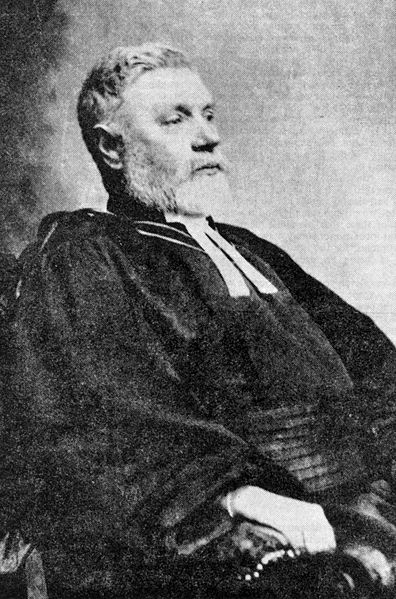
George Matheson (1842-1906) was a Scottish minister. While studying theology and with a promising theological career in front of him, in his twentieth year, he went completely blind.  Not only did his blindness block his academic ambitions, but the story is that his fiancé also left him, not being willing to be burdened with a blind husband for the rest of her life.

He was quite a successful pastoral minister who was served himself by his devoted sister.  When George was forty years old, his sister married and left him on his on. It was on the occasion of his sister’s wedding that George penned the words O Love That Wilt Not Let Me Go.!

O Love that wilt not let me go,

I rest my weary soul in Thee;

I give Thee back the life I owe,

That in Thine ocean depths its flow

May richer, fuller be.

First the loss of his sister’s care, rekindling no doubt the painful reminder of his own lost love, and all of this framed with his lost sight would have left many people bitter and angry. Matheson acknowledges the weariness of loss, but finds the ocean waves of God’s steadfast love life-giving as opposed to diminishing.

O Light that foll’west all my way,

I yield my flick’ring torch to Thee;

My heart restores its borrowed ray,

That in Thy sunshine’s blaze its day

May brighter, fairer be.

I love the “flick’ring torch” line. Our energies are too often spent trying to walk through life by the light of our flickering torch, when we could walk in the sunshine’s blaze with great confidence if we would yield.

O Joy that seekest me through pain,

I cannot close my heart to Thee;

I trace the rainbow thru the rain,

And feel the promise is not vain,

That morn shall tearless be.

The great hymns acknowledge pain rather than pretending that this world is tearless!  But Believers know that Joy is seeking us, not trying to allude us! Matheson may even suggest his own struggles with Joy because pain in this time can be a defining reality that we are tempted to close our hearts to Joy in doubt that it really exists.  Matheson traces the rainbow—not here a symbol of accomplished salvation, but rather a reminder of a sure promise!

O Cross that liftest up my head,

I dare not ask to fly from Thee;

I lay in dust life’s glory dead,

And from the ground there blossoms red

Life that shall endless be.

  A hymn that begins with a Love that will never let go ends with the Cross, a dying place.  Matheson’s hymn reminds us that we cannot circumvent the Cross—we dare not ask to fly from it—because only on that Cross do we find the Love that will never let us go—ever!

Amy Grant has a popular, somewhat bluesy version of the song with saxophones. I like a little more traditional version, but I don’t like at all the artists who turn it into a slow, sad dirge.

Matheson once described his life as “an obstructed life, a circumscribed life… but a life of quenchless hopefulness, a life which has beaten persistently against the cage of circumstance, and which even at the time of abandoned work has said not “Good night” but “Good morning.”

The pain is present, but there is nothing sad about this hymn!


One of the challenges to short-term missions is short-term planning—which most often results in short-term training—which leads to short-term results! Short-term results lead to disappointment, therefore, short-term interest and short-term funding.  Too much short-term here for me!

Good training for short-term missions requires good planning by those who are responsible. In the previous post, we talked about spiritual training for your short-term team as the necessary foundation for your mission.  Next, let’s talk about training your workers to meet the goals of the mission.

The Planners must know and be able to explain what the goals of the mission trip really are.  If you are going to Honduras with a group of doctors on a medical mission for five days, what are your goals?  If your youth are going to Estonia to do summer camp work, what are your goals? If your team is going with Let’s Start Talking to China for three weeks, what are your goals?

Everybody goes to bring glory to God, but how are you going to know if you have even accomplished that goal? The more specifically you define your objectives, the better you can train your Workers!

For example: at LST, we tell our workers in training that we are a seed-planting ministry, not a harvesting ministry. We are partners with local Christians who will nurture the relationships that our workers have begun and will continue to share the Story with those who will hear, so our goals are

  • to start relationships with people by offering to help them improve their English
  • to bring them into contact with the Word, specifically the Story of Jesus
  • to plant the Good Seed into their hearts and to water it with our love
  • to build a bridge from our short-term work to the long-term work of the local Christians.

With these very clear goals in mind, we can train very specifically.

  • To meet the first goal, LST trains workers in starting conversations with strangers and in helping them with their English in a way that fosters friendships and trust.
  • To meet the second goal, LST created appropriate materials for helping people with their English, which bring them into immediate and direct contact with the Word/Story in a non-confrontational way.  Much of LST’s training is in how to use these materials effectively.
  • Third, each LST lesson in every workbook contains seed thoughts, or very specific ideas that can germinate into faith in a good heart. Workers are trained how to plant the seeds in their conversations with unbelievers, as well as how to illustrate the truth of the Word from and with their own lives.
  • Finally, LST teams hosts social and service events for the local Christians and the participants, with the goal of building that very important bridge from short-term to long-term.  LST teams are trained specifically in ways to host these events to encourage the greatest participation and the best results.

Every goal or objective of your short-term work—whatever type–should produce a specific training component!  The hard part is defining the objectives specifically enough, but when your goals are truly defined, creating your training becomes much easier.

Every mission trip of every sort is conceived with the goal of doing good and bringing glory to God.  Most trips probably achieve these goals to about the same degree that each of us meets these same goals in our daily lives.  We can do better than that!

Excellent short-term missions will have well-defined goals and all of the workers on these mission trips will have been equipped and prepared intentionally and specifically with these goals in mind.